You fire up the smoker, nail the ribs, ace the brisket — then chicken thighs come out with rubbery skin and you’re not sure why. Learning how to smoke chicken thighs the right way comes down to three things: the temperature you choose, how long you let them ride, and one simple trick to fix the skin. This guide covers all of it.
Quick Roundup List
- What Makes Chicken Thighs Ideal for Smoking
- The Right Smoker Temperature for Chicken Thighs
- Smoked Chicken Thighs: Time + Temp Chart
- Bone-In vs Boneless Smoked Chicken Thighs
- How to Prep Chicken Thighs for the Smoker
- Step-by-Step: How to Smoke Chicken Thighs
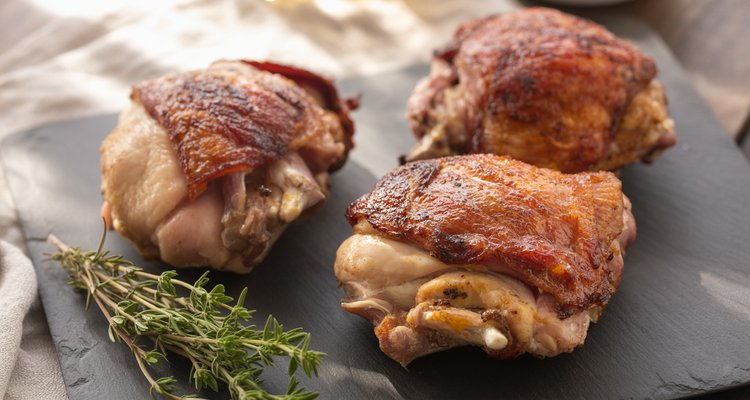
- How to Get Crispy Skin on Smoked Chicken Thighs
- When and How to Sauce Smoked Chicken Thighs
- Should You Flip Chicken Thighs While Smoking?
- Common Mistakes When Smoking Chicken Thighs
- Internal Temperature Guide for Smoked Chicken Thighs
- Best Wood for Smoking Chicken Thighs
- Frequently Asked Questions
What Makes Chicken Thighs Ideal for Smoking
Chicken thighs are one of the most forgiving cuts you can put in a smoker. The reason is fat. Thighs are dark meat — higher in intramuscular fat and collagen than chicken breasts — which means they stay juicy even when the temperature climbs a little past the target.
That collagen is the real prize. At around 175–180°F, connective tissue in the thigh breaks down into gelatin, giving you meat that’s silky, tender, and pulls cleanly from the bone. With a chicken breast, an extra 10°F means dry and stringy. With a thigh, it often means even better.
Bone-in thighs carry an extra edge: the marrow inside the bone contributes flavor during the long cook, and the bone itself acts as a heat shield that slows the outer edges from drying out. Skin-on thighs protect the meat from smoke intensity and add a textural contrast when finished correctly.
The Right Smoker Temperature for Chicken Thighs
There’s no single “correct” temperature for smoking chicken thighs. Each setting produces a different result, and the right choice depends on how much smoke flavor you want, how much time you have, and whether crispy skin is a priority.
Smoking Chicken Thighs at 225°F
At 225°F, chicken thighs absorb the most smoke flavor and cook the most gently. The extended time — roughly 2 to 2.5 hours for bone-in — lets smoke ring development go deep and the meat become exceptionally tender. The drawback is skin. At 225°F, the fat under the skin doesn’t render quickly enough to crisp up on its own. Plan on a high-heat finish (400°F+) or a quick sear to fix it.
Smoking Chicken Thighs at 250°F
At 250°F, you get a solid balance of smoke penetration and a more manageable cook time — typically 1.75 to 2.25 hours for bone-in thighs. This is the most popular temperature among backyard cooks. You still get good smoke flavor, and the slightly higher heat gives the skin a better chance at crisping without a separate finishing step, though a quick heat bump at the end still helps.
Smoking Chicken Thighs at 275°F
At 275°F, the cook is faster — around 1 to 1.5 hours for bone-in thighs — and the skin renders noticeably better on its own. Many competition BBQ teams prefer this temperature range because the higher heat helps the fat under the skin begin to render during the cook rather than requiring a separate step. Smoke flavor is slightly lighter, but the skin texture improvement is often worth it. For boneless thighs, this temperature is particularly well-suited.
Smoked Chicken Thighs: Time + Temp Chart
Use this chart as a starting point. Always cook to internal temperature — not to time. Thigh size, smoker type, and ambient conditions all affect timing.
| Smoker Temp | Bone-In Time | Boneless Time | Target Internal Temp | Skin Result |
|---|---|---|---|---|
| 225°F | 2 – 2.5 hrs | 1.5 – 2 hrs | 175–180°F | Needs finish step |
| 250°F | 1.75 – 2.25 hrs | 1.25 – 1.75 hrs | 175–180°F | Finish step helpful |
| 275°F | 1 – 1.5 hrs | 45 – 75 min | 175–180°F | Good natural render |
| 300°F+ | 45 – 60 min | 35 – 50 min | 175–180°F | Crispy, less smoke |
Times are for average-sized bone-in thighs (5–7 oz each). Always verify with a meat thermometer.
Bone-In vs Boneless Smoked Chicken Thighs
Bone-in thighs take roughly 30 to 45 minutes longer than boneless thighs at the same smoker temperature. The bone acts as insulation — slowing heat from penetrating the center — which actually works in your favor for low-and-slow cooking because it gives the fat more time to render and the meat more time to develop flavor.
Boneless thighs cook faster and are easier to eat, but they give up a little of that marrow-influenced depth. Skinless boneless thighs are the leanest option and can dry out if pushed past 180°F, so pull them a bit sooner — around 175°F — and make sure your smoker temperature is consistent.
For skin-on bone-in thighs, the skin itself is a protective barrier during the cook. For boneless skinless thighs, the rub makes direct contact with the meat on every surface, which means better spice coverage but also faster moisture loss. Keep your smoker sealed tight and consider a light spritz of apple cider vinegar and water every 45 minutes.
How to Prep Chicken Thighs for the Smoker
Good prep is where crispy skin starts. Follow these steps before the thighs ever touch the grate.
- Trim and tighten. Use kitchen shears to remove any excess skin flopping past the edges of the thigh. Trim visible fat pockets that won’t render cleanly. Tuck and fold the skin so it covers the meat evenly.
- Pat completely dry. Use paper towels and press firmly on the skin surface until no moisture remains. Wet skin steams rather than crisps. This step makes a bigger difference than most people expect.
- Dry brine overnight (recommended). Salt the thighs on all sides and leave uncovered in the refrigerator for 8–24 hours. The salt draws moisture to the surface, then reabsorbs, seasoning the meat from within. The skin dries out significantly, which is exactly what you want.
- Apply your rub. A base of kosher salt, black pepper, garlic powder, smoked paprika, onion powder, and a touch of brown sugar works well. Add 1 teaspoon of baking powder per pound of chicken to your rub — this raises the surface pH and accelerates browning and crisping.
- Let it rest at room temperature while the smoker preheats. 20–30 minutes of resting after the rub is applied helps the seasoning adhere and lets the surface temperature rise slightly, promoting more even cooking.
- Temperature tool: ThermoMaven wireless meat thermometer helps monitor dark meat through the smoke.
- Pellet option: Traeger Signature Blend pellets work well with smoked chicken thighs.
- Rub option: Spice Guru BBQ seasoning fits the dry-rub approach before smoking.
Step-by-Step: How to Smoke Chicken Thighs
- Preheat your smoker to your target temperature — 225°F, 250°F, or 275°F. Allow it to fully stabilize before loading the chicken.
- Add your wood. For chicken thighs, start with 2–3 chunks of applewood or cherry wood. These mild fruitwoods complement the richness of dark meat without overpowering it.
- Place thighs skin-side up on the smoker grates. Leave space between each piece for airflow. Do not crowd the grates.
- Close the lid and let them smoke. Resist opening the smoker for the first 45 minutes. Every time the lid opens, temperature drops and smoke escapes.
- Check internal temperature starting at the 45-minute mark for 275°F cooks, or at the 1-hour mark for 225–250°F cooks. Insert the thermometer probe into the thickest part of the thigh, away from the bone.
- Optional: spritz. If smoking at 225°F or 250°F, a light spritz of apple cider vinegar and water every 30–45 minutes keeps the surface moist and adds a subtle tang.
- Finish for crispy skin (see the next section) when the internal temperature reaches 155–160°F — just before the target.
- Pull and rest when the internal temperature reaches 175–180°F. Tent loosely with foil and rest for 5–10 minutes before serving.
How to Get Crispy Skin on Smoked Chicken Thighs
Rubbery skin is the most common complaint with smoked chicken thighs — and it’s fixable with any of these three methods. The root cause is fat under the skin that didn’t render. High heat is the cure.
Method 1: Smoke at 275°F from the Start
The simplest approach. At 275°F, the higher ambient heat starts rendering the subcutaneous fat during the cook itself. No separate step needed in most cases — just monitor and pull at 175–180°F. The skin won’t be as shatteringly crispy as a fried chicken, but it will be well-rendered and pleasantly firm.
Method 2: Two-Stage Cook (Best Results)
Smoke at 225°F or 250°F until the internal temperature reaches 150–155°F. At that point, crank your smoker — or transfer the thighs to a preheated grill — to 400–425°F. The high heat finishes the cook and blasts the skin in the last 10–15 minutes. This method gives you maximum smoke flavor plus genuine crispiness.
Method 3: Cast Iron Reverse Sear
Pull the thighs from the smoker at 155–160°F internal. Heat a cast iron skillet over medium-high heat with 1–2 tablespoons of neutral oil. Place the thighs skin-side down in the hot pan and press gently for full skin contact. Flip every 2 minutes for 6–8 minutes total until the skin is deep golden and crackling. Finish in a 375°F oven if needed to hit your target internal temperature.
 Pitmaster Tip: If you plan to sauce, brush it on after the skin has crisped — not before. BBQ sauce contains sugar that burns quickly at high heat. Apply sauce in the last 5 minutes of the crispy-skin finish, then pull immediately.
When and How to Sauce Smoked Chicken Thighs
The sugar in most BBQ sauces begins to burn somewhere around 265°F. At low smoking temperatures, the long cook gives sugars time to caramelize and then char. The fix is simple: hold the sauce until the final stretch.
Apply BBQ sauce to your smoked chicken thighs with 10–15 minutes left in the cook — or during the last 5 minutes of a high-heat skin finish. Brush a thin, even layer on both sides and let it tack up before pulling. A second thin coat 3–4 minutes before pulling gives you a sticky, lacquered finish without burning.
If crispy skin is your priority, serve sauce on the side. The moisture in the sauce softens the skin within minutes of contact, so any crispiness you worked for will disappear if you sauce too early or too heavily.
Should You Flip Chicken Thighs While Smoking?
For most methods, smoke chicken thighs skin-side up the entire cook. This allows the rendered fat to baste the meat as it liquefies, and it lets the smoke ring develop undisturbed on the top surface. Flipping during low-temperature smoking also introduces temperature swings each time the lid opens.
The exception: the two-stage method. When you crank heat for the skin finish — whether on a grill or in the smoker — flip the thighs so the skin contacts the grates or pan surface directly. This direct conductive heat is what gets the fat to render and the skin to crisp. Flip back skin-side up for the final minute if you want the surface to tighten.
Common Mistakes When Smoking Chicken Thighs
- Smoking at 225°F without a plan for the skin. Low-and-slow is great for flavor, but skin needs high heat to render. If you’re smoking at 225°F, commit to a finishing step at 400°F+.
- Skipping the pat-dry step. Wet skin steams instead of crisps. Drying the surface before applying the rub is the single biggest factor in skin texture.
- Opening the smoker too often. Every lid lift costs you 10–15 minutes of recovery time and washes smoke off the surface. Check the temp twice — once mid-cook and once near the end.
- Pulling at exactly 165°F. The USDA minimum for poultry is 165°F, but chicken thighs are best at 175–180°F. At 165°F, the collagen in the thigh hasn’t fully broken down — the meat will be safe but noticeably tougher.
- Saucing too early. BBQ sauce applied before the final stretch burns and turns bitter. Hold it for the last 10–15 minutes of the cook.
- Skipping the rest period. A 5–10 minute rest redistributes the juices so they don’t run out when you cut in. Skip it and the first cut releases a pool of liquid, leaving the meat drier on the plate.
Internal Temperature Guide for Smoked Chicken Thighs
The USDA requires poultry to reach a minimum internal temperature of 165°F for food safety. That’s the floor — not the goal.
For smoked chicken thighs, the sweet spot is 175–180°F. At this internal temperature, the collagen in the connective tissue has converted to gelatin, the fat has rendered throughout the meat, and the texture shifts from firm to silky and tender. Most experienced pitmasters target this range regardless of the cooking method.
Some competition cooks push to 185–195°F for a near fall-off-the-bone texture. This works well for bone-in thighs because the extra fat and collagen protect the meat, but it can make boneless thighs slightly dry — especially skinless ones.
Always insert your meat thermometer probe into the thickest part of the thigh at a slight angle, avoiding the bone. The bone conducts heat differently than the surrounding muscle and will give you a falsely high reading if the probe tip touches it.
Best Wood for Smoking Chicken Thighs
Chicken thighs have a rich flavor that pairs well with mild to medium smoke. Avoid overpowering woods and lean toward fruitwoods.
- Apple: Mild, slightly sweet smoke — the most versatile choice for smoked chicken. Works with any rub style.
- Cherry: Similar to apple but with a slightly deeper, fruitier note. Gives the skin a beautiful mahogany color.
- Pecan: Slightly richer and nuttier than fruitwood — a good middle ground for those who want a little more smoke intensity.
- Maple: Subtle sweetness; excellent with brown-sugar-forward rubs.
- Hickory (light use): Adds more pronounced smoke flavor — use sparingly. One small chunk is usually enough. Too much hickory on chicken turns bitter.
- Avoid mesquite: Too aggressive for chicken. Mesquite overpowers the delicate flavor of the meat in a long cook.
For chunks vs. chips vs. pellets: chunks last longer and produce more consistent smoke on charcoal and offset smokers. Chips work for short cooks or gas-smoker setups. Pellets are specific to pellet grills and produce consistent, calibrated smoke throughout the cook.
Ready to put this into practice? Check out our smoked chicken thighs recipe for exact rub measurements, timing, and step-by-step photos of the full cook.
Frequently Asked Questions
How long does it take to smoke chicken thighs at 225°F?
Bone-in, skin-on chicken thighs take 2 to 2.5 hours at 225°F. Boneless thighs take 1.5 to 2 hours. Always cook to internal temperature — target 175–180°F for best texture, not just the USDA minimum of 165°F.
Is it better to smoke chicken thighs at 225 or 250?
Both work well. At 225°F you get more smoke penetration and a more tender result, but you need a high-heat finishing step for the skin. At 250°F, the skin has a slightly better chance of rendering on its own, and the total cook time is 20–30 minutes shorter. For most backyard cooks, 250°F is the more practical choice.
How long to smoke bone-in chicken thighs at 250°F?
Bone-in chicken thighs smoked at 250°F typically take 1.75 to 2.25 hours. Start checking the internal temperature at the 90-minute mark. Pull when the thickest part reads 175–180°F.
How long to smoke boneless chicken thighs?
Boneless chicken thighs cook faster than bone-in because there’s no bone insulating the center. At 250°F, plan on 1.25 to 1.75 hours. At 275°F, 45 to 75 minutes. At 225°F, allow 1.5 to 2 hours. Pull at 175°F internal — boneless thighs can dry out if overcooked.
What internal temperature should smoked chicken thighs reach?
The USDA minimum safe internal temperature for chicken is 165°F. For smoked chicken thighs specifically, 175–180°F produces the best texture — the connective tissue breaks down at this range, yielding tender, juicy meat. Bone-in thighs can handle 185–190°F without drying out.
Do you flip chicken thighs when smoking?
No — for standard low-and-slow smoking, keep the chicken thighs skin-side up the entire cook. Flipping during low-temperature smoking introduces temperature swings and disrupts the smoke ring. The exception is the high-heat skin-finishing stage, where placing the skin directly on hot grates or a cast iron pan crisps the fat effectively.
How do you keep smoked chicken thighs moist?
The best ways to keep smoked chicken thighs moist: use bone-in thighs (more fat and collagen), dry brine overnight to season deeply, don’t exceed 180°F internal temperature for boneless thighs, spritz with apple cider vinegar and water every 45 minutes during a long 225°F cook, and always rest for at least 5 minutes before cutting (a BBQ seasoning sampler works great if you want to experiment with flavors without committing to a full jar).
Can you smoke frozen chicken thighs?
You should not smoke frozen chicken thighs. Frozen chicken will spend too much time in the danger zone (40–140°F) as the smoker temperature slowly thaws and heats the meat, increasing the risk of bacterial growth. Thaw fully in the refrigerator — usually 24 hours for bone-in thighs — before smoking.
How long to smoke chicken thighs at 275°F?
Bone-in chicken thighs smoked at 275°F take approximately 1 to 1.5 hours. Boneless thighs take 45 to 75 minutes. At this temperature, the skin renders better naturally without a separate finishing step, making 275°F a popular choice for competition and backyard cooks who prioritize skin texture.
Should you brine chicken thighs before smoking?
Brining is optional but helpful. A dry brine — salt applied and left uncovered in the refrigerator for 8–24 hours — is the most effective method. It seasons the meat deeply, dries out the skin for better crisping, and improves moisture retention during the cook. A wet brine works too but adds moisture to the skin, which can slow the crisping process.
What wood is best for smoking chicken thighs?
Apple and cherry wood are the top choices for smoking chicken thighs — both are mild fruitwoods that complement dark meat without overpowering it. Cherry also gives the skin a deep mahogany color. Pecan and maple are solid secondary options. Avoid mesquite, which is too aggressive for chicken and can turn bitter over long cooks.
Can you overcook smoked chicken thighs?
Technically yes, but chicken thighs are much more forgiving than breasts. Bone-in thighs can handle temperatures up to 190°F without significant drying. Beyond 195°F, even the fat-rich dark meat begins to dry out noticeably. Boneless skinless thighs are slightly less forgiving — pull them by 180°F for best results.
Wrapping Up: Smoked Chicken Thighs Done Right
Smoked chicken thighs are one of the most forgiving and rewarding cooks you can do on any smoker. The combination of higher fat content, collagen breakdown at 175–180°F, and the protective skin makes them nearly impossible to dry out when you follow the basics: pick your smoker temperature based on how much smoke flavor and skin crispiness you want, cook to internal temperature rather than time, and finish with high heat if you started low.
The biggest takeaway from this guide is that there is no single correct approach. A 225°F cook maximizes smoke penetration but needs a finishing step for the skin. A 275°F cook renders the skin naturally but delivers lighter smoke flavor. The two-stage method gives you the best of both worlds. Whichever route you choose, dry brining overnight, patting the skin completely dry, and adding baking powder to your rub will consistently produce better results than skipping those steps.
Use the time and temperature chart above as your starting reference, verify doneness with a meat thermometer in the thickest part of the thigh, and rest for at least five minutes before serving. Once you nail the process, smoked chicken thighs become one of the fastest and most satisfying things you can pull off a smoker.