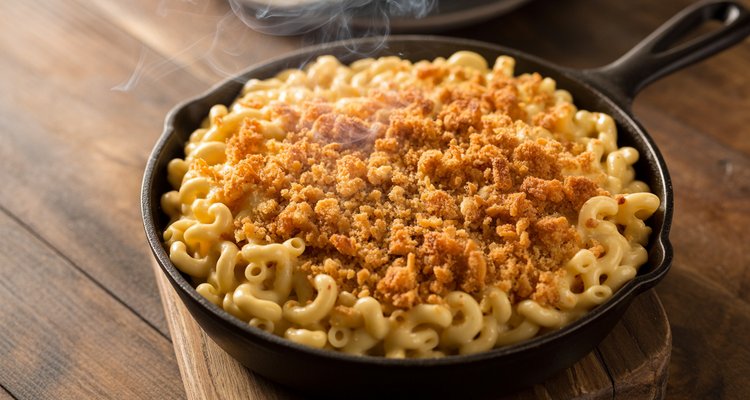
You set a brisket and a rack of ribs on the smoker at dawn. By noon, someone pulls a cast iron skillet of bubbling smoked mac and cheese off the grate and suddenly everything else is background noise. That’s the power of this dish. This recipe delivers from-scratch smoked mac and cheese-creamy, smoky, golden-topped-ready in under two hours on any smoker you own.
Why This Smoked Mac and Cheese Recipe Works
Most smoked mac and cheese recipes fall into one of two traps: either they use processed cheese that turns greasy under heat, or they run the smoker too hot and end up with dried-out noodles. This recipe solves both problems. The sauce foundation: A proper French-style roux-butter and flour cooked together, then built into a béchamel with whole milk and heavy cream.
The roux gives the sauce structure that holds up through a full 60-90 minutes on the smoker without breaking or separating. Cream cheese adds body and a slight tang. The cheese blend: Sharp cheddar, smoked gouda, and gruyere create layers of flavor that no processed shortcut can match.
The temperature discipline: Smoking at exactly 225°F keeps the macaroni noodles from drying out while giving the smoke plenty of time to penetrate the creamy sauce. The result is mac and cheese with genuine smoke flavor in every bite, crowned with a golden panko crust that shatters at the touch of a spoon.
The Best Cheese Blend for Smoked Mac and Cheese
The cheese blend makes or breaks this dish. Here’s why each one earns its place:
| Cheese | Amount | Role | Why It Works |
|---|---|---|---|
| Sharp Cheddar | 2 cups | The backbone | Tangy, familiar mac and cheese flavor everyone expects |
| Smoked Gouda | 1 cup | The secret weapon | Amplifies wood-smoke flavor; adds nutty, caramelized character |
| Gruyere | 1 cup | The melt master | Silky, complex; melts smooth without clumping at smoking temps |
One rule that applies to all three: Shred your own from a block. Pre-shredded cheese is coated with cellulose powder and anti-caking agents that prevent it from melting properly. The result is a grainy, clumpy sauce instead of the smooth, velvety one this recipe produces. Two minutes with a box grater is worth it.
Want to customize?
- Stir in a handful of pepper jack for heat
- Swap gruyere for fontina for a milder, butterier sauce
Helpful gear for this cook:
- ThermoMaven instant-read meat thermometer — checks doneness quickly at the grill
- Hotec stainless steel kitchen tongs — make turning and moving food easier
- Spice Guru BBQ rub set — gives you several BBQ seasoning options for the cook
Choosing Your Wood for Smoke Flavor
Mac and cheese is a delicate dish-the creamy, dairy-forward flavors are easily overwhelmed by aggressive smoke. Stick to mild hardwoods.
| Wood | Flavor Profile | Recommendation |
|---|---|---|
| Apple ★ | Sweet, mild, fruity | Most popular choice-subtle smokiness without competing |
| Cherry | Slightly fruity, beautiful color | Great for more character than apple; nice crust color |
| Pecan | Nutty, slightly richer | Pairs especially well with smoked gouda |
| Mesquite/Hickory | Intense, assertive | Avoid-too aggressive for dairy-based dishes |
Helpful gear for this cook:
- Temperature control: Stock Your Home aluminum pans catches drips, holds sides, or manages covered reheating.
- Handling: Grill Armor extra-long heat-resistant gloves protects your hands around hot grates, pans, and smoker parts.
- Prep: AMMZO digital meat thermometer checks doneness without guessing.
Ingredients and Equipment
Ingredients
For the mac and cheese:
- 1 lb elbow macaroni
- 4 tbsp unsalted butter (plus 2 tbsp for topping)
- 1/4 cup all-purpose flour
- 1 tsp dry mustard powder
- 2 cups whole milk
- 1 cup heavy cream (or half-and-half)
- 4 oz cream cheese, room temperature, cubed
- 2 cups sharp cheddar, freshly shredded
- 1 cup smoked gouda, freshly shredded
- 1 cup gruyere, freshly shredded
- 1 tsp kosher salt, plus more to taste
- 1/2 tsp black pepper
For the topping:
- 1 cup panko breadcrumbs
- 2 tbsp melted butter
- 1 tsp BBQ dry rub (your favorite blend)
Equipment
- 12-inch cast iron skillet – heats evenly, holds consistent temperature in the smoker, doubles as serving dish. A disposable aluminum half-pan works if you don’t have cast iron.
- Smoker – pellet, offset, or charcoal; any type works at 225°F
- Large pot – for boiling pasta
- Whisk – for building the roux and preventing lumps
- Box grater – for shredding cheese from the block
How to Make Smoked Mac and Cheese
Step 1-Preheat Your Smoker
Set your smoker to 225°F and load it with your wood of choice-apple, cherry, or pecan. Give it 15-20 minutes to come up to temperature and establish a clean smoke before adding food. Thin blue smoke is ideal; thick white smoke will taste acrid on the cheese.
Step 2-Cook the Pasta Al Dente
Bring a large pot of generously salted water to a boil. Cook the elbow macaroni for about 1 minute less than package directions-you want the noodles firm with a slight bite, not fully cooked. Why this matters: The macaroni continues to soften during the 60-90 minutes in the smoker. Starting with fully cooked pasta leaves you with mushy, blown-out noodles. Drain and set aside.
Step 3-Make the Roux and Cheese Sauce
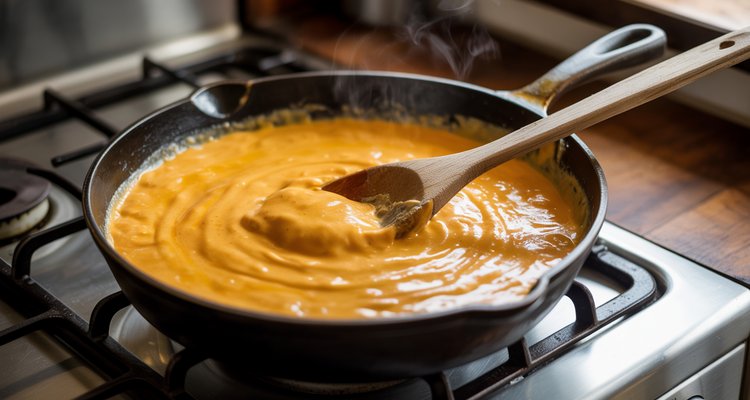 Build the roux:
- Place cast iron skillet over medium heat on stovetop
- Melt 4 tablespoons butter
- Whisk in flour and cook 1-2 minutes, stirring constantly, until slightly nutty and pale golden
- Whisk in mustard powder
Build the béchamel:
- Slowly pour in whole milk and heavy cream, whisking continuously to prevent lumps
- Bring to a gentle simmer
- Keep whisking until sauce thickens enough to coat the back of a spoon (about 3-4 minutes)
Add the cheese:
- Reduce heat to low
- Add cream cheese cubes and whisk until completely melted and smooth
- Add shredded cheeses in three additions (about a cup at a time), whisking well after each
- Season with salt and pepper
The sauce should be thick, glossy, and absolutely irresistible at this point.
Step 4-Combine and Add Topping
Remove skillet from heat. Add the cooked macaroni and fold gently into the cheese sauce until every noodle is fully coated. Make the topping:
- In a small bowl, stir together 1 cup panko breadcrumbs, 2 tablespoons melted butter, and 1 teaspoon BBQ dry rub
- Spread evenly over the surface of the mac and cheese
The panko will toast in the smoker and form the golden, crunchy crust that makes this dish unforgettable.
Step 5-Smoke at 225°F for 60-90 Minutes
Place the cast iron skillet directly on the smoker grates. Close the lid and smoke at 225°F. At the 30-minute mark: Give the mac and cheese a gentle stir from the edges toward the center. This distributes smoke flavor evenly through the dish. Replace the lid and let it ride. How to know it’s done (60-90 minutes total):
- Panko crust is golden brown
- Edges are bubbling
- Dish has taken on a subtle but unmistakable smoke ring
Serve hot directly from the skillet.
Pro Tips for Perfect Smoked Mac and Cheese
- Never exceed 225°F. This is the most important rule. At 250°F or above, the macaroni dries out and the cheese sauce breaks, leaving you with greasy, grainy mac and cheese.
- Stir at 30 minutes. One stir halfway through distributes smoke flavor and prevents edges from drying out before the center is ready.
- Skip processed cheese. Velveeta and similar products contain stabilizers that break down differently under prolonged heat. Cream cheese is the exception-it adds richness and structure without the downsides.
- Cast iron holds temperature better. If you use an aluminum pan, the thinner material heats up faster-watch the edges more carefully during the first 30 minutes.
Variations and Add-Ins
Smoked mac and cheese is a magnificent base for other flavors:
- Bacon: Crumble 6 strips of crispy cooked bacon over the top during the last 30 minutes. The bacon re-crisps in the smoker and adds a salty, savory punch.
- Pulled pork or brisket: Fold 1-2 cups of chopped leftover smoked meat into the mac before smoking. This turns a side dish into the main event.
- Jalapeños: Dice 2-3 fresh jalapeños and fold into the cheese sauce before smoking. Pickled jalapeños work too for more tang.
- Lobster mac: Fold in chunks of steamed lobster tail just before smoking. It sounds extravagant, but at a summer cookout it’s the dish people talk about for months.
Make Ahead and Storage
Make ahead:
- Complete through Step 4 (combining noodles and sauce, before adding panko topping)
- Cover skillet tightly with plastic wrap
- Refrigerate for up to 24 hours
- When ready to smoke, pull out 30 minutes before cooking to take the chill off
- Add panko topping and smoke as directed
Leftovers:
- Store in airtight container in refrigerator for up to 5 days
- Reheat gently on stovetop or microwave with a splash of whole milk stirred in-this restores the creamy consistency
Freezer:
- Cool completely
- Portion into shallow freezer-safe containers
- Freeze for up to 6 months
- Thaw overnight in refrigerator before reheating
Frequently Asked Questions
How long does it take to smoke mac and cheese?
Plan on 60-90 minutes at 225°F:
- 60 minutes: Light, pleasant smoke flavor
- 90 minutes: Deeper, more pronounced smoke character
- Up to 2 hours: Intense smoky flavor-but watch the noodles carefully to prevent drying
Start checking at 60 minutes. The panko topping should be golden brown and edges should be bubbling.
What wood is best for smoked mac and cheese?
Apple, cherry, and pecan are the top three choices. All three are mild hardwoods that add subtle smokiness without overwhelming the creamy cheese flavor. Apple is the most popular and foolproof option-its clean, slightly sweet smoke is hard to overdo. Avoid mesquite and strong hickory, which are too assertive for dairy-based dishes.
Can I use a pellet grill for smoked mac and cheese?
Absolutely. A pellet grill is actually one of the easiest methods because it holds 225°F with almost no adjustment. Set your pellet grill to 225°F, load with apple or cherry pellets, and follow the recipe exactly. Offset smokers, kettle grills, and kamado cookers all work just as well-the only requirement is holding a steady 225°F with indirect heat and some smoke.
Can I use pre-shredded cheese?
Possible but not recommended. Pre-shredded cheese is coated with cellulose powder and anti-caking starch to keep shreds from clumping in the bag. Those same additives prevent the cheese from melting into a smooth, cohesive sauce. The result is a grainy texture that gets worse during the long smoke time. Freshly shredded cheese from a block takes two extra minutes and makes a noticeable difference.
Why did my smoked mac and cheese turn out dry?
Most common causes:
- Temperature too high: Even 250°F evaporates moisture from the cheese sauce and dries out noodles over 60-90 minutes
- Pasta overcooked: Fully cooked noodles absorb remaining sauce and turn mushy, which can look dry even when sauce hasn’t broken
To fix an overly dry batch: Stir in a few tablespoons of warm whole milk and let it rest off the heat for 5 minutes.
Conclusion
Smoked mac and cheese is the side dish that steals the show at every cookout. The combination of a proper roux-based cheese sauce, a three-cheese blend of sharp cheddar, smoked gouda, and gruyere, and 60-90 minutes of gentle wood smoke at 225°F produces a dish that no oven-baked version can match. The keys to getting it right every time:<
/p>
- Cook pasta one minute short of al dente
- Shred cheese from a block
- Keep smoker locked at 225°F
- Stir once at the 30-minute mark
Follow those four rules and you’ll turn out creamy, smoky, golden-crusted mac and cheese that disappears before the brisket is even sliced. Whether you serve it as a side alongside ribs and pulled pork or load it up with bacon and jalapeños as a main course, this recipe delivers the kind of from-scratch flavor that keeps guests coming back for seconds-and asking for the recipe.
Smoked Mac and Cheese
Equipment
- 12-inch cast iron skillet or a disposable aluminum half-pan
- Smoker pellet, offset, or charcoal — any type works
- Large pot for boiling pasta
- Whisk for building the roux
- Box grater for shredding cheese — do not use pre-shredded
- Wooden spoon for stirring sauce
Ingredients
Pasta
- 1 lb elbow macaroni cooked al dente — about 1 minute less than package directions
Cheese Sauce
- 4 tbsp unsalted butter
- 1/4 cup all-purpose flour
- 1 tsp dry mustard powder
- 2 cups whole milk
- 1 cup heavy cream or half-and-half
- 4 oz cream cheese full fat, cut into cubes, room temperature
- 2 cups sharp cheddar freshly shredded from block
- 1 cup smoked gouda freshly shredded from block
- 1 cup gruyere freshly shredded from block
- 1 tsp kosher salt plus more to taste
- 1/2 tsp black pepper
Panko Topping
- 1 cup panko breadcrumbs
- 2 tbsp unsalted butter melted
- 1 tsp BBQ dry rub your favorite blend
Instructions
- Preheat your smoker to 225°F. Load with mild wood — apple, cherry, or pecan work best for this recipe.
- Bring a large pot of salted water to a boil. Cook the elbow macaroni until just al dente — about 1 minute less than the package directions. The noodles will continue to soften in the smoker. Drain and set aside.
- In a 12-inch cast iron skillet over medium heat, melt 4 tablespoons of butter. Whisk in the flour and cook for 1–2 minutes until the roux is smooth and just starting to turn golden. Whisk in the mustard powder.
- Slowly pour in the whole milk and heavy cream while whisking constantly. Bring to a gentle simmer, whisking until the sauce thickens, about 3–4 minutes.
- Reduce heat to low. Add the cream cheese cubes and whisk until fully melted and smooth. Add the shredded sharp cheddar, smoked gouda, and gruyere in three additions, whisking well between each addition. Season with salt and pepper.
- Remove the skillet from heat. Fold in the cooked macaroni noodles, stirring gently until every noodle is coated in cheese sauce.
- In a small bowl, combine the panko breadcrumbs, 2 tablespoons melted butter, and BBQ dry rub. Sprinkle evenly over the top of the mac and cheese.
- Place the cast iron skillet in the preheated smoker. Smoke at 225°F for 60–90 minutes, until the top is golden brown and the cheese sauce is bubbling around the edges. Stir once at the 30-minute mark for even smoke distribution. Serve hot directly from the skillet.
Notes