You pull a steak off the grill and it’s tough, bland, and disappointing – despite all the effort you put in. The fix starts long before the heat does. Learning how to marinate steak properly transforms even budget cuts into something genuinely tender and packed with flavor. This guide covers every step: what a marinade actually does, the right ingredients, which cuts benefit most, timing, and how to cook it after.
What Does Marinating Actually Do to Steak?
Before we cover how to marinate steak, it helps to understand what’s actually happening at the meat surface. A marinade works through three distinct mechanisms – each serving a different purpose:
| Component | Role | Effect on Steak |
|---|---|---|
| Acid | Tenderizer | Breaks down surface proteins, loosens muscle fibers, opens pathways for flavor to enter |
| Oil | Flavor carrier | Carries fat-soluble aromatics against the meat surface; locks in moisture during high-heat cooking |
| Salt | Penetration driver | Pulls moisture out through osmosis, then draws it back in carrying dissolved flavors – the same principle behind dry brining |
One important reality check: marinades primarily flavor and tenderize the outer layer. For thin cuts like skirt steak, that’s enough to make a real difference. For thick steaks over 1.5 inches, the marinade won’t penetrate more than a few millimeters deep – but the flavor at the surface is still significant.
Helpful gear for this cook:
- Temperature control: Priority Chef stainless mixing bowls with lids mixes sauces, rubs, marinades, and sides cleanly.
- Handling: Tovolo steak marinating container keeps meat covered without relying on disposable bags.
- Prep: AMMZO digital meat thermometer checks doneness without guessing.
The 5 Essential Ingredients in a Steak Marinade
Every great steak marinade is built from the same five components. Get the balance right and the exact ingredients are flexible – understanding these building blocks lets you improvise any flavor profile.
| Component | Best Sources | Amount Per Pound | Why It Matters |
|---|---|---|---|
| Fat | Olive oil, avocado oil, canola oil | 2-3 tbsp | Emulsifies the marinade, clings to the surface, and carries fat-soluble flavors from herbs and spices |
| Acid | Balsamic vinegar, red wine vinegar, lemon juice, Worcestershire | 1-2 tbsp | The tenderizing engine – don’t overdo it; too much acid for too long makes steak mushy, not tender |
| Salt | Soy sauce (best), kosher salt, fish sauce, Worcestershire | 2-3 tbsp soy sauce or 1 tsp kosher salt | Amplifies all other flavors and enables osmosis – without salt, the marinade sits on the surface instead of penetrating |
| Aromatics | Garlic, rosemary, thyme, ginger, smoked paprika, chili flakes, Dijon | 2-4 garlic cloves + herbs to taste | This is where the marinade gets its personality – garlic is the single most impactful addition |
| Sweetener | Brown sugar, honey, maple syrup | 1 tsp – 1 tbsp | Balances the acid and promotes caramelization on the grill – this is a note, not a glaze |
A Classic All-Purpose Steak Marinade
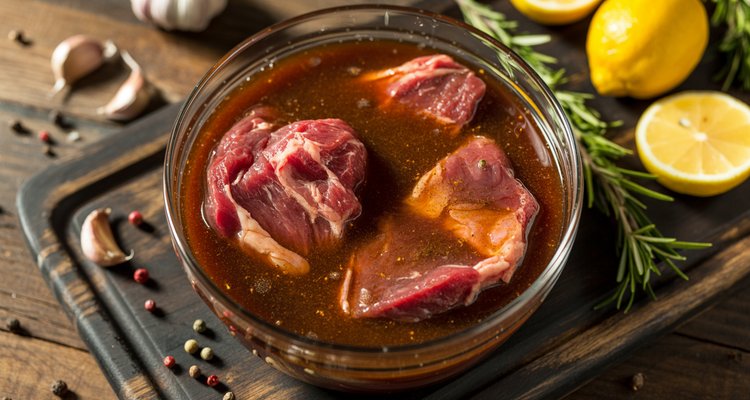
This recipe works on virtually any steak cut. Scale up proportionally for multiple steaks – makes enough for 1.5-2 lbs of steak.
Classic All-Purpose Steak Marinade
- ⅓ cup soy sauce
- 3 tablespoons olive oil
- 2 tablespoons Worcestershire sauce
- 1 tablespoon balsamic vinegar
- 4 cloves garlic, minced
- 1 teaspoon brown sugar
- 1 teaspoon black pepper
- ½ teaspoon dried rosemary (or 1 sprig fresh)
- ¼ teaspoon red pepper flakes (optional)
Whisk everything together in a bowl or shake in a jar. Citrus variation: swap the balsamic vinegar for 2 tablespoons fresh lemon juice and add 1 teaspoon lemon zest.
Best Steak Cuts to Marinate
Not every steak benefits equally from marinating. Leaner, tougher cuts gain the most – both in tenderness and flavor. Premium, well-marbled cuts are already tender; a marinade adds flavor but doesn’t change the texture significantly.
| Cut | Marinade Benefit | Recommended Style | Notes |
|---|---|---|---|
| Flank Steak | ★★★★★ | Soy-citrus or bold red wine | Score lightly before marinating; always slice against the grain |
| Skirt Steak | ★★★★★ | Citrus-herb or carne asada style | Thin cut – marinate 2-4 hours max; longer gets mushy |
| Sirloin | ★★★★☆ | Classic garlic-herb or balsamic | 4-8 hours ideal; good value cut that rewards marinating |
| Chuck Steak / Round | ★★★★☆ | Bold, acidic – red wine or vinegar-forward | Budget cuts that transform with overnight marinating |
| Flat Iron | ★★★★☆ | Any style works well | Underrated cut – tender grain with great marinade absorption |
| Ribeye | ★★★☆☆ | Light garlic-herb or butter-based | Already tender – marinade adds flavor only; 1-2 hours is enough |
| New York Strip | ★★★☆☆ | Light soy-garlic | Good marbling – keep marinade time to 2-4 hours max |
| Filet Mignon | ★★☆☆☆ | Very light – herb oil only | Extremely tender already; 30 min to 2 hours maximum |
For the best results on tougher cuts, use a fork or sharp knife to score the surface lightly (shallow cuts about ¼ inch deep). This gives the marinade more surface area to work with and speeds up the tenderizing process.
How Long to Marinate Steak
The single most important timing rule: marinate for at least 30 minutes, aim for 4-8 hours, and never exceed 24 hours. After 24 hours, the acid breaks down the protein structure too aggressively – the texture turns mealy and mushy rather than tender.
| Cut | Minimum | Ideal | Maximum | Notes |
|---|---|---|---|---|
| Skirt / Flank Steak | 30 min | 2-4 hours | 8 hours | Thin cut – acid works fast; overnight risks mushy texture |
| Sirloin / Flat Iron | 2 hours | 4-8 hours | 24 hours | Moderate thickness – overnight works well |
| Chuck / Round Steak | 4 hours | 8-24 hours | 24 hours | Tougher cuts – longer is better up to 24 hours |
| Ribeye / Strip | 30 min | 1-2 hours | 4 hours | Already tender; longer adds flavor but risks softening texture |
| Filet Mignon | 30 min | 30 min – 2 hours | 2 hours | Use for flavor only – never for tenderizing |
- Marinating tray: Tovolo steak marinating container gives steaks room to sit evenly in the marinade.
- Prep bowl option: Priority Chef mixing bowls with lids are useful for mixing and holding marinade components.
Step-by-Step: How to Marinate Steak
Step 1 – Choose Your Cut and Marinade Style
Match the marinade style to the cut. Tougher cuts like flank or sirloin can handle bold, acidic marinades with soy sauce and vinegar. Premium cuts like ribeye do better with a lighter touch – olive oil, garlic, and fresh herbs. Decide how long you have: if it’s less than 2 hours, a more acidic marinade will work faster.
Step 2 – Mix the Marinade
Whisk the fat, acid, salt, aromatics, and sweetener together in a bowl. Taste it – a good marinade should be boldly seasoned and slightly intense on its own because it’ll dilute when it contacts the steak. Plan on about ½ cup of marinade per 1-1.5 lbs of steak to ensure full coverage.
Step 3 – Prep the Steak
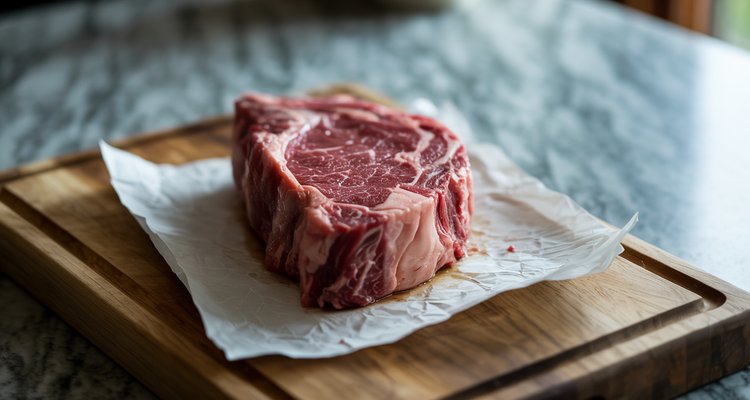
Pat the steak completely dry with paper towels first. This sounds counterintuitive before marinating, but removing surface moisture helps the marinade adhere more effectively. For tougher cuts like skirt or sirloin steak, score the surface lightly with a sharp knife in a crosshatch pattern – shallow cuts about ¼ inch deep. This dramatically increases the contact area.
Step 4 – Use the Right Container
A resealable zip-lock bag is the best option for marinating steak. It removes excess air, ensures the marinade coats every surface, and makes it easy to flip the steak without a mess. A glass dish or ceramic bowl work well too. Never use a metal container – the acid in the marinade reacts with metal and can impart a metallic flavor to the steak.
Step 5 – Refrigerate (Always)
Place the steak in the marinade, seal the bag or cover the dish, and put it in the refrigerator immediately. Never marinate at room temperature – bacteria multiply rapidly in the temperature danger zone (40-140°F). Flip the bag or turn the steak halfway through the marinating time to ensure even coverage.
Step 6 – Remove and Cook
Take the steak out of the refrigerator 30 minutes before cooking and let it come toward room temperature – this helps it cook more evenly. Pat the steak dry again before it goes on the heat. Excess marinade on the surface steams rather than sears, which prevents the crust you want. For technique on the grill, see our guide on how to grill steak for exact timing and heat management.
Tips for Cooking Marinated Steak
- Pat dry before cooking. The single most important step for a proper sear. Moisture on the surface causes steaming, not browning.
- Use high heat. Marinated steaks benefit from a screaming-hot grill or cast iron pan. You want the Maillard reaction happening fast – caramelized exterior while the inside stays juicy.
- Never reuse raw marinade. Marinade that’s been in contact with raw steak harbors bacteria. If you want a sauce, set aside a separate portion before adding the meat, or boil the used marinade vigorously for at least 5 minutes before using it as a finishing sauce.
- Rest the steak. Let it rest for 5-10 minutes after cooking. This allows the juices to redistribute rather than run onto the cutting board.
- Slice against the grain. Especially critical for skirt steak and other thin, fibrous cuts. Cutting across the muscle fibers shortens them, making each bite significantly more tender. For steak doneness targets, check our steak temperature guide.
Common Marinating Mistakes to Avoid
- Marinating too long. Leaving steak in an acidic marinade past 24 hours – or past 8 hours for thin cuts – results in a mushy, unpleasant texture. Set a timer.
- Marinating at room temperature. This is a food safety hazard, not just a flavor issue. Always use the refrigerator.
- Using a metal container. Acidic marinades corrode metal and affect flavor. Stick to zip-lock bags, glass, or ceramic.
- Skipping the pat-dry before cooking. Wet steak doesn’t sear – it steams. Always pat dry right before it hits the heat.
- Too much acid, not enough fat. An unbalanced marinade heavy on vinegar or citrus without enough oil won’t carry flavors properly and will tenderize too aggressively.
- Expecting a marinade to do all the work. Marinating is one step. Proper heat, rest time, and slicing technique all matter equally.
- Using raw marinade as a sauce. A common mistake that poses a real food safety risk. Always boil it first, or set aside a clean portion before the meat goes in.
Frequently Asked Questions
How long should you marinate steak?
For most cuts, marinate for a minimum of 30 minutes and up to 24 hours maximum. The sweet spot for skirt steak is 2-4 hours. Sirloin and chuck steaks do best with 4-8 hours or overnight. Tender cuts like ribeye and filet mignon only need 30 minutes to 2 hours.
Can you marinate steak for too long?
Yes – and it’s a common mistake. When steak sits in an acidic marinade past 24 hours, the acid breaks down the protein structure too aggressively. The result is a mealy, mushy texture that no amount of cooking will fix. Thin cuts like skirt steak can start to deteriorate in as little as 8-12 hours.
Should you marinate steak in the fridge or at room temperature?
Always in the refrigerator. Marinating at room temperature falls within the bacterial danger zone (40-140°F), where harmful bacteria can multiply rapidly. Even a 2-hour marinade should happen in the fridge, not on the counter.
Can you reuse steak marinade?
Not safely, unless you boil it first. Marinade that’s been in contact with raw steak contains raw meat juices and bacteria. If you want a dipping sauce or finishing glaze, pour out a separate portion of the marinade before adding the raw steak. Alternatively, boil the used marinade vigorously for at least 5 minutes to kill bacteria.
Does marinating actually tenderize steak?
Yes, but with limits. The acid in a marinade denatures surface proteins, making the outer layer of the steak noticeably more tender. However, marinades don’t penetrate deep into thick steaks – typically only 2-3mm. For tougher cuts, the effect is meaningful and real. For thick cuts, the tenderizing benefit is mostly at the surface, but the flavor impact throughout the cooking process is still valuable.
Can you freeze steak in marinade?
Yes – and it’s an excellent meal-prep strategy. Combine the steak and marinade in a zip-lock freezer bag, press out the air, seal, and freeze for up to 3 months. As the steak thaws in the refrigerator (plan on 24 hours for a 1-inch steak), it marinates simultaneously. You get maximum flavor with zero extra effort on cook day.
What is the best container for marinating steak?
A zip-lock freezer bag is the top choice – it removes air, ensures full contact between marinade and meat, and lets you flip the steak without mess. Glass baking dishes and ceramic bowls work well too. Avoid metal containers entirely: the acidic ingredients in marinades react with metal surfaces and can add a metallic off-flavor to the steak.
Should I rinse the marinade off before cooking?
No – don’t rinse, but do pat dry. Rinsing washes away the surface flavor you’ve built up. Patting dry with paper towels removes excess liquid that would cause steaming instead of searing, while keeping the seasoning and flavor compounds that have bonded to the surface of the meat.
Can you marinate a frozen steak?
You can, but it’s inefficient. A frozen steak doesn’t absorb marinade until it begins to thaw, so the marinade only works on the outside layers as they defrost. The better approach is to freeze the steak already in the marinade – it marinates as it thaws rather than sitting frozen in liquid it can’t absorb.
Does marinating steak overnight make it better?
For tougher cuts like sirloin, chuck, and flat iron steak, yes – overnight marinating (8-12 hours in the fridge) delivers noticeably better results than a short 1-2 hour marinade. The key is to stay within the 24-hour maximum. For thin cuts like skirt steak, overnight can be too long – 2-4 hours produces better results.
What can I use instead of vinegar in a steak marinade?
Several alternatives work well. Citrus juice (lemon, lime, or orange) provides similar acidity with a brighter flavor profile. Worcestershire sauce delivers acid plus deep umami. Buttermilk is a gentler acid that produces excellent results for overnight marinades. Red wine is another solid option – it provides mild acidity and adds complexity to the flavor.
Can you marinate steak without acid?
Yes. An acid-free marinade won’t tenderize the steak, but it will flavor it. Olive oil, garlic, herbs, soy sauce, and spices make an effective flavor marinade – just understand you’re building taste, not tenderizing. For naturally tender cuts like ribeye or filet mignon where tenderizing isn’t needed, an acid-free marinade is often the right choice to avoid any risk of texture degradation.
The Takeaway
Knowing how to marinate steak properly is one of the highest-leverage skills in the backyard cook’s playbook. The right marinade at the right time transforms tough, inexpensive cuts into weeknight dinners worth eating, and elevates premium cuts with complex, layered flavor. Start with the five-component framework – fat, acid, salt, aromatics, sweetener – use the timing guide for your specific cut, and always pat dry before cooking. The key is respecting the time limits: too short and the flavor won’t develop, too long and the texture suffers. Try it tonight with a sirloin or skirt steak using the classic all-purpose recipe above. The difference is immediate.