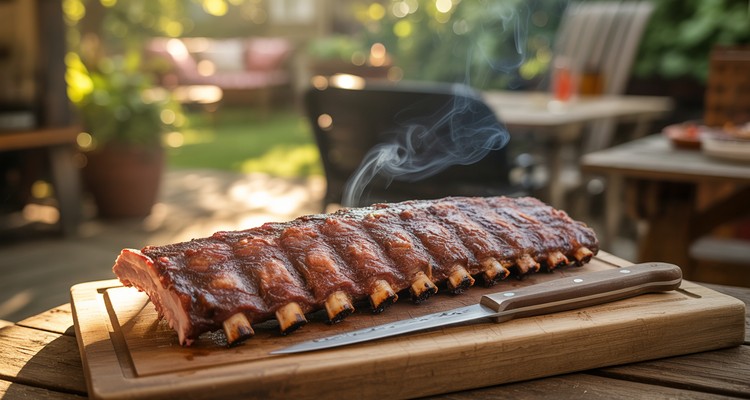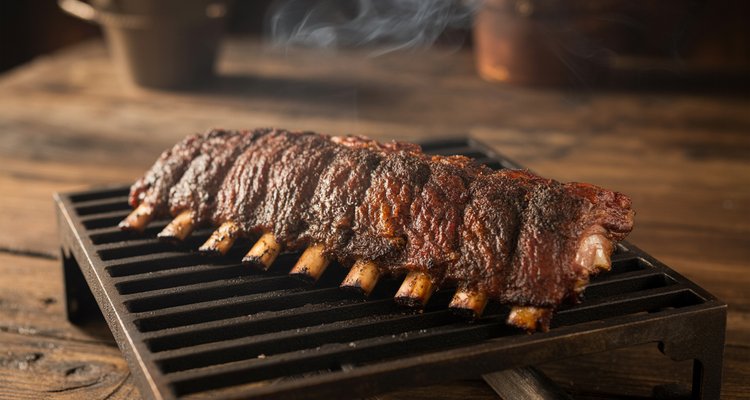
Your pit is running steady at 225°F, a full rack is resting on the grates, and now comes the part that trips up most backyard cooks – figuring out exactly what happens next. Low-and-slow BBQ at this temperature is the gold standard for ribs, and this guide covers every step: which cut to use, how to prep, which method to follow, and how to know when they’re actually done.
Helpful gear for this cook:
- extra-long stainless steel rib rack — keeps slabs upright and improves smoker capacity
- Bryco Goods pink butcher paper — works for wrapping brisket, ribs, and pork during the stall
- Western BBQ smoking wood chips variety pack — adds wood-smoke flavor on charcoal or gas grills
Types of Ribs and How They Affect Cook Time
The cut you’re working with changes your timeline significantly. Loin backs are lean and finish faster; spare ribs are thicker and fattier and need more time. Here’s how the main options compare:
| Rib Type | Where Cut From | Typical Weight | Fat Level | Total Time at 225°F | Best Method |
|---|---|---|---|---|---|
| Baby Back Ribs | Upper rib cage / loin | 1.5-2.5 lbs | Low-Medium | ~5 hours | 2-2-1 |
| Spare Ribs | Lower rib cage / belly | 2.5-3.5 lbs | High | ~6 hours | Foil wrap method |
| St. Louis-Style | Spare ribs, trimmed | 2-3 lbs | Medium-High | ~6 hours | Foil wrap method |
| Beef Short Ribs | Chuck / plate section | 3-5 lbs | Very High | 8-9 hours | Unwrapped |
Helpful gear for this cook:
- TempPro TP20 500FT Wireless Meat Thermometer with Dual Meat — helps verify doneness without guessing
- MEATER Plus: Smart Bluetooth Wireless Meat Thermometer Digital — helps verify doneness without guessing
- AMMZO Meat Thermometer Digital — helps verify doneness without guessing
How to Prepare Ribs
Good prep makes a bigger difference than most people expect. Spend 15 minutes here and you’ll get noticeably better bark, flavor penetration, and texture.
Remove the Membrane
The membrane – a thin, papery layer on the bone side of the rack – is tough, chewy, and blocks flavor from reaching the meat. Remove it before anything else. Slide a butter knife under the membrane at one end of the rack to lift a corner. Grip the lifted edge with a paper towel (the texture helps you hold on) and pull firmly across the rack in one steady motion. If it tears, work from another corner until the entire membrane is off.
Apply a Dry Rub
A simple dry rub builds the bark – the flavorful, slightly crispy crust that’s a hallmark of great pork ribs. A basic all-purpose blend combines: 2 tablespoons kosher salt, 1 tablespoon black pepper, 1 tablespoon smoked paprika, 1 tablespoon garlic powder, 1 tablespoon brown sugar, and 1 teaspoon cayenne (optional). Coat the ribs on all sides. Many pitmasters apply a thin layer of yellow mustard first – it acts as a binder and helps the rub stick without adding mustard flavor during the cook. Wrap the rubbed ribs in plastic and refrigerate for at least 2 hours, or overnight for the deepest flavor.
Bring Ribs to Room Temperature
Pull the ribs from the refrigerator 30-45 minutes before they go on. Cold meat placed directly onto a hot grate can cause uneven cooking. Room-temperature racks produce more consistent results and a better smoke ring.
Setting Up Your Cooker and Choosing Wood
Why 225°F Is the Target Temperature
At 225°F, fat renders slowly and collagen – the connective tissue that makes ribs tough – breaks down fully without drying out the outer meat. Ribs cooked at this temperature typically develop a genuine smoke ring, deep bark, and meat that pulls cleanly from the bone. The acceptable range is 225-250°F. Going higher speeds things up but reduces flavor penetration and can dry the surface before the interior finishes. Pellet grills and electric units hold this temperature with minimal effort. Offset and charcoal cookers require more active management but produce excellent results when dialed in.
Best Woods for Ribs
Wood choice affects flavor intensity significantly. For pork ribs, fruit woods and light hardwoods are generally preferred. For beef ribs, stronger hardwoods stand up to the richer flavor.
| Wood | Flavor Intensity | Best With | Notes |
|---|---|---|---|
| Apple | Mild, sweet | Pork ribs, back cuts | Most forgiving; great for beginners |
| Cherry | Mild, slightly sweet | Pork ribs, spare ribs | Adds beautiful mahogany color to bark |
| Hickory | Strong, classic BBQ | Spare ribs, St. Louis-style | Traditional choice; use in moderation |
| Pecan | Medium, nutty | All pork ribs | Excellent balance of flavor and sweetness |
| Oak | Medium-Strong | Beef short ribs | Texas-style standard for beef ribs |
Avoid pine, cedar, or any resinous softwood – these produce acrid, bitter combustion byproducts that ruin the meat.
The 3-2-1 Method for Spare Ribs
The 3-2-1 method is the most popular approach for spare ribs and St. Louis-style ribs. The name describes three stages: 3 hours open on the grate, 2 hours wrapped in foil, and 1 final hour unwrapped with sauce. Total time at 225°F: approximately 6 hours.
- Preheat your cooker to 225°F and add your chosen wood chunks or chips.
- Place ribs bone-side down on the grate, meat-side up. Close the lid and cook for 3 hours. Don’t open the cooker for at least the first 90 minutes.
- Spritz every 45 minutes after the first hour and a half with a 50/50 mix of apple juice and water. This keeps the surface moist and helps bark development.
- After 3 hours, remove the ribs and place each rack on a double sheet of heavy-duty aluminum foil. Add 2 tablespoons of brown sugar, 2 tablespoons of honey, and a splash of apple juice or apple cider vinegar per rack. You can also add pads of butter for richness.
- Wrap the foil tightly to create a sealed packet, then return the ribs to the cooker for 2 more hours. This is the “Texas crutch” – the steam inside the foil accelerates collagen breakdown and produces extremely tender meat.
- After 2 hours, unwrap carefully (hot steam will escape). Brush your favorite BBQ sauce on both sides. Return to the grate, bone-side down, for 1 final hour.
- Pull the ribs at 195-203°F internal temperature. Rest for 10-15 minutes before slicing.
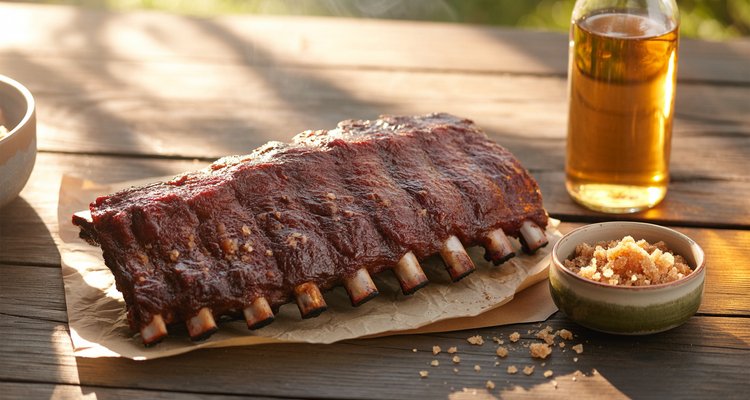
Foil vs. butcher paper: Foil creates a tighter seal and produces more tender, fall-off-the-bone results. Butcher paper is permeable, so the meat stays moist but retains more texture and a more pronounced bark. Both work well – foil is easier for beginners.
The 2-2-1 Method for Back Ribs
Back ribs are smaller and leaner than spare ribs, so the full three-stage method can over-tenderize them. The 2-2-1 version reduces the initial phase by an hour, giving you the same tender result without making the meat mushy. The process is identical with one change: cook unwrapped for only 2 hours before wrapping. Total time is approximately 5 hours. A third option is the 3-1-1 method – 3 hours on the grate, 1 hour wrapped, 1 hour sauced. This produces a firmer bite and stronger bark. It’s the right call if you want more texture and don’t need the ribs to be completely fall-off-the-bone tender.
| Method | Best For | Total Time | Result |
|---|---|---|---|
| 3-2-1 | Spare ribs, St. Louis-style | ~6 hours | Very tender, fall-off-the-bone |
| 2-2-1 | Back ribs | ~5 hours | Tender, moist, slightly more bite |
| 3-1-1 | Back ribs (purist style) | ~5 hours | Firm bark, strong flavor, more bite |
Cooking Ribs Without Wrapping
Skipping the wrap – sometimes called the “naked rib” method – produces ribs with a thicker, crunchier bark and a more assertive flavor. The trade-off is time: without the steam effect of the foil, the meat takes longer to tenderize. Add 1 to 1.5 hours to your total cook time. A rack of loin back ribs without a wrap typically takes 6 hours at 225°F; spare ribs take closer to 7. Spritz more frequently – every 30-45 minutes – to compensate for moisture loss without the foil. This approach suits experienced pitmasters who prefer a competition-style rib with serious bark. If you’re cooking for guests who like a cleaner bite and you don’t want to risk timing issues, wrapping is the safer choice.
Internal Temperature and Doneness Tests
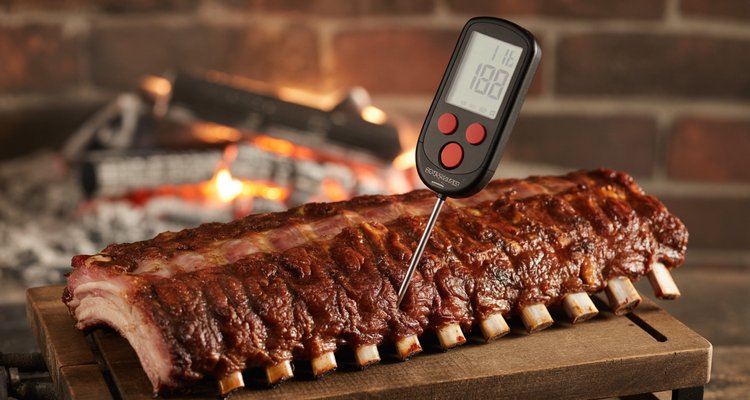
Use a Thermometer: Target 195-203°F
The USDA minimum safe temperature for pork is 145°F, but ribs are nowhere near done at that point. Collagen and connective tissue need to reach 185-195°F to begin fully breaking down. The ideal pull temperature for smoked pork ribs is 195-203°F. At this range, the meat is tender, juicy, and pulls cleanly from the bone. Insert the probe between two bones into the thickest part of the meat, avoiding contact with the bone itself (bone conducts heat and gives a false high reading).
The Bend Test
Pick up the rack from one end with tongs. Let it hang freely – it should bend significantly at the center, around 45°, and the top surface may show small cracks in the bark. If the rack holds rigid and horizontal, it needs more time. If it collapses completely and falls apart, it’s overcooked.
The Toothpick Test
Insert a toothpick or the tip of an instant-read thermometer probe between two bones in the thickest part of the rack. When done, it should slide in and out with zero resistance – like pushing into warm butter. Any tug or drag means the connective tissue hasn’t fully broken down yet.
The Twist Test
Grip an individual bone and twist it gently. On done ribs, the bone will rotate slightly in the meat with minimal resistance. On undercooked ribs, the bone won’t move. A note on “fall off the bone”: Properly cooked pork ribs at 195-203°F will release cleanly when you bite or pull them – they won’t literally fall off untouched. Meat that falls off without any effort has been overcooked past the 210°F range, resulting in dry, mushy texture. Clean release is the goal, not disintegration.
Cook Times at a Glance
| Rib Type | Method | Cooker Temp | Total Time | Target Temp |
|---|---|---|---|---|
| Baby Back Ribs | 2-2-1 | 225°F | ~5 hours | 195-203°F |
| Baby Back Ribs | No wrap (naked) | 225°F | ~6 hours | 195-203°F |
| Spare Ribs | 3-2-1 | 225°F | ~6 hours | 195-203°F |
| Spare Ribs | No wrap (naked) | 225°F | ~7 hours | 195-203°F |
| St. Louis-Style Ribs | 3-2-1 | 225°F | ~6 hours | 195-203°F |
| Beef Short Ribs | Unwrapped | 225°F | 8-9 hours | 200-205°F |
Frequently Asked Questions
How long does it take to smoke ribs at 225°F?
Back ribs take approximately 5 hours when using the 2-2-1 method, or around 6 hours without wrapping. Spare ribs and St. Louis-style ribs take approximately 6 hours when wrapping, or up to 7 hours unwrapped. Beef short ribs require 8-9 hours. Always use internal temperature (195-203°F) as your final guide – times can vary by rack size, cooker type, and weather.
What is the 3-2-1 method for ribs?
It’s a three-stage cooking process: ribs go on the grate at 225°F for 3 hours, then get wrapped tightly in foil with liquid for 2 hours, then unwrapped and sauced for 1 final hour. The wrap phase steams the meat, breaking down connective tissue for fall-off-the-bone tenderness. It’s most commonly used for spare ribs and St. Louis-style cuts.
What internal temperature should pork ribs reach?
The target for pork ribs is 195-203°F. While the USDA minimum safe temperature for pork is 145°F, the ribs won’t be tender at that point. Collagen and connective tissue need to break down, which happens between 185-203°F. Pull at 195-203°F, rest for 10-15 minutes, and carryover cooking will bring them to ideal serving texture.
Do you have to wrap ribs?
No – wrapping is optional, not required. The Texas crutch method shortens cook time, tenderizes the meat faster, and locks in moisture. Skipping the wrap produces a thicker, crunchier bark and stronger flavor, but adds 1-1.5 hours to the total cook. Both approaches produce excellent ribs – the right choice depends on your time constraints and texture preferences.
What is the best wood for BBQ ribs?
For pork ribs, apple and cherry are the most forgiving and widely recommended – both produce mild, sweet results that complement the meat without overpowering it. Hickory is the classic BBQ choice but is stronger; use it in moderation or blend it with apple or cherry. Pecan is a great middle ground: medium intensity with a slightly sweet, nutty character. For beef short ribs, oak is the Texas standard.
What’s the difference between baby back and spare ribs?
Loin back ribs come from the upper rib cage near the loin. They’re shorter, leaner, and more tender by nature – they typically cook in about 5 hours at 225°F using the 2-2-1 method. Spare ribs come from the lower rib cage near the belly. They’re larger, fattier, and more flavorful, but need a full 6 hours to fully tenderize. St. Louis-style ribs are spare ribs trimmed into a uniform rectangular shape – same cook time as untrimmed spare ribs.
Should smoked ribs fall off the bone?
Not literally. Properly cooked pork ribs at 195-203°F will release cleanly from the bone when you bite or pull them – there should be a slight, satisfying resistance before the meat comes away. Ribs that fall off untouched have been overcooked (above 210°F), resulting in dry, mushy texture. Competition BBQ judges specifically deduct points for fall-off-the-bone ribs. Clean release is the target.
Can you smoke ribs at 250°F instead of 225°F?
Yes. Running at 250°F cuts total cook time by 30-60 minutes. Baby backs with the 2-2-1 method at that higher temperature take about 4-4.5 hours; spare ribs take about 5-5.5 hours. The trade-off is slightly less flavor penetration and a somewhat thinner smoke ring. For most backyard cooks, the difference is minor. If you’re running short on time, 250°F is a perfectly acceptable choice.
How do you keep ribs moist on the pit?
Three approaches work well together: First, apply a spritz of apple juice and water (50/50) every 45 minutes after the first hour – this replenishes surface moisture and aids bark formation. Second, use the foil wrap phase (Texas crutch), which traps moisture inside the packet. Third, don’t open the cooker more than necessary during the first two hours; each time you open the lid you lose heat and humidity. A water pan in the cooker also helps maintain a moist cooking environment.
What should I spritz ribs with?
The most popular option is a 50/50 mix of apple juice and water. Apple cider vinegar diluted with water (1:1) is another excellent choice that adds a slight tang. Some pitmasters use straight apple juice, a mix of apple juice and bourbon, or even just water. The key is using something thin enough to spray and not so sweet that it burns before the bark sets. Start spritzing after the first 90 minutes and repeat every 45-60 minutes through the unwrapped phases.
How do you build a good bark on ribs?
Bark forms when the dry rub undergoes the Maillard reaction – the browning process that creates crust on seared meat. For the best bark: use a rub that includes both salt and sugar; apply it at least 2 hours before the cook (overnight is better); keep cooker temperature consistent at 225°F; don’t over-spritz early – let the surface dry between applications; and don’t wrap too early. The bark should be set (firm and dry to the touch) before you wrap. If it looks wet or tacky, give it more time.
How long should ribs rest before serving?
A minimum rest of 10-15 minutes is required after pulling ribs off the cooker – this allows juices to redistribute through the meat. Ribs can hold for up to 1-2 hours if you wrap them tightly in foil and then in a thick towel, placed in a cooler (no ice). This is called the faux Cambro method and is standard practice at competitions. Ribs held this way often taste even better than those served immediately, as the extended rest continues to tenderize the meat.