You pulled the chicken off the grill and it’s dry, bland, and forgettable. That problem starts before the fire ever gets lit. Learning how to marinate chicken properly is the single biggest upgrade you can make to your backyard cooking – and it takes less than five minutes of active prep time. This guide covers everything: how marinades work, the right timing for every cut, common mistakes, and grilling-specific techniques that make a real difference.
Why Marinate Chicken? The Three Key Benefits
Marinating isn’t just about flavor. There are three distinct things a marinade does for chicken, and understanding each one helps you build better marinades from scratch.
- Flavor infusion. A marinade deposits seasoning directly onto the surface of the meat and into any cuts or scored areas. Even a 30-minute soak adds layers of taste that dry seasoning alone can’t replicate.
- Surface tenderization. Acids in the marinade – lemon juice, vinegar, yogurt – gently break down the outer proteins of the chicken, softening the texture and making it more receptive to flavor uptake.
- Moisture retention. Salt in the marinade acts as a mini-brine. It draws moisture into the muscle fibers and helps the chicken stay juicy when exposed to the high heat of a grill or oven.
The Anatomy of a Perfect Chicken Marinade
Every good chicken marinade is built from four components. Get these right and you can improvise endlessly.
Acid: The Tenderizer
Acid is what separates a marinade from a simple seasoning. It breaks down surface proteins, softens the exterior of the meat, and adds brightness and contrast to the flavor. Best acids for chicken:
- Citrus juice (lemon, lime, orange) – bright, fresh, fast-acting. Best for shorter marinating times (30 minutes to 4 hours).
- Vinegar (apple cider, red wine, balsamic) – deeper, more savory flavor. Gentler than citrus; handles longer marinating times well.
- Yogurt or buttermilk – the mildest acid option. Excellent for grilling because the dairy proteins help prevent burning. Classic Southern fried chicken and tandoori both rely on this.
- Wine – complex flavor, moderate acid strength. Works well for bone-in cuts with longer marinating windows.
Caution: Too much acid, or marinating too long in a high-acid mixture, will make the surface of the chicken mushy. Citrus and vinegar-heavy marinades should generally not exceed 4-6 hours.
Fat and Oil: The Flavor Carrier
Fat doesn’t tenderize. What it does is carry fat-soluble flavor compounds from herbs and spices deep into every surface it contacts – and it helps the chicken stay moist on the grill. Best oils for chicken marinade:
- Olive oil – the most versatile. Its mild flavor works with virtually every herb, spice, or acid combination.
- Avocado oil – neutral flavor with a high smoke point. The best choice for grilling because it won’t burn at high heat.
- Sesame oil – strong, distinctive flavor. Use sparingly in Asian-inspired marinades; don’t substitute for olive oil in a traditional herb marinade.
Salt: The Moisture Key
Salt is not optional. It’s what makes a marinade act like a brine – pulling moisture into the muscle fibers and locking flavor in at a cellular level. Without salt, the marinade sits on the surface but doesn’t penetrate. Salt can come from multiple sources, each bringing its own flavor nuance:
- Table or kosher salt – clean salinity, no added flavor
- Soy sauce – adds umami depth alongside the salt
- Fish sauce – intense savory quality; use sparingly
- Miso – complex, slightly sweet fermented salt source
- Worcestershire sauce – savory complexity with a hint of sweetness
All serve the same core function: driving flavor below the surface.
Aromatics and Flavor Builders
This is where your marinade gets its personality. Everything else is structure – this is expression.
- Garlic and shallots – foundational aromatics in almost every cuisine
- Fresh herbs – rosemary, thyme, oregano, cilantro, basil
- Dried spices – smoked paprika, cumin, chili flakes, coriander, black pepper
- Sweeteners – honey or brown sugar add sweetness and promote caramelization on the grill. Use with caution at high heat – sugar burns.
- Heat – fresh chilis, sriracha, hot sauce, red pepper flakes
Classic All-Purpose Chicken Marinade:
- 1/4 cup olive oil
- 3 tablespoons lemon juice
- 3 garlic cloves, minced
- 1 teaspoon dried oregano
- 1 teaspoon smoked paprika
- 1 teaspoon kosher salt
- 1/2 teaspoon black pepper
Whisk together and use immediately, or store in the refrigerator for up to 3 days.
Helpful gear for this cook:
- Temperature control: AMMZO digital meat thermometer checks doneness without guessing.
- Handling: HOTEC silicone basting brushes layers sauce, glaze, or oil without loose bristles.
- Prep: Hotec stainless kitchen tongs turns food cleanly without piercing it.
How to Marinate Chicken: Step-by-Step
- Make the marinade. Whisk all ingredients together in a bowl, or combine directly in a zip-lock bag. Taste it – it should be well-seasoned, slightly acidic, and aromatic.
- Prep the chicken. Trim excess fat. For breasts, pound to an even thickness using a meat mallet or rolling pin – this ensures even cooking and faster marinade penetration. For thighs, score the surface with a sharp knife to help the marinade soak in.
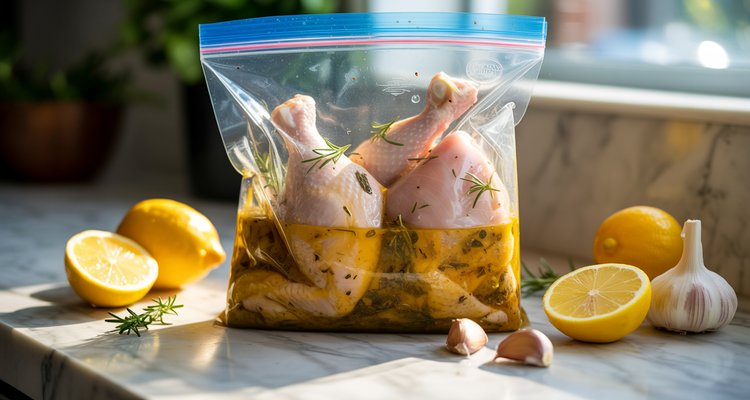
- Combine chicken and marinade. Place chicken in a large resealable zip-lock bag. Pour the marinade over the top, seal the bag, and massage gently through the bag to coat every surface. Remove as much air as possible before sealing.
- Refrigerate – never marinate at room temperature. Place the sealed bag flat in the refrigerator. Marinating at room temperature creates a food safety risk. Cold marinating is safe and effective.
- Remove and pat dry before cooking. Take the chicken out of the refrigerator 20-30 minutes before cooking. Remove from the bag, letting excess marinade drip off, then pat dry with paper towels. This step is critical for getting good sear marks and preventing steaming.
Using a Zip-Lock Bag vs. a Bowl
Both work. The zip-lock bag is generally preferred for three reasons: it requires less marinade to fully coat the chicken (the bag holds everything snug against the meat), cleanup is easier, and you can massage the marinade through the plastic without touching raw chicken. If you use a bowl, make sure every piece of chicken is fully submerged. Use a glass or ceramic bowl – never reactive metals like aluminum or copper, which can interact with acidic marinades and impart a metallic taste.
How Long to Marinate Chicken
The answer depends on the cut. The general principle: more surface area and less fat means the marinade works faster. Bone-in pieces with thick muscle need more time than boneless, thin cuts.
| Cut | Minimum | Optimal | Maximum |
|---|---|---|---|
| Chicken breast (boneless) | 30 minutes | 2-6 hours | 24 hours |
| Chicken thighs (boneless) | 30 minutes | 4-8 hours | 24 hours |
| Chicken thighs (bone-in) | 1 hour | 8-12 hours | 24 hours |
| Drumsticks | 1 hour | 8-12 hours | 24 hours |
| Whole chicken | 4 hours | 12-24 hours | 24 hours |
| Chicken tenders / strips | 15 minutes | 30 min-2 hours | 4 hours |
Can You Marinate Chicken Overnight?
Yes – overnight marinating (6-12 hours) is one of the best approaches for bone-in cuts like thighs, drumsticks, and whole chicken. The extended time allows the marinade to penetrate deeper into the muscle. The firm limit is 24 hours. Beyond that, the acid in most marinades begins to denature the surface proteins too aggressively, turning the exterior of the chicken mushy and pasty. This is especially true of high-acid marinades with citrus juice or vinegar. Oil-based marinades with milder acids can go slightly longer, but 24 hours is the safe ceiling for any marinade.
Quick Marinating Tricks (Under 30 Minutes)
Short on time? These methods help the marinade penetrate faster:
- Score the meat. Use a sharp knife to make shallow slashes (1/4 inch deep) across the thickest parts of the chicken. This creates more surface area for the marinade to enter.
- Pound to even thickness. A thinner, more uniform piece of chicken not only marinates faster but cooks more evenly on the grill.
- Use a more assertive marinade. Slightly higher salt and acid content works faster. Add an extra tablespoon of lemon juice or increase salt to push flavor in more quickly.
- Warm the marinade very slightly. A lukewarm (not hot) marinade accelerates penetration. Heat it briefly in a small saucepan – not to cooking temperature, just slightly above room temperature – before adding the cold chicken.
Marinating Chicken for the Grill
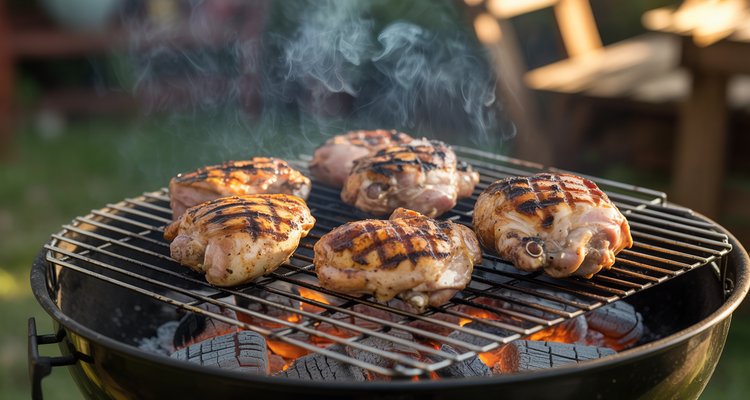 Marinades matter even more on the grill than in the oven. High, direct heat is the enemy of lean chicken – it drives out moisture fast. A well-marinated chicken has the salt-brine layer and the oil coating working together to slow that moisture loss and create the caramelized crust you’re after. For grilling, a few extra rules apply:
- Pat the chicken dry before it hits the grates. Wet chicken steams instead of sears. Patting dry removes the surface moisture from the marinade, leaving the flavor compounds behind while allowing the surface to char properly.
- Watch sugar content carefully. Marinades with honey, brown sugar, or sweet sauces are delicious – but sugar burns at high heat, especially over direct charcoal. On a charcoal grill, move sugary-marinated chicken to the indirect zone after the initial sear to finish cooking without blackening. On a gas grill, use medium heat rather than full blast.
- Let the chicken come to room temperature. Pull it from the refrigerator 20-30 minutes before grilling. Cold chicken placed over high heat cooks unevenly – the outside chars while the inside stays undercooked.
- Oil the grates, not just the chicken. Even with an oil-based marinade, brush the grill grates with a high-smoke-point oil (like avocado or canola) immediately before placing the chicken to prevent sticking.
For detailed guidance on smoking chicken to complement your marinade, see our guides on smoked chicken thighs and smoked chicken breast.
BBQ-Specific Marinade Flavor Profiles
These five profiles cover the most popular BBQ grilling scenarios. Each is built on the acid-fat-salt-aromatic framework and optimized for high-heat cooking.
- Smoke and char: Smoked paprika, chipotle in adobo, a splash of apple cider vinegar, olive oil, garlic, brown sugar (light hand), kosher salt. Inspired by traditional BBQ rubs – this brings the smokehouse indoors.
- Sweet heat: Honey, sriracha, soy sauce, rice vinegar, sesame oil, ginger, garlic. The honey caramelizes beautifully on the grill – use indirect heat for the final few minutes to prevent burning.
- Citrus herb: Lemon juice, olive oil, garlic, fresh rosemary and thyme, Dijon mustard, salt and pepper. Clean, bright, and versatile – works equally well on the grill or in the oven.
- Classic Southern buttermilk: Buttermilk, hot sauce, garlic powder, onion powder, salt, black pepper, a pinch of cayenne. The buttermilk acid is gentle, making this ideal for longer marinating (4-12 hours). It creates an exceptionally juicy result on the grill.
- Asian-inspired: Soy sauce, rice vinegar, sesame oil, fresh ginger, garlic, a small amount of honey, chili flakes. Bold and complex – cut back on the sesame oil if grilling over high heat.
Marinating Chicken Breast vs. Thighs
These two cuts behave differently under the same marinade, and understanding why helps you avoid the most common grilling mistake. Chicken breast is lean and has very little fat to insulate it from heat. Key rules for breast:
- Use a gentler acid – yogurt, buttermilk, or light citrus
- Keep marinating time to 2-6 hours maximum
- Pound to even thickness before marinating so it cooks evenly
- A simple salt-oil-acid marinade is all you need – don’t overthink it
Chicken thighs have significantly more fat and connective tissue, which makes them far more forgiving. Key rules for thighs:
- Can handle longer marinating times – up to 24 hours
- Tolerate stronger acids and bolder flavors
- Handle high direct heat without drying out
- Much harder to overcook – the preferred cut for beginners
If you’re smoking rather than grilling, the calculus shifts – marinated thighs at 250°F for 90 minutes produce some of the juiciest, most flavorful chicken you’ll ever eat. See our full guide to smoked chicken thighs for timing and temperature details.
Marinade Ingredients: What to Use and What to Avoid
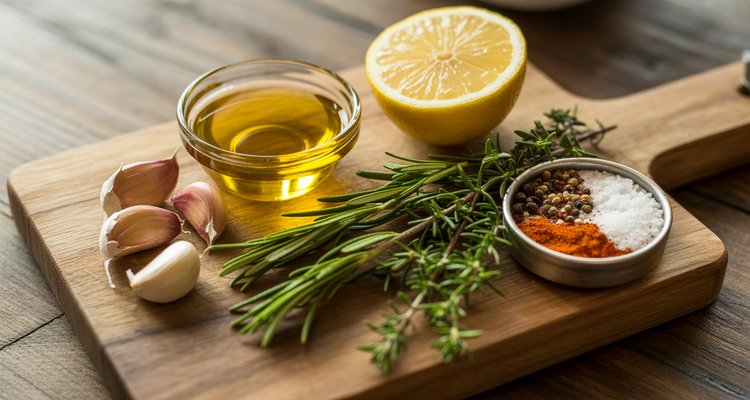 What to use: Any acid (citrus, vinegar, dairy), any cooking oil, salt in any form (kosher salt, soy sauce, Worcestershire), aromatics (garlic, shallots, ginger), fresh or dried herbs, spices, heat elements (chili, hot sauce), and sweeteners in moderation. What to avoid:
- Raw onion in large amounts – raw onion can make chicken smell off if left marinating for more than a few hours. Use onion powder instead, or add raw onion only to short-marinate applications.
- Excessive enzyme-based ingredients – fresh pineapple, kiwi, and papaya contain proteolytic enzymes (bromelain, papain) that break down protein aggressively. These will turn the surface of your chicken mushy even in 30 minutes. Use canned pineapple juice instead (the canning process deactivates the enzyme), and keep contact time short.
- Too much salt – a marinade isn’t a brine. You’re seasoning for flavor, not drawing out and replacing all moisture. Over-salted chicken will be rubbery and overly dense.
Common Chicken Marinade Mistakes to Avoid
- Marinating too long in a high-acid mixture. The acid doesn’t keep tenderizing – it starts degrading the surface proteins beyond the point of return. Mushy, pasty exterior is the result.
- Marinating at room temperature. Any marinating outside the refrigerator (above 40°F) enters the food safety danger zone. This applies even for short marinade times. Always use the refrigerator.
- Skipping the pat-dry step. Wet chicken doesn’t sear – it steams. You lose all the grill marks and caramelization that make marinated chicken worth the effort.
- Reusing the marinade as a sauce. Uncooked marinade that touched raw chicken contains raw meat bacteria. Either discard it after use or boil it vigorously for at least 3 minutes before using as a basting sauce or serving alongside the cooked chicken.
- Using too much acid. More acid doesn’t mean more tenderizing – it means more mushiness. The optimal acid level for most marinades is 2-4 tablespoons per pound of chicken, not a full cup of lemon juice.
- Skipping salt. A marinade without salt won’t penetrate the meat. Salt is what drives the other flavors below the surface. If your marinated chicken tastes bland, add more salt, not more herbs.
- Using a reactive metal bowl. Aluminum and copper react with acidic ingredients, producing a metallic off-flavor. Use glass, ceramic, or food-grade plastic containers.
- Not making enough marinade. The chicken needs to be fully coated. As a general rule, use 1/2 cup of marinade per pound of chicken. Scale up for larger batches.
Food Safety When Marinating Chicken
These rules aren’t optional. Raw chicken is one of the more common sources of foodborne illness, and the marinating process introduces risks that don’t exist with dry seasoning.
- Always marinate in the refrigerator (40°F or below). Never on the counter, even if the total marinating time is short.
- Never reuse raw marinade. If you want a basting liquid or dipping sauce, set aside a separate portion of the marinade before adding the raw chicken. That untouched portion is safe to use on the cooked chicken.
- Use sealed containers. Open plates or uncovered bowls let raw chicken come in contact with other refrigerator contents. Use sealed zip-lock bags or airtight containers.
- Cook chicken to 165°F internal temperature. This applies regardless of whether it was marinated or not. Use a reliable instant-read thermometer and check the thickest part of the meat.
Can You Freeze Marinated Chicken?
Yes – and it’s one of the most practical meal prep moves available. Raw chicken and marinade can go directly into the freezer and will keep for up to 3 months. The chicken marinates as it thaws in the refrigerator, so you get the full benefit without any extra time investment. To freeze marinated chicken:
- Place the raw chicken and marinade in a zip-lock freezer bag
- Remove as much air as possible and seal
- Lay flat in the freezer
- Label with the cut, marinade type, and date
- Thaw overnight in the refrigerator – never at room temperature or in warm water
Marinated chicken that has been thawed should be cooked within 24 hours and should not be refrozen.
Frequently Asked Questions
How long should you marinate chicken?
For most cuts, 2-6 hours is the sweet spot. Chicken tenders can go as short as 15-30 minutes. Bone-in thighs, drumsticks, and whole chicken benefit from 8-12 hours or overnight. Never exceed 24 hours for any cut – beyond that, the acid breaks down the surface proteins too aggressively, resulting in a mushy texture.
Can you marinate chicken for too long?
Yes. Over-marinating – especially in high-acid mixtures – causes the exterior of the chicken to become mushy and pasty. The acid has denatured too much surface protein. The chicken will still cook, but the texture will be unpleasant and it will fall apart on the grill. Stick to the time ranges in the table above.
Do you rinse marinade off chicken before cooking?
No – and don’t. Rinsing raw chicken spreads bacteria to your sink and surrounding surfaces (a known food safety risk). Instead, remove the chicken from the marinade, let the excess drip off, and pat dry with paper towels. That’s all you need.
Can you marinate frozen chicken?
You can marinate chicken as it thaws in the refrigerator. Place the frozen chicken in a bag with the marinade and thaw overnight – the chicken marinates as it defrosts. Do not marinate frozen solid chicken, as the ice prevents any marinade penetration. And never thaw chicken on the counter to marinate faster.
What is the best container for marinating chicken?
A large resealable zip-lock bag is the most practical option. It requires less marinade to fully coat the chicken, cleanup is simple, and you can massage the marinade through the bag without direct contact with raw meat. For bowls, use glass or ceramic – never aluminum or copper, which react with acidic marinades.
Does marinating chicken actually tenderize it?
Partially. Marinades tenderize the surface of the chicken by breaking down proteins with acid. They do not significantly tenderize the interior of thick cuts the way a long braise does. For deep tenderness throughout a thick chicken breast, mechanical tenderizing (pounding to even thickness) is more effective than relying solely on the marinade.
What’s the difference between marinating and brining chicken?
A brine is a salt-water solution (sometimes with sugar and aromatics) that you submerge the chicken in for an extended period – typically 1-8 hours. Its primary goal is moisture retention: the salt drives water into the muscle fibers through osmosis. A marinade adds flavor and surface tenderization, but doesn’t penetrate as deeply as a brine. For maximum juiciness, some pitmasters dry-brine first, then apply a marinade. Wet brining and marinating simultaneously is also common – particularly the buttermilk marinade, which functions as both.
Can you marinate chicken in just olive oil?
You can coat chicken in olive oil, but it’s not technically a marinade without an acid and salt. Oil alone will keep the surface moist and carry any flavors you add, but it won’t tenderize or penetrate the meat. For a proper marinade, add at minimum an acid (even a tablespoon of lemon juice or vinegar) and salt.
How much marinade do you need per pound of chicken?
Use approximately 1/2 cup of marinade per pound of chicken as a starting point. This is enough to fully coat the chicken without waste. If you’re using a zip-lock bag, you may need slightly less since the bag holds the marinade snug against the meat. If using a bowl, you may need more to fully submerge all pieces.
Is it safe to use leftover marinade as a sauce?
Not without cooking it first. Raw marinade that contacted raw chicken contains raw meat bacteria. You have two safe options:
- Set aside a separate portion of the marinade before adding the chicken – that untouched portion can be served directly as a sauce.
- Bring the used marinade to a full boil in a saucepan and boil for at least 3 minutes to kill bacteria, then use as a basting sauce.
Never serve used, uncooked marinade directly.
Final Tips for Perfect Marinated Chicken
A marinade doesn’t need to be complicated to work. The fundamentals – acid, fat, salt, and flavor builders – handle the science. The rest is creative expression. Keep these principles in mind every time:
- Refrigerate always, no exceptions
- Pat dry before cooking for real sear and grill marks
- Match marinating time to the cut – don’t over-marinate lean breast, don’t under-marinate bone-in thighs
- Set aside unused marinade before the chicken ever touches it if you want a sauce
- Let the chicken rest for 5 minutes off the heat before cutting – the juices redistribute and the final result is noticeably better
For more BBQ technique guides, check out our article on how to marinate steak, which covers the same acid-fat-salt principles applied to beef.