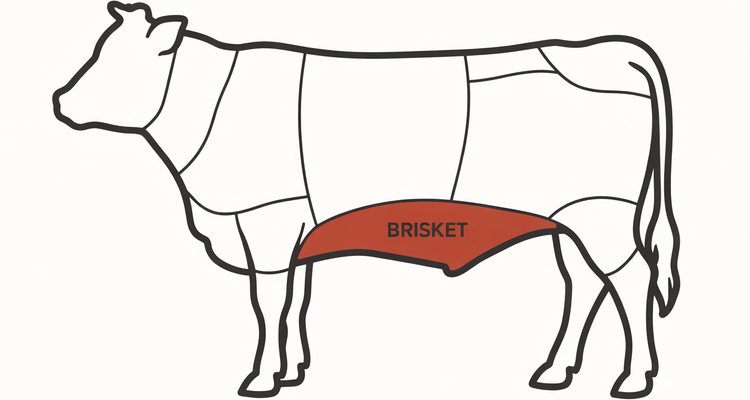
 Brisket comes from the lower chest of the cow, sitting between the front legs. It’s one of eight beef primal cuts recognized by the USDA and consists of two overlapping pectoral muscles. These hard-working chest muscles carry roughly 60% of a steer’s body weight, which is exactly why beef brisket is packed with collagen and needs low-and-slow cooking to turn tender.
Helpful gear for this cook:
- Spice Guru BBQ rub set — gives you several BBQ seasoning options for the cook
- TempPro TP20 500FT Wireless Meat Thermometer with Dual Meat — helps verify doneness without guessing
- MEATER Plus: Smart Bluetooth Wireless Meat Thermometer Digital — helps verify doneness without guessing
Where Is Brisket Located on a Cow?
The brisket primal sits on the lower front portion of the animal, directly below the chuck (shoulder) and above the shank (foreleg). Picture the cow’s chest area between its two front legs – that’s where you’ll find the brisket. Every cow has two briskets, one on each side of the chest. They’re mirror images of each other, made up of the same muscles and connective tissue. A single side typically weighs 10-20 pounds before trimming. The USDA classifies brisket as one of the eight primal cuts of beef under the Institutional Meat Purchase Specifications (IMPS). Brisket carries the IMPS number 120, with two sub-primals: 120A for the flat and 120B for the point.
Brisket Among the Eight Primal Cuts
Understanding where brisket fits among all beef primals helps explain why it cooks so differently from a ribeye or tenderloin.
| Primal Cut | Location on Cow | Common Sub-Cuts | Best Cooking Method |
|---|---|---|---|
| Brisket | Lower chest | Flat, Point, Packer | Smoking, Braising |
| Chuck | Shoulder/Neck | Chuck Roast, Flat Iron | Braising, Roasting |
| Rib | Upper back (ribs 6-12) | Ribeye, Prime Rib | Grilling, Roasting |
| Short Loin | Upper mid-back | T-Bone, Strip Steak | Grilling, Pan-Searing |
| Sirloin | Lower back/hip | Top Sirloin, Tri-Tip | Grilling, Roasting |
| Round | Rear leg | Eye of Round, Rump Roast | Braising, Roasting |
| Short Plate | Belly (below ribs) | Short Ribs, Skirt Steak | Braising, Grilling |
| Flank | Lower belly | Flank Steak | Grilling, Stir-Fry |
Notice the pattern: cuts from the chest, shoulder, and legs – areas with heavy muscle use – need slow cooking methods. Cuts from the loin and rib – muscles that do less work – can handle high-heat grilling.
The Anatomy of a Brisket
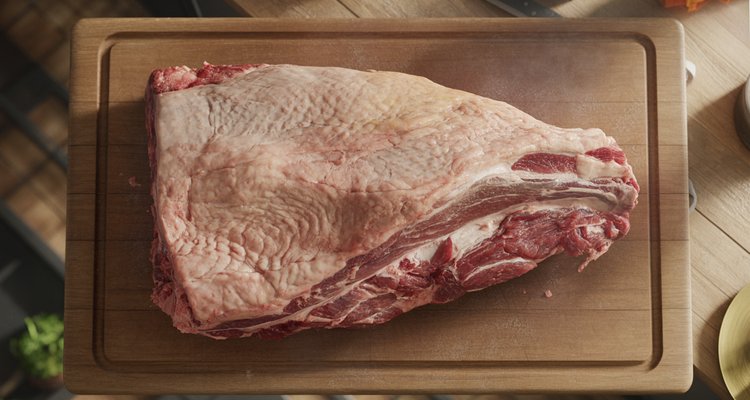
A whole brisket consists of two distinct pectoral muscles layered on top of each other, separated by a seam of fat. Cattle don’t have collarbones, so these pectoral muscles bear the full weight of supporting the animal’s front end – roughly 60% of its total body weight. That constant load-bearing creates dense networks of collagen and connective tissue throughout both muscles. It’s this collagen that makes raw brisket tough, and it’s also what gives properly cooked brisket its rich, silky texture.
The Flat (First Cut)
The flat is the larger, leaner portion of the brisket. It’s formed by the pectoralis profundus – the deep pectoral muscle that sits closer to the ribcage. Key characteristics of the flat:
- Rectangular shape with relatively uniform thickness
- Leaner meat with less intramuscular fat
- Weighs 6-10 lbs when separated from the point
- Muscle fibers run in one consistent direction
- Ideal for slicing into uniform, presentation-quality pieces
The flat’s lean profile makes it trickier to cook. Without enough fat to keep it moist, it can dry out if you push the internal temperature too high or cook it too fast.
The Point (Second Cut)
The point sits on top of the flat and is formed by the pectoralis superficialis – the superficial pectoral muscle. It’s the fattier, more irregularly shaped portion of the brisket. Key characteristics of the point:
- Thicker and more triangular in shape
- Heavy marbling with abundant intramuscular fat
- Richer, more intense beef flavor
- Muscle fibers run at a different angle than the flat
- The source of burnt ends – cubed and re-smoked for extra bark
Because of its higher fat content, the point is more forgiving during cooking. That extra marbling bastes the meat from within, keeping it moist even if your timing isn’t perfect.
What Is the Deckle?
The deckle is one of the most misunderstood terms in brisket butchery. Technically, it refers to the thick layer of fat, connective tissue, and intercostal meat that sits between the flat and the point. Many people incorrectly call the entire point “the deckle.” In reality, the deckle is specifically the seam – that band of hard fat and tissue you can see when you separate the two muscles. It plays an important role during cooking by slowly rendering and adding moisture to both muscles.
Brisket vs. Neighboring Beef Cuts
Brisket shares borders with three other primal areas on the cow. Understanding these neighbors explains why brisket behaves so differently in the kitchen.
| Feature | Brisket | Chuck | Short Plate | Shank |
|---|---|---|---|---|
| Location | Lower chest | Shoulder/Neck | Belly below ribs | Foreleg |
| Fat Content | Moderate-High | Moderate | High | Very Low |
| Texture | Tough, collagen-rich | Tough, well-marbled | Fatty, chewy | Very tough, sinewy |
| Best Method | Smoking, Braising | Pot Roast, Grinding | Braising, Grilling | Stewing, Osso Buco |
| Typical Use | BBQ, Corned Beef | Roasts, Burgers | Short Ribs, Fajitas | Soups, Stocks |
Helpful gear for this cook:
- Temperature control: Bryco Goods pink butcher paper wraps barbecue without trapping as much steam as foil.
- Handling: AMMZO digital meat thermometer checks doneness without guessing.
- Prep: Cutluxe butcher knife handles trimming and slicing jobs cleanly.
Why Brisket Needs Low-and-Slow Cooking
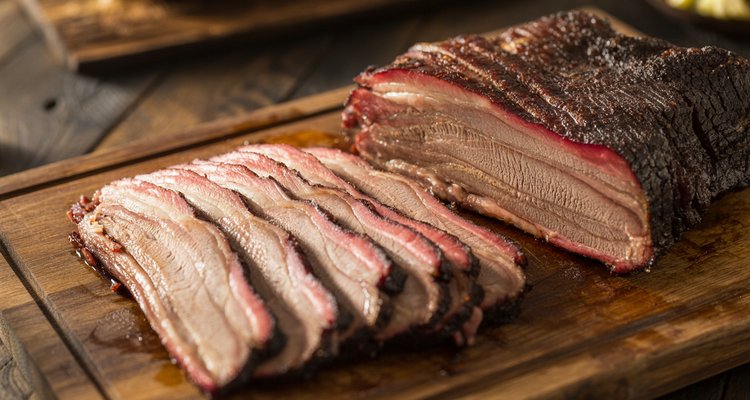
Everything about brisket’s anatomy points to one cooking method: long, slow heat. The pectoral muscles spend a cow’s entire life bearing weight and moving, which builds thick sheets of collagen throughout the meat. That collagen is what makes raw brisket feel tough and chewy. But here’s the key: collagen isn’t a flaw. It’s the source of brisket’s incredible flavor and texture – if you cook it correctly.
What Happens to Collagen During Cooking
Collagen has a triple-helix molecular structure that begins to unwind at around 160°F. Given enough time at sustained heat, those collagen fibers convert into gelatin – the same substance that gives bone broth its silky body. This conversion doesn’t happen quickly. The process requires hours of sustained temperatures between 200-275°F. That’s why a 12-pound packer brisket takes 10-14 hours to smoke. Here’s what happens at each stage:
- 130-140°F – Fat begins to soften and render slowly
- 150-170°F – The “stall” hits as moisture evaporates from the surface, cooling the meat and stalling temperature rise
- 170-190°F – Collagen converts to gelatin at an accelerating rate
- 195-205°F – The target zone where connective tissue is fully broken down and the brisket becomes probe-tender
Why does high-heat grilling fail on brisket? The exterior overcooks and dries out long before the interior collagen has time to convert. You’d end up with a charred outside and a tough, chewy center. The fat cap plays a critical role too. During smoking, it slowly renders and bastes the exterior surface. Meanwhile, intramuscular marbling – especially abundant in the point – melts from within, keeping the meat moist throughout the long cook.
What Is a Packer Brisket?
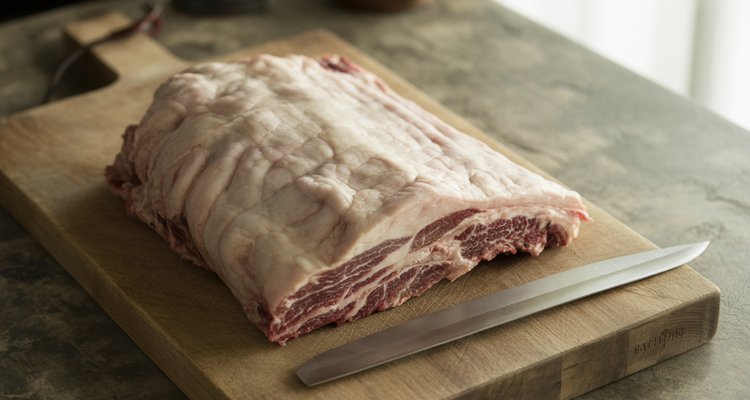
A packer brisket is the whole, untrimmed cut containing both the flat and the point, plus the full fat cap. It’s exactly how the brisket comes off the carcass after the initial primal breakdown at the packing plant – hence the name. Whole packers typically weigh between 10-20 lbs, with size varying by the animal’s breed, age, and USDA grade. Prime-grade packers tend to run larger (14-20 lbs) because Prime cattle are fed longer, while Select-grade briskets are often smaller (10-14 lbs). Competition pitmasters almost always cook whole packers. The point’s fat keeps the flat moist during the long cook, and you get the full range of textures – lean slices from the flat, rich burnt ends from the point. Expect 30-40% weight loss during cooking from moisture evaporation and fat rendering. A 15-pound raw packer yields roughly 9-10 pounds of cooked meat. Plan on about half a pound of cooked brisket per person.
| Feature | Packer (Whole) | Flat Only | Point Only |
|---|---|---|---|
| Weight Range | 10-20 lbs | 6-10 lbs | 4-8 lbs |
| Fat Content | High (cap + seam + marbling) | Low-Moderate | High (heavy marbling) |
| Best Use | Smoking whole, Competition | Slicing, Corned Beef | Burnt Ends, Chopped BBQ |
| Difficulty Level | Advanced | Intermediate | Intermediate |
| Cook Time (225°F) | 10-18 hours | 6-10 hours | 6-8 hours |
| Flavor Profile | Full range (lean + rich) | Clean, beefy | Rich, buttery |
Frequently Asked Questions
Is Brisket a Cheap Cut of Beef?
Historically, brisket was one of the cheapest beef cuts because butchers considered it too tough for most cooking methods. The BBQ boom changed that. Today it’s a mid-range cut, typically running see current price-see current price per pound for Choice grade. It’s still significantly cheaper per pound than premium steaks like ribeye or tenderloin, and a whole packer brisket offers the best value.
Why Is Brisket So Tough?
Brisket comes from the chest muscles that support roughly 60% of a cow’s body weight every day. This constant use builds dense collagen and connective tissue throughout the meat. Raw brisket is one of the toughest beef cuts you can buy. Low-and-slow cooking converts that collagen into gelatin, which is what gives properly smoked brisket its tender, melt-in-your-mouth texture.
Is Brisket the Same as Corned Beef?
Corned beef is brisket – but not all brisket is corned beef. Corned beef is made by salt-curing (brining) a beef brisket flat in a solution with large salt grains called “corns.” Pastrami is also made from brisket, but it’s brined, coated in a spice rub, and then smoked. Same cut, different preparations.
What Is the Best Way to Cook Brisket?
Smoking is the most popular method – set your smoker to 225-275°F and plan for roughly 1-1.5 hours per pound. For oven preparations, braising at 300°F in a covered pan with liquid works well, especially for brisket flats. The key with any method is sustained low heat over many hours to fully convert the collagen into gelatin.
Can You Grill Brisket Like a Steak?
Not with a whole brisket. The dense connective tissue needs hours of low heat to break down, and high-heat grilling would char the outside before the interior collagen converts. However, thin-sliced brisket flat (about 1/4 inch thick) can be grilled quickly over high heat for dishes like Korean BBQ or fajitas. The thin cut bypasses the collagen problem.
What Is Brisket Called at the Grocery Store?
You’ll usually see it labeled “Beef Brisket Flat” or “Beef Brisket Point.” Some stores use “First Cut” for the flat and “Second Cut” for the point. Whole packer briskets aren’t always in the display case – ask the butcher, as they often have them in the back. Costco and Sam’s Club regularly stock whole packers in the meat section.
How Many Briskets Does a Cow Have?
Every cow has two briskets – one on each side of the chest. They’re mirror images of each other, made up of the same pectoral muscles and connective tissue. When you buy a “whole brisket” or packer, you’re getting one side.
What Is the Difference Between Brisket Flat and Point?
The flat (pectoralis profundus) is the larger, leaner section ideal for slicing. The point (pectoralis superficialis) is the smaller, fattier section used for burnt ends and chopped BBQ. They overlap with a fat seam (deckle) between them, and their grain runs in different directions.
Is Brisket Similar to Tri-Tip?
They’re completely different cuts from different parts of the cow. Brisket comes from the chest (front of the animal), while tri-tip comes from the bottom sirloin (rear). Tri-tip is much smaller (2-3 lbs), leaner, and cooks in about 30-45 minutes over medium heat. Brisket needs 10-18 hours of low-and-slow cooking.
What Does the USDA Classify Brisket As?
The USDA classifies brisket as one of the eight primal cuts of beef. Under the Institutional Meat Purchase Specifications (IMPS), the whole brisket is number 120. The flat sub-primal is 120A, and the point sub-primal is 120B. This standardized numbering system is used by packers, butchers, and food service operations nationwide.