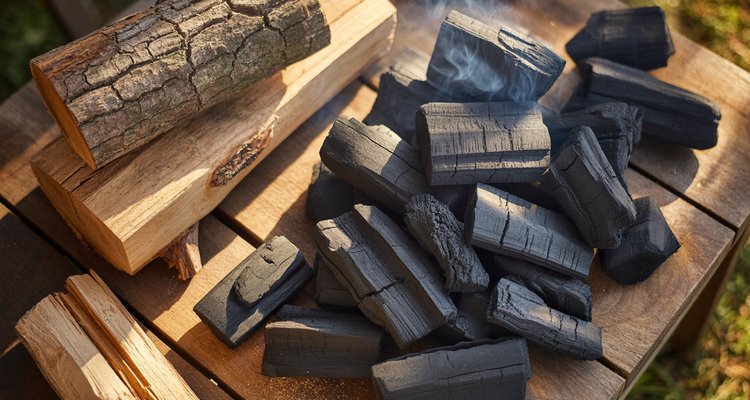
You just spent $25 on a bag of lump charcoal that burned through in two cooks. If that sounds familiar, learning how to make charcoal at home could save you serious money. This guide explains the science behind carbonization, walks through four proven methods, and covers the safety and legal issues most tutorials skip entirely.
Helpful gear for this cook:
- Temperature control: Grill Armor extra-long heat-resistant gloves protects your hands around hot grates, pans, and smoker parts.
- Handling: ThermoMaven bristle-free grill brush cleans grates without leaving wire bristles behind.
- Prep: AMMZO digital meat thermometer checks doneness without guessing.
What Is Charcoal and How Is It Made?
Charcoal is nearly pure carbon. It’s created through a process called pyrolysis, which means heating wood in a low-oxygen environment. Without enough oxygen for full combustion, the wood doesn’t burn to ash. Instead, heat drives off water, sap, volatile organic compounds, hydrogen, and methane, leaving behind a lightweight, energy-dense fuel.
Pyrolysis begins around 300°F (150°C) when moisture starts escaping. Full carbonization happens between 500-900°F (260-480°C). At this stage, the wood’s complex organic compounds break down completely. The finished charcoal weighs roughly 25% of the original wood but packs more energy per pound.
This guide focuses on making natural lump charcoal — pure hardwood pieces with no binders, fillers, or chemical additives. That’s what separates it from the pressed briquettes you’ll find at most hardware stores.
Best Wood for Making Charcoal
Hardwoods produce the best charcoal. Their dense cell structure creates longer-burning, hotter coals compared to softwoods. The type of wood you choose directly affects burn time, heat output, and flavor when grilling.
| Wood Type | Density | Burn Time | Best For | Notes |
|---|---|---|---|---|
| Oak | High | Long | All-purpose grilling, smoking | Most popular choice, widely available |
| Hickory | High | Long | Smoking, high-heat searing | Strong smoky flavor, burns very hot |
| Maple | Medium-High | Medium-Long | Poultry, vegetables | Mild, slightly sweet flavor |
| Cherry | Medium | Medium | Pork, poultry | Fruity aroma, excellent for smoking |
| Beech | High | Long | High-heat cooking | Clean burn, popular in Europe |
| Apple | Medium | Medium | Pork, poultry, fish | Sweet, delicate smoke flavor |
Woods to avoid: Pine, fir, spruce, and other softwoods contain high levels of resin. They burn too fast, produce excessive smoke, and leave behind a sticky residue. Never use pressure-treated, painted, or chemically processed lumber — burning these releases toxic compounds.
When you make charcoal from wood, preparation matters. Cut your wood into uniform pieces roughly 3-6 inches long. The wood should be seasoned for at least 6-12 months. Green or freshly cut wood contains too much moisture, which slows carbonization and produces excessive smoke.
Charcoal-Making Methods Compared
There are four primary ways to make charcoal at home. Each method balances cost, skill level, and charcoal quality differently.
| Method | Equipment | Time | Skill Level | Quality | Best For |
|---|---|---|---|---|---|
| Earth Pit | Shovel, metal lid | 24-48 hours | Beginner | Variable | Survival, one-time use |
| Metal Drum | 55-gallon drum, lid | 4-8 hours + cooling | Beginner | Good | Home use, regular batches |
| Two-Barrel Retort | 2 drums, paint can | 7-8 hours + cooling | Intermediate | Very Good | Serious hobbyists |
| Brick/Steel Kiln | Permanent structure | 10-24 hours | Advanced | Excellent | Regular production |
Earth Pit Method
The oldest charcoal-making technique requires nothing more than a shovel and a metal lid. Dig a pit at least 3 feet deep and slightly narrower than your lid. Fill it with seasoned hardwood, light the top, and let it burn until a thick bed of glowing coals forms. Cover tightly with the metal lid and seal the edges with soil to cut off oxygen.
Leave the pit sealed for 24-48 hours. When the pit stops producing smoke and has cooled completely, uncover your charcoal. This method is simple but inconsistent — airflow is hard to control underground, and you’ll likely get a mix of fully carbonized and partially converted pieces.
Metal Drum Method
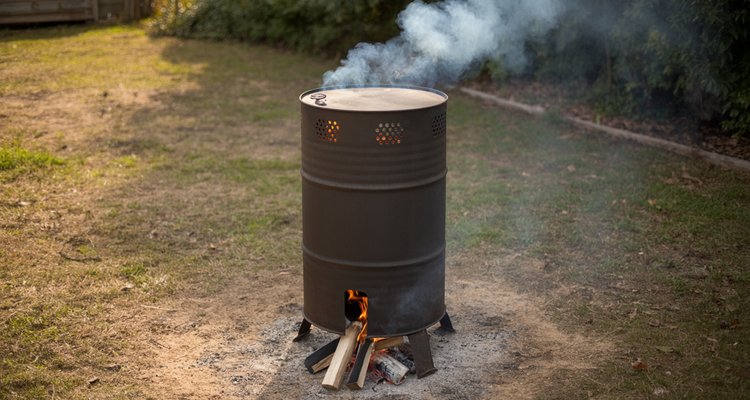
This is the most popular home method. You’ll need a clean 55-gallon steel drum with a tight-fitting lid. Make sure the drum has never held chemicals, oils, or hazardous materials.
Step-by-step process:
- Pack seasoned hardwood tightly into the drum, leaving small gaps for gas to escape.
- Place the lid loosely on top to allow gases to vent during carbonization.
- Build a fire around the outside of the drum using scrap wood. Keep it burning steadily for 4-6 hours.
- Watch the smoke — it starts thick and white (moisture), turns yellow-gray (volatiles), then thins to near-clear.
- When smoke nearly stops, seal the lid tightly to cut off all oxygen.
- Let the drum cool completely — at least 12-24 hours. Never open a hot drum.
- Remove your finished lump charcoal and store in a dry, airtight container.
A tightly packed 55-gallon drum of oak will produce roughly 15-20 pounds of finished charcoal — about 25% of the original wood weight.
Two-Barrel Retort Method
This method produces cleaner, more consistent charcoal. Place a smaller sealed container (the crucible) — like a 5-gallon metal paint can — inside a larger 55-gallon drum. Pack the crucible tightly with debarked hardwood cut into 1-3 inch pieces. Drill a small hole in the crucible lid for venting gases.
Build a hot fire inside the larger barrel around and over the crucible. Maintain high heat (500°F+ inside the crucible) for 7-8 hours. You’ll see steam first, then volatile gases venting from the hole. Eventually, a small flame appears at the vent as hydrogen and oxygen burn off. When that flame goes out, the charcoal is done.
Remove the crucible carefully with long tongs and immediately cover the vent hole with a damp rag. This method reburns volatile wood gases as secondary fuel, producing less smoke than other approaches.
Brick or Steel Kiln
For regular charcoal production, a permanent or semi-permanent kiln is worth the investment. Brick kilns allow precise airflow control through strategically placed vents and chimneys. Steel kilns can process even poor-quality wood into decent charcoal.
These setups produce the most consistent results but require significant space, materials, and expertise. They’re best suited for homesteaders or anyone making charcoal regularly throughout the year.
- Heat protection: Grill Heat Aid BBQ gloves help protect your hands around hot metal and coals.
- Temperature check: AMMZO instant read thermometer is useful for general grill and cooking checks after your charcoal is ready.
Safety and Legal Considerations
Making charcoal involves sustained open fire and produces significant smoke. Treat this with the same seriousness you’d give any large outdoor burn.
Fire safety essentials:
- Work in a cleared area at least 30 feet from buildings, trees, and dry vegetation
- Keep a charged garden hose or several buckets of water within arm’s reach
- Wear heat-resistant gloves, long sleeves, and eye protection
- Never leave an active burn unattended
- Avoid windy days — sparks can travel surprising distances
Smoke and air quality: The carbonization process releases carbon monoxide and volatile organic compounds. Always work outdoors in a well-ventilated area. Be mindful of neighbors — smoke can drift far on calm days.
Critical safety rule: Never open a hot drum or pit. Sudden oxygen exposure can cause the charcoal to flash-ignite violently. Wait until everything has cooled completely — at least 12-24 hours after sealing.
How to Tell When Your Charcoal Is Done
Reading the smoke is the most reliable indicator during the burn:
- White smoke (early stage): Steam and moisture escaping from the wood.
- Thick yellow-gray smoke (middle stage): Volatile organic compounds burning off — this is active carbonization.
- Thin blue or clear smoke (late stage): Most volatiles have been released. Carbonization is nearly complete.
- No visible smoke: The process is done. Time to seal and cool.
Other signs include the wood stopping its crackling sounds and the overall volume in the drum shrinking by half or more. Finished charcoal weighs roughly 25% of the original wood.
What Good Lump Charcoal Should Look Like
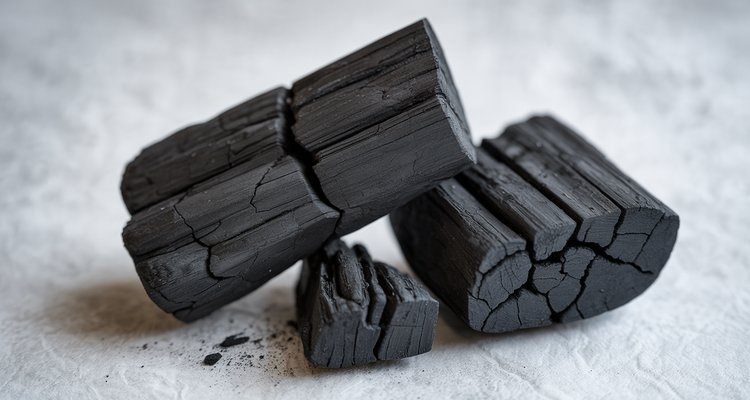
After all that work, here’s how to judge your results:
- Color: Jet black throughout. No brown or tan centers — those indicate incomplete carbonization.
- Weight: Surprisingly light relative to its size. If it feels heavy like wood, it isn’t fully converted.
- Texture: Clean, sharp breaks along natural grain lines. Should not crumble to powder in your hand.
- Sound: Two good pieces tapped together produce a distinctive metallic ring, almost like ceramic.
- Appearance: No visible bark, unconverted wood, or ashy white patches.
If your charcoal meets these criteria, it will burn hot, clean, and with minimal smoke — exactly what you want for grilling in a kamado grill or any charcoal setup.
Common Charcoal-Making Faults and Fixes
Even experienced charcoal makers hit problems. Here are the most common faults and how to fix them.
| Problem | Cause | Fix |
|---|---|---|
| Brown or tan centers | Insufficient heat or time | Maintain higher fire temperature, extend burn time by 1-2 hours |
| Crumbly, ashy charcoal | Too much oxygen — wood burned to ash | Seal the drum more tightly, reduce vent holes |
| Excessive smoke when grilling | Incomplete carbonization or residual moisture | Ensure full burn cycle completes before sealing |
| Low heat output | Used softwood instead of hardwood | Switch to dense hardwoods like oak or hickory |
| Charcoal reignites when uncovered | Opened too early while still hot | Wait a full 24-48 hours before opening |
| Uneven carbonization | Wood pieces were different sizes | Cut all pieces to uniform 3-6 inch lengths |
Is Making Charcoal at Home Worth It?
A 20-pound bag of quality lump charcoal costs $20-$35 at retail. If you have access to free or cheap seasoned hardwood, making your own charcoal can cut that cost to nearly zero — just your time and a one-time drum purchase of $20-$40.
A tightly packed 55-gallon drum yields roughly 15-20 pounds of finished lump per batch. That’s one bag’s worth in a single afternoon of active work plus overnight cooling time.
Where homemade wins: You control the wood species, know exactly what’s in your fuel, and avoid the fillers and binders found in many commercial products. If you grill frequently and have access to hardwood, the savings add up fast.
Where buying wins: If you live in an apartment, have limited outdoor space, or only grill a few times per season, quality store-bought lump like Jealous Devil or FOGO is a better use of your time. The convenience factor matters.
From an environmental perspective, charcoal burning produces roughly three times the carbon footprint of gas grilling. However, homemade lump from sustainably managed woodlots or coppiced trees stays within the natural carbon cycle, unlike fossil fuels.
How to Store Homemade Charcoal
Moisture is charcoal’s worst enemy. Store your finished charcoal in a dry, airtight container — a plastic tote with a locking lid, a metal trash can, or any weatherproof vessel. Keep it off the floor in a garage, shed, or covered area.
Properly stored charcoal lasts indefinitely. It won’t expire or lose its heating potential as long as it stays dry. If some pieces get damp, spread them in direct sunlight for a day to dry out. Slightly wet charcoal may crumble, but most of it can be salvaged.
Leftover charcoal dust and fines have uses too. Crushed charcoal (biochar) makes an excellent soil amendment — it improves water retention and adds carbon to garden beds.
Frequently Asked Questions
Can I Make Charcoal in a Barrel?
Yes. A 55-gallon steel drum is the most popular home charcoal-making setup. Pack it with seasoned hardwood, heat it with an external fire for 4-6 hours, seal it tightly when smoke clears, and let it cool for 12-24 hours. The barrel method strikes the best balance between simplicity and charcoal quality.
What Wood Works Best for Making Charcoal?
Dense hardwoods produce the best charcoal. Oak, hickory, maple, and beech are top choices because their tight grain structure creates long-burning, high-heat coals. Avoid softwoods like pine and fir — they contain resin, burn too quickly, and produce lower-quality charcoal.
Why Is My Charcoal Still Smoking?
Smoking during grilling usually means incomplete carbonization. The wood still contains volatile compounds that didn’t fully burn off during the charcoal-making process. Next time, maintain higher heat during the burn and don’t seal the drum until smoke has nearly stopped.
How Long Does It Take to Make Charcoal?
Active burn time ranges from 4-8 hours depending on your method and batch size. The drum method takes 4-6 hours of active fire, followed by 12-24 hours of cooling. The earth pit method requires 24-48 hours total. Plan on a full weekend for your first batch.
Is Homemade Charcoal Better Than Store-Bought?
It depends. Homemade lump charcoal is pure hardwood with zero additives, giving you complete control over quality and flavor. However, premium store-bought brands offer consistency that’s hard to match at home. Homemade charcoal is a clear win on cost if you have free wood access.
Can I Make Charcoal Without a Metal Drum?
Absolutely. The earth pit method requires only a shovel and a metal lid. Dig a pit, fill with wood, burn, cover with soil, and wait 24-48 hours. It’s the oldest charcoal-making technique and works with minimal equipment, though quality is less consistent than drum or retort methods.
What Is the Difference Between Charcoal and Activated Charcoal?
Regular charcoal is wood heated in a low-oxygen environment. Activated charcoal goes through an additional process — treatment with steam or chemicals at extremely high temperatures — that creates millions of tiny pores. This makes activated charcoal useful for water filtration and medical applications, but it’s not the same product you’d use for grilling.
How Much Charcoal Will I Get From a Barrel of Wood?
Expect roughly 25% yield by weight. A 55-gallon drum packed tightly with seasoned oak (about 60-80 pounds of wood) will produce approximately 15-20 pounds of finished charcoal. Volume also shrinks by about half — the wood compresses significantly during carbonization.
Is Making Charcoal Legal?
In most rural areas, yes. However, many cities and suburban municipalities restrict open burning through fire codes and air quality ordinances. Some areas require burn permits. Always check with your local fire department before starting. Burning without authorization can result in fines and liability if a fire spreads.
Can I Use Charcoal Dust for Anything?
Yes. Crushed charcoal (known as biochar) is an excellent soil amendment for gardens. It improves drainage, adds carbon, and helps retain moisture and nutrients. You can also press charcoal dust into homemade briquettes using a simple mold and starch binder. Some crafters use fine charcoal for drawing and sketching.
Learning how to make charcoal from wood is a practical skill that connects you directly to your fuel source. Whether you’re trying to save money, control quality, or simply enjoy the process, the techniques above will get you started safely. Pair your homemade lump with a quality charcoal chimney starter and you’ll be grilling with fuel you made yourself.