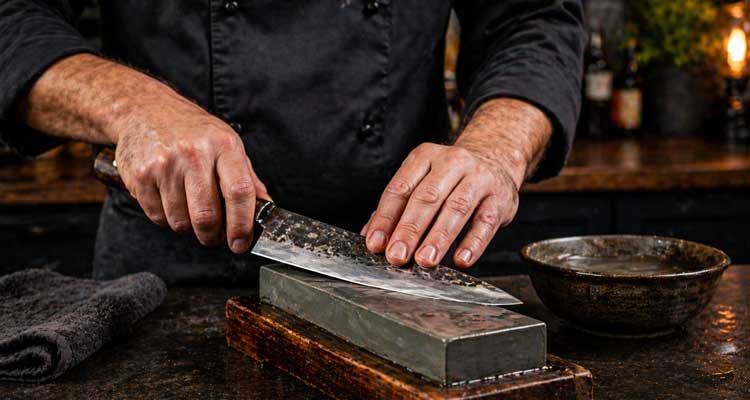
A dull knife is more than an inconvenience—it’s a kitchen hazard. When a blade loses its edge, you end up applying extra force, and that’s exactly when accidents happen. Whether you’re slicing brisket off the bone, breaking down a whole chicken, or prepping vegetables for a backyard cookout, keeping your blades sharp is one of the most impactful upgrades you can make in the kitchen. Finding the best knife sharpener for your needs means faster, safer, and more enjoyable work at the cutting board every single day. In this guide, we cover the full spectrum of knife sharpeners: electric models for those who want speed and convenience, traditional whetstone sets for purists who enjoy the process, honing rods for daily edge maintenance, and accessories that make sharpening more precise for every skill level. Whether you’re a professional chef, a serious home cook, or a backyard BBQ enthusiast who needs a dependable carving knife ready to go, there’s a pick here for you.
Quick Roundup List
- Best Professional Electric: Chef’s Choice Professional Electric Knife Sharpener
- Best for Japanese Knives: SHAPTON Ha No Kuromaku Ceramic Whetstone
- Best Traditional Whetstone Kit: KING Whetstone Starter Set
- Best for Beginners: Sharp Pebble Premium Whetstone
- Best Value Electric: Presto EverSharp Electric Knife Sharpener
- Best Budget Whetstone: Amazon Basics Whetstone
- Best for Daily Maintenance: Cutluxe Honing Rod
- Best Rolling Sharpener Accessory: Tumbler Knife Holder Pro
- Best Sharpening Accessory: Mercer Culinary Knife Sharpening Angle Guide
Knife Sharpener Comparison Table
| Product | Type | Best For | Compatibility | Key Feature |
|---|---|---|---|---|
| Chef’s Choice Electric | Electric | Professional Use | Western & Asian | 15 and 20 degree angle options |
| SHAPTON Ha No Kuromaku | Whetstone | Japanese Knives | Japanese / Fine Steel | #1000 + #5000 ceramic stones |
| KING Whetstone Starter Set | Whetstone Kit | Traditional Technique | Most Kitchen Knives | Angle holder and stable base |
| Sharp Pebble Premium | Whetstone Kit | Beginners | Kitchen and BBQ Knives | Angle guide and bamboo base |
| Presto EverSharp | Electric | Everyday Knives | Non-Serrated Knives | Two-stage electric sharpening |
| Amazon Basics Whetstone | Whetstone | Budget Shoppers | Most Knives and Tools | 1000/6000 grit starter kit |
| Cutluxe Honing Rod | Honing Rod | Daily Maintenance | Western Knives | 10-inch carbon steel rod |
| Tumbler Knife Holder Pro | Accessory | Rolling Sharpener Users | Varied Blade Angles | 10, 12, 17, and 25 degree settings |
| Mercer Culinary Angle Guide | Accessory | Whetstone Users | 6-inch Knives and Larger | Ceramic angle guide inserts |
Top Knife Sharpeners Reviewed
Chef’s Choice Professional Electric Knife Sharpener – Best Professional Electric

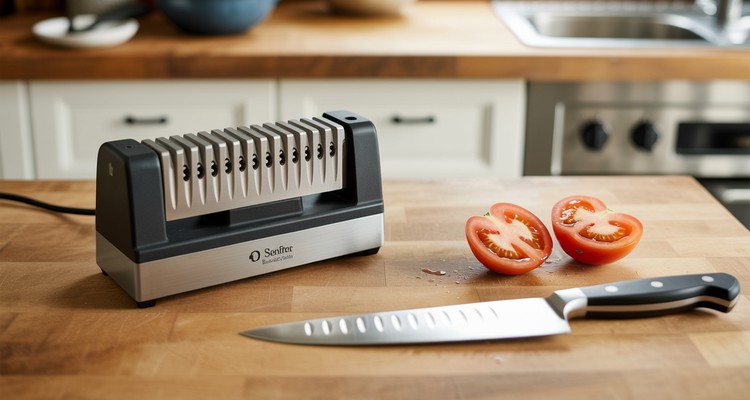
If you want professional-grade results without spending years mastering whetstone technique, the Chef’s Choice Professional Electric Knife Sharpener is the tool to reach for. This is one of the most well-regarded electric knife sharpeners on the market, and it earns that reputation with a genuinely versatile feature set. The ANGLESELECT system lets you choose between a traditional 20-degree edge for Western-style blades and a finer 15-degree edge for precision slicing and Japanese-style knives—making it equally at home whether you’re sharpening a thick BBQ cleaver or a delicate chef’s knife. The 3-stage Dizor engineered system uses 100% diamond abrasives throughout, setting two distinct facets at slightly different angles to create a longer-lasting, arch-shaped edge. This edge geometry holds up better over time than a simple flat grind, which matters when you’re running a cutting board hard during a long day of grilling prep. Precision angle guides eliminate guesswork entirely, so even a first-time user gets consistent results from the first pass.
Highlights
- ANGLESELECT technology: choose 15° or 20° edge angles
- 100% diamond abrasives for fast, reliable sharpening
- 3-stage Dizor system creates a durable arch-shaped edge
- Precision angle guides handle positioning automatically
- Sharpens both straight-edge and serrated knives
Specifications
- Type: electric sharpener
- Best for: mixed Western and Asian kitchen knives
- Key feature: selectable 15-degree and 20-degree angle guides
Customer Reviews
- I’m very pleased with this sharpener. I was debating between this one (model 1520) which is a 2-stage system that can sharpen at 15 or 20 degrees, and the Trizor model, which is a 3-stage but can only sharpen at a 15 degree angle.
- Instructions were easy to follow and it took me only a couple of passes to master the technique which is very simple.
- This is easy to use and truly gets my older dull knives sharp like new. Following the instructions is stressed and it makes sense so that they come out great every time.
SHAPTON Ha No Kuromaku Ceramic Whetstone – Best for Japanese Knives

High-end Japanese steel demands precise, careful treatment. The thin, hard blades used in Japanese knives can be damaged by aggressive electric sharpeners that remove too much material at the wrong angle. The Shapton Ha No Kuromaku set is the answer: a pair of premium ceramic whetstones engineered specifically to handle fine, hard steel with the kind of control only a stone can provide. The A-set includes a Medium Grit (#1000) stone for standard sharpening sessions and a Fine Grit (#5000) stone for finishing and polishing a razor-thin edge. The ceramic composition means the stones cut efficiently without glazing over quickly, and they stay flatter longer than many competing stones in this class. The ventilated plastic boxes double as stone holders during use, which is a practical touch that keeps the setup stable and tidy. If you own a good set of Japanese knives, this whetstone set is the most respectful way to maintain them.
Highlights
- Premium ceramic #1000 grit stone for main sharpening
- #5000 grit stone for finishing and polishing a fine edge
- Color-coded stones with ventilated plastic boxes that serve as holders
- Ideal for sushi knives, Japanese chef knives, and precision tools
- Working surface: 8-1/4 x 2-3/4 x 1/2 in.
Specifications
- Type: ceramic whetstone set
- Best for: Japanese knives and fine steel
- Key feature: #1000 sharpening stone plus #5000 finishing stone
Customer Reviews
- Some of the best synthetic water stones you can buy and priced more than fairly for how good these stones are!
- If you are new to knife sharpening or even a pro with plenty of experience, you cannot go wrong with these stones in your arsenal.
- I have not used them yet but the quality and grade are obvious when compared to the cheap Chinese stones.
KING Whetstone Starter Set – Best Traditional Whetstone Kit

The King Whetstone is a staple in culinary circles for good reason. Made in Japan, these stones are crafted to a quality standard close to natural whetstones—a meaningful distinction for anyone who takes sharpening seriously. The 1000/6000 grit combination covers the two most important stages: the 1000-grit side handles general sharpening and edge restoration, while the 6000-grit side finishes the blade to a smooth, polished edge that glides through food. What makes this starter set stand out is the completeness of the package. The included knife angle holder takes the guesswork out of blade positioning—you clip it onto the spine of your knife to maintain a consistent angle throughout each stroke. The original wiping cloth is a high-absorbency, quick-drying accessory that keeps your work area clean and protects the stone’s surface between sessions. For anyone stepping into traditional stone sharpening for the first time, this kit provides everything needed to develop real skill.
Highlights
- Made in Japan: quality close to natural whetstone performance
- 1000 grit for main sharpening; 6000 grit for a polished finish
- Includes knife angle guide with two ceramic protective rods
- Original high-absorbency wiping cloth included
- Stable plastic base holds the stone securely during use
Specifications
- Type: combination whetstone kit
- Best for: traditional sharpening practice
- Key feature: 1000/6000 grit stone with angle holder and base
Customer Reviews
- I have chef quality kitchen knives and because of a lot of use, they needed a long over do deep sharpening.
- Does the job I bought it for, but the size is a little odd and not well-suited to larger knives.
- I was skeptical but I took a chance on this whetstone. Today I used it to sharpen a 70’s era buck knife, a 20 year old single lock blade Case, and a small two blade Case pocket knife that is about 25 years oldAfter soaking the stone in water I sharped the knives in the order listed.
Sharp Pebble Premium Whetstone Knife Sharpening System – Best for Beginners
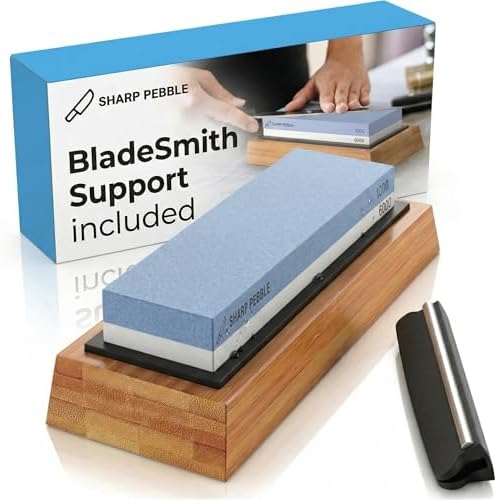
Using a whetstone for the first time can feel intimidating—the angle, the pressure, the motion all require a learning curve. The Sharp Pebble Premium Whetstone System is specifically designed to flatten that curve. Its double-sided aluminum oxide stone delivers #1000 grit on one face for sharpening and #6000 grit on the other for polishing, covering both stages of a complete sharpening session in one compact tool. The included knife sharpening angle guide is the standout feature for beginners. Clip it onto the blade spine, and it holds the knife at the correct sharpening angle automatically, so you can focus on developing a smooth, consistent stroke rather than fighting geometry. The non-slip bamboo base and silicone holder keep the stone fixed during use—an important safety feature when applying pressure with a sharp blade. Best of all, this system uses water rather than expensive honing oil, making it clean, affordable, and easy to maintain. Suitable for kitchen knives, BBQ knives, pocket knives, chisels, and more.
Highlights
- Dual-sided #1000/#6000 grit aluminum oxide stone
- Knife sharpening angle guide included for consistent blade positioning
- Non-slip bamboo base with silicone holder for safe sharpening
- Water-based system—no expensive honing oils needed
- Versatile: sharpens kitchen knives, BBQ blades, hunting knives, and more
- Includes instruction manual and detailed ebook with tips and tricks
Specifications
- Type: guided whetstone system
- Best for: beginners learning stone technique
- Key feature: 1000/6000 grit stone with angle guide and bamboo base
Customer Reviews
- So, before beginning this review, I think it’s important to note that this stone is a standard item that is sold by a different company and simply branded with “sharp pebble” branding.
- The Sharp Pebble Premium Whetstone delivers exactly what it promises: a dependable, easy to use sharpening system that produces excellent results.
- Excellent Quality and Easy to UseThe Sharp Pebble Premium Whetstone delivers excellent results.
Presto 08800 EverSharp Electric Knife Sharpener – Best Value Electric

Not every kitchen knife needs a professional sharpening system. For everyday kitchen knives, sport knives, and blades that just need a quick tune-up between sharpening sessions, the Presto EverSharp delivers reliable results at an accessible investment. It’s one of the most straightforward electric knife sharpeners available—you draw the blade through the slots, and the machine does the rest. The 2-stage system uses Sapphirite sharpening wheels—the same ultra-hard material used in professional sharpening shops. Stage 1 performs precision grinding to establish a correctly angled edge, while Stage 2 hones and polishes that edge to a razor-sharp finish. Precision blade guides hold the knife at the ideal angle automatically, so there’s no guesswork involved. Keep in mind this sharpener is designed for non-serrated blades; serrated knives should be sharpened with a dedicated tool or sent to a professional. For everyday household knives, though, the EverSharp is a dependable, no-fuss choice.
Highlights
- 2-stage Sapphirite sharpening system for quick professional-style results
- Precision blade guides set the correct sharpening angle automatically
- Stage 1 grinds; Stage 2 hones and polishes
- Designed for most non-serrated kitchen and sport knives
- Compact design; easy to store and use
Specifications
- Type: electric sharpener
- Best for: quick maintenance on non-serrated knives
- Key feature: two-stage Sapphirite sharpening system
Customer Reviews
- I just received my Presto knife sharpener, and immediately tried it out, as I happened to have some free time.
- Excellent knife sharpener. It does a great job in a very short amount of time.
- Shopping on the internet can be difficult, and sometimes buyers have to purchase a few versions of the same item online to determine which has the best quality.I love the idea of this product.
Amazon Basics Whetstone Knife Sharpening Stone – Best Budget Whetstone
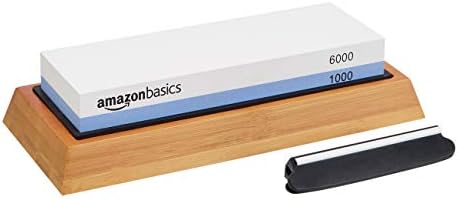
For home cooks who want to try manual whetstone sharpening without a large upfront investment, the Amazon Basics Whetstone Knife Sharpening Stone is a solid entry point. It covers the core essentials: a 1000-grit face for sharpening and a 6000-grit reverse for finishing and refining the edge, plus the safety and guidance features that make learning on a stone practical. The included knife-sharpening angle guide helps maintain the correct blade angle and consistent pressure throughout each stroke—essential when you’re still building muscle memory for freehand technique. The non-slip bamboo base holds the stone securely, and because the system uses water rather than oil, cleanup is quick and easy. It works on kitchen knives, scissors, pocket knives, hunting knives, and a range of other cutting tools. Backed by an Amazon Basics 1-year limited warranty, this stone is a genuinely practical introduction to the world of whetstone sharpening without the premium price tag.
Highlights
- Dual-sided 1000/6000 grit whetstone for sharpening and polishing
- Includes knife-sharpening angle guide for accurate blade positioning
- Non-slip bamboo base with silicone inner holder for stability
- Water-based: no honing oil required, easy cleanup
- Versatile: kitchen knives, scissors, pocket knives, and more
- Backed by Amazon Basics 1-year limited warranty
Specifications
- Type: budget whetstone kit
- Best for: low-cost manual sharpening practice
- Key feature: 1000/6000 grit stone with base and angle guide
Customer Reviews
- This is the stone I needed to sharpen my knives; I work in a kitchen, and my knives had lost their edge.
- For a cheap production whetstone, this is a great product for introducing someone to sharpening knives.
- Works pretty good. He just gotta press down on the knife.
Cutluxe Honing Rod – Best for Daily Edge Maintenance

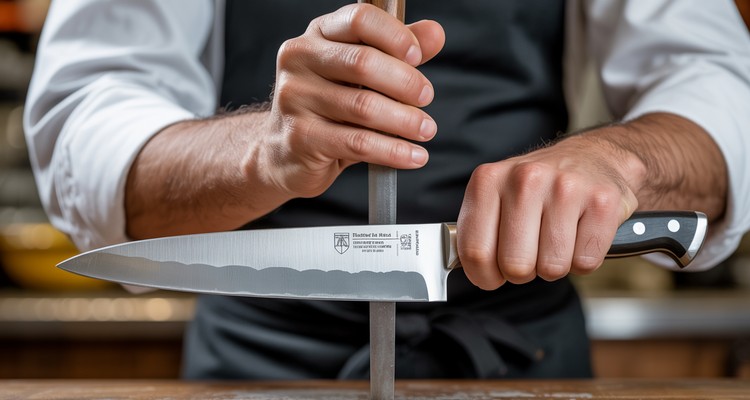
There’s an important distinction between sharpening and honing that every knife owner should understand. Sharpening removes metal from the blade to create a new edge. Honing—what a rod like this does—realigns the blade’s existing edge, which naturally folds or rolls out of alignment with regular use. A good honing steel used before each cooking session keeps your chef’s knife performing at peak sharpness between actual sharpening sessions, significantly extending the time between sessions on the stone. The Cutluxe Artisan Series 10-Inch Honing Rod is built for serious everyday use. The premium carbon steel construction won’t rust, corrode, bend, or break over time, and the non-slip PakkaWood ergonomic handle fits both right- and left-handed users comfortably. At 10 inches, this rod accommodates any standard kitchen or BBQ knife—long enough even for carving and slicing blades you’d use when serving brisket or smoked roasts. A lifetime warranty backs the investment. If you only add one maintenance tool to your routine, a honing rod is it.
Highlights
- 10-inch premium carbon steel rod—rust, corrosion, and break resistant
- Hones and realigns blade edge quickly between sharpening sessions
- Ergonomic non-slip PakkaWood handle for right- or left-handed users
- Long enough for carving knives, slicers, and large chef’s knives
- Lifetime warranty against material and workmanship defects
Specifications
- Type: honing rod
- Best for: daily edge realignment
- Key feature: 10-inch carbon steel rod with ergonomic handle
Customer Reviews
- I have been using this steel for a few months now and I am very happy with the quality of the tool.My old steel has gotten worn out and needed a replacement.
- The Cutluxe Honing Rod is an essential tool for anyone who values the importance of maintaining sharp kitchen knives.
- They wear out? I didn’t know that and I’m not talking about this one which I just got but the one that came with the knife set.
Tumbler Knife Holder Pro – Best Rolling Sharpener Accessory
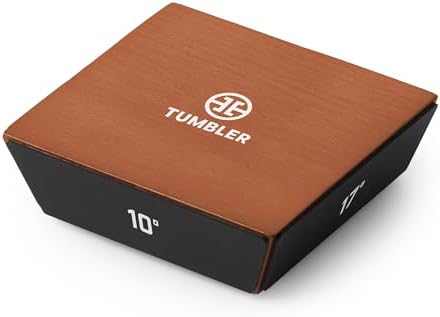
Important note: The Tumbler Knife Holder Pro is an accessory—it requires the Tumbler Rolling Knife Sharpener (sold separately) to function. If you don’t already own the Tumbler Rolling Sharpener, you’ll need to purchase that first. This holder is designed to expand what the Tumbler system can do, not to sharpen on its own. For those who already own the Tumbler Rolling Sharpener, the Holder Pro is a meaningful upgrade. The original rolling sharpener accommodates 15 and 20-degree angles, which covers the vast majority of Western and Japanese kitchen knives. The Knife Holder Pro adds four additional angles—10, 12, 17, and 25 degrees—opening up the system to a much wider range of blade types. That includes delicate slicers, hunting knives, and heavy-duty cleavers that need a more robust edge. The wider surface area accommodates longer, heavier blades, and upgraded neodymium magnets provide a more secure hold than the original during sharpening passes.
Highlights
- Companion accessory for the Tumbler Rolling Knife Sharpener (sold separately)
- Adds 10, 12, 17, and 25-degree sharpening angle options
- Wider surface area handles longer and heavier blades
- Upgraded neodymium magnets for a more secure knife hold
- Compatible with chef knives, slicers, cleavers, and specialty blades
Specifications
- Type: rolling sharpener accessory
- Best for: Tumbler-style magnetic sharpening systems
- Key feature: 10, 12, 17, and 25-degree angle options
Customer Reviews
- This worked quite well with my Horl sharpener. The magnets are strong and hold the knife well, but you do need to keep the magnetic surface clean so the blade doesn’t slide around.
- This thing works. I bought the rest of the kit from another brand based in reviews. I bought this thinking “it’s just a block with magnets.
- This is a must-have tool for maintaining razor-sharp knives. The 10- and 12-degree angle options are ideal for preserving a precise edge and keeping your knives in optimal condition over time.
Mercer Culinary Knife Sharpening Angle Guide – Best Sharpening Accessory

Maintaining a consistent blade angle on a whetstone is the single hardest skill for most beginners to master. Even experienced sharpeners can drift from their target angle under fatigue. The Mercer Culinary Knife Sharpening Angle Guide addresses this directly—it clips onto the spine of your blade and glides along the stone surface, holding the knife at a precisely consistent angle throughout every stroke. Unlike plastic angle guides that wear down against the abrasive surface of the stone, the Mercer guide uses durable ceramic inserts that maintain their shape over time and glide smoothly without catching. It’s designed specifically for 6-inch chef’s knife blades and larger—the size range that covers most kitchen and BBQ knives. If you’ve been struggling to get consistent results from your whetstone or angle guide set, this accessory eliminates the most common variable. It’s also a smart complement to the King Whetstone Starter Set or any other stone that doesn’t include its own dedicated guide.
Highlights
- Ceramic inserts glide over whetstone surface without wearing down
- Holds blade at consistent angle throughout every sharpening stroke
- Designed for 6″ chef’s knives and larger
- Pairs with any whetstone for improved sharpening accuracy
- Ideal for beginners or anyone building consistent sharpening technique
Specifications
- Type: sharpening angle guide
- Best for: whetstone users learning consistent angles
- Key feature: ceramic inserts for smoother stone contact
Customer Reviews
- Doesn’t work well on small blades (not tight enough and slips down the spine)—but if you follow the online hints to line up the curve of the blade with the line of ceramic, pre-soak your two grit stones, and then follow the directions, people will actually remark on how sharp your 20 degree angle sharpened knives are.
- Not as pictured. I specifically bought this brand for the very small gaps in the ceramic guide as pictured.
- Holds the knife at the correct angle for sharpeningRead more
Buying Advice: How to Choose the Best Knife Sharpener
Types of Knife Sharpeners
Understanding the different categories of knife sharpeners makes the buying decision much easier. Electric sharpeners are the most convenient option. You draw the blade through pre-set angle slots, and the motorized abrasive wheels do the work. They’re fast—a typical sharpening pass takes seconds—and they require no skill or prior knowledge. The trade-off is that they tend to remove more material per session than manual methods, which slightly shortens the long-term lifespan of a blade. For most home cooks, this is rarely a practical concern. Whetstones are the gold standard for edge quality and blade longevity. A properly sharpened blade on a whetstone is sharper and more refined than what most electric tools produce. Stones give you full control over angle and pressure, which matters a great deal for high-end Japanese knives that require specific treatment. The learning curve is real—consistent results take practice—but the investment in technique pays dividends for the life of your knives. For serious home cooks and BBQ enthusiasts who want to protect a quality knife collection, a whetstone system is the long game worth playing. Honing rods are not sharpeners in the traditional sense—they don’t remove material. Instead, they realign the blade’s microscopic edge, which bends out of alignment with regular cutting use. Using a honing steel before each session keeps your knife performing sharply between stone sessions. Most professional kitchens keep a honing steel at the station for exactly this reason. Pull-through manual sharpeners sit between electric machines and stones. They use fixed-angle slots like an electric model, but the user supplies the motion by drawing the blade through the abrasive channel. The appeal is simplicity: no soaking, no motor, and no need to learn freehand angle control. The limitation is that many inexpensive pull-through sharpeners are fairly aggressive and are usually built around one edge angle. They can be useful for basic utility knives, camping knives, and inexpensive kitchen knives, but they are not the best choice for preserving expensive Japanese or German blades over years of use. Ceramic rods and fine maintenance tools are another category worth separating from traditional steels. A steel honing rod primarily realigns an edge; a ceramic rod can also remove a small amount of material, making it useful when a knife needs more bite but does not yet need a full sharpening session. For BBQ work, that matters because brisket slicers, boning knives, and trimming knives see long cutting sessions against meat, fat, bark, and cutting boards. A light touch on a ceramic rod can bring back performance quickly without resetting the whole edge. At the premium motorized end of the market, systems like the Tormek T-1 represent the pinnacle of precision electric sharpening. The Tormek uses a fine-grained diamond grinding wheel, a composite honing wheel with integrated polishing agent, and a patented angle guide for exact, repeatable results with minimal material removal—only 45 dB operating noise. It’s a professional-grade investment, but for those who process a large number of high-value knives, it’s unmatched.
Understanding Grit
Grit is the measure of abrasive coarseness in a sharpening stone, and choosing the right grit for the task determines your results.
- Coarse grit (under #1000): Used to repair chipped, damaged, or very dull blades. Removes material quickly to rebuild the edge profile. Not needed for routine maintenance.
- Medium grit (#1000-#3000): The workhorse range for general sharpening. This is where most sessions begin. A #1000 stone handles standard edge restoration for kitchen knives, BBQ slicers, and chef’s knives.
- Fine grit (#4000-#8000+): The finishing range. After establishing a sharp edge with a medium stone, a fine-grit stone like the Shapton #5000 polishes the edge to a smooth, razor-thin result. Higher grits produce finer, more refined edges ideal for precision cutting tasks.
Most dual-sided combination stones—like the King Whetstone and the Sharp Pebble—pair a #1000 and a #6000 grit side, which covers both the sharpening and finishing stages in one tool.
Angles and Edges
The sharpening angle matters as much as the tool. Western-style knives—including traditional Zwilling blades and most American and European chef’s knives—are typically ground to a 20-degree edge angle. This produces a robust, durable edge that handles tough cutting tasks well. Japanese knives, on the other hand, are often ground to a finer 15-degree edge, producing a thinner, more acute blade that excels at precise, delicate cuts but requires more care during sharpening. Using the wrong angle during sharpening can undo the knife’s intended geometry. Electric sharpeners like the Chef’s Choice solve this with switchable angle settings. Whetstones require manual discipline—which is why an angle guide is so valuable, particularly when learning.
Long-Term Value
Quality knife sharpeners are one of the better kitchen investments you can make. A good set of chef’s knives represents real money; replacing them because they’ve been dulled beyond recovery—or because you had to pay repeatedly for professional sharpening services—adds up quickly. A reliable sharpening system extends the working life of your knives substantially, protecting that investment over the long haul. For those who take their grilling and kitchen work seriously, the cost of a quality sharpener pays for itself in preserved blades within the first year of regular use. The biggest value mistake is buying a tool that does not match how you actually cook. If you only sharpen a couple of inexpensive knives a few times a year, a budget combination stone or basic electric sharpener may be enough. If you own premium chef’s knives, a thin Japanese petty, a carving knife, or a long BBQ slicer, precision matters more than speed. Those blades benefit from a system that lets you control the angle, work slowly, and remove as little steel as possible. That is where a Shapton, King, or similar water stone earns its keep. Good knife care also reduces how often you need to sharpen. Use wood or quality synthetic cutting boards instead of glass, stone, or ceramic surfaces. Wash knives by hand, dry them immediately, and store them in a block, sheath, magnetic strip, or drawer insert so the edges are not banging into other tools. Hone before longer prep sessions, especially when slicing onions, trimming ribs, breaking down poultry, or carving cooked meat. These small habits extend the time between full sharpening sessions and keep the edge geometry intact. There is still a place for professional sharpening. If a knife has chips, a broken tip, a severely uneven bevel, or years of neglected wear, sending it out once can reset the blade before you maintain it at home. After that, a consistent home routine is usually enough. Think of the sharpener as part of the knife system rather than a standalone gadget: the right tool, used at the right interval, keeps every knife safer, cleaner, and more pleasant to use.
Frequently Asked Questions
What is the absolute best knife sharpener?
The best knife sharpener depends almost entirely on your skill level and the knives you’re working with. For home cooks who want reliable, foolproof results with minimal effort, a quality electric sharpener like the Chef’s Choice Professional is hard to beat—it handles both Western and Asian blades with selectable angle settings and does the work for you. For those who want the highest possible edge quality and are willing to invest time in technique, a whetstone system—especially a high-end ceramic option like the Shapton—produces results that electric tools simply can’t match. Most serious knife owners keep both: a stone for true sharpening sessions and an electric or honing tool for quick maintenance between them.
What does Gordon Ramsay use to sharpen his knives?
Professional chefs like Gordon Ramsay rely heavily on honing steels as part of their daily knife routine. Before and during service, a quick pass on a honing rod realigns the blade edge and keeps a chef’s knife performing sharply without stopping to sharpen. For actual metal-removing sharpening—when the blade has lost its edge despite regular honing—professionals tend to prefer whetstones because they remove less material than aggressive electric pull-throughs and give the user complete control over the angle and edge geometry. The combination of consistent honing and periodic whetstone sessions is how professional kitchens keep their blades in peak condition over years of heavy use.
What do chefs recommend for sharpening knives?
Most culinary professionals recommend whetstones as the primary sharpening method, with a honing rod used between sessions. The reason is material removal: whetstones are precise and controlled, removing only as much metal as needed to restore the edge. Aggressive electric pull-through sharpeners and motorized grinding tools remove significantly more material per session, which shortens the life of a quality knife over time. For home cooks who cook frequently and maintain a good knife collection, the whetstone-and-honing approach is the professional standard worth adopting.
What’s the best way to sharpen knives at home?
For beginners, start with a dual-sided whetstone (like the Sharp Pebble or Amazon Basics) and use the included angle guide to maintain consistent blade positioning. Soak the stone in water for a few minutes before starting—this lubricates the surface and prevents the stone from loading up with metal particles too quickly. Hold the knife at the appropriate angle (20 degrees for most Western knives, 15 degrees for Japanese), apply moderate consistent pressure, and move the blade across the stone in smooth, controlled strokes from heel to tip. Work the #1000 side until you feel a slight burr form on the opposite face, then flip the blade and work the other side. Finish on the #6000 side with lighter passes to refine and polish the edge. Follow up with a honing rod before each cooking session to keep that edge performing between stone sessions.
What knife sharpener do the professionals use?
Professional use varies by context. In restaurant kitchens, a combination of honing steels for daily maintenance and Japanese water stones for periodic sharpening is the most common setup. Butchers and meat-processing professionals who run high volumes of blades often rely on heavy-duty electric sharpeners or belt grinding systems that can restore an edge quickly across many knives. In professional knife shops and sharpening services, motorized precision systems—including high-end units like the Tormek with its diamond grinding wheel and exact angle guides—are the standard for achieving consistent, professional-quality results with minimal material loss across a wide range of blade types and angles.
The Right Sharpener for Your Kitchen
Keeping your knives sharp is one of the simplest and most impactful habits you can build in the kitchen. Whether you reach for an electric sharpener for its speed and simplicity, a whetstone for its precision and long-term edge quality, or a honing rod for daily maintenance, every knife in your collection—from your everyday chef’s knife to your BBQ slicer—will perform better and last longer with the right care. The picks above cover every need and skill level. Start with what fits your routine, and add tools as your interest in technique grows. A quality sharpening setup is an investment that pays for itself in preserved knives, cleaner cuts, and a better experience every time you cook.