There’s something deeply satisfying about biting into a piece of homemade smoked jerky. The rich, smoky flavor, the perfect chewy texture, and knowing exactly what went into it makes store-bought jerky seem bland by comparison. While dehydrators get the job done, a dedicated smoker transforms jerky-making into an art form, infusing your meat with genuine wood smoke flavor that simply can’t be replicated any other way.
The key to great smoked jerky lies in finding a smoker that excels at low-temperature cooking with consistent heat distribution. You need equipment that can maintain temperatures between 160-200 degrees Fahrenheit for several hours while generating steady smoke. Whether you prefer the convenience of electric, the flavor of pellet, or the authenticity of charcoal, the right smoker makes all the difference in your jerky results.
We’ve evaluated vertical smokers, cabinet smokers, and pellet smokers specifically for their jerky-making capabilities. Our picks focus on temperature control, cooking space, smoke generation, and overall value for home jerky enthusiasts.
Quick Roundup List
- Best Overall Electric: Masterbuilt 30-inch Digital Electric Smoker
- Best Budget: Masterbuilt 30-inch Analog Electric Smoker
- Best for Serious Makers: Bradley Smoker Jim Beam 4-Rack Digital
- Best Pellet: Camp Chef XXL Vertical Pellet Smoker
- Best Charcoal: Weber 18-inch Smokey Mountain Cooker
- Best Large Capacity: Pit Boss 5.5 Pellet Smoker
- Best Value Pellet: Pit Boss PBV3P1 Vertical Pellet Smoker
Smoker Comparison Table
| Product | Award | Fuel Type | Cooking Area | Best For |
|---|---|---|---|---|
| Masterbuilt 30″ Digital Electric | Best Overall Electric | Electric | 710 sq in | Most jerky makers |
| Masterbuilt 30″ Analog Electric | Best Budget | Electric | 535 sq in | Beginners |
| Bradley Smoker Jim Beam 4-Rack | Best for Serious Makers | Electric | 4 racks | Set-and-forget |
| Camp Chef XXL Vertical Pellet | Best Pellet | Pellet | 4 meat + 3 jerky racks | Pellet enthusiasts |
| Weber Smokey Mountain 18″ | Best Charcoal | Charcoal | 2 x 18.5″ grates | Traditionalists |
| Pit Boss 5.5 Pellet | Best Large Capacity | Pellet | 1548 sq in | Batch production |
| Pit Boss PBV3P1 | Best Value Pellet | Pellet | 901 sq in | Budget pellet |
What to Look for in a Jerky Smoker
Not every smoker excels at making jerky. The low-temperature, long-duration cooking that jerky requires demands specific features that set great jerky smokers apart from general-purpose units.
Temperature Control and Range
Jerky requires temperatures between 160 and 200 degrees Fahrenheit, which is lower than typical smoking temperatures for brisket or ribs. The ideal jerky smoker should maintain consistent heat at these lower settings without significant temperature swings. Digital temperature control panels offer precise adjustments, while analog dials provide simplicity. Look for smokers with a minimum temperature setting at or below 150 degrees for maximum flexibility in your jerky cooking.
Cooking Space and Rack Configuration
Jerky strips need adequate airflow around each piece for proper drying. Smokers with multiple cooking racks provide the vertical space needed to smoke large batches without overcrowding. A cooking area of at least 500 square inches works for occasional jerky makers, while serious enthusiasts should look for 900 square inches or more. Some smokers include specialized jerky racks with closer spacing designed specifically for thin strips of meat.
Smoke Generation and Ventilation
Consistent smoke production throughout the cooking process delivers that distinctive smoked flavor. Electric smokers use wood chips in a tray, pellet smokers burn compressed wood pellets, and charcoal smokers can incorporate wood chunks. Proper ventilation allows moisture to escape while retaining smoke, which is essential for jerky that dries evenly without becoming overly tough or developing an acrid taste.
Ease of Use and Cleanup
Jerky smoking sessions can last 4 to 8 hours, making set-and-forget operation highly valuable. Features like automatic wood chip feeders, digital timers, and meat probes reduce the need for constant monitoring. Removable drip trays and grease management systems simplify cleanup after each cooking session.
Detailed Product Reviews
Masterbuilt 30-inch Digital Electric Smoker – Best Overall Electric
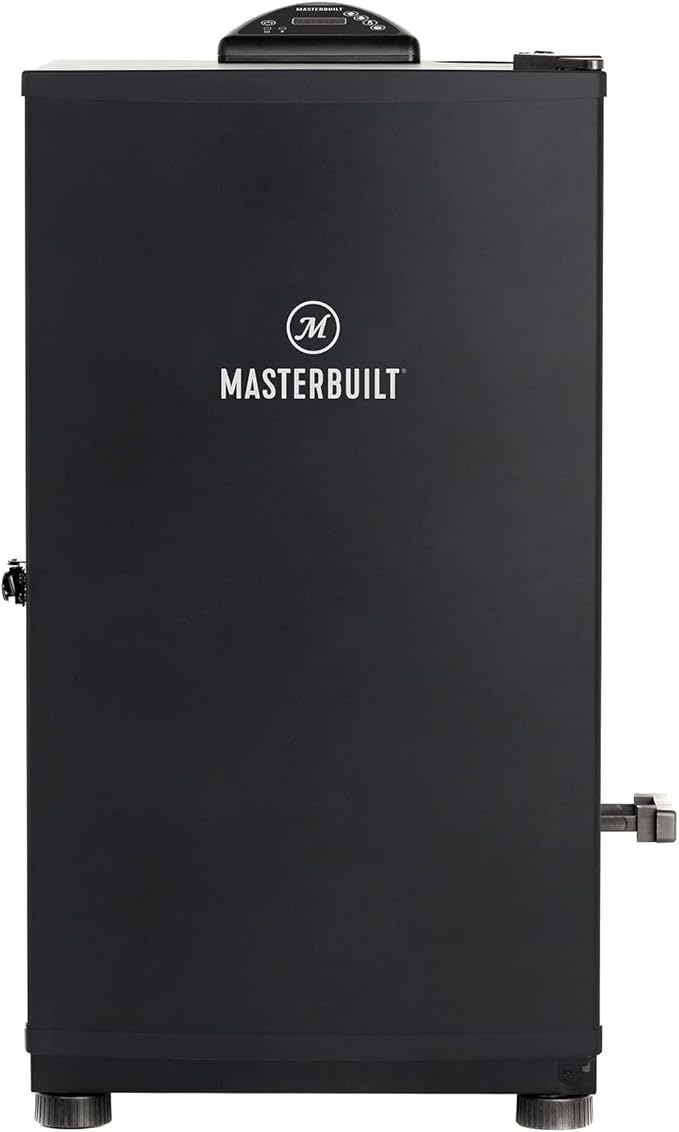
The Masterbuilt 30-inch Digital Electric Smoker stands out as the most versatile option for home jerky makers. Its digital control panel allows precise temperature settings up to 275 degrees, with excellent stability at the lower temperatures jerky requires. The patented side wood chip loader lets you add smoke flavor without opening the door, maintaining consistent internal temperature throughout your cooking session.
With 710 square inches of cooking space spread across four chrome-coated racks, this smoker handles substantial jerky batches comfortably. The spacious vertical design provides excellent airflow around your meat strips. A removable water bowl adds moisture control, though many jerky makers run without water to encourage proper drying.
Highlights
- Digital temperature and time controls up to 275 degrees
- Patented side wood chip loader for continuous smoke
- Four chrome-coated smoking racks with 710 sq in total
- Removable water bowl and rear grease tray
- Plug-and-play electric operation
Best For
Home jerky makers who want reliable temperature control and the convenience of electric operation. Ideal for both beginners learning the craft and experienced smokers making regular batches.
Masterbuilt 30-inch Analog Electric Smoker – Best Budget

For those entering the world of smoked jerky without a large investment, the Masterbuilt Analog Electric Smoker delivers solid performance at an accessible entry point. The simple analog temperature dial eliminates the complexity of digital controls while still providing adequate temperature regulation for jerky making.
Three chrome-coated racks offer 535 square inches of cooking space, enough for moderate jerky batches. The straightforward design means fewer components that can malfunction, making this smoker a reliable workhorse. A removable wood chip tray sits at the bottom for easy loading, though you’ll need to open the door to add more chips during longer smoking sessions.
Highlights
- Simple analog temperature dial up to 275 degrees
- Three chrome-coated smoking racks with 535 sq in total
- Removable wood chip tray for easy loading
- Water bowl for moisture control
- Compact footprint for smaller spaces
Best For
Beginners testing whether smoked jerky making is right for them, or budget-conscious smokers who prioritize simplicity over advanced features.
Bradley Smoker Jim Beam 4-Rack Digital – Best for Serious Jerky Makers

The Bradley Smoker represents a different approach to electric smoking with its automatic bisquette feeding system. Instead of wood chips that burn quickly and require reloading, Bradley uses compressed wood bisquettes that feed automatically into the burner every 20 minutes. This provides consistent smoke for up to 8 hours without any intervention, making it the ultimate set-and-forget jerky smoker.
Digital controls give you precise command over temperature, time, and smoke duration. The ability to smoke without heat opens up cold smoking possibilities, though most jerky makers will use the standard heated smoking function. The stainless steel construction provides durability and easy cleaning after multiple smoking sessions.
Highlights
- Automatic bisquette feeder for 8+ hours of continuous smoke
- Digital controls for temperature, time, and smoke
- Four smoking racks with adjustable positions
- 500W heating element with 125W smoke generator
- Stainless steel construction
Best For
Dedicated jerky enthusiasts who make large batches regularly and value hands-off operation. Perfect for those who want consistent results without babysitting their smoker.
Camp Chef XXL Vertical Pellet Smoker – Best Pellet Smoker

The Camp Chef XXL combines the convenience of pellet fuel with a vertical smoker design optimized for jerky. What sets this smoker apart is the inclusion of three dedicated jerky racks in addition to four standard meat racks. This configuration means you can smoke jerky on the specialized racks while using the remaining space for other foods.
Smart Smoke Technology adjusts smoke output on a scale from 0 to 10, letting you dial in exactly the smoke intensity you prefer. The temperature range of 150 to 350 degrees gives you flexibility for jerky at the low end and higher-heat cooking when needed. Dual meat temperature probes help monitor your food without opening the door.
Highlights
- Four meat racks plus three dedicated jerky racks
- Smart Smoke Technology with adjustable smoke levels
- Temperature range of 150 to 350 degrees
- 18 lb pellet hopper capacity
- Dual meat temperature probes included
- Ash cleanout system for easy maintenance
Best For
Pellet grill enthusiasts who want a dedicated vertical smoker for jerky and other low-and-slow cooking. Ideal for those who appreciate the clean-burning convenience of wood pellets.
Weber 18-inch Smokey Mountain Cooker – Best Charcoal

For traditionalists who believe the best smoke comes from burning charcoal and wood, the Weber Smokey Mountain Cooker delivers authentic flavor that electric and pellet smokers simply cannot match. This bullet-style smoker requires more hands-on attention than electric options, but rewards that effort with deeper, more complex smoke profiles.
The porcelain-enameled steel construction retains heat efficiently, while adjustable dampers on both the lid and bowl give you precise airflow control. Two 18.5-inch nickel-plated cooking grates provide ample space for jerky, and the water pan helps moderate temperature swings. A built-in thermometer lets you monitor internal temperature without opening the lid.
Highlights
- Porcelain-enameled steel construction for durability
- Two 18.5-inch nickel-plated cooking grates
- Adjustable dampers on lid and bowl for temperature control
- Built-in lid thermometer
- Water pan for moisture and temperature regulation
- Silicone grommet for probe thermometers
Best For
Traditional BBQ enthusiasts who want authentic charcoal smoke flavor and don’t mind the more hands-on approach. Great for those who already use charcoal for other smoking and want one versatile unit.
Pit Boss 5.5 Pellet Smoker – Best Large Capacity

When you’re making jerky in serious quantities, the Pit Boss 5.5 Pellet Smoker provides the capacity you need. With 1548 square inches of cooking area spread across five porcelain-coated racks, this smoker handles large batch production that smaller units simply cannot match.
The 40+ pound pellet hopper delivers over 24 hours of smoking time on a single fill, making extended jerky sessions possible without refueling. Double-walled construction with blanket insulation maintains consistent internal temperatures even in cold weather, which is crucial for the low temperatures jerky requires. A digital LED display shows real-time temperature and allows programming from 150 to 450 degrees.
Highlights
- 1548 square inches across five porcelain-coated racks
- 40+ lb hopper for 24+ hours of smoking
- Temperature range of 150 to 450 degrees
- Double-walled construction with blanket insulation
- Digital LED temperature display with meat probe
- Auto-start igniter with automatic shut-off
Best For
High-volume jerky makers who process large batches for family, friends, or small-scale sales. Essential for anyone who finds standard smokers too limiting.
Pit Boss PBV3P1 Vertical Pellet Smoker – Best Value Pellet

The Pit Boss PBV3P1 brings pellet smoking capabilities to a more compact and affordable package. With 901 square inches of cooking space across four porcelain-coated racks, this smoker offers substantial capacity without the footprint of larger units.
Despite its smaller size, this smoker shares many features with its bigger sibling, including the same 40+ pound hopper capacity and 150 to 450 degree temperature range. The double-walled construction with blanket insulation ensures consistent temperatures, and the digital controller provides precise heat management. This makes it an excellent choice for jerky makers who want pellet convenience without paying for capacity they won’t use.
Highlights
- 901 square inches across four porcelain-coated racks
- 40+ lb hopper for extended smoking sessions
- Temperature range of 150 to 450 degrees
- Double-walled insulated construction
- Digital programmable controller
- More compact footprint than larger models
Best For
Home jerky makers who want pellet smoker performance at a more accessible size and investment. Perfect for those with limited outdoor space or moderate production needs.
Tips for Smoking Perfect Jerky
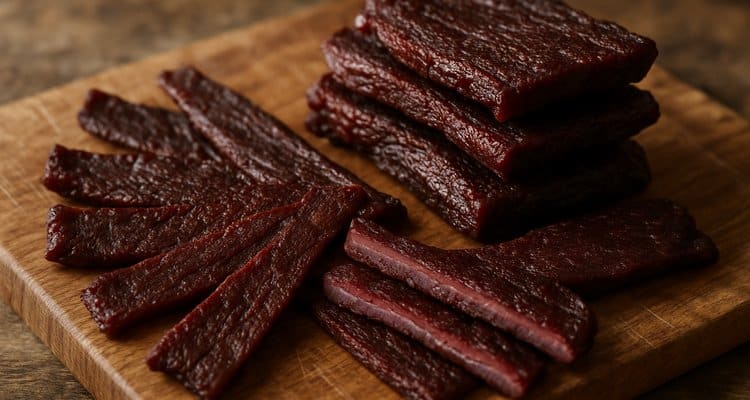
Best Woods for Jerky
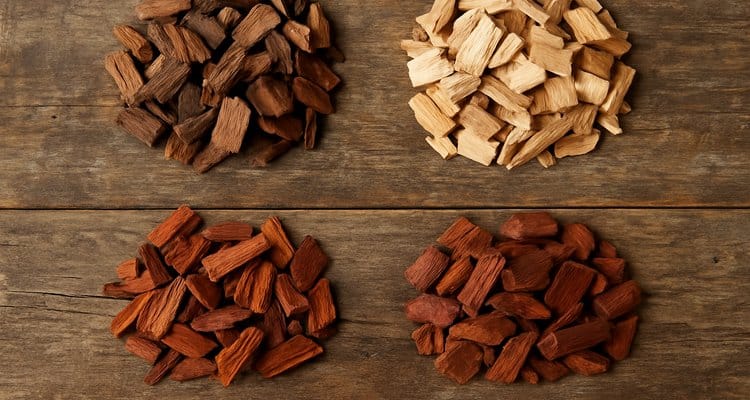
Wood selection significantly impacts your jerky’s final flavor profile. Hickory delivers bold, classic smoke flavor that pairs exceptionally well with beef jerky. Apple provides a milder, slightly sweet smoke that works well with both beef and game meats. Mesquite offers intense, earthy flavors best used sparingly or mixed with milder woods. Cherry adds subtle fruity notes that complement sweeter marinades. For your first batches, hickory or apple wood provides reliable results that most people enjoy.
Temperature and Timing Guidelines
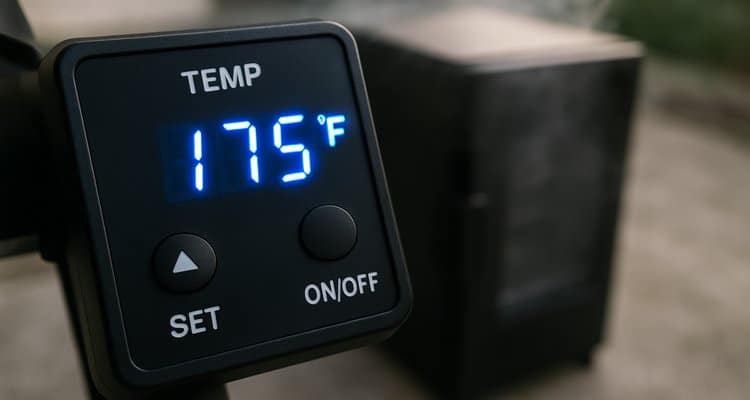
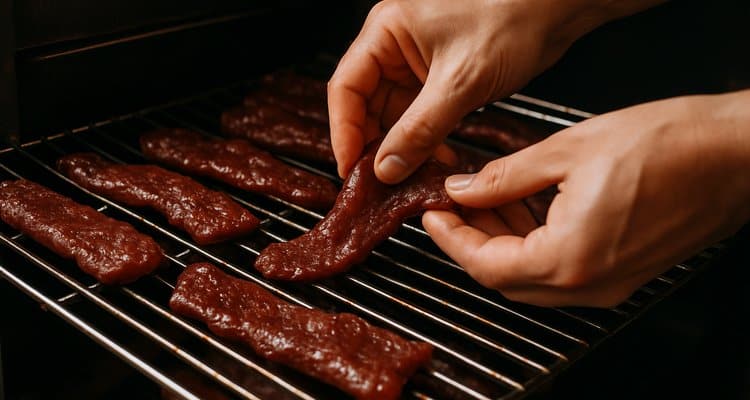
For beef jerky, maintain smoker temperature between 165 and 180 degrees Fahrenheit. Cooking time typically ranges from 4 to 8 hours depending on strip thickness, humidity levels, and desired texture. Thinner strips around 1/8 inch finish faster, while thicker cuts need longer cooking. Check jerky periodically by bending a piece. Properly finished jerky should bend and crack slightly without breaking completely. The internal temperature should reach 160 degrees for food safety before the drying process completes.
Food Safety Considerations
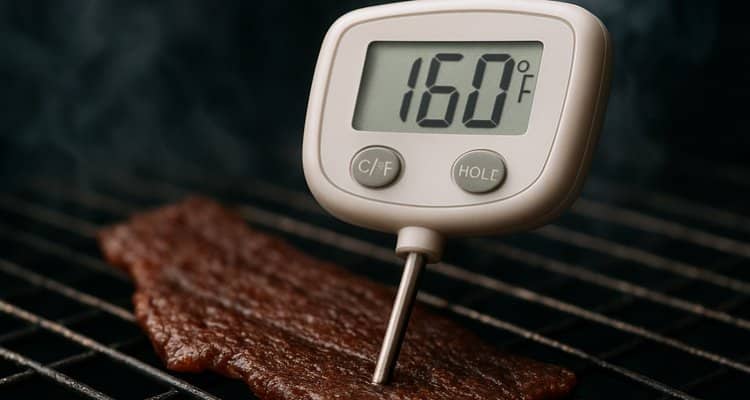
Safe jerky requires reaching proper internal temperatures to eliminate harmful bacteria. The USDA recommends heating meat to 160 degrees Fahrenheit before or during the drying process. Many experienced jerky makers briefly heat strips in an oven at 275 degrees before transferring to the smoker, ensuring food safety while still achieving that smoked flavor. Store finished jerky in airtight containers at room temperature for up to two weeks, or refrigerate for longer storage up to three months.
Frequently Asked Questions
What temperature should I smoke jerky at?
Smoke jerky at temperatures between 165 and 180 degrees Fahrenheit. This range allows the meat to dry properly while developing good smoke flavor. Going below 160 degrees risks food safety issues, while temperatures above 200 degrees can cook the meat too quickly before it properly dries.
How long does it take to smoke jerky?
Smoking jerky typically takes 4 to 8 hours depending on strip thickness, smoker temperature, and humidity. Thinner strips finish faster, while thicker cuts need more time. Start checking at 4 hours and test every 30 minutes until reaching your desired texture.
Electric vs pellet vs charcoal for jerky?
Electric smokers offer the most consistent temperature control for jerky’s low-heat requirements. Pellet smokers provide wood-fired flavor with nearly electric-level convenience. Charcoal delivers the most authentic smoke flavor but requires more attention to maintain low temperatures. Choose based on your priorities between convenience and flavor intensity.
What’s the best wood for smoking jerky?
Hickory and apple wood are the most popular choices for jerky. Hickory provides bold, traditional smoke flavor, while apple offers milder, slightly sweet notes. Mesquite works for those who like intense smoke but can overwhelm jerky if overused. Cherry adds subtle fruitiness that pairs well with sweeter marinades.
Can any smoker make jerky?
Most smokers can make jerky if they maintain temperatures below 200 degrees Fahrenheit. However, smokers designed for low-temperature cooking produce better results. Look for units with temperature settings starting at 150-175 degrees and good ventilation for moisture release.
How do I store smoked jerky?
Store finished jerky in airtight containers or vacuum-sealed bags. At room temperature, properly dried jerky lasts up to two weeks. Refrigeration extends shelf life to one to two months. For longer storage, freeze jerky for up to six months. Always ensure jerky is completely cooled before storing to prevent condensation.
Do I need special jerky racks?
Standard smoking racks work for jerky, but dedicated jerky racks with closer spacing help maximize capacity and keep thin strips from falling through. Some smokers like the Camp Chef XXL include jerky-specific racks. Aftermarket jerky racks are available for most popular smoker models.
Final Thoughts
The best smoker for jerky depends on your production needs, desired flavor profile, and preferred level of involvement. For most home jerky makers, the Masterbuilt 30-inch Digital Electric Smoker offers the ideal combination of temperature control, capacity, and ease of use. Those seeking set-and-forget operation will appreciate the Bradley Smoker with its automatic bisquette system. Pellet enthusiasts should consider the Camp Chef XXL with its dedicated jerky racks, while traditionalists will find the Weber Smokey Mountain delivers unmatched authentic flavor.
Whatever smoker you choose, homemade smoked jerky rewards your effort with flavor that store-bought products simply cannot match. Start with quality meat, choose your wood wisely, and let your smoker do what it does best.
Contents