It’s the morning of the big cook and you want the juiciest bird on the table. Brining and injecting are the two most powerful tools in your turkey arsenal, and using them together is the ultimate flavor strategy. But not every turkey needs both treatments. Here’s how to decide which method fits your bird, plus a tested brine-and-inject recipe that delivers every time.
Helpful gear for this cook:
- Temperature control: AMMZO digital meat thermometer checks doneness without guessing.
- Handling: HOTEC silicone basting brushes layers sauce, glaze, or oil without loose bristles.
- Prep: Hotec stainless kitchen tongs turns food cleanly without piercing it.
When to Brine, When to Inject, and When to Do Both
Brining and injecting tackle juiciness from opposite directions. A brine works from the outside in. The salt solution triggers osmosis, drawing moisture into the meat and denaturing proteins so they hold onto liquid during cooking. Your turkey can absorb up to 8% of its weight in brine, which translates to noticeably juicier white meat. Injecting works from the inside out. A flavor-loaded liquid gets pushed deep into the thickest parts of the breast and thighs where brining alone struggles to reach. The result is bold, consistent flavor in every bite rather than seasoned edges fading to bland centers. When you combine both methods, you get the best of each. The brine handles overall moisture retention and surface seasoning while the injection delivers rich, buttery flavor to the core. The key rule is simple: if you brine first, drop the salt from your injection to avoid an over-seasoned bird.
Which Method for Your Turkey Type
Not every turkey responds the same way to brining and injecting. Use this decision grid to pick the right approach based on what you’re cooking.
| Turkey Type | Best Method | Why |
|---|---|---|
| Supermarket Self-Basted | Skip Both | Already injected with a salt solution at the factory. Adding more risks a salty, waterlogged bird. |
| Fresh Heritage Turkey | Brine + Inject | Lean meat benefits most from both moisture retention and deep flavor delivery. |
| Spatchcocked Turkey | Dry Brine Only | Flat shape absorbs seasoning fast. Injection liquid leaks from exposed bones. |
| Smoked Turkey Breast | Inject Only | Smaller cut absorbs flavor quickly. Injection adds moisture for the long smoke. |
| Whole Pit/Smoked Turkey | Brine + Inject | Long cook times dry out meat. Double treatment provides maximum moisture insurance. |
The Brine – Building Your Base Layer
A turkey brine recipe starts with the right salt-to-water ratio. For a standard overnight wet brine, dissolve 1 cup of kosher salt per gallon of water. Add brown sugar, crushed garlic, whole peppercorns, bay leaves, and fresh herbs like thyme and rosemary. Bring everything to a boil to dissolve the salt and sugar, then cool completely with ice water before submerging your turkey. Use a food-grade container large enough to keep the entire bird submerged. Brining bags, large stockpots, and food-safe 5-gallon buckets all work. The turkey must stay below 40°F for the entire brine. A cooler packed with ice is a good backup if your fridge can’t fit the container. Brine for 12-24 hours. Going shorter than 12 hours won’t give the salt enough time to penetrate, and going beyond 24 hours risks a mushy, overly salty texture.
Dry Brine Alternative
If you don’t have the fridge space for a wet brine, dry brining works well. Coat the turkey evenly with kosher salt, black pepper, and dried herbs. Place it on a wire rack set over a sheet pan, uncovered, in the refrigerator for 12-24 hours. The salt draws out surface moisture, dissolves into it, and gets reabsorbed into the meat. The uncovered skin also dries out, which promotes better crisping during cooking.
The Injection – Delivering Flavor to the Core
A good turkey injection starts with fat. Melt unsalted butter and combine it with chicken broth, garlic powder, onion powder, smoked paprika, a pinch of cayenne, and black pepper. Keep the mixture warm so the butter stays liquid but not hot enough to start cooking the meat on contact. Grind any whole spices into a fine powder before adding them. Chunks will clog the injector needle and cause frustrating jams. If your mixture has any solids, strain it through a fine mesh sieve.
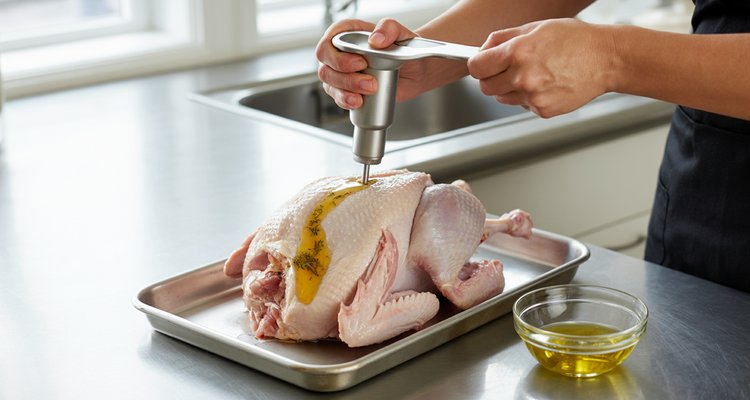
Injection Technique
Use a meat injector with a large-bore needle. Insert the needle into the thickest part of the meat and depress the plunger slowly as you pull the needle back out. This distributes the liquid along the entire needle track rather than pooling in one spot. Work in a grid pattern. Hit 3-4 sites on each side of the breast, 2-3 spots in each thigh, and 2-3 in each drumstick. Aim for about 1 ounce of injection per 5 pounds of turkey in each major section. Work over a sheet pan to catch any runoff.
Putting It All Together – Step by Step
Here’s the complete process for brining and injecting a turkey from start to finish. Step 1: Make the brine. Dissolve salt, sugar, and aromatics in boiling water. Cool completely with ice. Step 2: Submerge the turkey in the brine. Refrigerate for 12-24 hours, keeping the temperature below 40°F the entire time. Step 3: Remove the turkey from the brine. Rinse briefly under cold water (wet brine only) and pat completely dry with paper towels. Step 4: Make the injection. Melt unsalted butter and combine with broth, garlic powder, and spices. Strain through a fine mesh sieve. Step 5: Inject the turkey using a grid pattern. Focus on the breast, thighs, and drumsticks. Use zero salt in the injection if you wet brined. Step 6: Season the exterior with your favorite turkey rub or a simple blend of black pepper, garlic powder, and paprika. Step 7: Smoke or roast at 275-325°F until the thickest part of the thigh registers 165°F on an instant-read thermometer. Step 8: Rest for 20-30 minutes before carving. This lets the juices redistribute throughout the meat for the best texture.
Safety Rules You Can’t Skip
Turkey is a high-risk protein for foodborne illness. Follow these safety guidelines without exception. Use only food-grade containers for brining. Never use garbage bags, galvanized metal buckets, or unlined coolers. Food-safe plastic, stainless steel, or enameled pots are the right choices. The turkey must stay below 40°F during the entire brining process. If it doesn’t fit in your fridge, use a cooler with ice packs and monitor the temperature with a thermometer. Maximum wet brine time is 24 hours. Beyond that, the texture breaks down and the salt concentration can reach unpleasant levels. Always cook to an internal temperature of 165°F in the thickest part of the thigh. Check with an instant-read meat thermometer in multiple spots to confirm. Check the label on supermarket turkeys. Self-basted or enhanced birds like Butterball already contain a salt and water solution. Brining these will produce a waterlogged, over-salted turkey. You can still inject them with an unsalted butter mixture if you want added flavor.
Frequently Asked Questions
Can I Brine a Pre-Injected Turkey?
No. Self-basted turkeys from brands like Butterball already contain a salt and moisture solution injected at the factory. Adding a brine on top of that will over-salt the meat and produce a waterlogged texture. If you want more flavor, skip the brine and inject with an unsalted butter and herb mixture instead.
Is Overnight Brining Enough for a Whole Turkey?
Yes. A 12-16 hour overnight turkey brine is the sweet spot for a whole turkey up to 20 pounds. The salt needs at least 12 hours to fully penetrate the thickest parts of the breast and thigh. Going beyond 24 hours risks a mushy texture as the proteins break down too far. For turkeys over 20 pounds, aim for the full 24 hours.
Can I Inject a Turkey After Brining?
Absolutely. This is the recommended sequence. Brine first, then inject right before cooking. The critical adjustment is to reduce or eliminate salt in your injection since the brine already handled the seasoning. Stick to unsalted butter, herbs, chicken broth, and aromatics for your injection mixture.
Does Injecting a Turkey Actually Make a Difference?
Yes. Injection delivers flavor and moisture deep into the meat where brining alone cannot reach. This is especially noticeable in thick breast meat, which tends to dry out during long cooks. The melted butter in a typical injection also adds richness that brining doesn’t provide. Competition pitmasters use injection as their primary flavor tool for a reason.
Can You Inject a Dry-Brined Turkey?
Yes, but use a zero-salt injection. The dry brine already handles all the seasoning, so your injection should focus entirely on fat and flavor. Unsalted butter, chicken broth, garlic, and fresh herbs make an ideal combination. Inject after the dry brine period is complete and the skin has dried in the refrigerator.
Turkey Brine and Butter Herb Injection
Equipment
- Large food-grade container brining bag, stockpot, or food-safe 5-gallon bucket
- Meat injector with large-bore needle to prevent clogging
- Smoker or oven capable of maintaining 275-325°F
- Instant-read meat thermometer for checking internal temperature
- Fine mesh sieve for straining injection mixture
Ingredients
Wet Brine
- 1 gallon water
- 1 cup kosher salt Diamond Crystal preferred
- 1/2 cup brown sugar packed
- 1 tablespoon whole black peppercorns
- 4 bay leaves
- 6 cloves garlic crushed
- 4 sprigs fresh thyme
- 2 sprigs fresh rosemary
- 1 gallon ice water for cooling brine
Butter Herb Injection
- 1/2 cup unsalted butter melted
- 1/2 cup chicken broth low sodium
- 1 teaspoon garlic powder
- 1 teaspoon onion powder
- 1/2 teaspoon smoked paprika
- 1/4 teaspoon cayenne pepper optional
- 1/2 teaspoon black pepper finely ground
Turkey
- 1 whole turkey 12-15 pounds, natural (not self-basted)
Instructions
- Make the brine: Combine 1 gallon of water, kosher salt, brown sugar, peppercorns, bay leaves, garlic, thyme, and rosemary in a large stockpot. Bring to a boil, stirring until salt and sugar dissolve completely. Remove from heat.
- Cool the brine: Add 1 gallon of ice water to the hot brine to bring the temperature down quickly. The brine must be completely cold before adding the turkey.
- Brine the turkey: Place the turkey in a food-grade container and pour the cooled brine over it until fully submerged. Refrigerate for 12-24 hours, keeping the temperature below 40°F.
- Remove and dry: Take the turkey out of the brine. Rinse briefly under cold running water and pat completely dry inside and out with paper towels. Discard the brine.
- Make the injection: Melt the unsalted butter and combine with chicken broth, garlic powder, onion powder, smoked paprika, cayenne, and black pepper. Strain through a fine mesh sieve to remove any solids. Keep warm so the butter stays liquid.
- Inject the turkey: Using a meat injector with a large-bore needle, inject the butter mixture in a grid pattern. Hit 3-4 sites on each side of the breast, 2-3 in each thigh, and 2-3 in each drumstick. Depress the plunger slowly while pulling the needle back to distribute the liquid evenly.
- Season the exterior: Apply your favorite turkey rub or a simple blend of black pepper, garlic powder, and paprika to the entire surface of the turkey.
- Cook the turkey: Smoke or roast at 275-325°F until the thickest part of the thigh registers 165°F on an instant-read meat thermometer. A 12-15 pound turkey typically takes 3-4 hours at this temperature range.
- Rest and carve: Remove the turkey from the smoker or oven and let it rest for 20-30 minutes before carving. This allows the juices to redistribute throughout the meat for the best texture and flavor.
Notes