You should rest brisket for a minimum of 1 hour — but 2 to 4 hours is ideal for the best texture and juiciness. If you are using a cooler (the faux Cambro method), you can safely extend that rest to 8 hours.
That is the short answer. But the difference between a 1-hour rest and a proper 3-hour rest is the difference between good brisket and legendary brisket. In this guide, we break down exactly how long to rest brisket for every situation, why the rest matters at a science level, and the best methods to keep your brisket hot, safe, and juicy until it is time to slice.
If you are still working on the cook itself, check out our complete guide on how to smoke brisket before diving in here.
Why Resting Brisket Is Non-Negotiable
Skipping the rest — or cutting it short — is one of the most common brisket mistakes. Here is what is actually happening inside the meat while it rests:
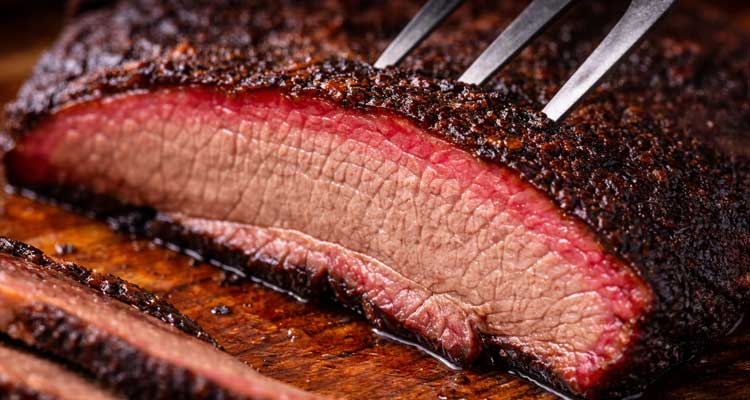
- Juice redistribution: During smoking, heat drives moisture toward the center of the brisket. When you remove the brisket from the heat, those juices begin migrating back toward the outer layers as pressure equalizes. Slice too early, and that juice flows straight onto your cutting board instead of staying in the meat. A 40-minute rest retains nearly all internal juices — under 1 tablespoon lost — versus a 10-minute rest, which loses roughly 4 tablespoons of liquid.
- Carryover cooking: Your brisket does not stop cooking the moment it leaves the smoker. Internal temperature typically rises another 5 to 10 degrees F during the first 15 to 20 minutes of resting. This is why you should pull brisket off the heat when it hits around 195 to 200 degrees F probe-tender — it will finish at the target 203 degrees F during carryover.
- Muscle fiber relaxation: The intense heat of smoking causes muscle fibers to contract tightly, making the meat tougher. Resting allows those fibers to relax, resulting in that melt-in-your-mouth tenderness that separates great brisket from mediocre BBQ.
- Flavor concentration: As juices redistribute, they carry dissolved collagen, fat, and smoke compounds throughout the meat, giving every slice a more complex, balanced flavor.
How Long to Rest Brisket: The Complete Breakdown
Brisket rest time is not one-size-fits-all. Here is how long to rest brisket depending on your situation:
| Situation | Recommended Rest Time | Method |
|---|---|---|
| Short on time | 1 hour minimum | Counter rest (wrapped) |
| Standard home cook | 2 to 3 hours | Cooler (faux Cambro) |
| Best results / plan ahead | 3 to 4 hours | Cooler (faux Cambro) |
| Extended hold / catering | 4 to 8 hours | Well-insulated cooler |
| Restaurant / competition | 4 to 17 hours | Cambro box or warming oven at 170 degrees F |
Rest Time by Brisket Size
Brisket size also affects how long you should rest it:
- Brisket flat (4 to 6 lbs): 1 to 1.5 hours minimum; 2 hours ideal
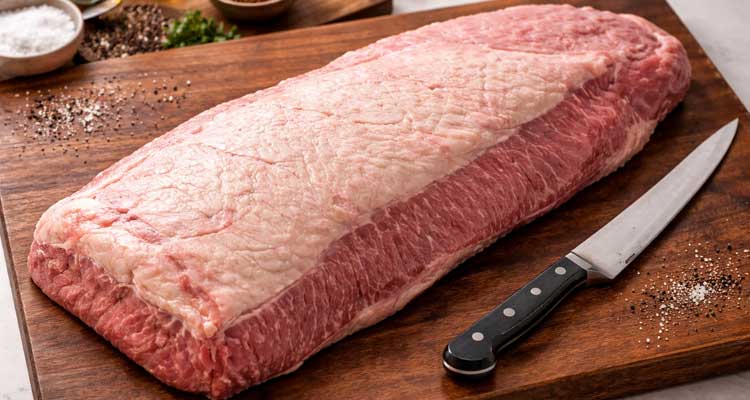
- Full packer brisket (10 to 16 lbs): 2 hours minimum; 3 to 4 hours ideal
- Oversized packer (16 to 20 lbs): 3 hours minimum; 4 to 5 hours ideal
Larger briskets hold heat longer and benefit from the extended rest. A whole packer brisket has significantly more mass, and it takes more time for the juices to redistribute fully through both the flat and the point.
 Helpful Gear:
- ThermoMaven wireless meat thermometer — helps monitor brisket during a long hold
- Bryco Goods pink butcher paper — a good fit for wrapped rests
- Cutluxe brisket slicing knife — helps with clean slices after the rest
The Best Methods for Resting Brisket
Method 1: The Faux Cambro (Cooler Method) — Recommended
This is the go-to method for most backyard pitmasters. It is simple, effective, and keeps your brisket food-safe for hours.
What you need:
- A quality insulated cooler (Yeti, RTIC, or similar)
- Clean old towels or blankets
- Butcher paper or aluminum foil (if not already wrapped)
Steps:
- Wrap your brisket tightly in butcher paper or foil if it is not already wrapped.
- Pre-warm the cooler by filling it with hot tap water for 10 to 15 minutes, then empty it.
- Wrap the brisket in clean towels for extra insulation.
- Place the wrapped brisket in the warm, empty cooler and close the lid.
- Do not open the lid until you are ready to serve.
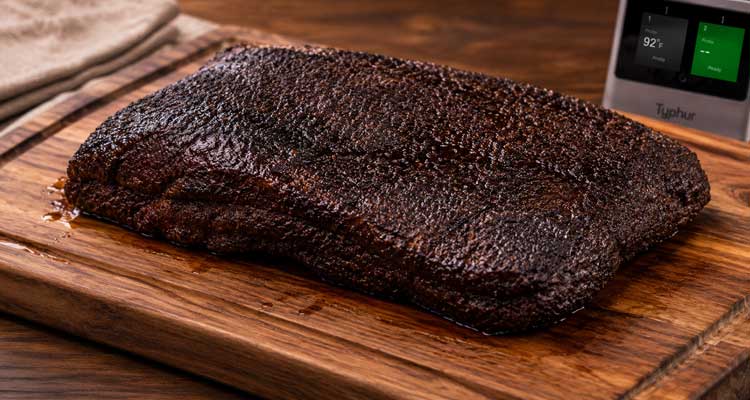
This method can keep your brisket safely above 140 degrees F for 4 to 8 hours. It is perfect when you finish cooking earlier than expected or need to transport your brisket to a gathering. A wireless meat thermometer with a leave-in probe lets you monitor temperature without opening the cooler.
Method 2: The Oven Method
If you do not have an insulated cooler, your oven can work for shorter rests.
- Preheat your oven to 170 degrees F (its lowest setting), then turn it off.
- Place your wrapped brisket inside the warm oven.
- Prop the oven door open slightly with a wooden spoon to prevent the temperature from climbing too high.
This method works well for 1 to 2 hour rests but is not reliable for longer holds since oven temperatures are harder to manage. If you want to hold for 3 or more hours, the cooler method is safer and more consistent.
Method 3: Counter Rest (Short Rest Only)
For a quick 1-hour rest, you can simply rest your brisket on the counter. Wrap it tightly in foil or butcher paper and loosely tent a second layer of foil over the top. This works fine for up to 1 hour, but temperatures will drop into the danger zone after that — so do not use this method for anything longer.
Method 4: Professional Warming Box (Advanced)
Top pitmasters like Aaron Franklin and Wayne Mueller do not rest briskets for just 2 hours — they hold them for considerably longer. Many BBQ restaurants use commercial Cambro boxes or custom warming ovens set to 160 to 170 degrees F to hold briskets for 4 to 17 hours.
One well-known example: Caldwell County BBQ in Gilbert, AZ holds their briskets at 170 degrees F for up to 17 hours before serving. The extended hold allows additional collagen breakdown and results in exceptionally tender, buttery brisket.
For home cooks who want to replicate this: set your oven to 170 degrees F (the lowest setting on most modern ovens), place your foil-wrapped brisket inside, and monitor internal temp with a leave-in probe. Keep it above 140 degrees F and you are food-safe for a very long rest.
Can You Rest Brisket Too Long?
Yes — and it is worth understanding both risks.
Food safety: Once your brisket internal temperature drops below 140 degrees F, it enters the USDA danger zone (40 to 140 degrees F), where bacteria multiply rapidly. This is the hard limit for any resting method. Brisket resting on the counter will typically hit this threshold within 1 to 1.5 hours. In a well-insulated cooler, you can safely stay above 140 degrees F for 4 to 8 hours.
Texture degradation: Even if you keep the temperature safe, a brisket rested for more than 8 hours can become mushy. The extended heat and steam continue breaking down proteins past the ideal point. You lose the structural integrity that makes each slice hold together cleanly, and the bark fully softens — even through foil or butcher paper.
The sweet spot: 2 to 4 hours in a good cooler gives you peak tenderness, juiciness, and intact bark. Beyond 6 hours, you are trading some bark quality for maximum tenderness — which is a worthwhile trade for competition or restaurant BBQ, but may not suit every backyard cook.
Resting Wrapped vs. Unwrapped
Whether you wrap during resting depends on how you cooked the brisket and what texture you are after:
Rest Wrapped (Foil or Butcher Paper)
- Retains the most moisture and heat
- Required for cooler method — you must wrap for the faux Cambro to work effectively
- Downside: bark will soften over time, especially in foil
- Butcher paper breathes slightly, preserving bark texture better than foil over 3 to 4 hour rests
Rest Unwrapped (or Loosely Tented)
- Allows bark to firm up or stay crispy
- Best for short counter rests under 1 hour
- Loses heat faster — not suitable for extended rests
- Loses slightly more moisture than wrapped resting
General rule: If you cooked with the Texas Crutch (wrapped in foil during the stall), keep it wrapped through the rest. If you cooked entirely unwrapped and have a great bark, a short counter rest loosely tented for 45 to 60 minutes preserves that crust best.
Step-by-Step: How to Rest a Brisket Properly
- Pull at the right temperature: Remove brisket from the smoker when it is probe-tender and reads 195 to 200 degrees F. Carryover cooking brings it to 203 degrees F during resting.
- Wrap immediately: If not already wrapped, wrap tightly in butcher paper or double-layer foil.
- Prepare your resting vessel: For the cooler method, pre-warm the cooler with hot water for 10 to 15 minutes then empty it completely.
- Add towel insulation: Wrap the brisket in one or two old towels before placing it in the cooler.
- Close and wait: Do not open the lid during the rest — every peek drops temperature. Plan for at least 2 hours, ideally 3 to 4.
- Monitor temperature for extended rests: If resting for 6 or more hours, use a wireless meat thermometer to verify internal temp stays above 140 degrees F.
- Slice just before serving: Only slice what you will serve immediately. Keep the rest whole to preserve moisture. Always slice against the grain. For a full packer, separate the flat and point first — they have different grain directions.
- Save the juices: Any juices accumulated in the wrap are liquid gold — pour them over sliced brisket or use as au jus.
Expert Tips for Better Brisket Resting
- Pre-warm your cooler. A cold cooler will drain heat from your brisket in the first 30 minutes, cutting your safe hold window significantly.
- Use butcher paper over foil for the rest. Foil traps steam and softens bark faster. Butcher paper allows slight moisture release and keeps bark texture better over 3 to 4 hour rests.
- Plan your cook backward. If you are serving at 5 PM, aim to have the brisket done by 1 to 2 PM. Build the rest into your timeline from the start.
- A good rub helps the rest. A quality brisket rub forms a better bark that holds up through resting more effectively than a thin seasoning layer.
- Know your investment. A full packer brisket is worth doing right. Understanding how much brisket costs per pound helps you shop smart for the right USDA grade.
For a full comparison of wireless meat thermometer options, see our wireless meat thermometer guide.
Frequently Asked Questions
How long should brisket rest?
Brisket should rest for a minimum of 1 hour, with 2 to 4 hours being ideal for the best tenderness and juiciness. Using the cooler (faux Cambro) method, you can safely extend the rest to 8 hours as long as the internal temperature stays above 140 degrees F.
What is the minimum rest time for brisket?
The absolute minimum is 1 hour. Anything less and the muscle fibers have not fully relaxed and juices have not redistributed. You will lose significantly more moisture when slicing. If you are truly pressed for time, 45 minutes is survivable — but 60 minutes is the floor for acceptable results.
Can you rest brisket too long?
Yes. Beyond 8 hours, brisket can become mushy from continued protein breakdown, and the bark fully softens regardless of wrapping method. The food safety hard limit is keeping internal temperature above 140 degrees F throughout the rest. In a warming oven at 170 degrees F you can safely go longer, but texture will eventually suffer.
How long can brisket rest in a cooler?
A brisket can safely rest in a well-insulated cooler for 4 to 8 hours. Pre-warming the cooler with hot water and wrapping the brisket in towels before placing it inside extends the safe hold window. Use a wireless probe thermometer for rests over 4 hours to verify temperature stays above 140 degrees F.
Should I rest brisket wrapped or unwrapped?
For most cooks, rest wrapped. Wrapping in butcher paper or foil retains heat and moisture, and is required for the cooler method. If you cooked entirely unwrapped and want to preserve a crispy bark, a short counter rest loosely tented for 45 to 60 minutes is your best option. Butcher paper is better than foil for resting because it allows slight steam release and softens bark less aggressively.
What temperature should brisket be when I pull it to rest?
Pull brisket off the smoker when it is probe-tender and reads 195 to 200 degrees F. Carryover cooking will raise the internal temperature another 5 to 10 degrees F during the first 15 to 20 minutes of resting, bringing it to the ideal 203 degrees F. Do not wait until it hits 203 degrees F on the smoker or it will overcook during carryover.
What temperature must brisket stay above while resting?
Brisket must stay above 140 degrees F (60 degrees C) during the entire rest to remain food-safe. Below 140 degrees F is the USDA danger zone (40 to 140 degrees F), where bacteria multiply rapidly. If your brisket drops into this range, serve it immediately or discard it — do not attempt to reheat and continue the rest.
Does rest time differ for brisket flat vs. full packer?
Yes. A brisket flat (4 to 6 lbs) needs 1 to 1.5 hours minimum, with 2 hours ideal. A full packer brisket (10 to 16 lbs) benefits from 2 hours minimum and 3 to 4 hours ideally — more mass means it holds heat longer and needs more time for juice redistribution through both the point and flat sections.
Can I rest brisket overnight?
Yes, but only with a method that maintains internal temperature above 140 degrees F throughout. An oven set to 170 degrees F with a leave-in probe thermometer can safely hold brisket overnight. A standard cooler will not maintain safe temperature for more than 6 to 8 hours. For overnight holds, a commercial Cambro box or warming oven is the right tool.
Conclusion
Mastering brisket rest time is one of the highest-leverage skills in BBQ. The cook itself takes 8 to 14 hours — do not undermine it by skipping a proper rest. Give your brisket a minimum of 1 hour, aim for 2 to 4 hours using the cooler method, and you will be rewarded with the kind of juicy, tender, bark-intact brisket that has people asking what your secret is.
The secret is patience. Plan your rest into the cook from the beginning, not as an afterthought, and your brisket will always hit the table at its best.
Ready to cook the whole brisket from scratch? Our complete how to smoke brisket guide walks through every step from trimming to the stall to slicing.