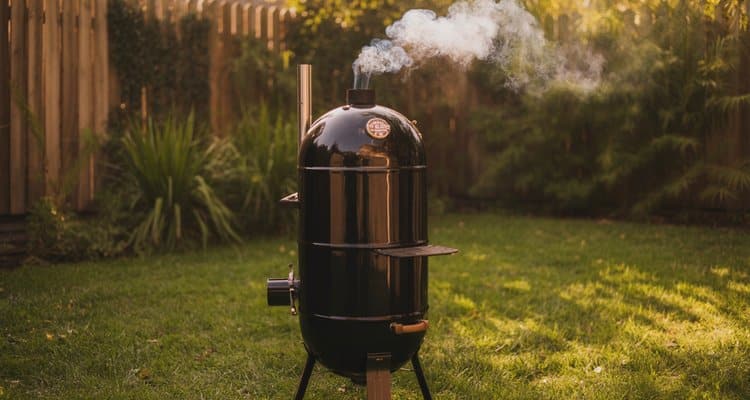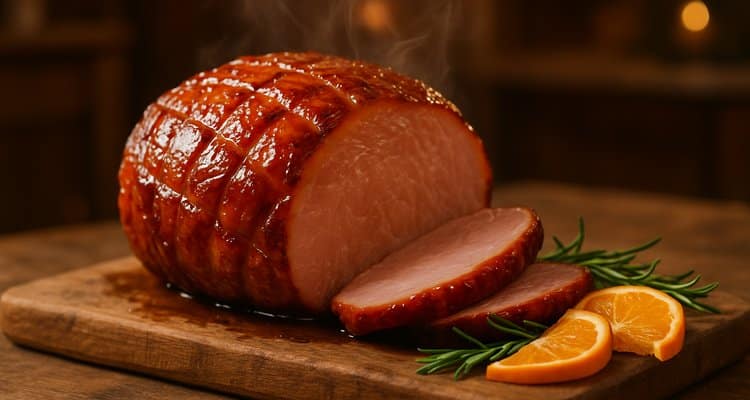
There’s something magical about a perfectly smoked ham gracing your holiday table. While traditional oven-baked hams are certainly delicious, smoking takes your holiday centerpiece to an entirely different level with layers of wood-fired flavor that simply can’t be replicated indoors. Whether you’re preparing for Christmas dinner, Easter brunch, or Thanksgiving feast, a smoked ham delivers incredible flavor while freeing up valuable oven space for all your other holiday dishes.
This complete guide walks you through everything you need to know about smoking a ham, from selecting the perfect cut to achieving that glossy, caramelized glaze that will have your guests asking for seconds. We’ll cover different ham types, essential equipment, step-by-step smoking instructions, delicious glaze recipes, and a comprehensive holiday planning timeline to ensure your smoked ham is the star of the celebration.
Understanding Your Ham: A Selection Guide
Before you fire up your smoker, understanding the different types of ham available will help you choose the best option for your holiday meal. The type of ham you select affects cooking time, technique, and final results.
Types of Ham Explained
Fresh Ham vs. Pre-Cooked Ham: A fresh ham (also called “green ham” or uncured ham) is raw pork that requires full cooking from scratch. Pre-cooked ham (sometimes called “city ham”) has already been cured and smoked, meaning you’re essentially reheating and adding flavor. Most grocery store hams are pre-cooked, making them the easier choice for holiday cooking.
Bone-In vs. Boneless: Bone-in hams deliver superior flavor because the bone helps retain moisture and adds depth during cooking. However, they’re trickier to carve. Boneless hams are convenient for slicing but may have a slightly different texture since they’ve been processed.
Spiral-Cut vs. Whole: Spiral-cut hams come pre-sliced for easy serving, but the cuts can dry out faster during smoking. Whole hams require more carving effort but retain moisture better.
Shank End vs. Butt End: The shank end has one long bone and is easier to carve but has tougher meat. The butt end is more tender with better marbling but contains part of the hip bone, making carving trickier.
Choosing the Right Ham for Your Holiday
| Ham Type | Description | Pros | Cons | Best For |
|---|---|---|---|---|
| Pre-Cooked Bone-In | Cured, smoked, ready to heat | Best flavor, retains moisture | Harder to carve | Traditional holiday meals |
| Pre-Cooked Boneless | Processed, easy to slice | Convenient carving | Less flavorful | Quick weeknight dinners |
| Spiral-Cut | Pre-sliced for serving | No carving needed | Can dry out faster | Large gatherings |
| Fresh (Uncured) | Raw pork, requires full cook | Control over flavor | Longer cook time (5-10 hrs) | BBQ enthusiasts |
| Half Ham (Shank) | Lower leg portion | Easier to carve | Slightly tougher | Smaller gatherings |
| Half Ham (Butt) | Upper leg portion | More tender meat | Tricky bone structure | Maximum tenderness |
Plan for approximately 3/4 pound of bone-in ham per person, or 1/2 pound for boneless. For a gathering of 12, a 10-pound bone-in ham is ideal.
Essential Equipment for Smoking Ham
Smoker Types
You can smoke ham on virtually any type of smoker. Pellet grills offer precise temperature control and consistent results. Offset smokers provide traditional smoke flavor but require more attention. Electric smokers are beginner-friendly with set-and-forget operation. Even a charcoal grill with indirect heat works well.
Tools You’ll Need
A reliable smoker thermometer is essential for monitoring your ham’s internal temperature. Both leave-in probe thermometers and instant-read thermometers serve important purposes. You’ll also need aluminum foil pans for catching drippings and adding moisture, silicone basting brushes for applying glaze, and a quality carving knife for serving.
Best Wood for Smoking Ham
The wood you choose significantly impacts your ham’s final flavor. Since ham already has a mild, sweet profile, you’ll want woods that complement rather than overpower.
| Wood Type | Flavor Profile | Intensity | Best Pairings |
|---|---|---|---|
| Apple | Sweet, mild, fruity | Light | Any ham, especially with fruit glazes |
| Cherry | Sweet, slightly tart | Light-Medium | Pre-cooked hams, bourbon glazes |
| Pecan | Rich, nutty, slightly sweet | Medium | Brown sugar glazes, spiral hams |
| Hickory | Strong, bacon-like | Medium-Strong | Fresh hams, savory preparations |
| Maple | Subtle, sweet | Light | Maple glazes, holiday hams |
For pellet grill users, apple or cherry pellets are excellent choices. If using a smoking wood variety pack, the fruit woods are your best bet for ham.
The Step-by-Step Guide to Smoking a Ham
Preparation
Thawing: If your ham is frozen, thaw it in the refrigerator, allowing 24 hours for every 5 pounds. A 10-pound ham needs about 2 days to thaw safely. Never thaw at room temperature.
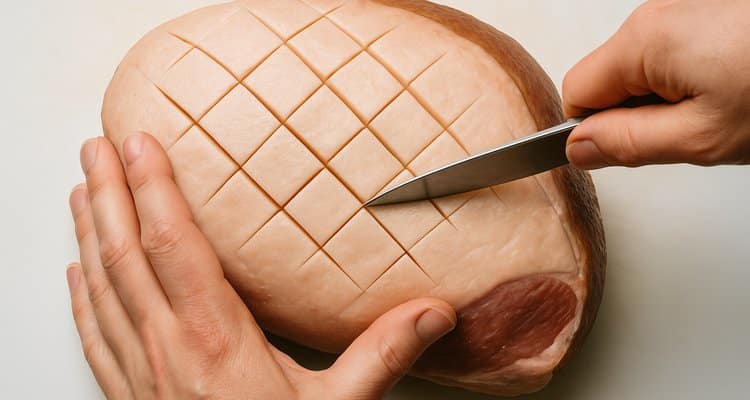
Scoring: Using a sharp knife, score the fat cap in a diamond or crosshatch pattern, cutting about 1/4-inch deep for pre-cooked ham or 1/2-inch deep for fresh ham. This allows smoke and glaze to penetrate the meat while creating an attractive presentation.
Seasoning: Pat the ham dry with paper towels. Apply a light coating of yellow mustard or olive oil as a binder, then season with your favorite BBQ rub. Many pitmasters use a simple combination of brown sugar, paprika, garlic powder, and black pepper.
The Smoking Process
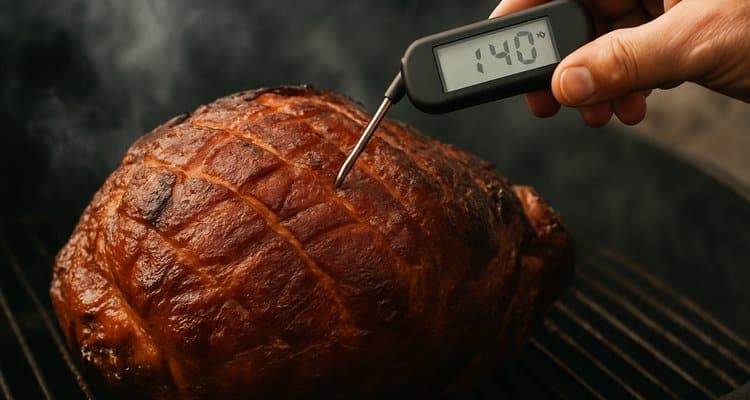
| Ham Type | Weight | Smoker Temp | Estimated Time | Target Internal Temp |
|---|---|---|---|---|
| Pre-Cooked (any) | 8-10 lbs | 225-250°F | 3-4 hours | 140°F |
| Pre-Cooked (any) | 10-14 lbs | 225-250°F | 4-5 hours | 140°F |
| Spiral-Cut | 8-10 lbs | 225-250°F | 2.5-3.5 hours | 140°F |
| Fresh (Uncured) | 10-14 lbs | 225-275°F | 5-8 hours | 145°F minimum |
| Fresh (Uncured) | 14-18 lbs | 225-275°F | 7-10 hours | 145°F minimum |
Step 1: Preheat your smoker to 225-250°F with your chosen wood.
Step 2: Place the ham cut-side down in an aluminum pan or directly on the grates. Insert a leave-in probe thermometer into the thickest part of the meat, avoiding the bone.
Step 3: Smoke uncovered for the first 1.5-2 hours to build smoke flavor.
Step 4: After the initial smoke period, you can add liquid (apple cider, chicken broth, or pineapple juice) to the pan and tent loosely with foil to retain moisture.
Step 5: Baste every 30-45 minutes with pan drippings or your basting liquid to keep the surface moist.
Glazing the Ham
The glaze is where holiday magic happens. Begin applying glaze when your ham reaches an internal temperature of about 130°F, typically during the last 30-45 minutes of cooking.
Glazing Technique:
- Remove foil covering
- Brush warm glaze generously over entire surface
- Return to smoker for 10-15 minutes
- Apply another layer of glaze
- Repeat 2-3 times until ham reaches 140°F
For maximum caramelization, you can briefly broil the glazed ham in your oven (watching carefully) or increase smoker temperature to 350°F for the final 10 minutes.
Resting and Carving
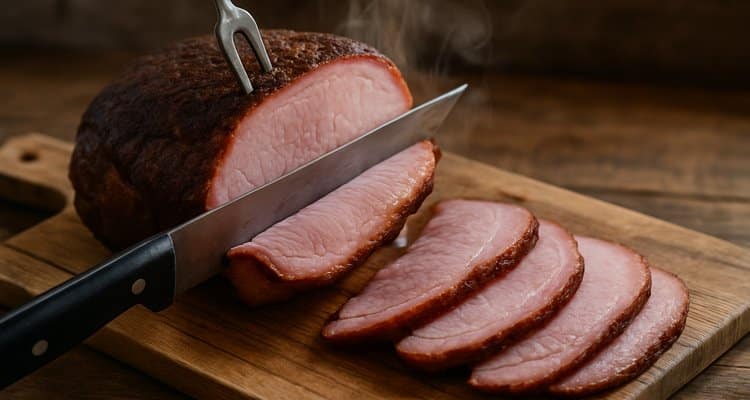
Once your ham reaches the target internal temperature, remove it from the smoker and tent loosely with foil. Let it rest for 15-30 minutes before carving. This allows juices to redistribute throughout the meat.
For bone-in hams, carve parallel slices perpendicular to the bone, then cut along the bone to release slices. For boneless hams, simply slice to your desired thickness.
Smoking Ham Variations
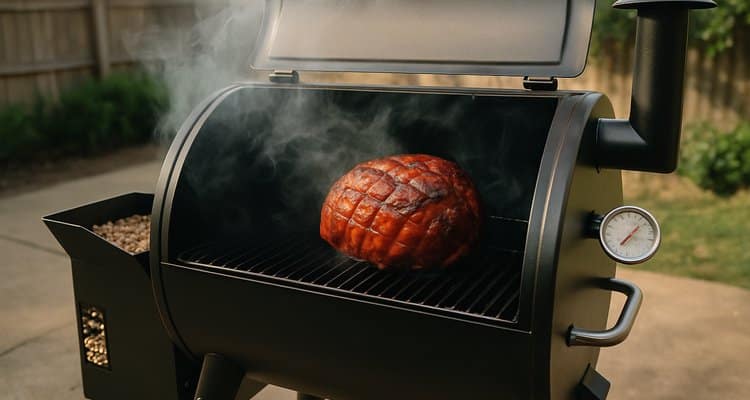
How to Smoke a Ham on a Pellet Grill
Pellet grills excel at smoking ham due to their precise temperature control. Set your pellet grill to 225°F and use fruit wood pellets like apple or cherry. The automated pellet feed maintains consistent smoke throughout the cook. Most pellet grills have a “smoke” setting (around 180°F) that’s perfect for the first hour if you want maximum smoke flavor before increasing to 225°F.
Double Smoked Ham (Re-smoking Pre-Cooked Ham)
“Double smoked” or “twice smoked” ham refers to smoking a ham that’s already been commercially smoked. Since store-bought hams are typically cured and smoked during processing, you’re adding a second layer of smoke flavor. This technique works exceptionally well because the mild commercial smoke gets enhanced without becoming overpowering. Simply follow the standard smoking process using a lighter wood like apple or cherry.
Smoking a Fresh/Uncured Ham
Fresh ham requires significantly more time since you’re cooking raw pork. Plan for 5-10 hours depending on size. The internal temperature must reach at least 145°F for food safety. Many pitmasters brine fresh ham for 2-3 days before smoking to add moisture and flavor. Fresh ham develops a darker bark and more intense smoke flavor than pre-cooked varieties.
Smoking a Spiral Ham
Spiral hams need extra attention to prevent drying out between the slices. Place the ham in a pan with 1/2 cup of liquid (apple juice works great). Keep the ham covered with foil for most of the cook, only removing it during the final glazing stages. Baste frequently between the spiral cuts to keep each slice moist.
Irresistible Ham Glaze Recipes
Maple Bourbon Glaze (Featured)
This sophisticated glaze balances sweetness with a warm bourbon kick.
Ingredients:
- 1 cup pure maple syrup
- 1/4 cup bourbon
- 1/2 cup packed brown sugar
- 2 tablespoons Dijon mustard
- 1 teaspoon ground cinnamon
- 1/4 teaspoon ground cloves
Instructions: Combine all ingredients in a saucepan over medium heat. Stir until sugar dissolves and mixture simmers. Reduce heat and simmer for 5 minutes until slightly thickened. Use warm.
Classic Brown Sugar & Honey Glaze
The timeless combination that never disappoints.
Ingredients:
- 1 cup packed brown sugar
- 1/4 cup honey
- 1 tablespoon Dijon mustard
- 2 teaspoons Worcestershire sauce
- 1/2 teaspoon ground ginger
Instructions: Whisk all ingredients in a saucepan over medium heat until smooth and bubbling. Simmer 2-3 minutes. Apply while warm.
Spicy Apple Cherry Habanero Glaze
For those who enjoy sweet heat, this glaze delivers complex flavors.
Ingredients:
- 1 cup apple jelly
- 1/4 cup cherry preserves
- 2 tablespoons brown sugar
- 1-2 teaspoons habanero hot sauce (adjust to taste)
- 1 tablespoon apple cider vinegar
Instructions: Melt jelly and preserves together over medium heat. Stir in remaining ingredients. Simmer until combined. Taste and adjust heat level.
Holiday Planning & Prep Timeline
Successful holiday ham requires planning ahead. Use this timeline to stay organized and stress-free.
| Time Before Holiday | Task | Notes |
|---|---|---|
| 1 Week | Purchase ham | Calculate 3/4 lb per person for bone-in |
| 3-4 Days | Begin thawing in refrigerator | Allow 24 hours per 5 lbs |
| 2 Days | Prepare glaze | Store covered in refrigerator |
| 1 Day Before | Gather equipment, check smoker | Ensure enough wood/pellets |
| Morning Of | Score and season ham | Let sit at room temp 1-2 hours before smoking |
| 5-6 Hours Before Serving | Start smoking | Account for cook time plus 30 min rest |
| 1 Hour Before Serving | Begin glazing process | Apply 3-4 coats during final hour |
| 30 Minutes Before | Rest and carve | Tent with foil while resting |
Make-Ahead Tips
- Glaze can be made 2-3 days ahead and refrigerated
- Dry rub can be applied the night before
- Score the ham a day ahead and refrigerate
- Leftover smoked ham freezes well for up to 3 months
Troubleshooting Common Smoked Ham Issues
Dry Ham: This usually results from overcooking or insufficient moisture. Add liquid to your pan, baste more frequently, and pull the ham at exactly 140°F for pre-cooked varieties. Covering with foil during most of the cook helps retain moisture.
Uneven Cooking: Rotate your ham 180 degrees halfway through cooking. Check for hot spots in your smoker and adjust accordingly. Using a water pan helps stabilize temperature.
Lack of Smoke Flavor: Ensure you’re using fresh wood (chips or chunks should be less than 6 months old). Don’t over-wrap with foil early in the cook, as smoke needs direct contact with meat. Try lowering temperature to 225°F for the first 2 hours.
Temperature Stalls: Like brisket, ham can experience temperature plateaus around 150-160°F. This is normal and caused by evaporative cooling. Be patient and don’t increase temperature – the stall will pass.
Serving & Storage
| Ham Type | Weight | Estimated Servings |
|---|---|---|
| Bone-In | 6-8 lbs | 8-10 people |
| Bone-In | 10-12 lbs | 12-16 people |
| Bone-In | 14-16 lbs | 18-22 people |
| Boneless | 4-6 lbs | 8-12 people |
| Boneless | 8-10 lbs | 16-20 people |
Side Dish Pairings
Smoked ham pairs beautifully with scalloped potatoes, mac and cheese, green bean casserole, glazed carrots, sweet potato casserole, and cornbread. Since your smoker did the heavy lifting, you’ll have plenty of oven space for these classic accompaniments.
Storage Guidelines
- Refrigerator: Store leftover ham in an airtight container for 3-4 days
- Freezer: Wrap tightly in plastic wrap and foil for up to 2-3 months
- Leftover Ideas: Ham sandwiches, omelets, ham and bean soup, fried rice, ham salad
If you enjoyed this smoking guide, you might also like our complete guide to smoking turkey for your next holiday meal.
Frequently Asked Questions
What’s the ideal internal temperature for smoked ham?
For pre-cooked ham, target 140°F internal temperature. For fresh (uncured) ham, you must reach at least 145°F for food safety. Use a reliable meat thermometer to verify temperature in the thickest part of the meat, avoiding the bone.
How long does it take to smoke a pre-cooked ham versus a fresh ham?
Pre-cooked ham takes approximately 15-20 minutes per pound at 225-250°F, typically 3-5 hours for an average ham. Fresh ham requires much longer – around 20-25 minutes per pound, often 5-10 hours depending on size.
Do I need to brine my ham before smoking?
Pre-cooked hams are already cured and don’t need brining. For fresh ham, brining for 2-3 days adds moisture and flavor. A simple brine includes water, salt, brown sugar, and aromatics like peppercorns and bay leaves.
What are the best wood types for smoking ham?
Fruit woods like apple and cherry are ideal for ham, providing sweet, mild smoke that complements the meat’s natural flavor. Pecan offers a richer, nuttier smoke. Avoid heavy woods like mesquite, which can overpower ham’s delicate taste.
How do I prevent my smoked ham from drying out?
Use a pan with liquid (apple juice, broth, or cider), baste regularly, keep the smoker temperature at 225-250°F, cover with foil during most of the cook, and don’t overcook past 140°F for pre-cooked varieties.
Can I smoke a spiral-cut ham without it becoming dry?
Yes, but it requires extra care. Place spiral ham in a pan with liquid, keep it covered with foil until the last hour, and baste frequently between the slices. The pre-cuts allow glaze to penetrate but also release moisture.
What’s the difference between single-smoked and double-smoked ham?
Single-smoked ham has been smoked once during commercial processing. Double-smoked (or twice-smoked) ham is when you smoke a pre-smoked commercial ham again at home, adding another layer of wood-fired flavor.
When should I apply the glaze to my smoked ham?
Start glazing when the ham reaches about 130°F internal temperature, typically during the last 30-45 minutes of cooking. Apply multiple thin coats every 10-15 minutes, allowing each to set slightly before adding more.
How much smoked ham should I plan per person?
Plan for 3/4 pound per person for bone-in ham, or 1/2 pound per person for boneless. For a gathering of 12 people, a 10-pound bone-in ham or 6-pound boneless ham is ideal.
What’s the best way to store leftover smoked ham?
Store leftover ham in an airtight container in the refrigerator for 3-4 days. For longer storage, wrap tightly in plastic wrap and aluminum foil, then freeze for up to 2-3 months. Thaw in refrigerator before reheating.
Can I use a pellet grill to smoke a ham?
Absolutely! Pellet grills are excellent for smoking ham due to their precise temperature control. Set to 225°F, use fruit wood pellets (apple or cherry work great), and follow the standard smoking process. Many pellet grills have a dedicated smoke setting perfect for the initial smoke phase.
How do I fix common issues like uneven cooking?
Rotate your ham 180 degrees halfway through cooking to address hot spots. If the exterior is browning too quickly, tent loosely with foil. For persistent temperature issues, use a water pan to help stabilize smoker temperature. Always verify your smoker’s actual temperature with an independent thermometer.
Conclusion
Smoking a ham for the holidays transforms an already delicious cut of meat into something truly extraordinary. With the right preparation, proper temperature control, and a well-timed glaze application, you’ll create a centerpiece that delivers incredible smoky flavor while keeping your oven free for all those holiday sides.
Remember the key points: choose a quality ham suited to your needs, maintain steady smoker temperatures between 225-250°F, start glazing around 130°F internal temperature, and always let your ham rest before carving. With this guide and a little practice, you’ll be smoking holiday hams that your family talks about for years to come.
Fire up that smoker and make this holiday season your most delicious yet!
Contents