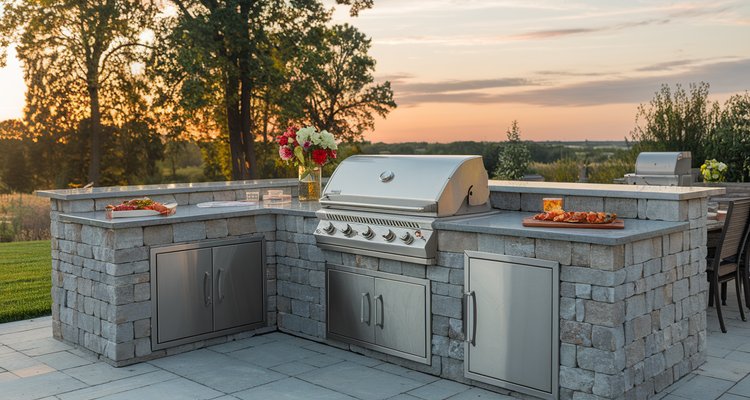
An outdoor kitchen transforms your backyard into a true entertainment hub – but getting from vision to reality takes careful planning. This guide covers every step, from setting your budget and mapping your layout to navigating utility hookups, permits, and material selection. We focus on practical decision-making and practical modular outdoor kitchen options that deliver a built-in look without the cost or timeline of a full custom build.
Quick Summary
- Plan First: Define your budget, ideal location, necessary utilities, core appliances, and durable materials before starting. These decisions prevent costly changes later.
- Cost Varies by Approach: DIY builds offer the lowest material cost but require significant skill. Modular kits provide a high-end look with easier assembly, while custom builds offer unlimited design at the highest investment.
- Permits and Professionals: New gas lines, electrical circuits, or permanent plumbing almost always require permits and licensed professionals. Always check with your local building department and HOA.
- Durable Materials: Choose welded aluminum or stainless steel for frames, and granite or sealed concrete for countertops to ensure longevity against outdoor elements.
Planning Your Outdoor Kitchen: The 5 Decisions You Need to Make First
Before buying anything, settle five key questions: your total budget and project scope, the ideal location and layout for your space, what utilities you need (gas, electric, water), which core appliances you want, and the most durable materials for your climate. These five decisions shape every step that follows and prevent costly mid-project changes.
1. Define Your Budget and Scope
Establish a realistic budget that accounts for appliances, materials, and potential labor costs. Then decide your approach: a full DIY build, a semi-DIY modular outdoor kitchen kit, or a fully custom project. Your budget is the primary filter for every decision that comes next.
2. Choose Your Location and Layout
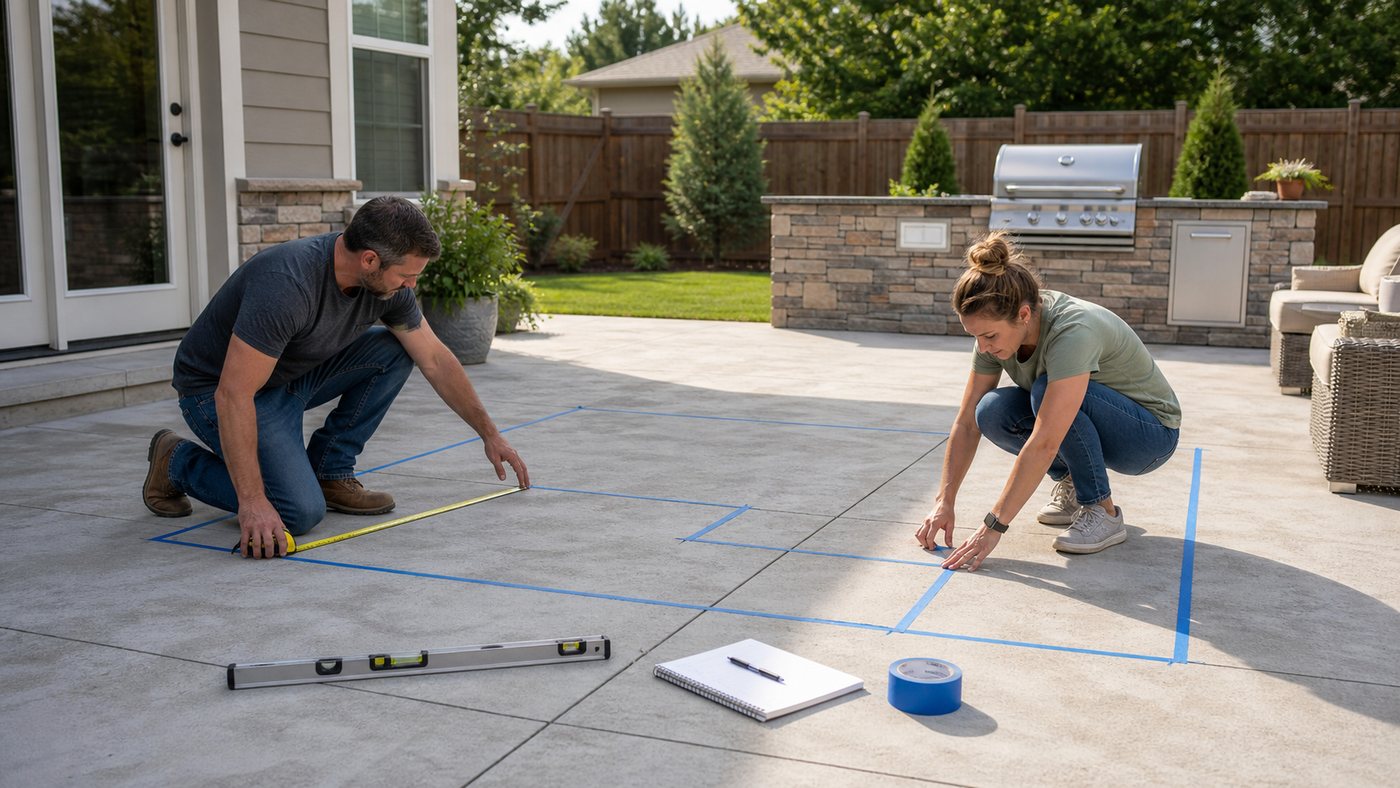
Assess your backyard for a suitable spot by considering traffic flow, wind direction, and sun exposure. Measure the available space carefully to confirm your planned kitchen will fit with adequate clearance to move safely. Proximity to your indoor kitchen also matters for carrying food and supplies during a party.
3. Plan Your Utilities
Decide early whether you’ll connect to natural gas or use a portable propane tank. Plan for electrical needs – a refrigerator, lighting, or a rotisserie all require outdoor-rated outlets. If you want a sink, factor in a water supply and a drainage solution before your layout is finalized, since both affect where the kitchen can be positioned.
4. Select Your Core Appliances
The built-in grill is the centerpiece of any outdoor kitchen – its size and fuel type determine the dimensions of everything around it. If you are still choosing the appliance, start with our guide to the best gas grills under $3,000 before locking in cutout dimensions. Then consider supporting components: access doors for storage, a side burner for sauces, or a small outdoor refrigerator. List your must-haves before committing to any layout so nothing gets left out after the frame is built.
5. Pick Your Materials and Finishes
Choose a frame material that can withstand your local climate – welded aluminum and stainless steel are the top choices for outdoor durability. If you are matching the island to a freestanding cooker, our guide to the best gas grills under $3,000 can help narrow the appliance style first. Select a countertop based on how you’ll use the space and how much maintenance you’re willing to do. The finish on your kitchen base – stucco, stone veneer, or stainless panels – sets the final aesthetic and affects long-term upkeep as well.
How Much Does an Outdoor Kitchen Cost?
The cost of an outdoor kitchen depends almost entirely on your approach. A basic DIY project can start at a few thousand dollars in materials, while modular kits represent a mid-range investment that most homeowners find to be a strong balance of quality and value. Fully custom-built outdoor kitchens require a significant budget and can climb much higher based on size, materials, and the number of trades involved.
| Approach | Typical Investment | Project Timeline | DIY-Friendly | Best For |
|---|---|---|---|---|
| DIY Build | Lowest (materials only) | 2-6 months | High – but requires skill | Experienced builders with time and the right tools |
| Modular Kit | Mid-range investment | 4-8 weeks total | Moderate – assembly is simple | Homeowners wanting a polished result without a long build |
| Custom Build | Highest investment | 3-6+ months | Low – contractors required | Those with a large budget and a specific custom vision |
DIY Outdoor Kitchen
Building entirely from scratch gives you the lowest material cost and complete creative control. The tradeoff is labor-intensive work, a significant skill requirement for framing, tile, and potentially plumbing, and a higher potential for costly mistakes. This approach suits experienced builders who have both the time and the right BBQ tools to see a complex project through.
Modular Outdoor Kitchen
A modular outdoor kitchen kit provides a streamlined path to a high-end look at a fraction of custom cost. Most kits arrive mostly pre-built and can be assembled in a day or two without contractors. This is a great fit for homeowners who want a polished, functional backyard kitchen without months of construction disruption.
Custom-Built Outdoor Kitchen
A custom build offers unlimited design possibilities and perfect integration into your existing landscape and home architecture. The cost reflects that flexibility: multiple contractors, longer timelines, and materials chosen outside the economies of a packaged kit. This path makes sense for those with a substantial budget and a specific vision that modular options can’t replicate.
Location and Layout Planning
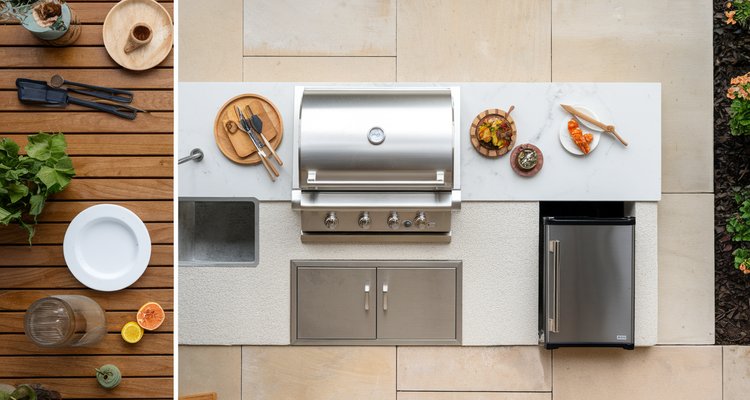
Effective layout planning keeps your outdoor kitchen both functional and safe. Apply the outdoor work triangle concept, grouping your grill (hot zone), refrigerator (cold zone), and sink (wet zone) within a few steps of each other. Factor in traffic patterns, prevailing wind direction, and proximity to your indoor kitchen to maximize convenience during every cookout.
How Much Space Do You Need?
A simple grill island can fit comfortably in a 10×10 foot space and still leave room for a cook to work safely. For an L-shaped layout with bar seating, plan for at least 15×15 feet. In all cases, leave 3-4 feet of open clearance around the kitchen for safe traffic flow during cooking and entertaining.
The Outdoor Work Triangle
The classic kitchen work triangle adapts naturally to the outdoors. The hot zone (grill and side burners), cold zone (refrigerator or ice chest), and wet zone (sink and prep area) should each be within a few steps of the others. Keeping these zones compact reduces unnecessary movement during cooking and makes hosting feel genuinely effortless.
Traffic Flow and Safety
Position your kitchen so it doesn’t block the main pathways through your yard. The grill should maintain a safe distance from combustible materials, including your home’s siding and any overhead wood structures.[NFPA] When serving, keep hot food at 140°F or warmer[USDA]. Separating the cooking area from play zones is also a key safety consideration.
Sun, Shade, and Wind
Track how the sun moves across your yard at different times of day – an overhead pergola or shade sail can make an afternoon cookout significantly more comfortable. Position the grill so the prevailing wind carries smoke away from both your seating area and your house. Orienting the kitchen to capture natural shade also extends how many months per year the space is usable.
Utilities: Gas, Electric, and Water Explained
Utility planning often determines whether your outdoor kitchen is truly functional or just visually impressive. Gas fuels your grill and side burner, electricity powers refrigeration and lighting, and water enables a proper prep-and-clean workspace. Each utility involves different complexity and professional requirements – understanding all three before finalizing your design prevents significant rework later.
Gas Lines: Propane vs. Natural Gas
Propane is the simplest option: most modular kits are designed to house a standard 20-pound tank, and no professional installation is required to get started. Natural gas requires running a dedicated line from your home’s supply to the kitchen – work that must be performed by a licensed plumber or gas fitter. Natural gas is ideal for frequent entertainers since there’s no tank to monitor or swap out mid-party. Most quality built-in grills are available in both propane and natural gas configurations, so you can choose based on your existing setup. If you entertain regularly, the upfront cost of a gas line installation typically pays for itself in convenience over time. Many homeowners start with propane and add a natural gas line later once they’ve confirmed the kitchen location is permanent.
Electrical Requirements for Outdoor Kitchens
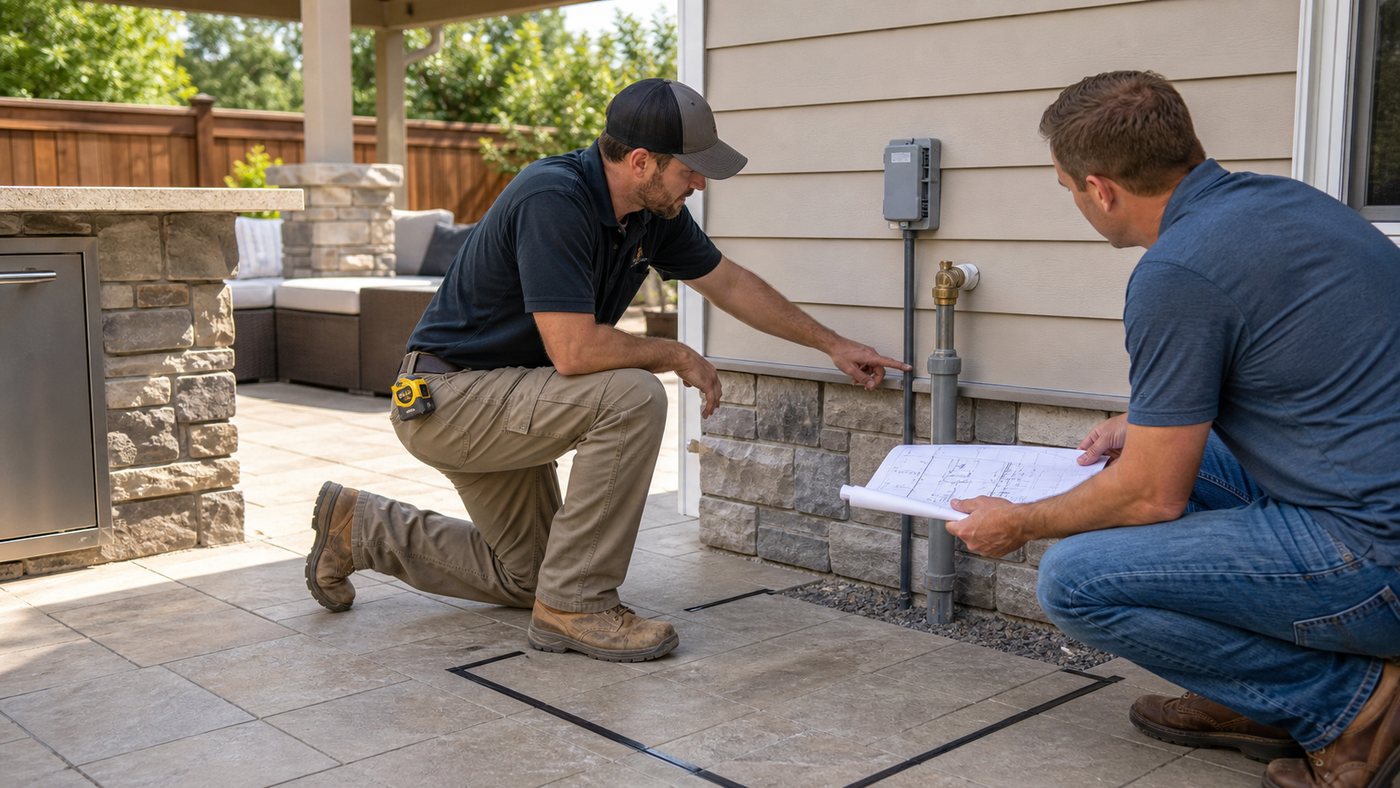
Outdoor electrical outlets are essential for a refrigerator, rotisserie motor, ambient lighting, or a blender at the bar area. Every outdoor outlet must be Ground Fault Circuit Interrupter (GFCI) protected – this is a code requirement in virtually every jurisdiction, not just a best practice. All wiring and outlet boxes must be rated for outdoor use and housed in weatherproof covers, and this work should be completed by a licensed electrician.
Plumbing for Sinks and Refrigerators
The simplest sink setup uses a garden hose for cold water supply and a drain hose routed to a nearby landscape drain for wastewater. For full hot and cold running water, a plumber will need to tap into your home’s supply lines and run them underground or through a conduit to the kitchen. Outdoor icemakers require the same water supply considerations along with a proper drain line for the waste water output.
Helpful products for this guide:
- TempPro TP20 500FT Wireless Meat Thermometer with Dual Meat — helps verify doneness without guessing
- ThermoMaven wireless meat thermometer — helps verify doneness without guessing
- Typhur Sync WiFi Wireless Meat Thermometer Digital — helps verify doneness without guessing
Choosing Durable Materials for Your Outdoor Kitchen
Material selection determines how well your outdoor kitchen holds up over years of heat, UV exposure, rain, and freeze-thaw cycles. Durable choices prioritize weather resistance and low maintenance over appearance alone. What looks great in a showroom may not hold up after five seasons outdoors if the material wasn’t engineered for exterior conditions.
Frame Materials
Welded aluminum is the top choice for most modular outdoor kitchen frames – it’s lightweight, structurally strong, and cannot rust, making it ideal for any climate. Stainless steel is similarly durable with a more premium aesthetic, though it typically costs more and weighs significantly more. Wood frames can look beautiful but require regular sealing and staining to prevent rot, and they’re not recommended in wet or high-humidity climates without substantial ongoing maintenance.
Countertop Materials
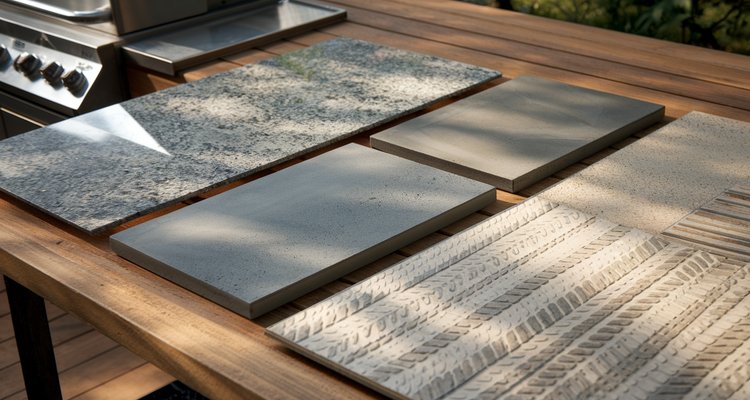
Granite is the gold standard for outdoor kitchen countertops – it resists heat from hot pans, shrugs off scratches, and handles weathering well with periodic sealing. Sealed concrete offers a modern industrial aesthetic and excellent durability, but requires proper sealing to prevent staining and must be specified for freeze-thaw climates. Porcelain or large-format ceramic tile is the most budget-friendly option with a wide range of design styles, though grout lines require more routine cleaning to stay presentable in a working outdoor kitchen.
The Best Modular Outdoor Kitchen Kits
After planning your space and utilities, a modular kit is the fastest path from decision to first cookout. These pre-fabricated islands and component systems deliver a built-in look without the custom construction timeline or the uncertainty of a full DIY build. The options below represent a strong approach for each type of builder – from turnkey all-in-one solutions to component sets for those building a custom frame. For a deeper look at the full modular market, the companion guide to best outdoor kitchen kits and modular systems covers complete modular setups by budget and use case.
| Feature | Blaze Island (Best All-in-One) | Bull Component Set (Best DIY) | Mont Alpi 805 (Benchmark) |
|---|---|---|---|
| Type | All-in-One Island | Component Set (Drop-in) | All-in-One Island (L-shape) |
| Frame | Welded Aluminum | N/A (components only) | Stainless Steel |
| Countertop | Granite (included) | User supplied | Included |
| Grill | 4-Burner Blaze | 5-Burner Bullet (drop-in) | 6-Burner |
| Fuel | Propane or Natural Gas | Propane (LP) | Propane or Natural Gas |
| Best For | Turnkey backyard kitchen | Custom DIY island builds | Premium benchmark reference |
Premium Benchmark: Mont Alpi 805 Deluxe Island
The Mont Alpi 805 represents the high end of the modular outdoor kitchen market – a massive L-shaped system featuring a 6-burner grill, a refrigerator, and an integrated sink in a single premium package. We include it here as a benchmark illustrating what the top tier of modular looks like in terms of scope, feature set, and stainless steel construction quality. Our primary recommendations below deliver strong performance at a considerably lower investment level for most homeowners.
Best All-in-One Island: Blaze Outdoor Kitchen Island

The Luxury Living Supply Outdoor Kitchen Island with Blaze Grill is the ideal solution for someone who wants a built-in look without the complexity of a full custom build. It arrives nearly fully assembled with a welded aluminum frame and a real granite countertop. Once it is placed, you connect your fuel source and start cooking. A natural gas version is also available for homes with an existing gas line already in place.
What We Like
- Delivers a high-end, custom appearance without requiring contractors or permits for the island itself.
- The welded aluminum frame and granite countertop are built to handle outdoor conditions without rusting or warping over time.
- Powered by a Blaze 4-burner grill known for consistent heat distribution and long-term reliability.
- Built-in storage and a hidden trash compartment keep the cooking area organized and out of sight during entertaining.
What We’d Improve
- The fixed layout and finish options limit customization for unusual patio shapes.
- The heavy pre-built island requires careful delivery access and final placement planning.
Specifications
- Frame: Welded Aluminum
- Countertop: Granite (included)
- Grill: Blaze 4-Burner (Propane or Natural Gas models available)
- Storage: Access doors, hidden trash pull-out drawer
- Availability: Usually ships within 6-7 days
Best for Custom Builds: Bullet by Bull Component Set
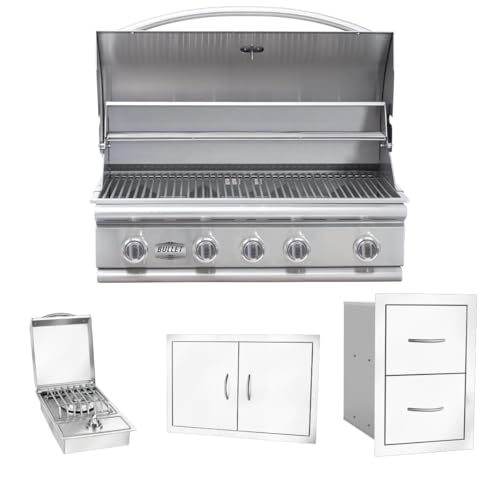
The Bullet by Bull Stainless Steel Outdoor Kitchen Grill Set provides the stainless steel core for an ambitious DIY outdoor kitchen build. The bundle includes a 5-burner drop-in grill, a side burner, a double access door, and a double storage drawer. Those components equip a custom-built island without forcing you into a fixed layout. You design and build the frame and countertop around the set to fit your exact space.
What We Like
- Allows you to design a truly custom island that fits your specific dimensions, frame material, and countertop preference.
- All components are stainless steel, giving the finished kitchen a cohesive, professional appearance regardless of the frame you build.
- The 5-burner drop-in grill and side burner together provide substantial cooking capacity for larger gatherings.
- Bundling the core components offers better value than purchasing each piece individually.
What We’d Improve
- This is not a complete island kit, so the frame, countertop, and finish materials are still separate decisions.
- It requires more DIY planning and measuring than an all-in-one modular island.
Specifications
- Material: Stainless Steel
- Included: 5-Burner Drop-in Grill (LP), Side Burner, Double Access Door, Double Storage Drawer
- Fuel: Liquid Propane (LP)
- Availability: Limited stock – order soon
Do You Need a Permit for an Outdoor Kitchen?
Yes, permits are often required – especially for any work involving new gas lines, electrical circuits, or permanent plumbing. A freestanding modular kitchen running on a propane tank may not need one, but any permanent structure or utility work almost certainly will. Always verify with your local building department before starting work, since skipping a required permit can result in fines or orders to remove completed work.
When Permits Are Usually Required
- Running a new natural gas line to the outdoor kitchen location
- Installing new electrical outlets, circuits, or a sub-panel for the outdoor area
- Any permanent plumbing work including sink supply lines and drain connections
- Building a permanent structure with a foundation, masonry base, or attached roof
Checking with Your Local Municipality
Before starting any work, call or visit your local building department’s website to confirm exactly what requires a permit in your jurisdiction. Requirements vary significantly by city and county, so don’t assume the same rules apply as elsewhere. Permitted utility work also gets inspected, which gives you professional verification that gas and electrical connections were made correctly and safely.
Don’t Forget HOA Approvals
If you live in a community governed by a Homeowners Association, you’ll need to submit your plans for approval before any work begins. HOAs often have rules about the size, location, materials, and appearance of outdoor structures. Get written approval in hand before ordering materials or scheduling contractors – verbal approval from an HOA representative is not sufficient protection.
Project Timeline: From Planning to Your First Cookout
A realistic timeline for a modular outdoor kitchen build is 4-8 weeks from start to finish. The longest phase is typically waiting for product delivery, not the physical assembly itself. Planning the project phases in sequence – and using the delivery wait productively for site prep and utility scheduling – keeps the overall schedule as tight as possible.
Phase 1: Planning and Design (1-2 Weeks)
Finalize your budget, layout, material selections, and appliance choices. If your HOA requires approval, which can take 14-30 days, submit your plans now so the review process doesn’t become a bottleneck. Use this time to get quotes from your electrician and plumber so you can schedule utility work well in advance of delivery.
Phase 2: Ordering and Delivery (2-4 Weeks)
Place orders for your modular kit, appliances, and any additional materials simultaneously. Delivery lead times for large items like kitchen islands can range from 1-4 weeks depending on the manufacturer and time of year. Ordering everything at once ensures that one delayed shipment doesn’t hold up the entire project.
Phase 3: Site Prep and Utility Work (1 Week)
While waiting for delivery, prepare the site. If pouring a new concrete pad, allow at least 72 hours for it to cure sufficiently before placing heavy objects on it. Schedule your licensed electrician and plumber to run the utility lines; this work often takes 4-8 hours per trade. Completing utility rough-in during the delivery window is the most effective way to compress the project timeline. Aim to have all connections ready before your kit arrives.
Phase 4: Assembly and Installation (1-3 Days)
Once your kit arrives, assemble the frame and install the drop-in components. Most modular kits are designed for a capable homeowner to complete this with basic hand tools in about 4-6 hours. Keep the right BBQ tools nearby for final setup and cleanup.
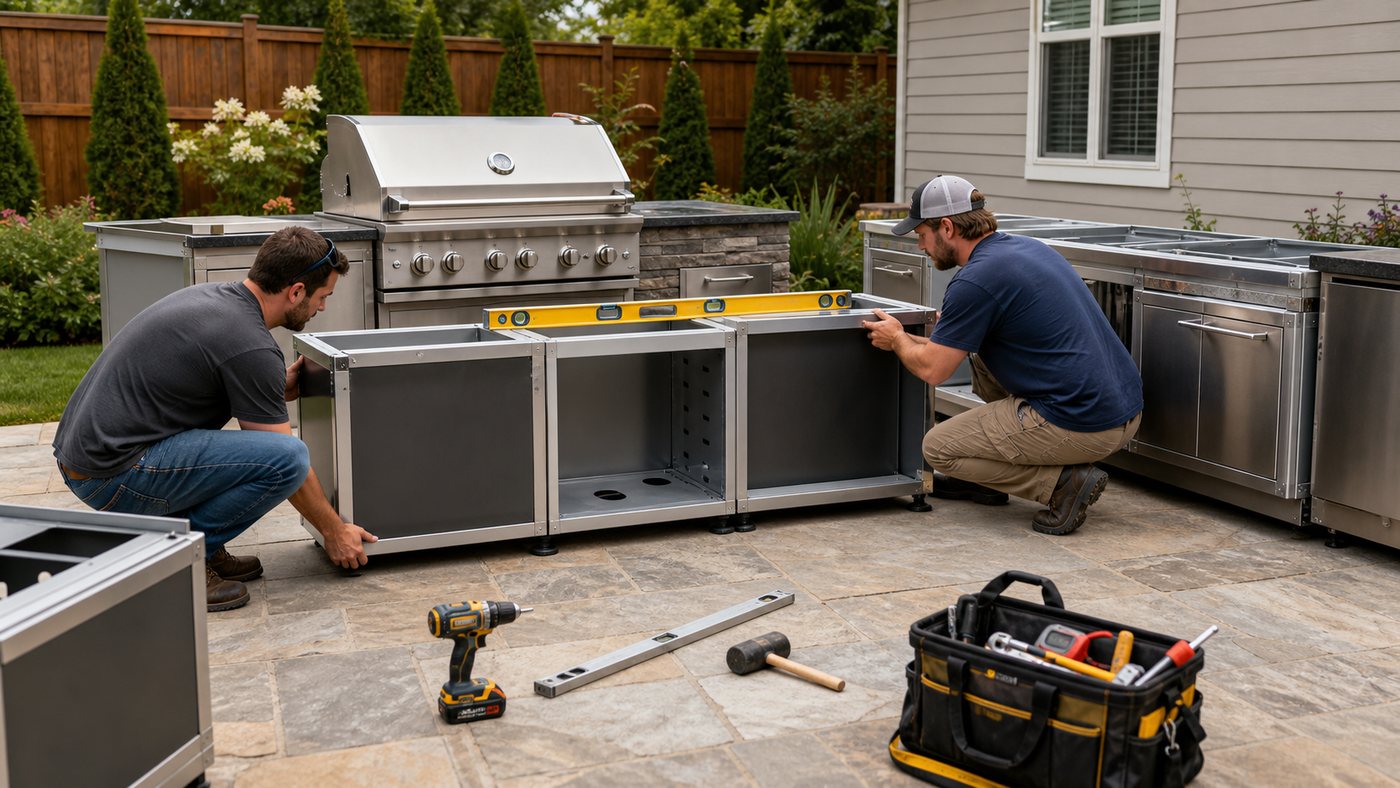
This is the most DIY-friendly phase; earlier steps involving utilities and permits are where professional help is essential.
Once the kitchen is installed, protect exposed appliances between cooks. A fitted cover is still useful even under a pergola, and our grill cover guide explains what to look for in weather-resistant materials.
Frequently Asked Questions
What is the most effective layout for an outdoor kitchen?
An L-shaped layout is most effective for backyards with sufficient space – it creates a natural work triangle between the grill, sink, and refrigerator while providing ample counter space for prep and serving. For smaller areas, a linear or galley-style layout keeps everything accessible without requiring as much square footage.
Can I build an outdoor kitchen myself?
Yes, especially with a modular kit – assembling the frame and installing drop-in components are very DIY-friendly tasks that most handy homeowners can complete in a weekend. However, any work involving natural gas lines, new electrical circuits, or permanent plumbing must always be performed by licensed professionals for both safety and code compliance.
What is the most durable countertop for an outdoor kitchen?
Granite is the most popular and durable outdoor countertop choice – it resists heat from hot pans, handles scratches well, and weathers outdoor conditions with periodic sealing. Sealed concrete and large-format porcelain tile are also excellent options that offer different aesthetics with comparable durability in most climates.
Do I need a permit for an outdoor kitchen?
It depends on your local jurisdiction and what your outdoor kitchen involves. A portable propane-powered modular island often requires no permit. Any project that includes new gas lines, electrical circuits, permanent plumbing, or a permanent foundation structure almost always does – check with your local building department before starting.
How long does it take to build an outdoor kitchen?
A modular outdoor kitchen typically takes 4-8 weeks from the start of planning to the first cookout. Most of that time is delivery lead time and utility scheduling, not actual construction. The physical assembly of a modular kit can be completed in 1-3 days once all materials and components are on site.
What is the difference between a modular and custom outdoor kitchen?
A modular outdoor kitchen uses pre-fabricated islands and component sets that you assemble and connect, resulting in a built-in look at a fraction of custom cost. A custom build is constructed on-site by contractors using masonry, concrete, or steel framing, offering unlimited design flexibility at significantly higher cost and with longer timelines.
What size outdoor kitchen do I need?
A simple grill island with minimal counter space can fit in a 10×10 foot footprint. For a more functional setup with seating and prep space, plan for at least 15×15 feet. Always leave 3-4 feet of open clearance around the kitchen perimeter for comfortable movement during cooking and entertaining.
Should I use propane or natural gas for my outdoor kitchen?
Propane is the simpler starting point – no permanent installation, and most modular kits accommodate a standard 20-pound tank. Natural gas eliminates the need to refill tanks and is more convenient for frequent entertainers, but requires a professional to run a dedicated gas line from your home’s supply. If you cook outside regularly, the upfront investment in a natural gas connection typically pays off in long-term convenience.
How do I protect my outdoor kitchen from the weather?
Choose weather-resistant materials from the start – welded aluminum frames, granite or sealed concrete countertops, and stainless steel appliances all hold up well in outdoor conditions. Use appliance covers when the kitchen is not in use, particularly in wet or snowy climates. A pergola or attached roof structure provides both shade and meaningful weather protection that significantly extends the kitchen’s usable season.
What is the most important appliance in an outdoor kitchen?
The built-in grill is the undisputed centerpiece – its size and fuel type determine the layout of everything else in the kitchen. After the grill, a small outdoor refrigerator is the most impactful addition for entertaining, keeping drinks and prepped ingredients cold without repeated trips inside. A sink rounds out the setup by enabling a genuinely self-contained food prep and cleanup station.
Final Verdict
Building an outdoor kitchen is a rewarding project that enhances your home’s entertainment capabilities and value. Careful planning of budget, layout, utilities, and materials is crucial for a successful outcome, whether you choose a DIY, modular, or custom approach. Prioritize durable, weather-resistant components and always consult local regulations for permits and HOA approvals to ensure a safe and compliant installation.