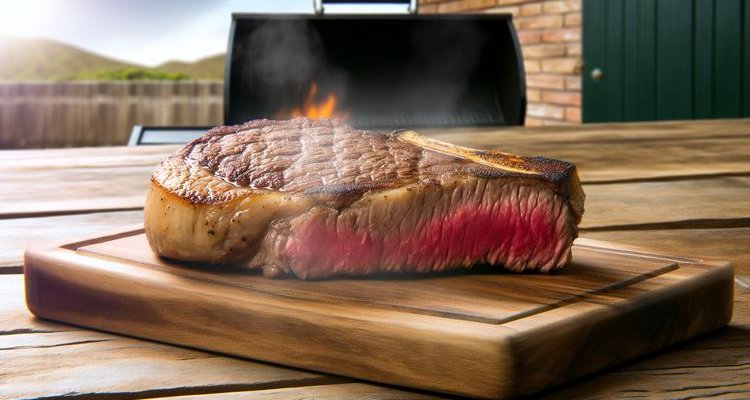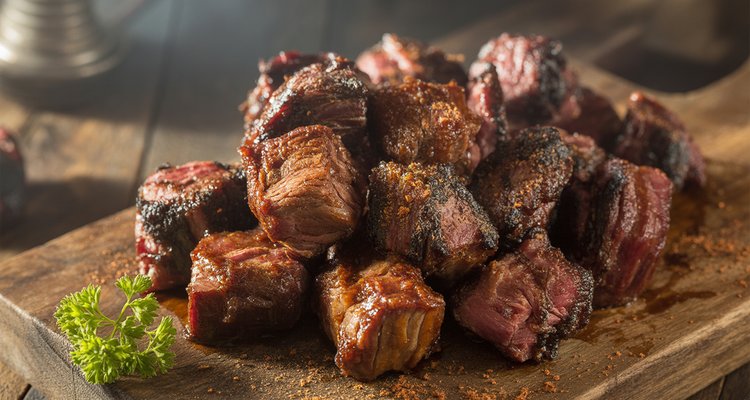
A whole brisket runs $40 or more, takes 12-plus hours, and still requires you to trim the point yourself. A 3-pound chuck roast costs around $10, smokes in 6-7 hours, and produces poor man’s burnt ends that are sticky, caramelized, and genuinely hard to distinguish from the brisket original. This recipe walks you through every step.
What Are Poor Man’s Burnt Ends?
Poor man’s burnt ends are beef burnt ends made with chuck roast instead of brisket point. The “poor man’s” label comes down to one thing: price. Traditional burnt ends use the fatty, well-marbled point cut of a brisket — the most flavorful part of the cow’s chest. A full packer brisket can cost $40-60, and you only get the burnt ends from the point portion. Chuck roast delivers nearly identical flavor thanks to the same rich marbling, at a fraction of the cost.
There’s a trio of burnt end approaches worth knowing, each with its own character:
| Method | Cut | Cook Time | Flavor Profile |
|---|---|---|---|
| Original | Brisket point | 12–14 hrs | Rich, deeply beefy, traditional bark |
| Richest | Pork belly | 8–10 hrs | Fatty, silky, melt-in-your-mouth |
| Budget (this recipe) | Chuck roast | 6–7 hrs | Beefy, smoky, accessible, fast |
If you want the classic brisket burnt ends experience and don’t mind the time and cost, that’s the original. If you want the most indulgent, fattiest version possible, pork belly burnt ends are unrivaled. But if you want great burnt ends on a weeknight budget, chuck roast is your answer.
Choosing the Right Chuck Roast
Start with a 3-4 pound chuck roast. That size gives you enough meat to yield a satisfying batch of burnt ends after the long cook, and it fits easily in a foil pan for the braising step.
Look for intramuscular fat — small white flecks running through the muscle itself. This is different from thick exterior fat caps or large white chunks in the center. Intramuscular fat renders down during the slow cook, keeping the beef moist and tender from the inside out. A roast that looks lean will dry out; one with good marbling will produce burnt ends with that characteristic pull-apart tenderness.
Boneless chuck roast is easier to cube evenly. Bone-in works fine and can add flavor, but you’ll get less yield and trickier cutting. Either is a good choice — just adjust your expectations on the cubing step.
The Rub and Binder
Coat the chuck roast in a thin layer of yellow mustard before applying your rub. The mustard acts as a binder — it helps the seasoning adhere to the surface and won’t leave any perceptible mustard flavor after hours on the smoker. If you don’t have mustard, olive oil or hot sauce works equally well.
For the rub, keep it simple: equal parts kosher salt, coarse black pepper, and garlic powder. This SPG (salt/pepper/garlic) combination lets the beef and smoke flavor do the talking. If you prefer a commercial beef rub, use it generously on all sides. Apply at least 15 minutes before smoking, or season the night before and refrigerate uncovered — the overnight dry brine builds a better crust.
How to Make Poor Man’s Burnt Ends
Setting Up Your Smoker
Preheat your smoker to 250-275°F for indirect cooking. This temperature range gives you good smoke penetration without rushing the cook. Hickory delivers bold, assertive smoke that works beautifully with beef. Oak is the classic Texas choice — slightly milder and cleaner. Pecan adds a hint of sweetness. Avoid mesquite for a long cook; its intensity can turn bitter over several hours.
If you’re using a pellet grill, set it to 250°F with a hickory or oak blend. Pellet grills hold temperature extremely consistently, which makes them ideal for this cook — you won’t need to babysit the firebox.
Smoking the Chuck Roast — Phase 1
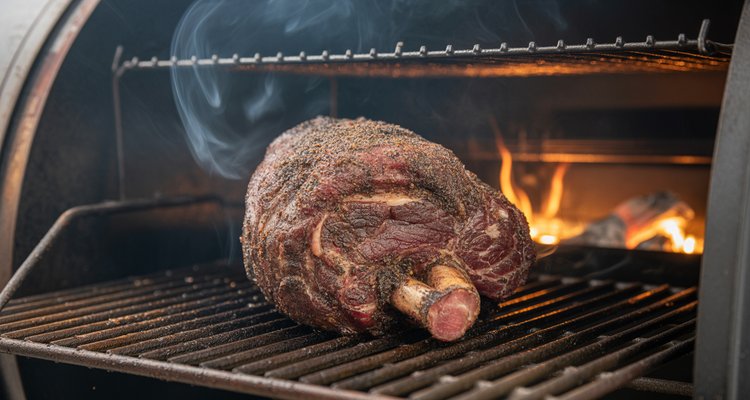
Place the seasoned chuck roast directly on the smoker grates, fat-side up. Close the lid and smoke unwrapped until the internal temperature reaches 165°F. This takes approximately 4-5 hours at 250°F, though it varies by roast size and smoker. Don’t rush it — this phase builds the bark and gets smoke deep into the meat.
You’ll know Phase 1 is done when the roast has a deep mahogany color on the outside and the bark looks dry and set. The surface should feel firm to the touch, not tacky. Insert your thermometer into the thickest part, avoiding any bone or large fat pockets.
Wrapping and Finishing — Phase 2
Once the roast hits 165°F, wrap it and return it to the smoker until it reaches 195-202°F — or, better yet, until a probe slides in with zero resistance, like pushing into warm butter. That’s what “probe tender” means, and it’s more reliable than any temperature reading.
You have two wrapping options, and they produce slightly different results:
- Butcher paper — breathes slightly, allowing some moisture to escape. The bark stays firmer and the exterior has more texture after cubing.
- Aluminum foil — creates a tight seal that traps all the juices. The meat braises in its own liquid, producing maximum tenderness with a softer, more braised exterior.
For burnt ends specifically, either works well. If you love a chewy, well-developed bark on each cube, use butcher paper. If you want the most tender, pull-apart result with less concern for texture, go with foil. Once wrapped, Phase 2 takes about 1-2 hours at the same temperature.
Remove the roast from the smoker and rest it unwrapped on a cutting board for 20-30 minutes. This isn’t optional — resting allows the internal juices to redistribute, and it also drops the temperature enough to make cubing manageable without burning your hands.
Cubing and Saucing
Cut the rested roast into 1-inch cubes. Uniform sizing matters here — inconsistent pieces will caramelize unevenly in the final step, leaving some cubes overdone while others are still wet. Use a sharp knife and work deliberately.
Transfer the cubes to an aluminum foil pan. Pour your BBQ sauce over the top — roughly ¾ cup for a 3-pound roast — then add 2-3 tablespoons of brown sugar. Toss everything together until each cube is evenly coated. You want the pieces coated, not swimming; if there’s a thick pool of sauce at the bottom of the pan, you’ve added too much.
Optional additions that take the flavor up a notch: a pat of butter (adds richness), a drizzle of honey (more caramelization), a splash of beef broth or apple juice (keeps moisture during the final cook).
Final Caramelization
Return the foil pan to the smoker uncovered at 250-275°F. Cook for 45-60 minutes, tossing the cubes once or twice to expose all sides to the heat. The goal is for the sauce to reduce from wet and loose to tacky and glossy, coating each piece like lacquer.
Visual doneness cues: the sauce darkens and thickens noticeably, the edges of the cubes show caramelized char spots, and the overall color deepens to a rich mahogany-brown. For the squeeze test, pick up a cube (use gloves — they’re hot) and compress it gently between your fingers. A done poor man’s burnt end compresses slightly and springs back partially; it shouldn’t crumble apart, but it also shouldn’t feel rubbery or tight. Once done, pull the pan and rest for 10 minutes before serving.
Troubleshooting: Why Are My Burnt Ends Tough?
Tough poor man’s burnt ends almost always come down to undercooking. The beef needs to reach probe-tender in Phase 2 — not just a target temperature. If your thermometer reads 195°F but the probe doesn’t glide in smoothly, the collagen hasn’t fully broken down yet. Return the wrapped roast to the smoker and check every 30 minutes.
Cubes cut smaller than 1 inch can dry out before the sauce has time to caramelize properly. If this happened to you, add a splash of beef broth to the pan and cover with foil for the first 20 minutes of the final caramelization step, then uncover for the last 20-30 minutes.
If you rushed through the stall — that temperature plateau around 155-165°F where the roast stops climbing for an hour or more — the collagen never had enough time to convert to gelatin. The stall is normal. Don’t panic and crank the heat; just wait it out or wrap to push through it.
Serving Suggestions
Poor man’s burnt ends are a complete BBQ meal on their own, but they shine even brighter alongside classic sides. Smoked mac and cheese is the go-to — the richness of the cheese sauce plays off the caramelized beef perfectly. Baked beans (especially cooked in the same pit) absorb the BBQ flavors beautifully. A simple coleslaw cuts through the richness with brightness and crunch. Cornbread or buttered white bread for mopping up the glaze is non-negotiable.
Leftovers keep in an airtight container in the refrigerator for 4-5 days. They freeze well for up to 3 months — freeze in portions with a bit of extra sauce to prevent drying. To reheat, place in an oven-safe dish at 325°F covered with foil and a splash of BBQ sauce; 15-20 minutes brings them back to life. In a microwave, heat in 30-second increments to avoid overcooking.
Frequently Asked Questions
Can I make poor man’s burnt ends without a smoker?
Yes. Set your oven to 250°F and follow the exact same temperatures and timing as the smoker method. Place the seasoned roast on a wire rack over a baking sheet for Phase 1, then wrap in foil and continue until probe tender. You won’t get a smoke ring or wood flavor, but you can add ½ teaspoon of liquid smoke to the BBQ glaze to approximate some of that depth.
What’s the best BBQ sauce for burnt ends?
A thick, Kansas City-style sauce — sweet, tomato-based, with body — clings to the cubes and caramelizes well. Thin, vinegar-based sauces don’t hold up the same way; they run off the meat and don’t create that sticky glaze. Whatever sauce you use, adding brown sugar boosts caramelization significantly.
Do I have to wrap the roast?
Wrapping is strongly recommended but not absolutely required. Without wrapping, you’ll push through the stall by sheer time — add 1-2 hours to Phase 2 and expect slightly drier results. The bark will be better without a wrap, but tenderness suffers. Wrapping accelerates collagen breakdown and keeps the beef moist. If your priority is deep bark over maximum tenderness, skip the wrap; if you want fall-apart cubes, wrap.
Can I use a different cut of beef?
Chuck roast is the best budget option — the marbling and connective tissue make it ideal for this long cook. Chuck shoulder works as a close substitute. Avoid round roast — it’s too lean and will dry out badly over a multi-hour cook. If you want to step up from this budget method, the full brisket burnt ends recipe linked in the comparison table above is worth the investment.
Poor Man's Burnt Ends
Equipment
- Smoker or pellet grill offset, kamado, or pellet — any smoker works
- Instant-read meat thermometer essential for hitting accurate internal temps
- Aluminum foil pan half-size disposable pan for the saucing and caramelization step
- Butcher paper or aluminum foil for wrapping during Phase 2
- Sharp boning or chef's knife for cubing the roast evenly
Ingredients
Main Ingredients
- 3 pounds chuck roast boneless, well-marbled; 3-4 lbs total
- 2 tablespoons yellow mustard binder — flavor disappears after cooking
BBQ Rub
- 1 tablespoon kosher salt
- 1 tablespoon coarse black pepper
- 1 tablespoon garlic powder
BBQ Glaze
- 3/4 cup BBQ sauce thick Kansas City-style recommended
- 3 tablespoons brown sugar packed
- 1 tablespoon butter optional, adds richness
- 2 tablespoons honey optional, boosts caramelization
Instructions
- Preheat your smoker to 250-275°F for indirect cooking. Add your preferred smoking wood — hickory or oak are ideal for beef.
- Coat the chuck roast all over with a thin layer of yellow mustard. In a small bowl, mix together the kosher salt, black pepper, and garlic powder. Season the roast generously on all sides, pressing the rub in to adhere.
- Place the chuck roast directly on the smoker grates, fat-side up. Close the lid and smoke unwrapped until the internal temperature reaches 165°F — approximately 4-5 hours. The surface should be a deep mahogany color with a set, dry bark.
- Remove the roast from the smoker and wrap tightly in butcher paper or aluminum foil. Return to the smoker and continue cooking until the internal temperature reaches 195-202°F and a probe slides in with zero resistance (probe tender). This takes approximately 1-2 more hours.
- Remove the wrapped roast from the smoker. Let it rest unwrapped on a cutting board for 20-30 minutes to cool slightly and redistribute juices.
- Cut the chuck roast into 1-inch cubes using a sharp knife. Try to keep the pieces as uniform as possible for even caramelization.
- Transfer the cubes to an aluminum foil pan. Pour the BBQ sauce and brown sugar over the top, plus the optional butter and honey if using. Toss until all cubes are evenly coated. They should be coated, not swimming in sauce.
- Return the uncovered foil pan to the smoker at 250-275°F. Cook for 45-60 minutes, tossing once or twice. The burnt ends are done when the sauce has reduced to a tacky, glossy glaze and the cubes have darkened edges. The squeeze test: a cube should compress slightly without crumbling.
- Remove from the smoker and rest for 10 minutes before serving.
Notes
Contents