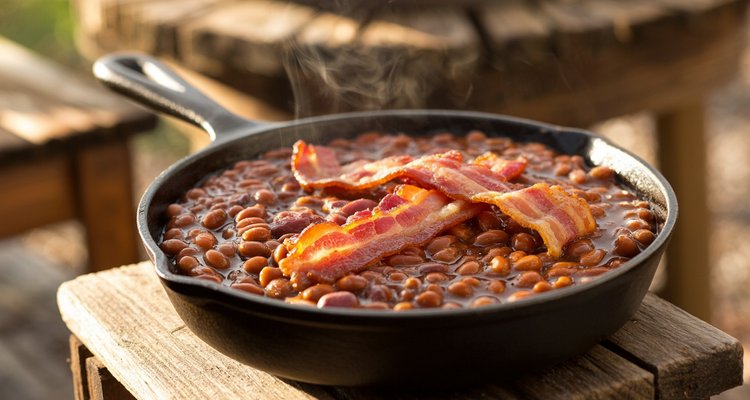
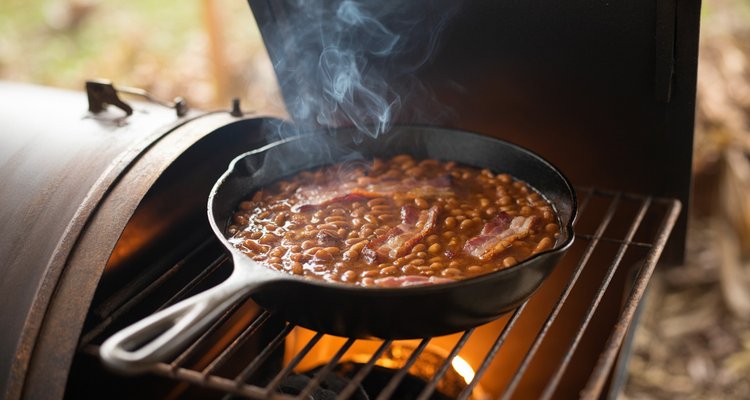
You’ve got a pork shoulder on the smoker and four hours to kill. Toss a cast iron skillet of smoked baked beans on the rack below it, and both are ready at the same time — the beans soaking up every drip of pork fat that falls from above. That’s the beauty of this recipe. No extra fuel, no extra effort, just deeply smoky, slow-cooked beans that taste like they belong at a championship BBQ cookout.
Why Smoke Your Baked Beans?
Canned baked beans are fine. Stovetop baked beans are better. But smoked baked beans are in a category of their own. The smoker does three things that no stovetop or oven can match: it infuses real wood smoke into the bean base, it slowly reduces the sauce into something thick and caramelized, and — if you position your pan right — it lets meat drippings from whatever you’re cooking above rain down into the beans.
The result is a side dish with genuine BBQ character. The sweetness from brown sugar and molasses plays against the acidity of apple cider vinegar, while the smoke rounds everything out with depth you can actually taste. These beans don’t just sit on the plate — they compete for attention alongside the main course.
Ingredients for Smoked Baked Beans
This recipe keeps things straightforward. No rare ingredients, no overnight soaking. Here’s what you need and why each piece matters.
Beans: Two 28-ounce cans of pork and beans form the base. Canned beans are a smart shortcut here — they’re already soft and carry a light sauce that adds body. If you prefer dried beans, cook them first (navy, pinto, or kidney all work well).
Thick-cut bacon: Go for thick-cut. It renders slowly on the smoker instead of crisping up too fast, and each person gets a real, satisfying piece with their serving. Use 6 strips, cut in half to lay flat across the beans.
Aromatics: One yellow onion (diced) and 2–3 jalapeños (seeds removed for medium heat, kept in for hot). Sub a green bell pepper if you want no heat at all.
Sauce base: ¾ cup BBQ sauce, ½ cup dark brown sugar, ¼ cup apple cider vinegar, 2 tablespoons Dijon mustard, 2 tablespoons molasses. The dark brown sugar and molasses give richness; the vinegar cuts through the sweetness and keeps the flavor balanced.
Optional additions: A handful of leftover pulled pork or brisket chunks stirred in transforms this from a side into a near-meal. 1–2 tablespoons of bourbon in the sauce adds a subtle depth that works especially well with cherry or apple wood smoke.
Best Wood for Smoking Baked Beans
Good news: wood selection for beans is forgiving. The sauce is bold enough to complement almost any smoke profile.
Apple or cherry: The best choice if you’re smoking beans on their own. Both impart a mild, slightly sweet smoke that complements the brown sugar and molasses without fighting it.
Pecan: A slightly richer, nuttier smoke that pairs beautifully with the bacon. It’s Hey Grill Hey’s recommendation and ours too when smoking standalone beans.
Hickory or oak: Works well if you’re already running these woods for a brisket or pork shoulder. The stronger smoke flavor is balanced by the richness of the sauce. Just don’t smoke longer than 3 hours at these intensities, or the beans can turn bitter.
Avoid mesquite: It’s too aggressive for a dish this sweet. Mesquite can overpower the bean base entirely and create a harsh, acrid aftertaste.
The simplest strategy: use whatever wood is already in your smoker. If it’s good enough for the main course, it’s good enough for the beans cooking below it.
How to Make Smoked Baked Beans
This recipe starts on the stovetop and finishes on the smoker, all in one 12-inch cast iron pan. Less cleanup, better crust, more flavor.
Step 1 — Cook the Bacon
Preheat your cast iron over medium-high heat. Add the bacon pieces and cook for 2–3 minutes per side. You want the fat to render and the edges to start to color, but don’t fully crisp it — it’ll finish on the smoker. Remove to a paper towel-lined plate and leave the fat in the pan.
Step 2 — Sauté the Aromatics
Drop the heat to medium. Add the diced onion and jalapeños to the bacon fat. Cook for 3–5 minutes, stirring frequently, until the onion is soft and translucent. The bacon fat carries flavor that plain oil can’t replicate — don’t drain it.
Step 3 — Mix the Bean Base
Pour in both cans of pork and beans (liquid and all). Add the BBQ sauce, dark brown sugar, apple cider vinegar, Dijon mustard, and molasses. Stir everything together well. Taste the raw mixture — you’re looking for a balance of sweet, tangy, and savory. Adjust with a little more vinegar if it tastes flat, or more brown sugar if it needs sweetness. Lay the bacon pieces across the top of the beans.
Step 4 — Smoke Low and Slow
Transfer the pan to your preheated smoker. Keep it uncovered — covering the beans traps moisture and blocks smoke from penetrating. Stir once at the halfway mark. They’re done when the sauce has thickened, the bacon is fully rendered, and the top has taken on a darker, caramelized color. Let them rest for 10 minutes before serving. The sauce continues to set up as it cools slightly.
Temperature and Timing Guide
Smoked baked beans are flexible — they can run at whatever temperature you’re already using for the main course.
| Smoker Temp | Cook Time | Notes |
|---|---|---|
| 225°F | 2.5–3 hours | Most smoke penetration; ideal for a long brisket cook |
| 250°F | 2–3 hours | Most common; great balance of smoke and sauce reduction |
| 275°F | 60–90 minutes | Good for shorter cooks; taste at 60 minutes |
Taste the beans at the minimum time listed. If they’re smoky, thick, and the bacon is rendered, pull them. If they need more time, keep going and check every 20 minutes. If the beans start to look dry before they’re done, stir in ¼ cup of water to loosen the sauce.
Tips for the Best Smoked Baked Beans
Use cast iron. A 12-inch cast iron pan is the ideal vessel for this recipe. It goes from stovetop to smoker without any transfers, builds a slight caramelized crust along the edges, and doubles as a serving dish. If you don’t have one, a heavy-gauge disposable aluminum pan works — just don’t use a thin one that bends and spills.
Position the beans under the meat. If you’re smoking something above — pork shoulder, ribs, brisket — place the beans on the rack directly below it. Every drip of fat and juices that falls from the meat lands in the beans. It adds a layer of flavor that no amount of additional ingredients can replicate. This is one of those small decisions that separates good smoked beans from unforgettable ones.
Don’t cover the beans. Wood smoke needs direct access to the surface of the mixture to penetrate. A covered pan produces baked beans. An open pan produces the real thing. The difference is noticeable.
Want crispy bacon? Finish under the broiler. If you want the bacon on top genuinely crispy rather than just rendered, transfer the pan to your oven’s broiler for 2–3 minutes after the cook. Watch it closely — the brown sugar in the sauce can burn fast.
Make them ahead. This dish reheats extremely well. Cook them up to 3 days in advance, cool completely, and refrigerate. Reheat on the stovetop over medium-low heat with a splash of water to loosen the sauce. The flavor actually deepens overnight as the ingredients meld.
Variations and Customizations
Bourbon smoked baked beans: Stir 1–2 tablespoons of bourbon into the sauce base during Step 3. It adds a whiskey-caramel undertone that pairs especially well with apple or cherry smoke. Start with 1 tablespoon and go from there.
With brisket or pulled pork: Add 1–1½ cups of shredded leftover brisket or pulled pork when you mix the bean base. It soaks up the sauce and turns this side dish into something close to a meal on its own.
Spicy version: Keep the jalapeño seeds in, or add ½ teaspoon of cayenne pepper to the sauce base. A few dashes of hot sauce stirred in at the end also work well.
Vegetarian: Omit the bacon and use 1 tablespoon of olive oil to sauté the aromatics. Add 1 teaspoon of smoked paprika to the sauce base to compensate for the lost depth from bacon fat. The beans still pick up genuine wood smoke flavor from the cooker.
Serving Suggestions
This dish belongs at the BBQ table. It pairs naturally with brisket, pulled pork, baby back ribs, spare ribs, and chicken off the cooker. It holds its own alongside burgers and hot dogs at a simpler cookout too. Serve directly from the cast iron pan for a presentation that looks as good as the food tastes.
Storage and Reheating
Store leftover smoked baked beans in an airtight container in the refrigerator for up to 5 days. For longer storage, freeze in a zip-seal freezer bag or airtight container for up to 3 months. Thaw overnight in the refrigerator before reheating.
To reheat: pour into a saucepan over medium-low heat, add 2–3 tablespoons of water to loosen the sauce, and stir occasionally until hot throughout. Microwave works in a pinch — cover loosely and heat in 90-second intervals, stirring between each.
Frequently Asked Questions
Can you smoke canned baked beans?
Yes, and it works well. Canned pork and beans form the backbone of this recipe exactly as written. The smoker adds genuine wood smoke flavor that elevates the canned base significantly. The key is smoking them uncovered so the smoke can actually penetrate the surface — don’t just set a can on the grate.
Should I cover beans when smoking?
No. Always smoke baked beans uncovered. Covering the pan traps steam and prevents smoke from contacting the sauce surface. An open cast iron pan or aluminum pan gives you maximum exposure and allows the sauce to reduce and concentrate as it cooks.
What temperature should I smoke baked beans at?
250°F is the most common and reliable temperature for smoked baked beans — it gives good smoke penetration in a reasonable 2–3 hour window. If you’re running your smoker at 225°F for a long brisket cook, the beans can go right alongside it and just need an extra 30–45 minutes. At 275°F they’re done in about 60–90 minutes. All three temperatures produce great results.
How long does it take to smoke baked beans?
At 250°F — the most common temperature — plan on 2 to 3 hours. At 225°F, allow 2.5 to 3 hours for deeper smoke penetration. At 275°F, check them at the 60-minute mark and pull when the sauce is thick and the bacon is rendered. All three windows produce excellent results; the lower temperatures just give more smoke time.
How long do smoked baked beans last?
Stored in an airtight container, smoked baked beans keep in the refrigerator for up to 5 days and in the freezer for up to 3 months. The flavor actually improves on day two as the smokiness and sweetness have more time to meld together.
Can I make smoked baked beans on a Traeger or pellet grill?
Absolutely. This recipe works on any smoker — pellet grills, charcoal smokers, kettle grills, kamados, and electric smokers all produce great results. On a Traeger or other pellet grill, set the temperature to 250°F and use any fruit or hardwood pellet. The smoke output from most pellet grills is lighter than charcoal or offset smokers, so consider running your Traeger in Super Smoke mode (if available) for the first hour, or go the full 3 hours for deeper smoke flavor.
Smoked Baked Beans
Equipment
- 12-inch cast iron skillet or heavy-gauge disposable aluminum pan
- Smoker any type — pellet, charcoal, electric, or kamado
- Can opener
Ingredients
Beans & Bacon
- 2 28-oz cans pork and beans do not drain
- 6 strips thick-cut bacon cut in half crosswise
Aromatics
- 1 medium yellow onion diced
- 2 jalapeños seeds removed for medium heat; sub 1 green bell pepper for no heat
Sauce Base
- 3/4 cup BBQ sauce store-bought or homemade
- 1/2 cup dark brown sugar packed
- 1/4 cup apple cider vinegar
- 2 tablespoons Dijon mustard
- 2 tablespoons molasses blackstrap preferred
Instructions
- Preheat your smoker to 250°F using apple, cherry, or pecan wood. Any mild or hardwood works.
- Preheat a 12-inch cast iron skillet over medium-high heat on the stovetop. Add the bacon pieces and cook 2–3 minutes per side until fat begins to render but bacon is not fully crisp. Remove bacon to a paper towel-lined plate. Leave the bacon fat in the skillet.
- Reduce heat to medium. Add the diced onion and jalapeños to the bacon fat. Cook 3–5 minutes, stirring frequently, until the onion is soft and translucent.
- Pour in both cans of pork and beans (liquid and all). Add the BBQ sauce, dark brown sugar, apple cider vinegar, Dijon mustard, and molasses. Stir well to combine. Taste and adjust seasoning if needed.
- Lay the bacon pieces across the top of the bean mixture in the skillet.
- Transfer the cast iron skillet to the smoker. Smoke uncovered at 250°F for 2–3 hours, stirring once at the halfway point. Beans are done when the sauce is thick and caramelized, the bacon is rendered, and the top is darkened.
- Remove from the smoker and let rest 10 minutes before serving. The sauce will continue to thicken as it cools. Serve directly from the cast iron skillet.
Notes
Contents
- Why Smoke Your Baked Beans?
- Ingredients for Smoked Baked Beans
- Best Wood for Smoking Baked Beans
- How to Make Smoked Baked Beans
- Temperature and Timing Guide
- Tips for the Best Smoked Baked Beans
- Variations and Customizations
- Serving Suggestions
- Storage and Reheating
- Frequently Asked Questions
- Smoked Baked Beans