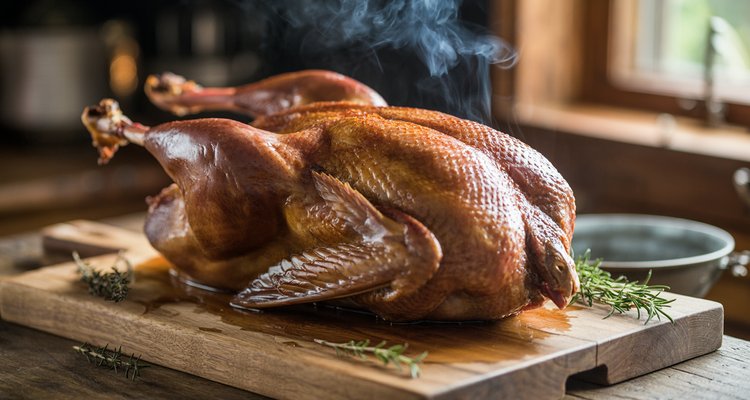
Smoked duck delivers rich, deeply savory meat with crispy rendered skin when you hold your smoker at 225-250°F. A whole duck takes 3-4 hours to reach 165°F in the thigh. Duck breasts need just 60-90 minutes and can be served at a rosy 130°F. The secret most chicken smokers miss is that duck carries a thick layer of subcutaneous fat that must render out – not just cook through. Once you understand that single difference, this smoked duck recipe is no harder than smoking a turkey.
Helpful gear for this cook:
- Temperature control: AMMZO digital meat thermometer checks doneness without guessing.
- Handling: HOTEC silicone basting brushes layers sauce, glaze, or oil without loose bristles.
- Prep: Hotec stainless kitchen tongs turns food cleanly without piercing it.
Why Duck Smokes Differently Than Chicken
Every cut on a duck is dark meat. Unlike chicken, which has mild white breast and darker legs, the muscle is uniformly rich and red. That means more myoglobin, more connective tissue, and a deeper flavor baseline before any wisps of hickory or fruitwood ever touch it. The bigger difference sits just beneath the outer layer. Duck carries a heavy band of subcutaneous fat – sometimes a quarter-inch thick on a Pekin – that chicken simply does not have. On a roasted chicken, the exterior crisps easily because there is almost no lipid barrier. On a duck, that layer must melt and drain away before the surface can turn crispy. This is actually good news for low-and-slow cooking. Lipids absorb aromatic compounds more readily than lean protein does. As the subcutaneous layer slowly renders over hours at low heat, it bastes the meat from the outside in while pulling flavor deep into every fiber. The result is a richer, more complex profile than you will ever get from chicken.
Whole Duck vs. Duck Breast – Which Should You Smoke?
Most smoked duck recipes assume you are cooking a whole bird. But the breast is a completely different cook with its own advantages. Choosing the right cut before you fire up the cooker saves time and sets better expectations. A whole duck is the showpiece option. You get legs, thighs, wings, and breast in one presentation-ready package. The cook is more forgiving because the legs and thighs benefit from long, slow rendering. The downside is that the breast can dry out while you wait for the thighs to finish. Duck breast is faster, more precise, and gives you direct control over doneness. Unlike the whole bird, a boneless breast can safely be served medium-rare at 130-140°F – similar to a steak. The fat-cap side gets scored, cooked low, then finished with a hot sear for maximum crispiness.
| Factor | Whole Duck | Duck Breast |
|---|---|---|
| Cook Time | 3-4 hours | 60-90 minutes |
| Target Temp | 165°F (thigh) | 130-165°F |
| Difficulty | Moderate | Easy |
| Serving Style | Carved tableside | Sliced on bias |
| Best For | Holiday dinners | Weeknight meals |
Choosing Your Duck – Farmed vs. Wild
Not all ducks cook the same. The breed and how it was raised changes the richness, size, and flavor intensity – all factors that affect your results. Pekin (White Pekin) is the most common farmed duck in the US. It weighs 5-6 pounds whole, carries generous marbling, and has a mild, approachable flavor. This is the bird you will find at most grocery stores, and it is the best choice for your first smoke. Muscovy is leaner and gamier than Pekin with notably larger breast muscles. It takes well to smoking but needs more attention to avoid drying out. Muscovy is a good step up once you have a successful Pekin smoke under your belt. Wild duck – mallard, teal, wood duck – is dramatically leaner than any farmed variety. Wild birds have almost no subcutaneous layer. They cook best as breasts only, treated more like venison than poultry. Whole wild duck on the smoker tends to dry out before the fat can render.
| Duck Type | Weight | Fat Level | Best Use |
|---|---|---|---|
| Pekin (farmed) | 5-6 lbs | High | Whole smoked duck |
| Muscovy (farmed) | 6-8 lbs | Medium | Smoked breast |
| Wild (mallard, teal) | 2-3 lbs | Low | Breast only, seared |
How to Prepare Duck for Smoking
Pricking the Skin
This is the single most important prep step for smoked duck. Use a sharp fork, toothpick, or poultry needle to prick the surface every half-inch across the breast and thigh areas. Angle the punctures so they go through the outer layer only – not into the flesh below. Each tiny hole creates a channel for rendered drippings to escape during the long cook. Without pricking, the lipids stay trapped underneath, leaving it flabby and rubbery even after hours on the smoker.
Dry Brine vs. Wet Brine
Both methods season the bird, but dry brining is the clear winner for smoked duck. Dry brine method: Coat the entire duck with 1 tablespoon of kosher salt per pound. Add black pepper, garlic powder, and any other dry seasonings. Place the duck uncovered on a rack in the fridge for 8-12 hours. The salt draws out surface moisture, dissolves into it, then gets reabsorbed – seasoning the meat deeply while drying the skin surface. Wet brine method: Dissolve 1/4 cup kosher salt per 4 cups of water. Submerge the duck and refrigerate overnight. Dry brining wins because the exposed surface dries out in the fridge. A dry exterior absorbs smoke better and crisps faster. Wet-brined birds start the cook with damp surfaces, which can lead to a pale, leathery finish.
Best Wood for Smoking Duck
Duck’s rich character and dark meat stand up to moderate intensity, but aggressive hardwoods overpower it. The best choices complement the natural richness without masking it.
- Apple: Sweet and mild. The classic pairing – lets the bird’s flavor lead while adding fruity undertones.
- Cherry: Slightly stronger than apple with a touch of tartness. Gives the skin a beautiful mahogany color.
- Maple: Traditional pairing. Adds warm, caramel-like sweetness that mirrors classic glazed preparations.
- Pecan: Medium intensity with a nutty finish. A good middle ground if you want more presence than fruit woods deliver.
Avoid mesquite – it is far too aggressive and will leave a bitter, acrid aftertaste. Stay away from pine, cedar, or any resinous softwood.
Smoking Your Duck Step by Step
Whole Duck Method
- Preheat your cooker to 225°F. Set up a water pan to stabilize temp and add humidity during the initial phase.
- Place the bird breast-side up on the grate with a drip pan positioned below to catch rendered drippings. You will collect a surprising amount – save it for cooking.
- Smoke for 3-4 hours until an instant-read thermometer inserted in the thickest part of the thigh reads 165°F. Do not rely on time alone.
- Optional glaze: During the final hour, brush on a maple-orange glaze every 20 minutes for a lacquered finish.
- Crisp the exterior using one of the finishing methods below. Rest 15 minutes before carving.
Duck Breast Method
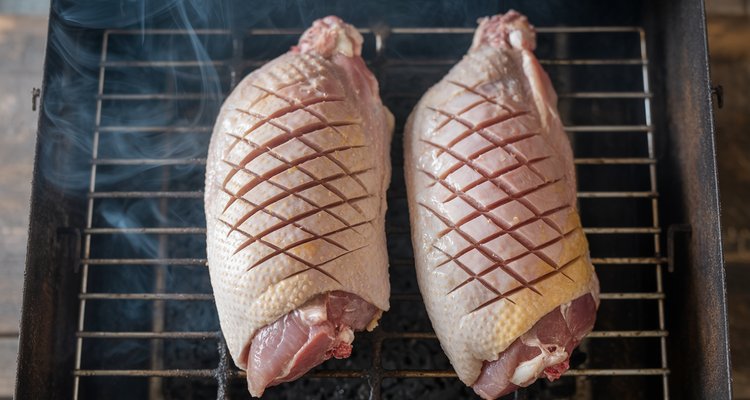
- Score the skin in a tight crosshatch pattern, cutting through the layer of fat but stopping before the flesh. Use a sharp knife on a solid cutting board. Cuts should be about 1/4-inch apart.
- Set your smoker to 225°F with your chosen fruit wood.
- Place breasts skin-side up on the grate.
- Cook for 60-90 minutes until the internal reading reaches 130°F for medium-rare or 165°F for well-done. Medium-rare is the traditional restaurant preparation.
- Sear the scored side down in a ripping-hot cast iron skillet for 2-3 minutes. The crosshatch cuts will render and crisp into a crackling golden crust.
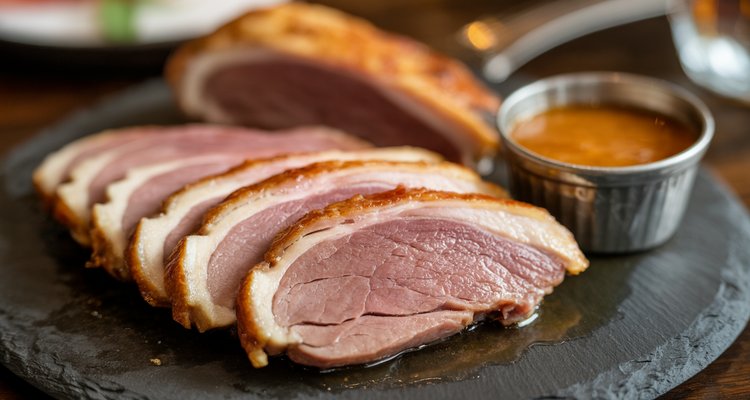
- Rest 5-10 minutes, then slice on the bias to show off the pink interior and crispy exterior.
Temperature Guide and What “Done” Looks Like
The USDA recommends 165°F as the safe minimum internal temperature for all poultry, including duck. For a whole bird, always hit this temperature in the thigh – no exceptions. Duck breast is where it gets interesting. Because the breast is a whole-muscle cut (not ground), the USDA acknowledges that it can be safely consumed at lower internal readings when proper handling is followed. Many chefs and the USDA’s own guidance for whole-muscle poultry note that reaching 130-140°F with a brief hold time reduces pathogens to safe levels in intact muscle.
Visual cues that the bird is done: juices run clear when you pierce the thigh, the leg joint wiggles freely, and the exterior is a deep golden-brown. For breast, the interior should show a gradient from smoky pink at the center to fully rendered edges.
Crisp-Skin Finishing Options
Low-and-slow smoking renders the fat beautifully, but it will not crisp the exterior on its own. You need a finishing step. Method 1 – High heat blast: Crank your cooker to 350-400°F for the final 15-20 minutes. This works well for the whole bird and does not require extra equipment. Method 2 – Broiler finish: Transfer the finished bird to a sheet pan and broil 6 inches from the element for 2-3 minutes. Watch it carefully – rendered drippings can flare. Method 3 – Cast iron sear: Best for breast cuts. Heat a dry cast iron skillet until it starts to haze, then sear skin-side down for 2-3 minutes. The pre-scored surface crisps into restaurant-quality crackling. Method 4 – Flash fry (advanced): Dunk the finished bird into 375°F oil for 30 seconds. This is the technique behind Peking duck’s legendary crackling. It works, but requires careful handling of hot oil.
Frequently Asked Questions
Can Smoked Duck Still Be Pink?
Yes. Duck is all dark meat, and dark meat naturally retains a pinkish hue even when fully cooked. For the breast specifically, a pink center at 130-140°F is safe and preferred – similar to a medium-rare steak. The USDA minimum of 165°F applies to the whole bird (measured in the thigh). As long as you hit your target with a reliable thermometer, pink breast is perfectly safe to eat.
What Wood Is Best for Smoking Duck?
Fruit woods like apple and cherry are the top choices. They deliver a sweet, mild aroma that complements the natural richness without overpowering it. Maple is another excellent option that pairs well with traditional glazes. Avoid mesquite or other heavy hardwoods – they produce a bitter aftertaste.
How Long Does It Take to Smoke a Duck?
A whole duck at 225°F takes roughly 3-4 hours to reach 165°F in the thigh. Breasts at the same temperature take 60-90 minutes to hit 130°F for medium-rare. Always cook to doneness rather than time – size, cooker type, and ambient conditions all affect cooking speed.
Should You Brine Duck Before Smoking?
Absolutely. Dry brining is the preferred method. Rub the bird with kosher salt (1 tablespoon per pound) and refrigerate uncovered for 8-12 hours. The salt seasons deeply while the open-air fridge time dries the surface – creating an exterior that absorbs smoke better and crisps faster than a wet-brined bird.
Smoked Whole Duck
Equipment
- Smoker pellet, offset, or kamado
- Instant-read meat thermometer essential for checking doneness
- Drip pan to catch rendered duck fat
- Wire Rack for dry brining in the fridge
- Sharp fork or poultry needle for pricking the skin
- Cast iron skillet optional, for crisp-skin finishing on breasts
Ingredients
Duck
- 1 whole Pekin duck 5-6 lbs, giblets removed
Dry Brine
- 2 tablespoons kosher salt 1 tablespoon per pound
- 1 tablespoon black pepper freshly ground
- 1 teaspoon garlic powder
- 1 teaspoon onion powder
- 1/2 teaspoon smoked paprika
Optional Glaze
- 1/4 cup maple syrup pure maple
- 2 tablespoons orange juice freshly squeezed
- 1 tablespoon soy sauce
Instructions
- Remove giblets from the duck cavity. Pat the duck completely dry with paper towels inside and out.
- Using a sharp fork or poultry needle, prick the skin every 1/2 inch across the breast, thighs, and legs. Angle the punctures to penetrate through the skin and fat layer only — not into the meat.
- Mix the kosher salt, black pepper, garlic powder, onion powder, and smoked paprika. Rub the mixture evenly over the entire duck, including inside the cavity.
- Place the duck on a wire rack set over a sheet pan. Refrigerate uncovered for 8-12 hours. This dry brines the meat and dries the skin for better smoke adhesion.
- Preheat your smoker to 225°F using apple, cherry, or maple wood. Set up a water pan to help stabilize the temperature.
- Place the duck breast-side up on the smoker grate. Position a drip pan directly beneath the duck to catch rendered fat.
- Smoke the duck for 3-4 hours, maintaining 225°F. If using the optional glaze, whisk together the maple syrup, orange juice, and soy sauce. Brush it onto the duck every 20 minutes during the final hour.
- Check the internal temperature by inserting an instant-read thermometer into the thickest part of the thigh without touching bone. The duck is done at 165°F.
- For crispy skin, increase the smoker temperature to 350-400°F for the final 15-20 minutes. Alternatively, transfer the duck to a sheet pan and broil 6 inches from the element for 2-3 minutes.
- Remove the duck from the smoker and rest on a cutting board for 15 minutes before carving. Save the rendered fat from the drip pan for cooking.
Notes