 Pork belly is the rare cut that seems almost designed for the smoker. Thick fat cap, rich intramuscular fat running in ribbons through the meat, and a forgiving structure that holds up beautifully over a long, slow cook. This smoked pork belly recipe walks you through exactly how to do it — the right temperature, the real cook time, and the technique that produces a deep, crackly bark over pull-apart tender meat.
Why Pork Belly Is Built for the Smoker
Before it’s cured and sliced, bacon is just pork belly. Same cut. The difference is what you do with it, and when you leave it whole and run it through a smoker low and slow, you get something that rivals brisket in richness and frankly surpasses it in flavor depth. The high fat content is everything here. Pork belly contains a thick fat cap on top plus dense intramuscular fat throughout — that interlacing fat bastes the meat from within as it slowly renders over hours on the smoker. The result is meat that stays moist and tender without any babysitting. Skinless pork belly is what you want for best bark. The skin creates a moisture barrier that slows rub adhesion and bark formation. If you have skin-on belly, score it deeply every inch in both directions before rubbing. This recipe uses skinless. Compared to brisket, smoked pork belly is more forgiving. The fat content gives you more margin for error — a few degrees past the target won’t dry it out the way it might with a leaner cut. That said, the target internal temperature still matters. Undercook it and the fat won’t fully render, leaving you with a greasy, waxy texture instead of that silky, pull-apart bite.
What You’ll Need
The pork belly: Look for a skinless slab in the 3–5 lb range. Uniform thickness produces more consistent cooking. If your slab has a thick end and a thin end, fold the thin end under and tie it to even out the cook. The dry rub: This recipe uses a balanced rub that encourages bark without burning.
- 2 tbsp kosher salt
- 1 tbsp coarse black pepper, freshly ground
- 2 tbsp brown sugar
- 1 tsp garlic powder
- 1 tsp smoked paprika
- ¼ tsp cayenne pepper
Wood: Apple or cherry wood. Both provide a mild, sweet smoke that pairs naturally with pork without overpowering the meat’s own flavor. Hickory is an option if you want a stronger, more assertive smoke profile — use it sparingly or blend it with a fruit wood. Equipment: Any smoker capable of holding a steady 225°F over indirect heat. Offset, pellet, and charcoal kettle setups all work well. An instant-read thermometer is non-negotiable — this cook is driven by internal temperature, not time.
How to Smoke Pork Belly Step by Step
What Temperature Should You Smoke Pork Belly?
Set your smoker to 225°F for a true low-and-slow cook. This pace maximizes bark development and gives the intramuscular fat enough time to render completely. If you’re running short on time, 250°F is acceptable and will shave roughly an hour off the cook — but bark formation will be slightly less developed. The internal temperature target for sliced pork belly is 195–203°F. This is the fully rendered zone where the fat has converted from waxy and dense to silky and yielding. Many recipes incorrectly list 165°F as the target — at that temperature, the fat has barely begun to render and the meat will be tough and greasy rather than pull-apart tender.
How Long to Smoke Pork Belly at 225°F?
Expect 6–8 hours for a 3–5 lb skinless slab to reach 195–203°F at 225°F. A rough planning estimate is 1.5–2 hours per pound, but fat thickness and smoker calibration affect this significantly. Use temperature as your guide, not the clock. Step-by-step:
- Score the fat cap. Using a sharp knife, cut a cross-hatch pattern into the fat cap with cuts spaced about 1 inch apart. Cut through the fat only — stop before reaching the meat. This allows rub to penetrate deeper and promotes even fat rendering across the entire surface.
- Apply the rub. Mix all rub ingredients together and apply generously to all sides of the pork belly, pressing the rub firmly into the scored cuts. The brown sugar in the rub will help form that signature dark, caramelized bark. Let the rubbed belly rest at room temperature for 30 minutes while you prepare the smoker.
- Preheat your smoker to 225°F. Set up for indirect heat. Add apple or cherry wood chunks or chips to the firebox or hopper. Give the smoker 15–20 minutes to reach and stabilize at temperature before loading the meat.
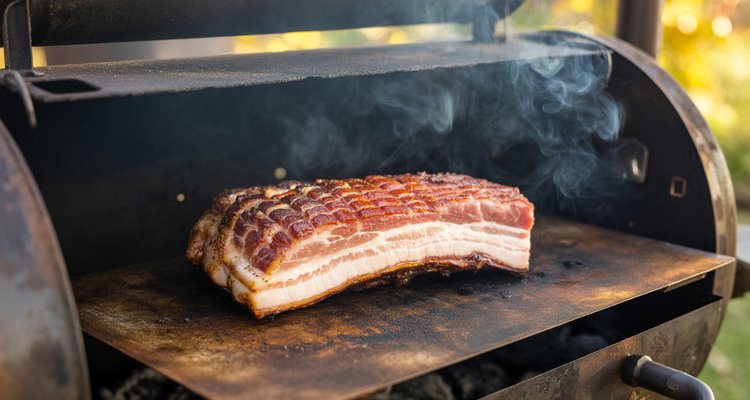
- Place the pork belly fat-side up. Fat-side up allows the rendering fat to slowly baste the meat below as it drips down through the belly. Close the lid and resist the urge to open it during the first couple of hours — every peek extends the cook time.
- Smoke to the stall (165–175°F, ~3–4 hours). Around this temperature range, you’ll hit the stall — a plateau where evaporative cooling keeps the internal temp from rising for an extended period. Starting around hour 3, spritz the pork belly every 60 minutes with apple cider vinegar or apple juice. This keeps the surface moist and promotes bark adhesion during the stall.
- Push through to 195–203°F. If bark is your priority, leave the pork belly unwrapped through the stall and continue smoking until you reach the target internal temp. If you’re short on time, wrap tightly in heavy-duty aluminum foil at the stall — this speeds the cook by 1–2 hours but produces a slightly softer bark (see the bark section below). Total cook time at 225°F is approximately 6–8 hours.
- Optional BBQ sauce glaze. At 195°F, brush a thin coat of BBQ sauce over the pork belly. Leave it unwrapped and smoke for another 20–30 minutes until the sauce caramelizes into a sticky, lacquered finish.
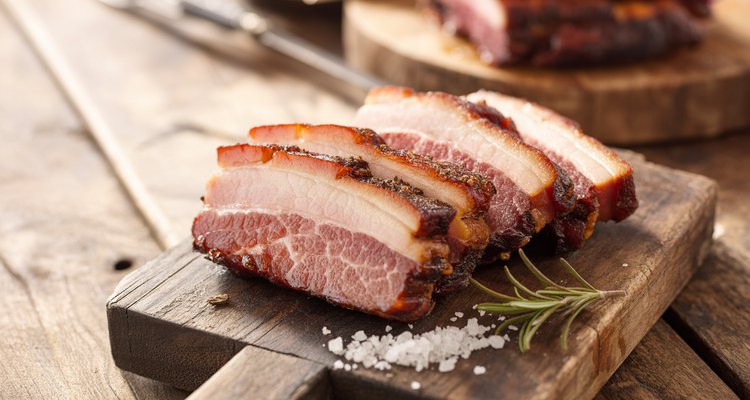
- Rest 10–15 minutes before slicing. Remove the pork belly from the smoker and tent loosely with foil. This rest allows the juices to redistribute through the meat. Slice into thick pieces perpendicular to the grain and serve immediately.
Smoked Pork Belly Quick-Reference Table
| Parameter | Recommended | Notes |
|---|---|---|
| Smoker Temperature | 225°F | 250°F acceptable if short on time |
| Target Internal Temp | 195–203°F | Fat fully rendered, pull-apart tender |
| Cook Time (3–5 lb) | 6–8 hours | ~1.5–2 hours per pound at 225°F |
| The Stall | 165–175°F | Spritz every 60 min starting hour 3 |
| Burnt Ends Stage 2 | 250°F for 1–2 hrs | Cube at 165–175°F, finish to 200°F |
| Rest Time | 10–15 minutes | Tent loosely with foil |
| Wood Choice | Apple or Cherry | Hickory optional, use sparingly |
Getting That Crispy Bark
Bark on smoked pork belly forms through a combination of the Maillard reaction, pellicle formation, smoke adhesion, and time. The rub creates a protein-sugar matrix on the surface that browns and hardens as moisture escapes and smoke compounds bind to it over the long cook. For the best bark on smoked pork belly:
- Score the fat cap deeply — rub pushed into those cuts adheres directly to the meat layer, creating bark below the fat surface as well
- Apply rub generously — a thin coating produces a thin bark; press it in firmly
- Keep the fat cap up — the rendering fat self-bastes while the rub on the underside develops bark against the grates
- Spritz after hour 3 — a light mist every 60 minutes keeps the surface moist enough for smoke adhesion without washing off the rub
To Wrap or Not to Wrap? (The Foil Debate)
Wrapping in foil (the Texas Crutch) is a genuine trade-off, not just a shortcut:
- No wrap: Best bark, longer cook, recommended in this recipe. The surface stays exposed to smoke and airflow for the full cook, producing a deep, firm, deeply flavored bark.
- Foil wrap at the stall: Speeds the cook by 1–2 hours, retains moisture, and produces a slightly softer, more steamed bark. Still produces good flavor — just a different texture on the exterior.
Verdict: Skip the foil if bark is the point. Use it if the cook is running long and you need to hit dinnertime.
Smoked Pork Belly Burnt Ends (Optional Variation)
Pork belly burnt ends are one of the best things you can do with this cut. Here’s how the two-stage method works:
- Follow the main recipe through the first stage. When the pork belly reaches 165–175°F (approximately 3–4 hours in), pull it from the smoker.
- Cube the belly into 1.5-inch pieces. Toss the cubes in your favorite BBQ sauce and a generous coat of brown sugar until every side is coated.
- Place the cubes in a foil pan (or directly on the grate) and return to the smoker, now running at 250°F.
- Cook for 1–2 more hours until the internal temperature on individual cubes reaches 200°F and the BBQ sauce glaze has caramelized into a sticky, deeply flavored crust on all sides.
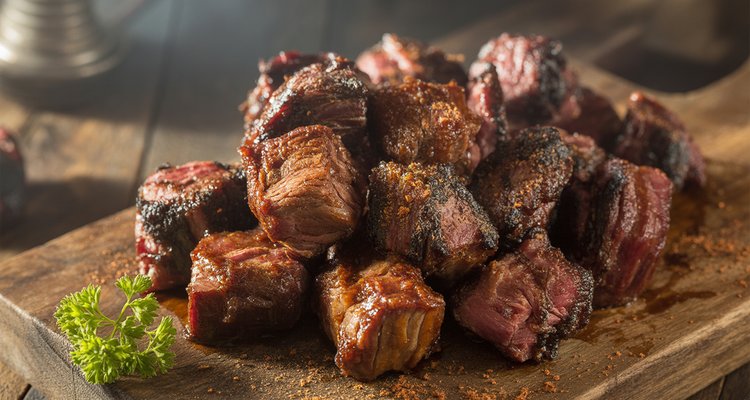
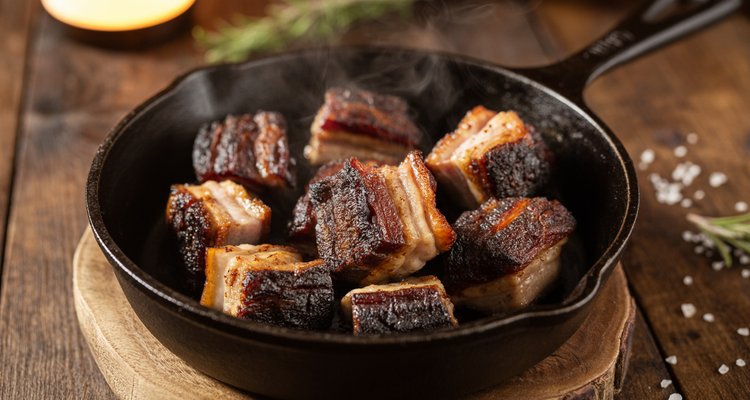
The payoff is a pocket of fully rendered fat inside each cube, surrounded on all four sides by caramelized bark and lacquered sauce. It’s the richest version of this cut.
Serving Suggestions
Sliced smoked pork belly works beautifully across a range of presentations:
- Classic BBQ board: Thick slices fanned out on a cutting board with pickles, white bread, and a side of BBQ sauce
- Pork belly tacos: Thin slices in corn tortillas with crunchy slaw, pickled jalapeños, and a spicy crema
- Pork belly sliders: Slabs on brioche buns with mustard-based BBQ sauce and a handful of coleslaw
- Sides that work: Baked beans (the rendered fat drippings from the cook are perfect in them), creamy mac and cheese, classic coleslaw, and white rice — rice in particular absorbs the rich fat beautifully
Frequently Asked Questions
How long does it take to smoke pork belly at 225°F?
A 3–5 lb skinless pork belly slab takes approximately 6–8 hours at 225°F to reach the target internal temperature of 195–203°F. Plan on 1.5–2 hours per pound as a rough estimate, but fat thickness and smoker calibration will affect the actual time. Always smoke to temperature, not to time.
What internal temperature should smoked pork belly reach?
195–203°F for sliced pork belly where the fat is fully rendered and the meat is pull-apart tender. For burnt ends, push individual cubes to 200°F or slightly above — at that temperature, every fat pocket inside has liquefied and the exterior glaze has fully caramelized.
Can I smoke pork belly on a pellet grill?
Yes — pellet grills work perfectly for smoked pork belly. Set your pellet smoker to 225°F, load apple or cherry pellets, and follow the same recipe. There’s no meaningful difference in outcome between a pellet grill and an offset smoker for this cook. Pellet grills also make temperature management easier, which is helpful on a 6–8 hour cook.
How do I get a crispy bark on smoked pork belly?
Score the fat cap deeply, push the rub into those cuts, keep the fat cap facing up throughout the cook, spritz lightly after hour 3, and — most importantly — skip the foil wrap. The bark needs direct airflow and smoke contact for the full duration to develop a firm, deep crust. Wrapping accelerates the cook but softens the bark.
Should I wrap pork belly in foil when smoking?
It depends on your priorities. No wrap produces the best bark — firmer, deeper flavored, and more textured. Foil at the stall speeds the cook by 1–2 hours and produces moist meat with a slightly softer bark. If bark quality is the goal, don’t wrap. If you’re managing the clock, wrap at 165–175°F.
Conclusion
Smoked pork belly rewards patience. The combination of a generous fat cap, dense intramuscular marbling, and a forgiving cook window makes this one of the most satisfying cuts you can run through a smoker. Set your temperature at 225°F, commit to the full cook without wrapping if bark is the priority, and pull it when the probe slides into the meat like warm butter in the 195–203°F range.
The technique here is straightforward: score the fat cap, apply a balanced rub, maintain steady smoke, and let time do the work. Whether you slice it thick for a classic BBQ plate or cube it into burnt ends glazed with sauce, the result is rich, tender meat with a deep smoke ring and a bark that crunches when you bite through it. Once you dial in your smoker and trust the internal temperature over the clock, smoked pork belly becomes one of the easiest high-impact cooks in your rotation.
Smoked Pork Belly
Equipment
- Smoker offset, pellet, or charcoal kettle — any smoker capable of holding 225°F indirect heat
- Instant-read thermometer essential for hitting the 195–203°F target
- Sharp knife for scoring the fat cap in a cross-hatch pattern
- Aluminum foil optional — use at the stall if prioritizing speed over bark
- Spray bottle optional — apple cider vinegar or apple juice for spritzing after hour 3
Ingredients
Pork Belly
- 1 slab skinless pork belly 3–5 lbs, fat cap intact
Dry Rub
- 2 tbsp kosher salt
- 1 tbsp coarse black pepper freshly ground
- 2 tbsp brown sugar packed
- 1 tsp garlic powder
- 1 tsp smoked paprika
- 1/4 tsp cayenne pepper adjust to taste
Optional Glaze
- 1/2 cup BBQ sauce your favorite, for finishing glaze
Instructions
- Score the fat cap in a cross-hatch pattern with cuts spaced 1 inch apart. Slice only through the fat — stop before hitting the meat layer. This allows the rub to penetrate and the fat to render evenly during the long cook.
- Combine all dry rub ingredients in a small bowl: kosher salt, black pepper, brown sugar, garlic powder, smoked paprika, and cayenne. Apply the rub generously to all sides of the pork belly, pressing firmly into the score marks. Let the seasoned belly rest at room temperature for 30 minutes while you prepare the smoker.
- Preheat your smoker to 225°F and set it up for indirect heat. Add apple or cherry wood chunks or chips — these fruit woods provide a mild, sweet smoke that complements pork belly perfectly without overpowering it.
- Place the pork belly fat-side up on the smoker grates over indirect heat. Fat-side up allows the rendering fat to baste the meat below as it drips through, keeping the interior moist throughout the long cook.
- Smoke until the internal temperature reaches 165–175°F, approximately 3–4 hours. This is the stall — the point where evaporative cooling causes the temperature to plateau. Beginning around hour 3, spritz with apple cider vinegar or apple juice every 60 minutes to keep the surface moist and promote bark development.
- Decision point: For the best bark, leave the pork belly unwrapped and continue smoking. For a faster cook (saves 1–2 hours), wrap tightly in heavy-duty aluminum foil at the stall. Either way, continue cooking until internal temperature reaches 195–203°F — the point where the fat is fully rendered and the meat is pull-apart tender. Total cook time is approximately 6–8 hours at 225°F.
- Optional BBQ sauce glaze: When the internal temperature hits 195°F, brush BBQ sauce evenly over the pork belly. Leave unwrapped and smoke for an additional 20–30 minutes until the glaze caramelizes into a sticky, lacquered finish.
- Remove the pork belly from the smoker and rest for 10–15 minutes before slicing. This allows the juices to redistribute throughout the meat. Slice into thick pieces perpendicular to the grain and serve immediately.
Notes
Contents