
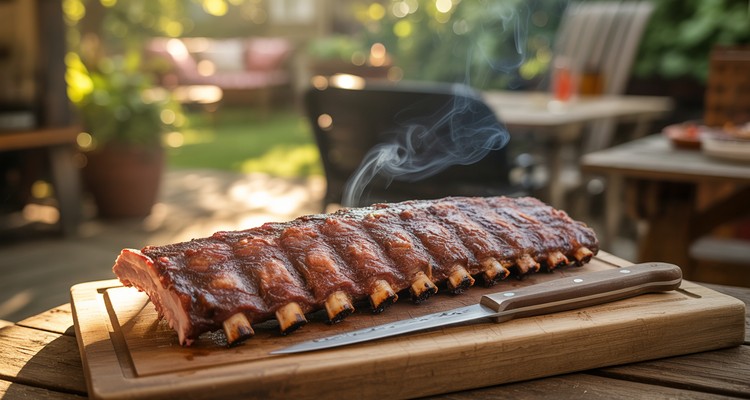
You’ve been tending the fire for hours. The smell coming off the smoker is doing something to everyone within range. Smoked pork spare ribs — done right, with a deep bark and a smoke ring that goes clean to the bone — are one of the best things a backyard cook can produce. This smoked spare ribs recipe covers everything: prep, technique, timing, and how to know when they’re actually done.
Spare Ribs vs. Baby Backs — Why Spares Win on the Smoker
Baby backs get the marketing attention, but pork spare ribs are what serious smokers reach for. The difference comes down to fat content and connective tissue. Spare ribs come from the belly side of the pig — longer bones, more meat between them, more intramuscular fat running through the muscle. That fat does two things on a long, slow cook: it bastes the meat from the inside and gives you more margin for error. Over-smoke baby backs and they dry out. Over-smoke spares by 30 minutes and they’re still eating well. The flavor is different too. Spare ribs have a deeper, more complex pork flavor that holds up to heavy smoke and bold rubs. Baby backs are leaner and milder — good for quick weeknight cooks. For a low-and-slow smoker session that showcases what your setup can do, spare ribs are the right choice.
St. Louis Cut vs. Full Spare Ribs
Full spare ribs come off the hog with the sternum cartilage section and rib tips still attached — a ragged, irregular shape that’s harder to cook evenly. St. Louis cut is the same rack trimmed to a clean rectangle: the cartilage section removed, the flap trimmed tight. You lose a little meat but gain a rack that sits flat on the grates and cooks consistently from end to end. For most cooks, St. Louis cut is the practical choice. If you start with full spares, don’t throw away the trimmings — the rib tips and sternum section make excellent snacks when smoked alongside the main rack. They cook faster and are done when a toothpick passes through the cartilage without resistance.
What You Need
Ingredients
- 1 rack pork spare ribs, 3–4 lbs (St. Louis cut preferred)
- Yellow mustard — for the binder (2–3 tablespoons)
- Dry rub: 1 tbsp kosher salt, 1 tbsp coarse black pepper, 1 tbsp garlic powder, 1 tbsp paprika, 1 tbsp brown sugar, ½ tsp cayenne
- Apple cider vinegar or apple juice — for spritzing (½ cup)
- BBQ sauce (optional) — for finishing only
- For the 3-2-1 wrap: 2 tbsp butter, 2 tbsp brown sugar, 2 tbsp apple juice
Equipment
- Smoker (offset, pellet, or kettle set up for indirect cooking)
- Wood chunks or chips: hickory, apple, or cherry
- Instant-read meat thermometer
- Heavy-duty aluminum foil (for the wrap phase)
- Paper towels (for membrane removal)
- Spray bottle (for spritzing)
Does Smoker Type Matter?
All three major smoker types produce excellent spare ribs — the differences are real but manageable. Offset smokers deliver the most complex smoke flavor, with temperature variations across the cook chamber that actually help render fat and develop bark. The trade-off is active fire management every 45–60 minutes. Pellet smokers offer the easiest temperature control — set 225°F and walk away — but produce slightly less smoke depth at lower temperatures. Adding a smoke tube loaded with hickory pellets or chips solves most of that gap. Kettle grills set up for two-zone indirect cooking work better than most people expect. Keep the coals banked to one side, ribs on the cool side, a chunk of wood on the coals, and you’re running a legitimate smoker. The capacity is the only real limitation. The technique is the same on all three. The fire management differs. Choose what you have.
How to Prep Spare Ribs for the Smoker
Most people lose time and flavor here. The prep takes 15 minutes but makes a measurable difference in the final result.
Removing the Membrane
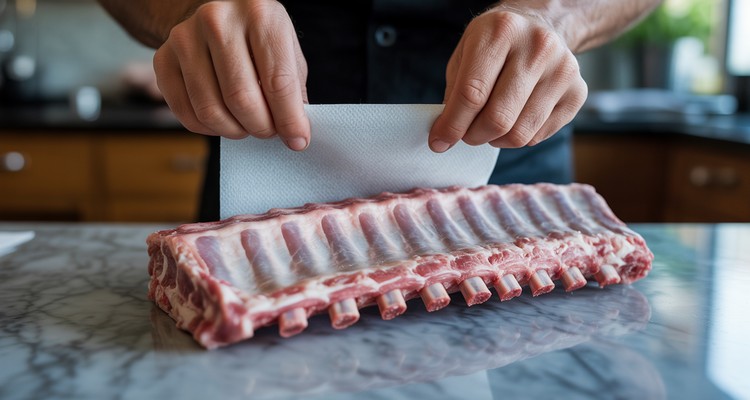
The membrane — a thin layer of silverskin on the bone side of the rack — must come off. It doesn’t render during cooking, doesn’t absorb smoke or rub, and creates a rubbery barrier between the bones and the meat. Leave it on and you’ll have a chewy texture on the bottom of every bite. To remove it: flip the rack bone-side up. Find the membrane at one of the bone ends — it looks like a thin, semi-transparent sheet stretched tightly across the bones. Slide a butter knife or your finger under the edge to break the seal. Grab the flap with a dry paper towel (the grip makes all the difference), and pull in one firm, steady motion. It usually peels off in one sheet. If it tears, work from the new edge. The whole process takes two minutes once you’ve done it once.
Trimming to St. Louis Style (If Starting with Full Spares)
If your rack came untrimmed, find the line where the flat rib bones end and the cartilage begins — it runs roughly parallel to the bone ends. Cut straight down that line to remove the sternum section. Then trim the skirt flap on the bone side to a consistent thickness so it doesn’t burn before the main rack is done. Smoke the trimmings alongside the rack — they’re done when a toothpick passes through the rib tip cartilage cleanly.
Should You Boil Ribs Before Smoking?
No. Boiling spare ribs before smoking is an oven shortcut that has no place on the smoker. The process leaches out the fat, flavor, and the very juices that make smoked ribs worth eating. It also destroys any chance of developing bark — there’s nothing left on the surface to form a crust. The connective tissue that seems to justify boiling renders naturally during the low-and-slow cook when sustained heat is applied over time. That’s what the 5–6 hours are for. Skip the boiling, trust the process.
Applying the Rub
Apply a thin coat of yellow mustard across both sides of the rack as a binder. Don’t worry about the flavor — it disappears completely during the cook and exists only to help the rub adhere. Apply your dry rub generously to both sides and all edges. Pat it in firmly rather than rubbing back and forth; rubbing dislodges the seasoning you just applied. Let the rubbed rack rest for at least 30 minutes at room temperature before it goes on the smoker. For better results, rest it uncovered in the refrigerator overnight. The exposed surface dries slightly, which helps bark formation during the first few hours of the cook.
How to Smoke Spare Ribs: Step-by-Step
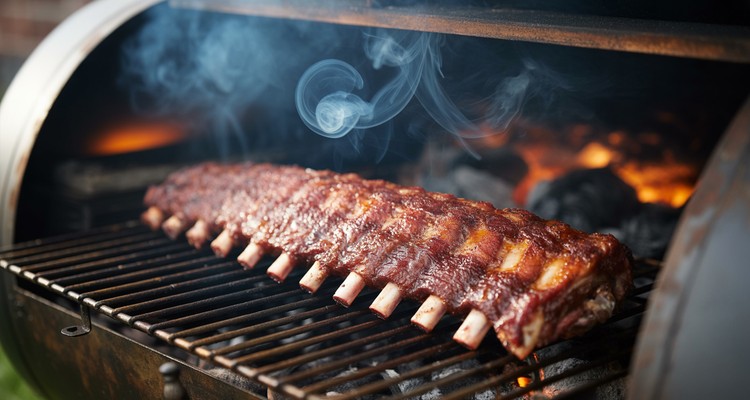
- Preheat your smoker to 225°F. Add wood — a combination of hickory and apple works well. Let the smoker run until it’s producing thin blue smoke, not thick white billows.
- Place ribs bone-side down on the grates. Meat side up means the fat cap faces the heat and bastes the meat as it renders. Close the lid.
- Smoke uncovered for 3 hours. Do not open the lid in the first 90 minutes. Temperature loss slows bark formation and adds cook time. Let the smoke do its work.
- At the 3-hour mark, evaluate: the surface should have color and a developing bark. Begin spritzing with apple cider vinegar every 45 minutes, OR proceed to the foil wrap (3-2-1 method below).
- If wrapping: lay out two sheets of heavy foil. Place the rack meat-side down, add 2 tbsp butter, 2 tbsp brown sugar, and 2 tbsp apple juice on top of the bones. Seal the foil tightly into a packet with no gaps. Return to the smoker for 2 hours at 225°F.
- Unwrap the rack and return it to the grates bone-side down for 1 more hour. This firms up the bark and sets the surface texture.
- Test for doneness (see below), rest 15–30 minutes loosely tented in foil, then slice between the bones and serve.
The 3-2-1 Method vs. Unwrapped — Which Produces Better Ribs?
The 3-2-1 method (3 hours smoke, 2 hours wrapped, 1 hour unwrapped) was designed for spare ribs. The foil phase creates a steam environment that accelerates connective tissue breakdown, producing reliable tenderness with a shorter total cook time. The risk is over-steaming — leave the ribs in the foil too long and the meat turns soft and falls apart at the slice rather than pulling cleanly off the bone. Two hours in foil is the ceiling; check at 1:45. Cooking unwrapped for the full duration (5–6 hours at 225°F) produces better bark texture and more smoke penetration. The surface stays in contact with smoke and dry heat the entire time, which builds a firmer crust and a more pronounced smoke ring. It requires more attention — spritzing every 45 minutes after the third hour to prevent the surface from drying out. BBQ Report pick: use the 3-2-1 method for consistent, beginner-friendly results. Cook unwrapped if you want competition-style texture and you’re comfortable monitoring the cook.
How to Test for Doneness
Don’t pull ribs off the smoker based on time alone. Use all three tests together: Bend Test: Pick up the rack with tongs at one end. A done rack will bend significantly — the meat will crack slightly across the surface and the whole rack will droop nearly 90°. An underdone rack holds rigid. Bone Pull-Back: Look at the bone ends. On a properly cooked rack, the meat recedes approximately ¼ inch from the bone tips. If the bones are still fully covered in meat, they need more time. Internal Temperature: Insert a probe into the thickest section of meat between two bones, avoiding the bone itself. Target 200–205°F. At this temperature, collagen has fully converted to gelatin, which is what creates that tender, yielding texture. Spare ribs that read 185°F will be technically cooked but still tough.
How Long to Smoke Spare Ribs
At 225°F using the unwrapped method, spare ribs take 5–6 hours. At 225°F using the 3-2-1 method, the total time is approximately 6 hours — three hours uncovered, two wrapped, one unwrapped. At 250°F, both methods run about an hour shorter across the board. Build your schedule around the longer end of the range and let the doneness tests — not the clock — be the final call.
225°F vs. 250°F — The Temperature Debate
The debate between cooking spare ribs at 225°F versus 250°F is smaller than the internet makes it seem.
| 225°F | 250°F | |
|---|---|---|
| Unwrapped time | 5–6 hours | 4–5 hours |
| 3-2-1 total time | ~6 hours | ~5 hours |
| Bark texture | Slightly softer, well-formed | Slightly crispier |
| Smoke absorption | More time in smoke | Slightly less smoke depth |
| Best for | Maximum tenderness, competition-style | Faster cook, slightly firmer bite |
The differences are real but small. Temperature consistency matters more than which number you pick. A smoker that holds 250°F steady beats one swinging between 220°F and 270°F every time. Choose your temperature, dial it in, and keep the lid closed.
Why You Shouldn’t Rush Spare Ribs
The tenderness in smoked spare ribs doesn’t come from heat — it comes from time. Spare ribs contain significant connective tissue, primarily collagen, concentrated around the bones and between muscle groups. Collagen begins converting to gelatin at around 160°F, but the conversion requires sustained heat over an extended period. You can’t accelerate it by cranking the temperature to 300°F without drying out the meat before the collagen has time to break down. Low and slow isn’t just a tradition — it’s the only way the chemistry works.
Wood Selection for Smoked Spare Ribs
Wood choice shapes the flavor of the finished ribs as much as the rub does. Pork spare ribs are forgiving — they handle both mild and strong woods — but some combinations work better than others in this ribs recipe.
Best Woods for Pork Ribs
- Hickory: The classic BBQ smoke flavor — assertive, slightly nutty, deeply savory. Works well alone but can turn bitter on very long cooks. Pair with apple at a 50/50 ratio to balance it out.
- Apple: Sweet, mild smoke that produces excellent mahogany color on pork. Competition teams favor apple for spare ribs because it enhances the natural sweetness of the meat without overpowering it. Works well as a solo wood.
- Cherry: Similar to apple but produces a slightly deeper, richer color. Good for appearance-focused cooks. Pairs well with hickory or oak.
- Oak: Clean, balanced smoke that works as a base wood. Less distinctive than hickory, more neutral than apple — good for letting the rub and pork flavor take center stage.
- Avoid — Mesquite: Mesquite burns hot and aggressive. It works for quick-cook beef but turns acrid on a 5–6 hour rib cook. Leave it for steaks.
Use chunks rather than chips for long cooks — chips burn out quickly and require constant reloading. A couple of fist-sized chunks of hickory and apple at the start of the cook will carry most of the smoke flavor you need.
Getting the Bark and Smoke Ring Right
What Creates Good Bark
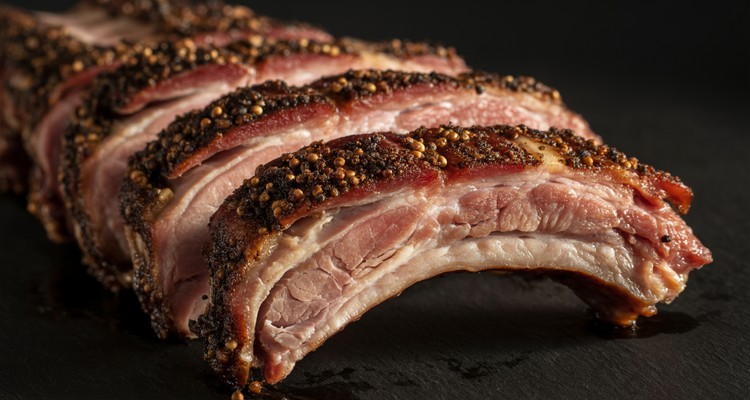
Bark is the dark, mahogany-colored crust that forms on the exterior of smoked meat. It’s not burned — it’s the result of three overlapping processes: the Maillard reaction (browning at the surface), dehydration of the rub and surface moisture, and fat rendering into the crust. The key variables are low surface moisture in the early stages of the cook, coarse rub particles (fine powders compact into a paste instead of a crust), and adequate airflow through the smoker. The most common bark killer is spritzing too early. Spritz in the first 90 minutes and you’re adding moisture back to a surface that needs to stay dry to develop a crust. Hold off until the bark is visibly set — typically after the third hour. Once the surface feels tacky and the bark has color, spritzing adds sheen and prevents excessive drying without undoing your work.
The Smoke Ring — What It Is and How to Get One
The pink ring just below the bark is one of the most recognized signs of properly smoked meat. It’s not an indicator of rawness — it’s a chemical reaction between myoglobin in the meat and gases produced by combustion (primarily nitric oxide and carbon monoxide). The reaction locks the pink color in place permanently. Two things produce a thicker smoke ring: cold meat and clean smoke. Putting cold ribs straight from the refrigerator onto the smoker extends the window during which the reaction can occur — the meat stays below 140°F longer, absorbing more of the reactive gases before the myoglobin denatures. Running your smoker on thin blue smoke rather than thick white smoke also increases the concentration of reactive gases available. Thick white smoke means incomplete combustion, which adds acrid flavor and contributes little to smoke ring formation.
Saucing and Serving
Sauce is optional on properly cooked pork spare ribs. A rack with good bark, rendered fat, and smoke flavor doesn’t need improvement. If you want sauce, apply it in the last 20–30 minutes of the cook while the ribs are unwrapped. Brush on a thin layer, let it tack up and caramelize for 15 minutes, add a second coat if desired, and finish the last few minutes. After pulling the ribs off the smoker, rest them for a minimum of 15 minutes — up to 30 — loosely tented in foil. The rest allows the juices to redistribute through the meat. Skip it and the juices run out when you slice. To slice, stand the rack on its side and cut straight down between each bone. Each bone should come apart cleanly with minimal sawing.
Frequently Asked Questions
How long does it take to smoke spare ribs at 225°F?
At 225°F, this spare ribs recipe takes 5–6 hours cooked unwrapped, or approximately 6 hours using the 3-2-1 method (3 hours uncovered, 2 hours wrapped in foil, 1 hour unwrapped to reset the bark). Plan for the longer end of that range. The doneness tests — bend test, bone pull-back, and internal temperature of 200–205°F — tell you when they’re ready. The clock doesn’t.
Does the 3-2-1 method work for spare ribs?
Yes — the 3-2-1 method was developed specifically for spare ribs. Three hours of uncovered smoking builds the bark and smoke penetration; two hours wrapped in foil with butter and a splash of liquid accelerates collagen breakdown and drives tenderness; one hour unwrapped firms the bark back up. It’s the most consistent method for beginners. The only risk is over-steaming: don’t let the ribs sit in the foil longer than two hours or the texture turns mushy.
Are spare ribs better at 225°F or 250°F?
Both temperatures produce good smoked spare ribs. At 225°F you get slightly more smoke absorption and a marginally softer texture because of the longer cook time. At 250°F the cook is about an hour shorter and the bark can get a little crispier. The difference between the two is smaller than most people expect. Temperature stability — keeping your smoker dialed in and consistent — matters more than which specific number you choose.
What are the most common mistakes when smoking spare ribs?
Leaving the membrane on (creates a rubbery barrier, blocks smoke penetration). Opening the smoker too frequently in the first two hours (loses heat, extends cook time, prevents bark formation). Pulling by the clock instead of using the bend test and bone pull-back. And applying sauce or BBQ sauce before the bark is set, which softens the crust you spent hours building. Get these four right and the rest of this pork spare ribs recipe takes care of itself.
Should I use a water pan when smoking spare ribs?
A water pan adds humidity to the cook chamber, which can help prevent the surface from drying out too quickly during a long cook — especially relevant in this spare ribs recipe since you’re running 5–6 hours. It’s most useful at lower temperatures (225°F) and on ceramic kamado cookers where airflow is more restricted. On offset smokers with good air movement through the cook chamber, a water pan is optional — the smoke and heat dynamics already provide enough moisture management. On pellet grills, a water pan can help compensate for the drier cooking environment.
Smoked Spare Ribs
Equipment
- Smoker (offset, pellet, or kettle)
- Wood chunks (hickory and apple)
- Instant-read meat thermometer
- Heavy-duty aluminum foil
- Spray bottle
Ingredients
- 1 rack pork spare ribs 3–4 lbs, St. Louis cut preferred
- 2-3 tablespoons yellow mustard binder
- 1 tablespoon kosher salt
- 1 tablespoon coarse black pepper
- 1 tablespoon garlic powder
- 1 tablespoon smoked paprika
- 1 tablespoon brown sugar
- 1/2 teaspoon cayenne pepper
- 1/2 cup apple cider vinegar for spritzing
- 2 tablespoons unsalted butter for 3-2-1 wrap
- 2 tablespoons brown sugar for 3-2-1 wrap
- 2 tablespoons apple juice for 3-2-1 wrap
- BBQ sauce optional, for finishing
Instructions
- Remove the membrane from the bone side of the rack. Slide a butter knife under the edge at one end, grip with a paper towel, and peel off in one sheet.
- Apply a thin coat of yellow mustard across both sides of the rack as a binder. Combine the salt, pepper, garlic powder, paprika, brown sugar, and cayenne and apply generously to both sides and all edges. Pat in firmly. Rest 30 minutes at room temperature (or overnight uncovered in the refrigerator).
- Preheat your smoker to 225°F. Add wood — hickory and apple combination recommended. Allow the smoker to reach temperature and produce thin blue smoke before loading the ribs.
- Place the rack bone-side down on the grates. Close the lid and smoke uncovered for 3 hours. Do not open the lid for the first 90 minutes.
- After 3 hours: either begin spritzing with apple cider vinegar every 45 minutes, OR proceed to the foil wrap. To wrap: place ribs meat-side down on two sheets of heavy foil, add butter, brown sugar, and apple juice on top of the bones, seal tightly, and return to the smoker for 2 hours.
- Unwrap the rack and place bone-side down on the grates for 1 final hour to firm up the bark.
- Test for doneness: the rack should bend 90° with tongs (bend test), meat should have receded ¼ inch from the bone ends, and internal temperature should read 200–205°F.
- If saucing, brush a thin layer onto the ribs in the last 20–30 minutes and let it caramelize.
- Rest 15–30 minutes loosely tented in foil. Slice between the bones and serve.
Notes
Contents
- Spare Ribs vs. Baby Backs — Why Spares Win on the Smoker
- What You Need
- How to Prep Spare Ribs for the Smoker
- How to Smoke Spare Ribs: Step-by-Step
- How Long to Smoke Spare Ribs
- Wood Selection for Smoked Spare Ribs
- Getting the Bark and Smoke Ring Right
- Saucing and Serving
- Frequently Asked Questions
- Smoked Spare Ribs
