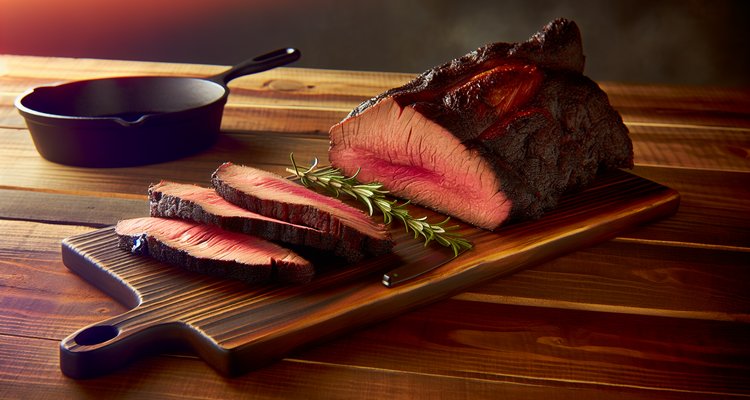
You pull the tri-tip off the smoker and the bark is the color of dark mahogany—firm, cracked, and fragrant with oak smoke. The knife glides through, revealing a vivid pink smoke ring beneath the crust and a juicy red center that practically glows.
This is the beauty of smoked tri-tip: brisket-level flavor in a fraction of the time. While your neighbor is still wrapping his brisket at hour six, you’re already slicing yours.
This recipe uses a low-and-slow method at 225°F followed by a scorching reverse sear—the combination that delivers steakhouse crust with backyard smoke flavor every single time.
What Is Tri Tip—and Why It’s Perfect for the Smoker
Tri-tip is California’s best-kept secret that finally escaped state lines. This triangular cut from the bottom sirloin typically weighs 2 to 3 pounds—big enough to feed a crowd, small enough to finish in under two hours.
Unlike brisket with its dense web of connective tissue, tri-tip is essentially a giant steak. It doesn’t need to hit 200°F to become tender. Cook it like a ribeye: build smoke flavor and bark at low temp, then sear fast and hot.
The cut traces back to California’s Santa Maria Valley in the 1950s, where ranchers cooked it over red oak coals at community barbecues. For decades, Californians hoarded it while the rest of the country had never heard of it.
That’s changed. Most grocery stores and butchers now carry it. Look for USDA Choice or Prime with good marbling—the fat equals flavor when it renders during the smoke.
What You Need Before You Start
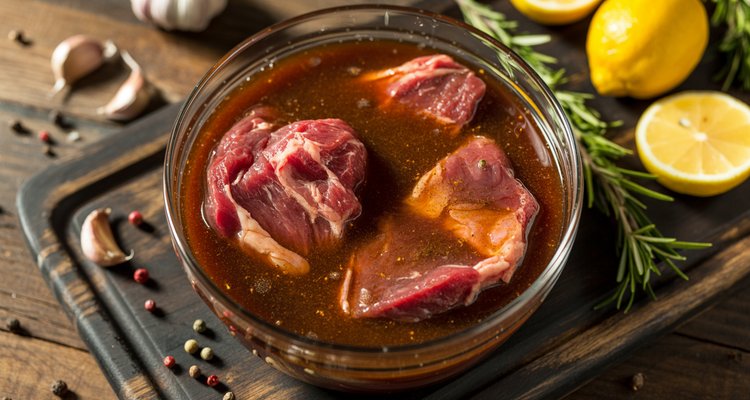
The Rub
The Santa Maria purists keep it sacred—equal parts of three ingredients, nothing more:
- Coarse kosher salt
- Coarsely ground black pepper
- Garlic powder
That’s it. Just SPG—salt, pepper, garlic—and let the beef do the talking. The coarse salt pulls moisture to the surface during the dry brine, then that moisture dissolves the salt and carries it deep into the meat.
Optional upgrades for competition-level bark:
- 1 teaspoon smoked paprika (deepens mahogany color)
- ½ teaspoon finely ground coffee (adds roasted complexity)
Wood Choice
| Wood Type | Flavor Profile | Recommendation |
|---|---|---|
| Red Oak | Medium, earthy, clean | ★ Traditional Santa Maria choice |
| Hickory | Bold, slightly sweet | Excellent alternative |
| Cherry | Subtle sweetness, red tint | Great for bark color |
| Mesquite | Intense, aggressive | Avoid—turns bitter over 90+ min |
For pellet grills, red oak, hickory, or a competition blend all work beautifully. If your grill has Super Smoke or Smoke Boost mode, use it—these settings pulse the auger to produce more smoke at low temperatures.
Equipment
You don’t need a $2,000 offset smoker. Any cooker that holds 225°F works:
- Pellet grill
- Kettle with indirect heat
- Kamado
- Offset smoker
The one non-negotiable: a reliable thermometer. Tri-tip has a brutally narrow window between medium-rare perfection and overcooked disappointment—just 5 to 10 degrees. Your smoker’s built-in dial lies. Only a thermometer tells the truth.
You’ll also need a cast iron skillet or screaming-hot grill zone for the reverse sear.
Two tools we reach for every time:
- Instant-Read Thermometer: The TempPro TP19H reads in 1 second flat, rotates 180° for easy reading, and is IP65 waterproof.
- Oak Smoking Pellets: Bear Mountain Oak Pellets are 100% hardwood with no fillers. Clean burn, consistent heat, authentic Santa Maria flavor.
How to Smoke Tri Tip Step by Step
Step 1—Trim the Fat Cap
Most tri-tips arrive with a thick fat cap—sometimes nearly an inch. That fat won’t fully render at 225°F. It’ll stay rubbery and block smoke from forming bark underneath.
What to do:
- Trim the fat cap down to about ¼ inch
- Remove any silverskin from the underside
- Keep enough fat to baste the meat as it cooks
Step 2—Dry Brine (Optional but Highly Recommended)
This step separates good tri-tip from unforgettable tri-tip.
The process:
- Season generously on all sides with kosher salt only—no pepper, no garlic yet
- Place on a wire rack over a sheet pan (air needs to circulate underneath)
- Refrigerate uncovered for 4 to 24 hours
What happens: The salt draws moisture to the surface, dissolves into a concentrated brine, then gets reabsorbed—carrying salt deep into the muscle fibers. The result is meat seasoned throughout and a surface dry enough to form spectacular bark.
Short on time? Skip it and season right before smoking. You’ll still get great results.
Step 3—Season and Bind
Pull the tri-tip from the fridge about 30 minutes before cook time. A cold roast shocks when it hits heat and cooks unevenly.
The process:
- Brush lightly with neutral oil or yellow mustard (the “binder”)
- Apply SPG rub generously on all sides
- Press it in lightly with your hands
- Let sit 15 to 20 minutes until surface goes from shiny to tacky
That tacky surface is called the pellicle—it’s your foundation for great bark.
Step 4—Fire Up the Smoker to 225°F
Get your smoker running at 225°F and let it stabilize. On a pellet grill, set the dial and wait 10 to 15 minutes. On an offset or kettle, build your fire and give it time to find equilibrium.
Critical mistake to avoid: Loading meat too early. When a fire first ignites, you get thick, billowing white smoke. That smoke is acrid and bitter—it ruins bark.
Wait until you see thin blue smoke, almost invisible, drifting from the exhaust. That’s clean combustion. That’s the smoke you want.
If your pellet grill has Super Smoke mode, engage it now for deeper flavor.
Step 5—Smoke Low and Slow
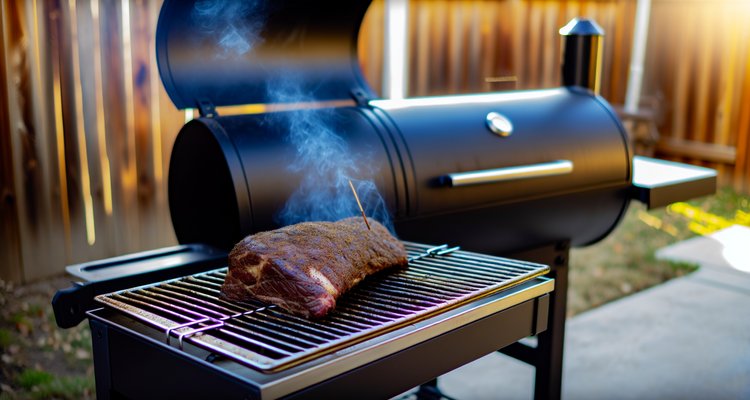
Place the tri-tip on the grates, fat cap up. The fat renders and bastes the meat below—nature’s butter drip. Close the lid and walk away.
Time estimates (use thermometer, not clock):
- 2 lb tri-tip: 60 to 75 minutes
- 3 lb tri-tip: 90 minutes to 2 hours
- General rule: ~30 minutes per pound at 225°F
Temperature targets:
- Insert probe into thickest part, avoiding fat pockets
- Pull at 120-125°F for medium-rare
- Sear and rest will push final temp to 130-135°F
Resist the urge to peek. Every lid lift loses heat, extends cook time, and bleeds smoke. Trust the thermometer.
The smoke ring forms during this phase—it only develops while surface temp stays below 140°F. Don’t stress if your pellet grill produces a thinner ring than stick burners. It’s purely cosmetic.
Step 6—Reverse Sear
This is where good becomes great.
When your thermometer reads 120-125°F, pull the tri-tip and immediately crank your heat source:
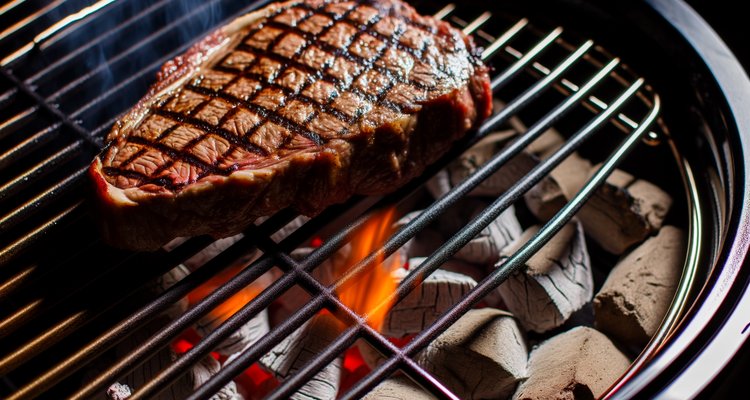
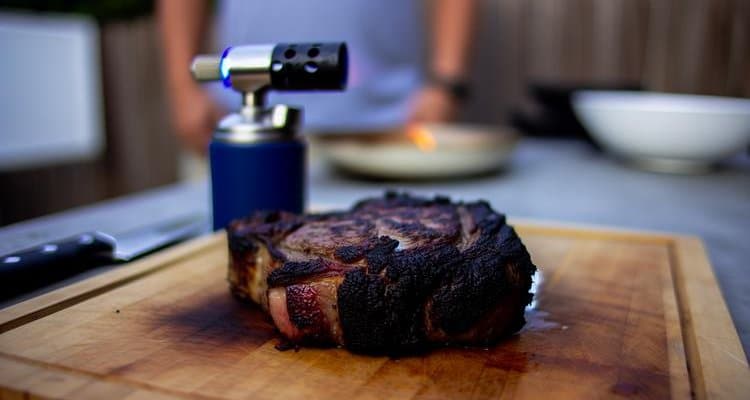
- Cast iron skillet: Ripping hot on stove over high heat—look for faint wisps of smoke
- Grill: Open vents wide or fire up dedicated sear zone
- Goal: Maximum heat, as hot as your equipment can go
The sear:
- Add a tablespoon of butter or high-smoke-point oil
- Sear 30 to 45 seconds per side—no more
- You’re building crust, not cooking the interior further
Caution: If your rub contains paprika, garlic, or onion powder, keep the sear brief. Those ingredients scorch at extreme heat and turn bitter.
Step 7—Rest and Slice
Tent loosely with foil and rest 10 to 15 minutes. This feels like torture, but it’s non-negotiable.
What happens during rest:
- Carryover cooking pushes temp up 3 to 5°F
- Muscle fibers relax and reabsorb juices
- Cut too soon = juices on cutting board instead of in meat
The crucial slicing technique:
Tri-tip has a split personality—the grain runs one direction in the thin end and changes direction toward the thick end.
- Start at the pointed thin end
- Slice against the grain in ¼ to ½ inch cuts
- When you reach the center where grain visibly shifts—stop
- Rotate the roast 90°
- Continue slicing against the new grain direction
This one technique is the difference between tri-tip that melts in your mouth and tri-tip that fights back.
Internal Temperature Guide for Smoked Tri Tip
Tri-tip is best at medium-rare to medium. Push past 150°F and the lean muscle fibers clamp down, turning tender meat into chewy disappointment.
Note: Carryover cooking and the reverse sear add 5 to 10°F to the final temperature.
| Doneness | Pull Off Smoker | Final Temp | Notes |
|---|---|---|---|
| Rare | 115°F | 125°F | Very red center; suited to thicker steaks |
| Medium-Rare ★ | 125°F | 130-135°F | The sweet spot—juicy, tender, max flavor |
| Medium | 135°F | 140-145°F | Pink center, slightly firmer |
| Medium-Well | 145°F | 150-155°F | Fading pink; noticeably firmer |
| Well Done | 155°F+ | 160°F+ | Not recommended—tough, dry |
Tips for the Best Smoked Tri Tip
Cook to temperature, not time. The 30-minutes-per-pound estimate is a starting point, not a promise. Your thermometer is the only thing that knows when your tri-tip is done.
Fat cap up, no exceptions. Rendering fat bastes the meat and shields it from direct heat. Fat cap down dries out the bottom.
Wait for clean smoke. Those first 10 to 15 minutes of heavy white smoke will ruin your bark. Wait for thin blue smoke before loading meat.
Use Super Smoke mode on pellet grills. Traeger, Pit Boss, Z Grills, Weber SmokeFire—most have this feature. Engage it during the first half of your cook.
Never wrap tri-tip. It’s a steak, not a brisket. It doesn’t stall, and wrapping just steams your bark into mush. Smoke it naked start to finish.
Frequently Asked Questions
How long does it take to smoke tri tip at 225°F?
Roughly 30 minutes per pound. A 2 lb tri-tip typically hits 125°F in 60 to 75 minutes. A 3 lb roast needs 90 minutes to 2 hours.
But time is just a guess—your thermometer is the only reliable guide.
What internal temperature should smoked tri tip be?
Pull at 125°F for medium-rare. After the sear and rest, you’ll land at 130-135°F—the sweet spot for juicy, tender tri-tip.
Don’t let it climb past 150°F. The lean muscle fibers seize up and the texture turns tough.
Can I smoke tri tip on a pellet grill?
Absolutely. Set to 225°F, engage Super Smoke mode if available, and use oak, hickory, or competition blend pellets.
The only difference: pellet grills often produce thinner smoke rings due to cleaner combustion. It’s purely cosmetic—the flavor is all there.
Should I wrap tri tip when smoking?
No. Tri-tip doesn’t hit a temperature stall and doesn’t have the collagen that benefits from wrapping.
Wrapping steams your hard-earned bark into a soft, sad shadow. Smoke uncovered the entire time, then sear.
How do I slice smoked tri tip correctly?
The grain changes direction midway through the roast—this is the trick most people miss.
Start at the thin end, slice against the grain. When the grain shifts at the center, rotate 90° and continue against the new direction. This single technique makes the difference between tender and chewy.
Conclusion
Smoked tri-tip occupies that perfect middle ground—more impressive than a steak, faster than a brisket, absolutely worth mastering.
In under two hours, you get deep smoke penetration, mahogany bark that cracks when you press it, and a steakhouse crust from the reverse sear.
The formula is simple:
- SPG rub
- 225°F smoke until 125°F internal
- Screaming-hot sear
- Rest, then slice against the grain (adjusting for the grain change)
Keep a thermometer within reach. Tri-tip’s narrow window between perfection and overdone makes guessing a losing game.
Smoked Tri Tip
Equipment
- Pellet smoker or offset smoker Any smoker works — pellet grill, offset, kettle with indirect heat, or kamado
- Instant-read meat thermometer Non-negotiable — tri-tip has a narrow 5°F window between perfect and overcooked
- Cast iron skillet For reverse sear; alternatively use a high-heat grill zone
- Wire rack and sheet pan For dry brine step if using
Ingredients
Tri-Tip Roast
- 1 tri-tip roast 2–3 lbs, USDA Choice or Prime, fat cap trimmed to ¼ inch
Santa Maria SPG Rub
- 1 tablespoon kosher salt coarse; reduce by half if dry brining overnight
- 1 tablespoon coarsely ground black pepper
- 1 tablespoon garlic powder
- 1 teaspoon smoked paprika optional
Binder & Sear
- 1 tablespoon neutral oil or yellow mustard binder — helps rub adhere
- 1 tablespoon unsalted butter for reverse sear in cast iron
Instructions
- Trim the fat cap on the tri-tip down to about ¼ inch. Remove any hard silverskin from the underside. A thin fat layer is fine — it bastes the meat during smoking.
- Optional dry brine: Season the trimmed tri-tip generously with kosher salt on all sides. Place uncovered on a wire rack over a sheet pan and refrigerate for 4 to 24 hours. Skip this step if short on time.
- Remove the tri-tip from the fridge 30 minutes before smoking. Coat lightly with neutral oil or mustard as a binder. Mix together the black pepper, garlic powder, and smoked paprika (and salt, if you did not dry brine). Apply the rub generously on all sides and press lightly to adhere.
- Preheat your smoker to 225°F using oak, hickory, or cherry wood. If using a pellet grill, engage Super Smoke or Smoke Boost mode. Wait until the initial white smoke clears and you see thin blue smoke before adding the meat.
- Place the tri-tip fat-cap-up on the smoker grates. Insert a probe thermometer into the thickest part, avoiding fat pockets. Close the lid and smoke at 225°F until the internal temperature reaches 120–125°F for medium-rare (about 30 minutes per pound). Do not open the lid frequently.
- When the tri-tip reaches 120–125°F, remove it from the smoker. Heat a cast iron skillet over high heat until screaming hot, or crank your grill to maximum. Add butter just before the sear. Sear the tri-tip for 30–45 seconds on each side to build a crust. Keep it brief to prevent the rub from scorching.
- Remove from heat and tent loosely with foil. Rest for 10 to 15 minutes — the internal temperature will rise another 3 to 5°F during this time.
- To slice: start at the pointed thin end and cut against the grain in thin slices. When you reach the center point where the grain visibly shifts direction, rotate the roast 90° and continue slicing against the new grain direction. Serve immediately.
Notes
Contents