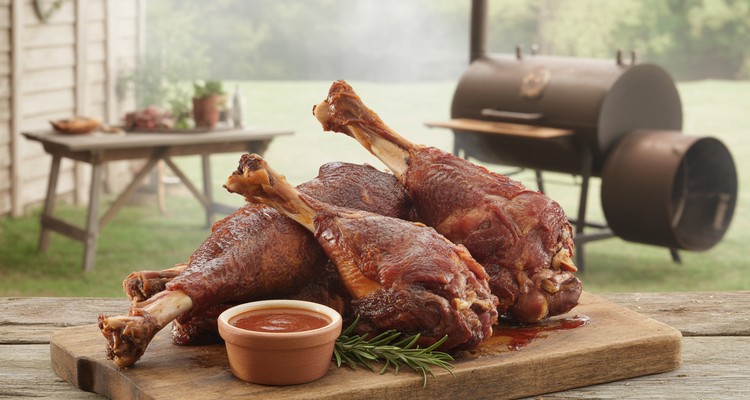
Smoked turkey legs deliver the iconic theme park flavor right from your backyard smoker. Brine turkey legs for 24 hours with curing salt, then smoke at 250°F for 3-4 hours until the internal temperature reaches 185-190°F for fall-off-the-bone tenderness.
The USDA requires all poultry to reach a minimum internal temperature of 165°F for food safety[USDA], but turkey legs need the higher range of 185-190°F to break down tough connective tissue and tendons into tender, pull-apart meat.
This Disney copycat recipe walks you through the complete process: brining with curing salt for that signature pink color, smoking low and slow, and using the foil wrap technique for maximum tenderness.
Quick Summary
- Iconic Flavor — Recreate theme park-style smoked turkey legs at home by brining with curing salt for 24 hours, which imparts a distinctive pink color and savory, ham-like taste.
- Optimal Tenderness — Smoke turkey legs at 250°F for 3-4 hours, targeting an internal temperature of 185-190°F. This higher temperature is crucial for breaking down tough connective tissues, ensuring fall-off-the-bone meat.
- Foil Wrap Technique — After an initial 2 hours of open smoking, wrap the legs tightly in foil with a splash of broth. This “Texas Crutch” method traps steam, accelerating the tenderization process and preventing the meat from drying out.
- Sourcing & Reheating — For the classic oversized look, seek out 1.5-2 lb tom turkey legs from specialty butchers or wholesale clubs. Store-bought legs are pre-cooked and can be reheated in a 300°F oven to 165°F for 45-60 minutes.
Helpful gear for this cook:
- ThermoMaven wireless meat thermometer — tracks long cooks without opening the smoker
- ThermoMaven instant-read meat thermometer — checks doneness quickly at the grill
- Hotec stainless steel kitchen tongs — make turning and moving food easier
Ingredients and Equipment
For the Brine:
- 4 large tom turkey legs (1.5-2 lbs each)
- 1 gallon cold water
- 1 cup kosher salt
- 1/2 cup brown sugar
- 1 tablespoon Prague Powder #1 (curing salt)
Essential Equipment:
- Smoker or grill set up for indirect heat
- Large food-safe container or brining bag
- Instant-read meat thermometer
- Heavy-duty aluminum foil
- Smoking wood (cherry, apple, or hickory)
Sourcing the Right Turkey Legs
Tom turkey legs weigh 1.5-2 pounds each and are the massive, meaty legs found at theme parks and Renaissance festivals. Hen legs are smaller and more commonly stocked at grocery stores. For the classic oversized presentation, seek out tom legs from butcher shops, wholesale clubs, or online meat vendors.
Tom vs. Hen: Why Size Matters
The difference between tom and hen turkey legs is significant. Tom legs are the jumbo 1.5-2 pound legs that create that iconic theme park look. Hen legs weigh closer to 3/4 to 1 pound and work fine but lack the visual impact.
For the classic oversized presentation, always seek out tom legs.
Check restaurant supply stores, wholesale clubs like Costco or Sam’s Club, and online meat vendors for raw tom turkey legs. Most standard grocery stores only carry hen legs.
Frozen tom legs work well — thaw fully in the refrigerator for 24-48 hours before brining.
The Secret to Theme Park Flavor: Brine and Curing Salt
A 24-hour brine with Prague Powder #1 curing salt is what gives smoked turkey legs their signature pink color and ham-like flavor. Without curing salt, the meat tastes like standard roasted turkey rather than the cured, smoky version found at theme parks and fairs.
Why Curing Salt is Essential for the “Disney” Style
The curing salt, specifically Prague Powder #1, is the key ingredient that differentiates these from regular smoked turkey. It penetrates the meat during the brining process, creating that distinctive pink hue and savory, ham-like taste that is so iconic.
How to Make the Curing Brine
To create the brine, dissolve 1 cup of kosher salt, 1/2 cup of brown sugar, and 1 tablespoon of Prague Powder #1 in 1 gallon of cold water. Stir until all the solids are fully dissolved. Ensure the water is cold to keep the turkey legs in a safe temperature range.
Brining Process and Duration
Submerge the turkey legs completely in the brine. Use a large, food-safe container or a brining bag. Refrigerate the submerged legs for a full 24 hours to allow the cure and salt to penetrate the dense meat thoroughly.
Developing the Pellicle for Better Smoke Adhesion
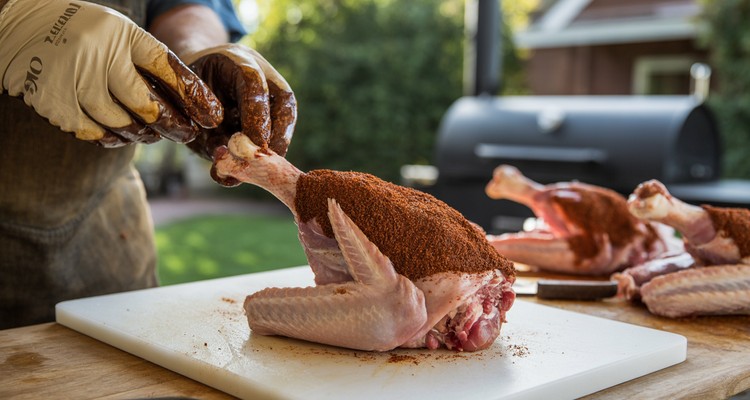
After brining, rinse the turkey legs under cold water and pat them completely dry with paper towels. Place them on a wire rack and let them air-dry uncovered in the refrigerator for 2-4 hours. This develops a tacky surface called the pellicle, which helps smoke adhere to the meat.
 Pitmaster Tip: Prague Powder #1 contains 6.25% sodium nitrite and is specifically designed for curing meats. Do not substitute Prague Powder #2 or saltpeter. Use exactly 1 tablespoon per gallon of brine — more is not better and can be unsafe.[NCHFP]
Firing Up the Smoker
Set your smoker to 250°F using cherry, apple, or hickory wood. Place the brined and dried turkey legs directly on the grates and smoke uncovered for approximately 2 hours to build color and bark before wrapping in foil. This method works on any pellet grill, offset smoker, or charcoal setup.
Setting Your Smoker to 250°F
Preheat your smoker to a steady 250°F. This moderate temperature is ideal for slowly rendering the connective tissue in the legs without drying out the meat. This temperature works well for any type of smoker, including pellet grills, offsets, or charcoal smokers.
Choosing the Best Smoking Wood
Cherry and apple wood produce a sweet, mild smoke that pairs perfectly with the cured meat. For a bolder, more traditional smokehouse flavor, hickory is an excellent choice. These woods are readily available and work well on a Traeger, Pit Boss, or other pellet grill.
The First Smoke: Building Color and Bark
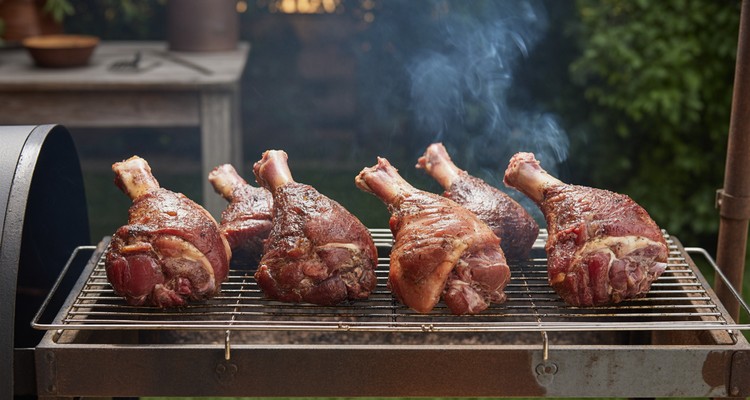
Place the turkey legs directly on the smoker grates, ensuring there is space between each leg for even airflow. Smoke them uncovered for about 2 hours. During this initial phase, the exterior will develop a deep, attractive mahogany color and a flavorful bark.
| Phase | Smoker Temp | Duration | Internal Temp Target |
|---|---|---|---|
| Smoke (uncovered) | 250°F | 2 hours | ~150°F |
| Foil wrap (covered) | 250°F | 1-2 hours | 185-190°F |
| Reheat (store-bought) | 300°F oven | 45-60 minutes | 165°F |
The Fall-Off-the-Bone Technique: Foil Wrapping
Wrap turkey legs tightly in aluminum foil with a splash of chicken broth after 2 hours of open smoking. Return to the smoker at 250°F for 1-2 additional hours until the internal temperature reaches 185-190°F. This Texas Crutch method breaks down tough connective tissue and tendons for tender, pull-apart meat.
How to Wrap Turkey Legs (The Texas Crutch)
After the initial 2-hour smoke, wrap each turkey leg tightly in heavy-duty aluminum foil. Add 2 tablespoons of chicken broth or melted butter to each foil packet before sealing. This technique, often called the “Texas Crutch,” traps steam and accelerates collagen breakdown.
The Importance of Cooking to 185-190°F
Return the wrapped legs to the smoker at 250°F and cook for 1-2 more hours. While poultry is safe at 165°F[USDA], turkey legs need to reach 185-190°F. This higher temperature dissolves tough tendons and connective tissue into gelatin, producing that signature fall-off-the-bone texture.
Pitmaster Tip: Insert the thermometer probe into the thickest part of the meat, avoiding the bone. The bone conducts heat faster and gives a falsely high reading. Check multiple spots for accuracy. Reheating Store-Bought Smoked Turkey Legs
Commercially packaged smoked turkey legs from grocery stores like Walmart are fully cooked and only need reheating. Wrap them in aluminum foil with 2 tablespoons of water or broth, then heat in a 300°F oven for 45-60 minutes until the internal temperature reaches 165°F.
Store-bought smoked turkey legs are pre-cooked and safe to eat cold, but reheating significantly improves their texture and flavor. The goal is to warm them through without drying them out.
Reheating in the Oven
Wrap each leg in foil with a small amount of liquid, like water or broth, to create steam. Heat in a 300°F oven for 45-60 minutes.
For a crispier exterior, unwrap the foil for the last 10 minutes. The USDA recommends reheating leftovers to an internal temperature of 165°F[USDA].
Reheating on the Smoker
For enhanced flavor, you can also reheat the turkey legs on your smoker. Set it to 250°F and place the foil-wrapped legs inside for 30-45 minutes. This method helps to refresh the smoky aroma and taste.
Serving and Storing Leftovers
Serve smoked turkey legs hot from the smoker for optimal flavor and texture. For leftovers, cool them to room temperature within two hours, then wrap each leg individually in foil or plastic wrap. Store them in the refrigerator for up to four days or freeze for up to three months.
How to Serve
Smoked turkey legs are ideally served immediately after they come off the smoker and have rested for a few minutes. Their rich, smoky flavor makes them a satisfying meal on their own, perfect for a backyard party or a fun family dinner.
Storing in the Refrigerator
If you have leftovers, allow the turkey legs to cool completely. Wrap each one tightly in aluminum foil or plastic wrap and place in an airtight container for safe storage up to 4 days in the refrigerator.[USDA]
Freezing Smoked Turkey Legs
For longer storage, freezing is an excellent option. Wrap the cooled legs individually in foil, then place them in a heavy-duty freezer bag. They will maintain their quality in the freezer for up to 3 months.
Thaw overnight in the refrigerator before reheating.
Smoked Turkey Legs (Theme Park Style)
Equipment
- Smoker or grill Set up for indirect heat at 250°F.
- Large food-safe container or brining bag For brining the turkey legs for 24 hours.
- Instant-read meat thermometer Essential for checking the final internal temperature.
- Heavy-duty aluminum foil For wrapping the legs to make them tender.
- Smoking wood Cherry, apple, or hickory recommended.
Ingredients
For the Brine
- 4 large tom turkey legs (1.5-2 lbs each)
- 1 gallon cold water
- 1 cup kosher salt
- 1/2 cup brown sugar
- 1 tablespoon Prague Powder #1 This is the curing salt.
Instructions
- In a large food-safe container, dissolve the kosher salt, brown sugar, and Prague Powder #1 in 1 gallon of cold water. Stir until all solids are fully dissolved to create the brine.
- Submerge the turkey legs completely in the brine. Refrigerate for a full 24 hours to allow the cure and salt to penetrate the dense meat.
- After brining, remove the legs, rinse them under cold water, and pat completely dry with paper towels. Place on a wire rack and air-dry uncovered in the refrigerator for 2-4 hours to develop a tacky surface (pellicle).
- Preheat your smoker or grill for indirect cooking to a steady 250°F. Add your choice of smoking wood, such as cherry, apple, or hickory.
- Place the dried turkey legs directly on the smoker grates. Smoke uncovered for approximately 2 hours until they develop a deep, mahogany color.
- Remove the legs from the smoker. Wrap each leg tightly in heavy-duty aluminum foil. You can add 2 tablespoons of chicken broth or melted butter to each foil packet before sealing to add moisture.
- Return the wrapped legs to the smoker. Continue cooking for another 1-2 hours, or until an instant-read thermometer inserted into the thickest part of the meat (avoiding the bone) registers 185-190°F.
- Once the target temperature is reached, carefully unwrap the turkey legs and serve immediately.
Notes
Frequently Asked Questions
How long does it take to smoke turkey legs?
Smoking turkey legs takes 3-4 hours total at 250°F. This includes approximately 2 hours of open smoking to build color and bark, followed by 1-2 hours wrapped in foil to reach the target internal temperature of 185-190°F.
Larger tom turkey legs take longer than smaller hen legs, so always use a thermometer rather than relying on time alone.
Do I have to use curing salt?
No, curing salt is optional. A standard salt-and-sugar brine produces excellent smoked turkey, but the meat will taste like traditional roasted turkey rather than the cured, ham-like version found at theme parks. Without Prague Powder #1, the meat also lacks the signature pink hue that makes Disney-style turkey legs distinctive.
Are smoked turkey legs from the store already cooked?
Yes. Commercially packaged smoked turkey legs sold at grocery stores like Walmart are fully cooked during the smoking and packaging process. They only need reheating to serving temperature.
Wrap in foil with a splash of broth and heat in a 300°F oven for 45-60 minutes until the internal temperature reaches 165°F.
Should I wrap turkey legs in foil when smoking?
Yes, wrapping in foil after the initial 2-hour smoke is recommended. The foil wrap traps moisture and steam, which breaks down the tough connective tissue and tendons in turkey legs much faster. Without wrapping, the legs take significantly longer and risk drying out before the collagen fully renders.
Add a splash of broth or butter before sealing.
Can I freeze smoked turkey legs?
Yes. Wrap cooled smoked turkey legs tightly in aluminum foil, then place in a freezer-safe bag. They freeze well for up to 3 months.
Thaw overnight in the refrigerator and reheat in a 300°F oven for 45-60 minutes. Adding a splash of broth to the foil packet during reheating restores moisture lost during freezing.
What wood is best for smoking turkey legs?
Mild fruitwoods like apple and cherry are excellent choices as they impart a sweet, subtle smoke that complements the cured flavor of the turkey. For a more traditional, robust smokehouse taste, hickory is a classic option. Avoid strong woods like mesquite, which can overpower the meat.
Why are my smoked turkey legs tough?
Toughness is almost always caused by undercooking. While poultry is safe to eat at 165°F, turkey legs must be cooked to a higher internal temperature of 185-190°F. This higher temperature is necessary to break down the abundant collagen and connective tissue in the leg, rendering it tender and juicy.
Take Home Message
Achieving the perfect theme park-style smoked turkey leg is a rewarding process that combines brining with curing salt for that iconic pink hue and ham-like flavor, followed by a low-and-slow smoke.
The key to fall-off-the-bone tenderness lies in cooking to a higher internal temperature of 185-190°F, facilitated by a foil wrap during the final stages.
Mastering these techniques will allow you to recreate a beloved fairground classic right in your backyard, delivering a juicy, flavorful, and unforgettable experience.