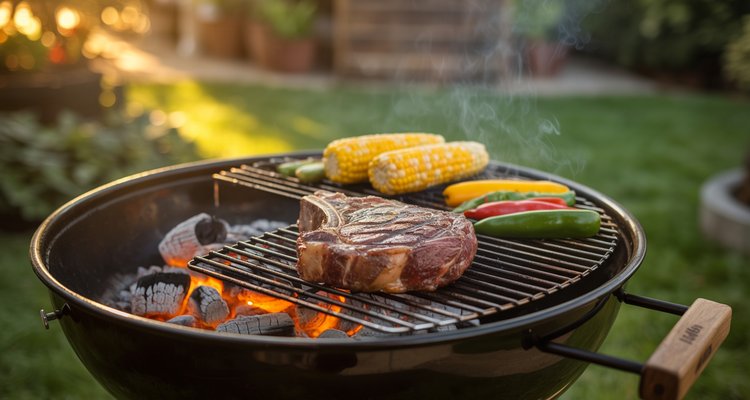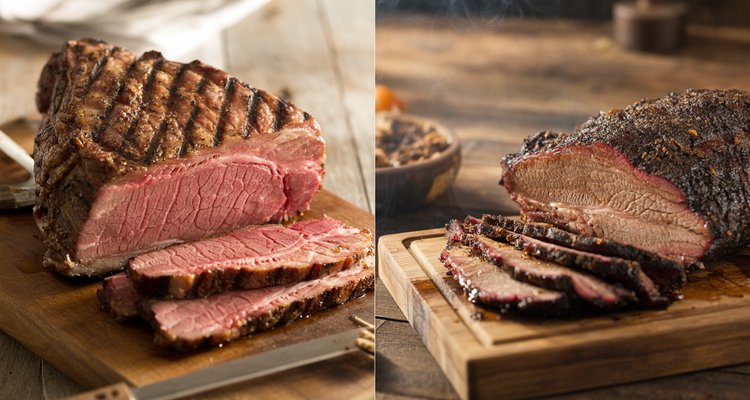
You’re standing at the butcher counter staring at two very different cuts of beef. One is a compact triangle that’ll be done before dinner. The other is a massive slab that needs an entire weekend. Choosing between tri-tip vs brisket comes down to how much time you have, how many people you’re feeding, and what kind of experience you want from the cook.
Helpful gear for this cook:
- Hotec stainless steel kitchen tongs — make turning and moving food easier
- Spice Guru BBQ rub set — gives you several BBQ seasoning options for the cook
- Typhur Sync WiFi Wireless Meat Thermometer Digital — helps verify doneness without guessing
Where Each Cut Comes From
Tri-tip and brisket come from completely different parts of the cow, and that single fact explains almost every other difference between them. Tri-tip is a triangular muscle cut from the bottom sirloin primal, located in the hindquarter. It’s a relatively small cut, typically weighing 2-3 pounds, with a distinctive triangular shape and a single, clean grain pattern. Tri-tip rose to fame as a staple of California’s Santa Maria-style grilling tradition, where it’s been the centerpiece of community barbecues since the 1950s. Brisket comes from the chest (breast) of the cow. It’s a heavily exercised muscle that supports about 60% of the animal’s body weight. A whole packer brisket weighs 10-16 pounds and contains two distinct muscles – the flat and the point – connected by a thick layer of fat. Brisket is the undisputed king of Texas barbecue and the cut that built the reputations of legendary smokehouses across the South.
| Feature | Tri-Tip | Brisket |
|---|---|---|
| Primal | Bottom sirloin | Chest (breast) |
| Typical Weight | 2-3 pounds | 10-16 pounds |
| Shape | Triangular | Flat, rectangular |
| Muscles | Single muscle | Two (flat + point) |
| BBQ Tradition | California Santa Maria | Texas BBQ |
| Cook Time | 45-90 minutes | 8-14 hours |
Fat, Marbling, and Connective Tissue
The fat structure of each cut is the single biggest reason they cook so differently. Tri-tip is a lean cut with a thin fat cap on one side and minimal intramuscular marbling. It has very little connective tissue, which means it doesn’t need long cooking times to become tender. Think of it as a roast that behaves more like a thick steak. Brisket is the opposite. The flat is relatively lean but sits beneath a thick fat cap. The point is heavily marbled with both intramuscular fat and dense connective tissue rich in collagen. That collagen needs hours of low-temperature cooking to break down into gelatin – the substance that gives properly smoked brisket its melt-in-your-mouth texture.
| Nutrient (per 4 oz cooked) | Tri-Tip | Brisket (flat) |
|---|---|---|
| Calories | 200-220 | 245-280 |
| Protein | 26-28g | 24-27g |
| Total Fat | 10-12g | 14-18g |
| Saturated Fat | 3-4g | 5-7g |
Helpful gear for this cook:
- TempPro TP20 500FT Wireless Meat Thermometer with Dual Meat — helps verify doneness without guessing
- MEATER Plus: Smart Bluetooth Wireless Meat Thermometer Digital — helps verify doneness without guessing
- ThermoMaven wireless meat thermometer — helps verify doneness without guessing
Cooking Methods and Time
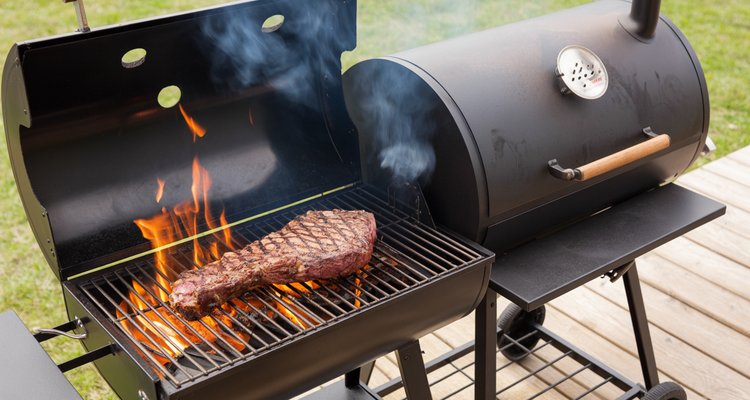
The cooking approach for each cut couldn’t be more different. Tri-tip is a fast cook. Brisket is an all-day commitment.
How to Cook Tri-Tip
Tri-tip thrives on high heat. The most popular method is a direct grill sear over hot coals or gas burners, followed by indirect heat to finish. A reverse sear – starting low and finishing with a hard sear – also works well. You can also run tri-tip on a pellet smoker at 275-300°F for a faster smoke. Total cook time runs 45-90 minutes depending on thickness and method. Pull the tri-tip off the grill when the internal temperature hits 130-135°F for medium-rare. Let it rest 10 minutes before slicing. The whole process from fridge to plate takes about 90 minutes, making tri-tip a realistic weeknight dinner option. Tri-tip is forgiving. Because it’s naturally tender, you don’t need perfect fire management. Even a slightly overcooked tri-tip is still enjoyable.
How to Cook Brisket
Brisket demands patience. Set your smoker to 225-275°F and plan for 8-14 hours of cook time, depending on the size of the packer. The internal temperature needs to reach 200-205°F and the meat should be probe-tender – a thermometer probe slides in with zero resistance. Somewhere around 150-170°F internal, you’ll hit the stall. The brisket’s internal temperature plateaus for hours as moisture evaporates from the surface. Many pitmasters wrap the brisket in butcher paper or foil at this point to push through faster.
After the brisket hits temp, it needs 1-2 hours of rest in a cooler or oven set to 150°F. Skip the rest and the juices run out when you slice. From trimming to carving, a brisket cook is a 12-18 hour commitment.
Seasoning and Wood Pairings
Tri-tip’s signature seasoning is the Santa Maria rub – coarse salt, black pepper, garlic powder, and sometimes a touch of dried parsley. Marinades also work well on tri-tip because the leaner meat absorbs flavor quickly. For wood, red oak is the traditional California choice. It produces a medium smoke flavor that complements the beefy taste without overpowering it. Brisket keeps it simple with the classic Texas “dalmatian rub” – just coarse salt and coarse black pepper in a 50/50 ratio. The philosophy is to let the beef and smoke do the talking. Oak and hickory are the most common wood choices for brisket. Mesquite works too but burns hot and produces intense smoke, so it requires more experience to manage.
Can You Smoke Tri-Tip Like Brisket?
Yes, you can smoke a tri-tip low-and-slow like a brisket. Set your smoker to 225°F, season the tri-tip with a brisket-style rub, and smoke until the internal temperature reaches 200°F. The whole process takes 4-5 hours – much faster than a full brisket. The result is smokier and more tender than a grilled tri-tip, but the texture stays leaner since tri-tip lacks brisket’s collagen and fat. It’s a solid middle ground if you want smoker flavor without the 14-hour commitment.
Flavor and Texture Compared
Both cuts deliver big beef flavor, but the experience at the table is completely different. Tri-tip tastes like a premium sirloin steak – clean, beefy, and slightly mineral. When cooked over wood or charcoal, it picks up a pleasant grilled char on the exterior while staying juicy and pink inside. The texture is firm with a satisfying bite, closer to a sliced steak than traditional barbecue. Brisket delivers deep, layered flavor. The meat absorbs hours of smoke, developing a dark bark on the outside that’s loaded with seasoning and rendered fat. A properly smoked brisket flat is moist and tender, while the point is rich and almost buttery. The smoke ring – a pink band just beneath the surface – is a visual hallmark of well-smoked brisket.
| Quality | Tri-Tip | Brisket |
|---|---|---|
| Primary Flavor | Clean, beefy, steak-like | Deep, smoky, rich |
| Texture | Firm, sliced-steak bite | Melt-in-your-mouth tender |
| Exterior | Grilled char and crust | Dark bark with smoke ring |
| Best Doneness | Medium-rare (130-135°F) | Probe-tender (200-205°F) |
| Smoke Absorption | Light to moderate | Heavy, penetrating |
Price and Value Breakdown
At the meat counter, brisket looks like the cheaper option per pound. But the real cost comparison requires a closer look at yield. Tri-tip typically runs see current price-see current price per pound in 2026, depending on grade and region. A 2.5-pound tri-tip costs about see current price-see current price Because tri-tip is lean, you lose only 10-15% of the raw weight during cooking. A 2.5-pound roast yields roughly 2.1-2.25 pounds of finished meat. Whole packer brisket costs see current price-see current price per pound. A 14-pound packer runs see current price-see current price However, brisket loses 30-40% of its weight to trimming and rendering during the cook. That 14-pound brisket yields about 8.5-10 pounds of finished meat.
| Cost Factor | Tri-Tip | Brisket |
|---|---|---|
| Price Per Pound (raw) | see current price-see current price | see current price-see current price |
| Typical Purchase | 2.5 lbs (see current price-see current price) | 14 lbs (see current price-see current price) |
| Weight Loss During Cooking | 10-15% | 30-40% |
| Cooked Yield | ~2.1-2.25 lbs | ~8.5-10 lbs |
| Cost Per Cooked Pound | see current price-see current price | see current price-see current price |
| Feeds (approx.) | 3-4 people | 15-20 people |
When you factor in weight loss, brisket still costs less per cooked pound. But remember – you’re also investing 10+ hours of cook time with brisket. For a small weeknight dinner, tri-tip is far more practical even at the higher per-pound price.
Slicing and Serving
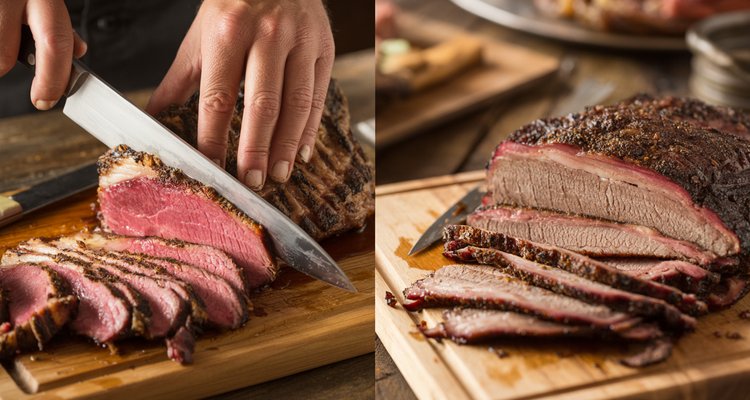
How you slice each cut matters as much as how you cook it. Cut with the grain and you’ll get chewy, stringy meat regardless of how well it was prepared. Tri-tip has a unique grain pattern that changes direction roughly at the midpoint of the roast. The key is to find that grain change, cut the roast in half at that point, then slice each half against the grain into thin, steak-like slices about 1/4 inch thick. Serve it fanned out on a cutting board or plated like sliced steak. Brisket slicing depends on which part you’re cutting. Separate the flat from the point first. Slice the flat against the grain in pencil-thin slices – about 1/4 inch thick. The slices should be thin enough to bend without breaking. The point can be sliced thicker, chopped for sandwiches, or cubed and re-smoked for burnt ends.
Choose Tri-Tip If… vs Choose Brisket If…
The right cut almost always comes down to your situation. Here’s a decision guide based on the most common cooking scenarios. Choose tri-tip if:
- You have 1-2 hours and want medium-rare beef sliced like steak
- You’re cooking for a small group of 2-6 people
- You’re a beginner who wants a forgiving, hard-to-ruin cut
- You want a weeknight dinner that still feels special
- You have a gas or charcoal grill but no dedicated smoker
Choose brisket if:
- You have 8-14 hours and want fall-apart, pull-with-a-fork barbecue
- You’re feeding a crowd of 10-20 people at a party or gathering
- You want leftovers for days – brisket sandwiches, tacos, chili, and hash
- You enjoy the process of tending a smoker and managing fire for hours
- You own a dedicated smoker, pellet grill, or offset smoker
| Scenario | Best Pick | Why |
|---|---|---|
| Weeknight dinner | Tri-tip | Done in under 90 minutes |
| Big party (10+ guests) | Brisket | One packer feeds 15-20 people |
| Beginner cook | Tri-tip | Forgiving, no stall or wrap |
| Weekend BBQ project | Brisket | The full low-and-slow experience |
| Tight budget, small group | Tri-tip | see current price-see current price total outlay |
| Tight budget, large group | Brisket | Lowest cost per serving |
| Maximum leftovers | Brisket | Sandwiches, tacos, chili for days |
| Only have a gas grill | Tri-tip | Direct + indirect heat is all you need |
Frequently Asked Questions
Can tri-tip replace brisket?
Not directly. Tri-tip and brisket cook differently, taste different, and serve different purposes. You can smoke a tri-tip brisket-style for a similar smoky flavor, but the texture will be leaner and firmer. If a recipe calls for slow-cooked, pull-apart brisket, tri-tip won’t deliver the same result. For grilling and quick-cook applications, tri-tip is the better choice on its own merits.
Which is more tender, tri-tip or brisket?
It depends on how you define tender. Tri-tip is naturally tender right off the grill at medium-rare – no special technique needed. Brisket is tough when raw but becomes incredibly tender after 10-14 hours of slow cooking as the collagen breaks down into gelatin. At its best, properly smoked brisket is more tender than tri-tip. But achieving that level requires skill and patience.
Which is cheaper, tri-tip or brisket?
Brisket costs less per pound (see current price-see current price/lb vs see current price-see current price/lb for tri-tip). However, brisket loses 30-40% of its weight during cooking, while tri-tip only loses 10-15%. Per cooked pound, brisket still wins on price, but the gap is smaller than the raw price suggests. The total cash outlay is lower for tri-tip (see current price-see current price vs see current price-see current price) since you’re buying a much smaller cut.
What is the poor man’s brisket?
Chuck roast is most commonly called the “poor man’s brisket.” When smoked low-and-slow at 225-250°F, a chuck roast develops a bark and tender, pull-apart texture similar to brisket at a fraction of the cost. Some people also use the term for tri-tip smoked brisket-style, though tri-tip is actually more expensive per pound than brisket in most markets.
Is tri-tip considered a good cut of meat?
Tri-tip is an excellent cut. It’s naturally tender, packed with beefy flavor, and versatile enough to grill, smoke, roast, or broil. In California, tri-tip has been a barbecue staple for over 70 years. It’s gaining popularity nationwide as more people discover it’s one of the best values in the sirloin section – premium steak flavor at a fraction of ribeye or tenderloin prices.
Can I cook a tri-tip like a brisket?
Yes. Set your smoker to 225°F and smoke the tri-tip until the internal temperature reaches 200°F, roughly 4-5 hours. Apply a brisket-style salt-and-pepper rub and wrap in butcher paper at 165°F if desired. The result is a smokier, more tender tri-tip, though it won’t have the same melt-in-your-mouth fattiness as real brisket because tri-tip lacks the heavy collagen and intramuscular fat.
Which has more fat, tri-tip or brisket?
Brisket has significantly more fat than tri-tip. The brisket point is heavily marbled with intramuscular fat, and the whole packer sits under a thick external fat cap. Tri-tip is comparatively lean with a thin fat cap and minimal marbling. Per 4-ounce cooked serving, brisket contains about 14-18 grams of total fat versus 10-12 grams for tri-tip.
How do you slice tri-tip vs brisket?
Both cuts must be sliced against the grain, but the technique differs. Tri-tip has a grain that changes direction at the midpoint – cut the roast in half there, then slice each half against its own grain. Brisket requires separating the flat from the point first. Slice the flat into thin, pencil-width slices against the grain. The point can be sliced thicker, chopped, or cubed for burnt ends.
Is tri-tip or brisket better for beginners?
Tri-tip is far easier for beginners. It cooks in under 90 minutes, requires no special equipment beyond a grill, and is forgiving if you slightly overcook it. Brisket demands smoker management, an understanding of the stall, wrapping decisions, and 10+ hours of attention. Start with tri-tip to build confidence, then graduate to brisket when you’re ready for a full-day cook.
How much tri-tip or brisket do I need per person?
For tri-tip, plan on about 1/2 pound of raw meat per person (it loses only 10-15% during cooking). For brisket, plan on 3/4 to 1 pound of raw meat per person to account for the 30-40% weight loss. A 2.5-pound tri-tip feeds 3-5 people. A 14-pound whole packer brisket feeds 15-20 people with sides.