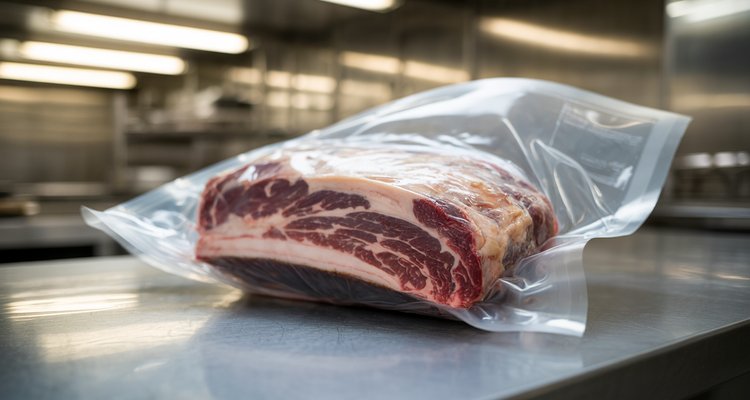
You grabbed a cryovac brisket at Costco and noticed the pack date is three weeks old. That’s not a problem. It’s actually working in your favor. Every day that brisket sits sealed in its vacuum packaging, natural enzymes are quietly breaking down tough muscle fibers and making the meat more tender before you ever fire up the smoker. Wet aging brisket is the most common tenderization method in the commercial beef industry, yet most home cooks don’t fully understand how it works or how to use it intentionally. This guide covers the science, the timelines, the safety boundaries, and the difference between controlled aging and simply forgetting about meat in your fridge.
Helpful gear for this cook:
- Bryco Goods pink butcher paper — works for wrapping brisket, ribs, and pork during the stall
- Spice Guru BBQ rub set — gives you several BBQ seasoning options for the cook
- Typhur Sync WiFi Wireless Meat Thermometer Digital — helps verify doneness without guessing
What Is Wet Aging?
Wet aging is the process of holding vacuum-sealed beef at refrigerator temperatures for an extended period. Inside the airtight cryovac packaging, naturally occurring enzymes called calpains and cathepsins slowly break down myofibrillar proteins, which are the structural fibers responsible for meat’s toughness. This process happens without any oxygen exposure. Lactic acid bacteria also contribute by breaking down carbohydrates in the muscle, producing amino acids that add subtle flavor complexity. The result is beef that’s measurably more tender than freshly slaughtered meat. The technique originated in the 1960s and 1970s alongside the commercial adoption of vacuum packaging technology. Before that, all beef was dry aged in hanging coolers. Today, roughly 90% of commercially sold beef in the United States is wet aged by default.
Wet Aging vs. Dry Aging Brisket
Both methods tenderize beef, but they achieve fundamentally different results. Dry aging hangs unwrapped beef in a temperature and humidity-controlled cooler, allowing moisture to evaporate and concentrating flavors into a nutty, funky profile. Wet aging keeps the meat sealed, retaining all original moisture while enzymes work on tenderness. For brisket specifically, wet aging dominates the commercial market because it preserves yield. A dry aged brisket loses 15-30% of its original weight to evaporation and trim, while a wet aged brisket weighs the same after 45 days as it did on day one.
| Factor | Wet Aging | Dry Aging |
|---|---|---|
| Method | Vacuum-sealed, refrigerated | Unwrapped in controlled cooler |
| Weight Loss | 0% | 15-30% |
| Flavor Profile | Mild, slightly metallic at extended times | Concentrated, nutty, funky |
| Equipment Needed | Refrigerator only | Dedicated aging cooler with humidity control |
| Cost | No extra cost beyond refrigeration | Higher due to weight loss and equipment |
| Tenderness | Significant improvement | Significant improvement |
| Best For | Home cooks, competition pitmasters | Premium steakhouses, specialty butchers |
How Long Should You Wet Age Brisket?
The ideal wet aging window depends on your goals and how much risk you’re willing to accept. Tenderness improves steadily through about 45 days, but off-flavors can develop beyond that point. Here’s what to expect at each stage.
| Aging Period | Tenderness | Flavor Notes | Risk Level |
|---|---|---|---|
| 14-21 days | Baseline commercial level | Clean, standard beef flavor | Minimal |
| 21-35 days | Noticeable improvement | Still clean, slightly richer | Low |
| 35-45 days | Sweet spot for most pitmasters | Deeper flavor, mild tang possible | Low-moderate |
| 45-60 days | Maximum tenderness | Off-flavor risk increases | Moderate |
| 60+ days | Diminishing returns, may over-tenderize | Sour, metallic taste likely | High |
Aaron Franklin ages briskets between 14-40 days at Franklin Barbecue. Crossbuck BBQ targets about 47 days total. A 2020 Texas Tech University study found that wet aging for 21 days makes beef 23% more tender. However, a separate Texas A&M study comparing briskets aged 7, 21, and 35 days found that a taste panel noticed no significant difference in flavor between those groups. The takeaway: tenderness clearly improves with time, but flavor gains plateau early and can reverse if you push too far.
Does Muscle Type Matter?
The flat and point respond differently to wet aging. The flat, being a leaner and tougher muscle with tighter connective tissue, benefits more from the enzymatic breakdown. The point’s higher intramuscular fat already provides built-in tenderness, so the improvements from extended aging are less dramatic. USDA grade also plays a role. Prime briskets with more marbling tend to show better aging results than Select grade cuts, partly because the intramuscular fat helps carry the flavor compounds produced during aging.
Helpful gear for this cook:
- MEATER Plus: Smart Bluetooth Wireless Meat Thermometer Digital — helps verify doneness without guessing
- TempPro TP20 500FT Wireless Meat Thermometer with Dual Meat — helps verify doneness without guessing
- ThermoMaven wireless meat thermometer — helps verify doneness without guessing
How to Read Pack Dates on Brisket
Knowing when your brisket was actually packaged is the single most critical piece of information for wet aging. Without it, you’re guessing how long the meat has already been aging, and guessing wrong can mean spoilage. There are three dates you might encounter, and only one matters:
- Kill date: The actual slaughter date. This is the true starting point for aging calculations. Found on the original case box, not always on individual cryovacs.
- Pack date: When the meat was vacuum sealed. Usually within 1-2 days of the kill date for major packers.
- Sell-by date: A retail inventory date. Do NOT use this for aging calculations. It tells you nothing about when the animal was processed.
If you’re buying from a local butcher, ask directly for the kill date. Reputable butchers track this information and can tell you exactly when the animal was processed. If the butcher can’t provide a date, buy the brisket and cook it within a few days rather than attempting extended aging.
Step-by-Step Wet Aging Process
Choose Your Brisket
Start with a whole packer brisket in its original cryovac packaging. Choice or Prime grade will give you the best aging results. Inspect the packaging before purchasing. The vacuum seal should be tight against the meat with no air pockets, no punctures, and no ballooning. If you see air inside the package, that brisket is not a candidate for extended aging. Cook it within a day or two, or freeze it immediately.
Storage Setup
Place the brisket on the lowest shelf of your refrigerator, toward the back where temperature is most consistent. The target temperature range is 32-34°F (0-1°C). This is colder than most home refrigerators run by default. A dedicated secondary fridge is ideal because it opens less frequently and maintains steadier temperatures. Your main kitchen fridge opens dozens of times daily, causing temperature swings that accelerate bacterial growth.
During the Aging Period
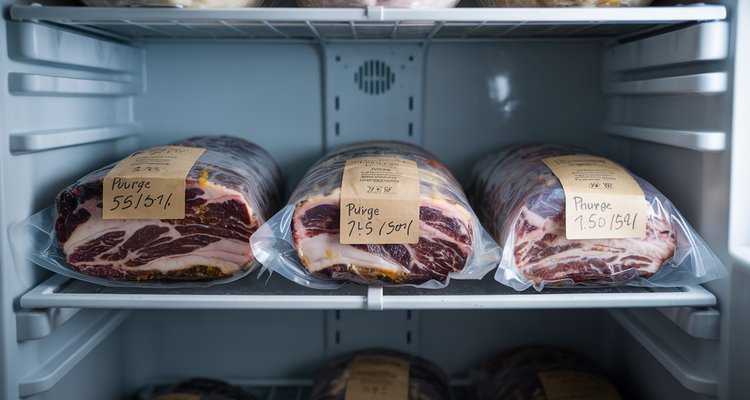
Leave the cryovac packaging completely sealed. Don’t open it, don’t poke holes, and don’t transfer the meat to a different vacuum bag. Opening the package exposes the meat to whatever bacteria are on your hands, countertop, and in the air. Flip and rotate the brisket about once per week so the purge liquid doesn’t pool in one spot for the entire duration. You’ll notice air bubbles forming inside the packaging over time. This is normal and indicates that protein breakdown is occurring. If the packaging inflates significantly or feels pressurized, cook or freeze the brisket immediately. Excessive gas production signals bacterial activity beyond what’s normal for aging.
Opening and Inspection
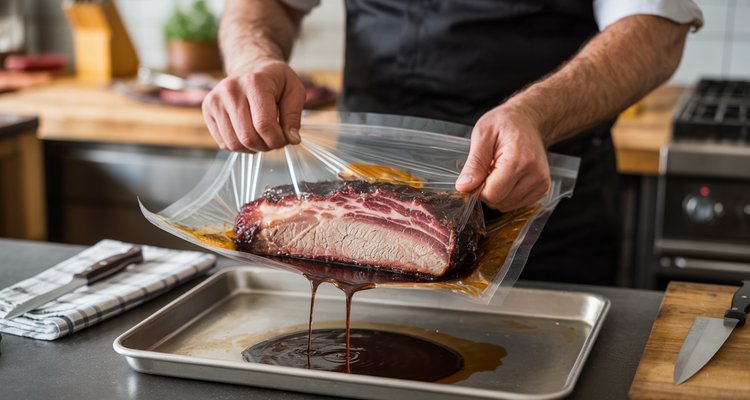
When you’re ready to cook, open the package over a disposable pan to catch the purge liquid. A strong, somewhat sour odor is completely normal when you first cut the seal. This smell comes from the anaerobic (oxygen-free) environment inside the bag and should dissipate within 10 minutes of exposure to fresh air. If the smell is aggressively rancid, pungent, or doesn’t fade after rinsing, discard the brisket. Trust your nose on this one. Rinse the brisket under cold running water, pat it dry with paper towels, and cook it the same day. Once opened, a wet aged brisket will discolor quickly and can develop off-flavors if left sitting for hours.
When Wet Aging Goes Wrong
Wet aging has real limits, and ignoring them leads to wasted meat and potentially unsafe food. Here are the most common failure points:
- Over-aging: Brisket aged beyond 60 days frequently develops sour, metallic, or “stony” flavors that cooking can’t mask. One experienced pitmaster reported that a 60-day aged brisket was “too tender,” crumbling apart during seasoning and falling off the slicing knife at 175°F.
- Compromised seal: Any puncture or leak in the cryovac packaging introduces oxygen and surface bacteria. What was controlled aging instantly becomes uncontrolled spoilage.
- Temperature abuse: Even brief periods above 40°F dramatically accelerate bacterial growth. A main fridge that swings to 42-45°F every time the door opens is riskier than a stable secondary unit.
- Unknown starting date: Without knowing the actual pack or kill date, you can’t calculate how long the brisket has already been aging. This is the most common reason home attempts go wrong.
Is Wet Aging Brisket Worth It?
For most home cooks, the honest answer is that your store-bought brisket is already wet aged. Most grocery store and warehouse club briskets have been sitting in cryovac packaging for 14-28 days by the time you buy them. You’re already getting the baseline benefits of wet aging without doing anything special. Intentional extended aging, pushing to 35-45 days from the kill date, makes the most sense for competition pitmasters chasing maximum tenderness and for cooks who’ve mastered every other variable in their process. It’s an incremental improvement, not a game-changer for someone still dialing in their smoke, wrap, and rest timing. The main advantages of wet aging are simplicity and zero waste. You don’t need specialized equipment, you lose no weight to evaporation, and the process costs nothing beyond fridge space and patience. The main downside is that wet aging doesn’t develop the concentrated, complex flavors that dry aging produces.
Frequently Asked Questions
How long should you wet age brisket?
Most pitmasters recommend 30-45 days from the kill date as the sweet spot. You’ll see meaningful tenderness improvements by 21 days, and the 35-45 day range is where experienced cooks like Aaron Franklin and Crossbuck BBQ typically target. Don’t exceed 60 days unless you’re comfortable with potential off-flavors.
Can you wet age brisket at home safely?
Yes, as long as the brisket stays in its original sealed cryovac packaging and your refrigerator maintains a steady 32-34°F. A secondary fridge that isn’t opened frequently is the safest choice. Never attempt to wet age meat that’s been removed from its original packaging or resealed in a home vacuum bag.
Does wet aging improve flavor?
Wet aging primarily improves tenderness, not flavor. Some enzymatic breakdown creates amino acids that add subtle depth, but the flavor changes are mild compared to dry aging. Extended wet aging (45+ days) can actually produce sour or metallic off-flavors from lactic acid buildup.
What temperature is best for wet aging brisket?
The target range is 32-34°F (0-1°C). This temperature keeps the meat safely below the bacterial danger zone while allowing enzymatic activity to proceed slowly. Most home refrigerators run at 35-38°F, which still works but provides less margin for error.
How does wet aged beef not spoil?
The vacuum seal removes oxygen, which prevents the growth of aerobic spoilage bacteria. Combined with consistently cold temperatures, the anaerobic environment allows beneficial enzymatic processes to occur while keeping harmful bacteria in check. If the seal is compromised or temperatures rise, spoilage can begin rapidly.
Can you freeze brisket after wet aging?
Yes. If you’ve reached your target aging time but aren’t ready to cook, freezing stops the enzymatic process and preserves the tenderness gains you’ve achieved. Thaw in the refrigerator when you’re ready to cook. Don’t attempt to resume aging after thawing.
Is wet aged brisket better than dry aged?
Neither method is objectively better. Wet aging produces more tender brisket with no weight loss and requires no special equipment. Dry aging produces more complex, concentrated flavors but costs more due to weight loss and equipment requirements. Most competition and restaurant brisket is wet aged for practical and economic reasons.
What does wet aged brisket smell like when opened?
A normal wet aged brisket will have a strong, somewhat sour odor when you first open the cryovac packaging. This comes from the anaerobic environment and should dissipate within 10 minutes of air exposure. If the smell is aggressively pungent, rancid, or doesn’t fade after rinsing, the meat has spoiled and should be discarded.
Should you rinse wet aged brisket before cooking?
Yes. Rinse the brisket under cold running water after removing it from the cryovac packaging, then pat it dry with paper towels. This removes the purge liquid and any surface odor, giving you a clean surface for applying your rub or seasoning.
Does USDA grade affect wet aging results?
Higher grades benefit more from wet aging. Prime briskets with abundant marbling show the most improvement in both tenderness and flavor development. Choice grade also responds well. Select grade briskets, with their leaner profile and less intramuscular fat, show less dramatic improvement and are more prone to developing off-flavors during extended aging.
Final Thoughts
Wet aging brisket is the simplest path to more tender results, and chances are you’re already benefiting from it without realizing it. Every cryovac brisket at the grocery store has been quietly aging since the day it was packaged. The decision to intentionally extend that aging period comes down to two non-negotiable requirements: knowing your pack date and maintaining proper temperature. Get those right, and 35-45 days of wet aging can produce noticeably more tender brisket. Get them wrong, and you’re left with spoiled meat. If you’ve never tried it, buy two briskets from the same case. Cook one right away and wet age the other for an additional 2-3 weeks. Smoke them side by side and decide for yourself whether the wait was worth it. For tips on trimming before the cook, see our brisket trimming guide.