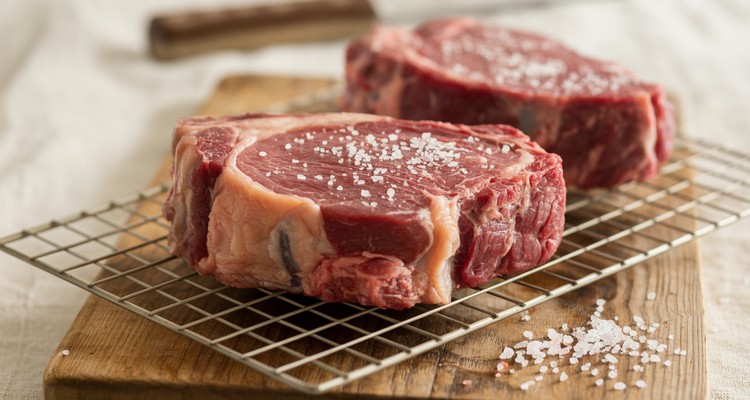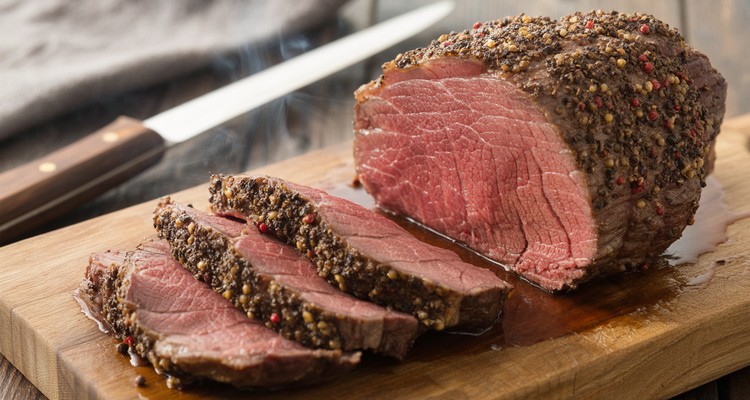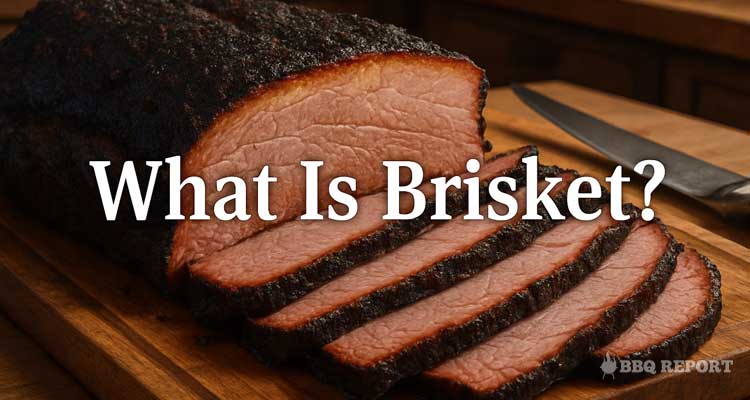
There’s something truly magical about transforming a tough cut of beef into a mouthwatering masterpiece that practically melts in your mouth. But what is brisket, exactly? Brisket is a flavorful cut of beef from the lower chest or pectoral muscles of the cow, cherished by barbecue enthusiasts worldwide for its rich flavor and remarkable transformation during cooking. As one of the nine primal cuts of beef, the brisket starts off tough because it’s a hardworking muscle that bears much of the cow’s weight, resulting in dense connective tissues and fibers that require special cooking techniques to break down properly.
For many pitmasters and barbecue lovers, the journey of cooking brisket represents the ultimate test of skill and patience. The transformation of this initially tough cut into tender, succulent meat is what makes brisket so special and why it holds such an esteemed place in barbecue culture, particularly in states like Texas where it’s considered the crown jewel of smoked meats.
Brisket Anatomy: Understanding the Cut
When exploring what is brisket, it’s essential to understand its anatomy. A whole brisket, often called a “packer brisket” or “full packer,” consists of two distinct parts: the flat and the point. Each section has unique characteristics that affect how it cooks and tastes.
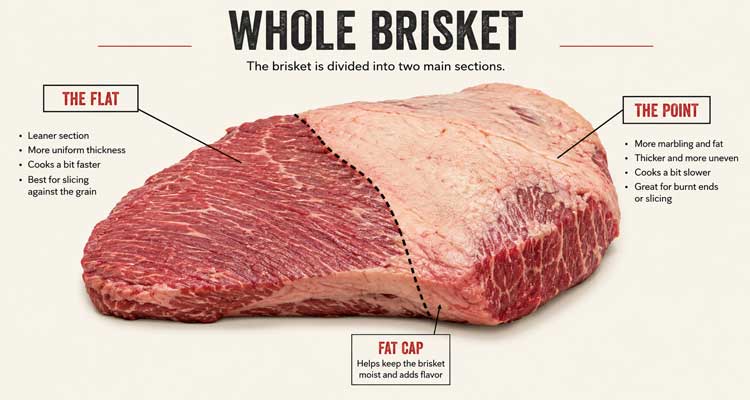
The Flat (First Cut)
The flat, also known as the “first cut,” is the leaner portion of the brisket with a more uniform thickness. This section:
- Has less marbling and a thin fat cap
- Offers even slices that hold together well
- Is ideal for dishes where presentation matters
- Works well for slicing and serving in sandwiches or plated dishes
- Is commonly used in traditional Jewish brisket recipes and corned beef
The Point (Second Cut)
The point, or “second cut” (sometimes called the “deckle point”), is the thicker, more marbled section of the brisket. This cut:
- Contains more intramuscular fat and connective tissue
- Provides richer, more flavorful meat
- Is less uniform in shape
- Is perfect for creating “burnt ends,” a beloved barbecue delicacy
- Tends to be juicier and more forgiving when cooked
Many butchers sell brisket as a whole packer cut, including both the flat and the point, giving cooks versatility for various recipes. Understanding these differences helps you select the right cut for your cooking method and desired outcome.
How to Choose the Perfect Brisket
Selecting the perfect brisket is a crucial first step in your brisket cooking journey. Here’s what to look for to ensure you start with the best possible cut:
Size and Grade Considerations
- USDA Grade: For optimal results, look for USDA Prime or Choice grades as they offer superior marbling and quality, resulting in a juicier, more flavorful brisket.
- Size: A whole packer brisket typically weighs between 10-16 pounds. Consider how many people you’re feeding – generally plan for about ½ pound of raw brisket per person.
- Thickness: Choose a brisket with uniform thickness throughout the flat portion to ensure even cooking.
Visual Indicators of Quality
- Marbling: Look for briskets with good intramuscular fat distribution (small white flecks throughout the meat). This fat will render during cooking, adding flavor and moisture.
- Fat Cap: A good brisket should have a clean, white fat cap that’s about ¼-inch thick. Too much fat will need to be trimmed away; too little might result in a dry brisket.
- Color: Fresh brisket should have vibrant, cherry-red meat and bright white fat. Avoid any with gray or brown discoloration.
- Flexibility: A quality brisket should be pliable, not stiff. When you pick it up, it should bend easily.
Shopping Tips
- Talk to Your Butcher: A good butcher can help select the best cut and might even trim it to your specifications.
- Plan Ahead: Quality brisket might need to be ordered in advance, especially if you’re looking for prime grade or a specific size.
- Consider Online Options: If local options are limited, specialty meat purveyors offer high-quality briskets delivered to your door.
Remember that while a higher grade brisket costs more, the investment often pays off in superior flavor and texture. The quality of your starting product significantly impacts your final results, so choose wisely. For a detailed breakdown of what you can expect to pay, check out our complete guide to brisket prices in 2026.
Brisket Cooking Methods: Low and Slow is the Way to Go
What is brisket without the proper cooking method? A tough, chewy disappointment. The key to transforming this cut lies in patience and technique. Let’s explore the most popular brisket cooking methods.
Smoking Brisket
Smoking is perhaps the most celebrated method of cooking brisket, especially in Texas-style barbecue. Here’s how to smoke a brisket to perfection:
- Preparation: Trim the fat cap to about ¼-inch thickness and apply a dry rub (often simply salt and coarse black pepper for Texas-style).
- Temperature: Maintain a consistent smoker temperature between 225°F and 250°F.
- Wood Choice: Oak and hickory are traditional, though fruitwoods like apple or cherry impart milder smoke flavors.
- Time: Expect about 1-1.5 hours per pound of cooking time. A 12-pound brisket might take 12-18 hours.
- The Stall: When the brisket reaches around 165°F internally, it might hit “the stall” where the temperature plateaus as moisture evaporates from the meat’s surface.
- Wrapping: To push through the stall, many pitmasters wrap the brisket in butcher paper or aluminum foil (known as the “Texas crutch”).
- Final Temperature: Continue cooking until the internal temperature reaches 195°F-205°F. The meat should feel probe-tender, like sliding through warm butter.
- Resting: Let the brisket rest for at least one hour, wrapped and placed in an insulated cooler for best results.
Oven-Braised Brisket
Not everyone has access to a smoker, but that doesn’t mean you can’t enjoy delicious brisket. Braising in the oven is an excellent alternative:
- Searing: Season the brisket generously and sear on all sides in a hot Dutch oven to develop flavor.
- Aromatics: Add onions, garlic, carrots, and herbs to the pot for depth of flavor.
- Liquid: Add enough cooking liquid (beef broth, wine, beer, or a combination) to partially submerge the meat.
- Low and Slow: Cover tightly and cook at 300°F for about 3-4 hours for a 4-6 pound brisket.
- Doneness: The brisket is ready when fork-tender. For maximum flavor, cool in the cooking liquid overnight, then reheat and serve the next day.
Slow Cooker Brisket
The slow cooker is perhaps the most convenient method for cooking brisket with minimal supervision:
- Prep: Season the brisket generously and, if possible, sear it before placing in the slow cooker for enhanced flavor.
- Position: Place the brisket fat-side up in the slow cooker.
- Liquid: Add just enough liquid to create steam (not enough to submerge the meat).
- Cooking: Set on low for 8-10 hours, depending on the size of your brisket.
- Finishing: For a caramelized exterior, you can briefly broil the cooked brisket in the oven before serving.
Sous Vide Brisket
For the tech-savvy cook, sous vide offers precise temperature control:
- Season: Apply your favorite rub to the brisket.
- Bag: Vacuum seal the brisket or use the water displacement method with a zipper-lock bag.
- Cook: Set your immersion circulator to 155°F and cook for 24-36 hours.
- Finish: After sous vide cooking, briefly smoke or sear the brisket to develop bark and flavor.
No matter which method you choose, the fundamental principle remains the same: cook the brisket low and slow to break down tough connective tissues and transform them into rich, gelatin-like goodness that makes the meat tender and moist.
The Wrapping Debate: Foil, Butcher Paper, or Naked?
One of the most debated topics in brisket cooking is whether to wrap the meat during the cooking process and, if so, with what material. Each approach has its merits:
Unwrapped (Naked)
Pros:
- Develops the strongest bark (the flavorful outer crust)
- Creates the most intense smoke flavor
- Offers the most authentic traditional approach
Cons:
- Most susceptible to the stall, potentially leading to longer cook times
- Higher risk of drying out
- Requires more attention to maintain moisture levels
Aluminum Foil Wrap (The Texas Crutch)
Pros:
- Most effective at pushing through the stall
- Fastest cooking time
- Preserves maximum moisture and tenderness
Cons:
- Can create a “pot roast” like texture
- Softens the bark significantly
- Can somewhat mute the smoke flavor
Pink Butcher Paper Wrap
Pros:
- Allows some moisture to escape while retaining enough to keep the meat juicy
- Preserves most of the bark’s texture
- Permits continued smoke penetration
- Reduces cooking time compared to unwrapped
Cons:
- Not as effective at speeding up the cook as foil
- Requires proper technique to wrap effectively
- Less commonly available than foil
Essential Equipment for Cooking Brisket
What is brisket cooking without the right tools? Whether you’re a beginner or an experienced pitmaster, having the proper equipment can make the difference between good and great brisket:
Cooking Vessels
- Smoker Options: Offset, pellet, kettle, or electric smokers all work for brisket, though each has different characteristics and learning curves.
- Dutch Oven: Essential for braising brisket in the oven, with heavy walls and tight-fitting lids for even heat distribution.
- Slow Cooker: A convenient option for hands-off cooking, particularly for smaller cuts.
Temperature Control
- Reliable Thermometer: A quality dual-probe digital meat thermometer is perhaps the most important tool, allowing you to monitor both the cooking environment and the internal temperature of the brisket.
- Temperature Controller: For smokers without built-in controls, an aftermarket controller can help maintain consistent temperatures.
Preparation and Handling
- Sharp Knife: A flexible boning knife works well for trimming fat and a long slicing knife is essential for serving.
- Large Cutting Board: Look for one with a channel around the edge to catch juices.
- Heat-Resistant Gloves: For safely handling the hot brisket during the cooking process.
- Wrapping Materials: Heavy-duty aluminum foil and/or pink butcher paper for the wrapping stage.
- Spray Bottle: For spritzing the brisket with apple juice, vinegar, or another liquid to maintain moisture.
- Insulated Cooler: For resting the finished brisket, which can be as important as the cooking itself.
- Knife option: Cutluxe brisket knife fits trimming and slicing brisket.
- Thermometer option: ThermoMaven wireless meat thermometer fits low-and-slow brisket cooking.
- Meat source: Porter Road whole brisket gives readers a direct source if they want to cook the cut they just learned about.
The Science Behind Great Brisket
Understanding what happens to brisket during the cooking process can help you achieve better results. The magic of brisket transformation involves several scientific processes:
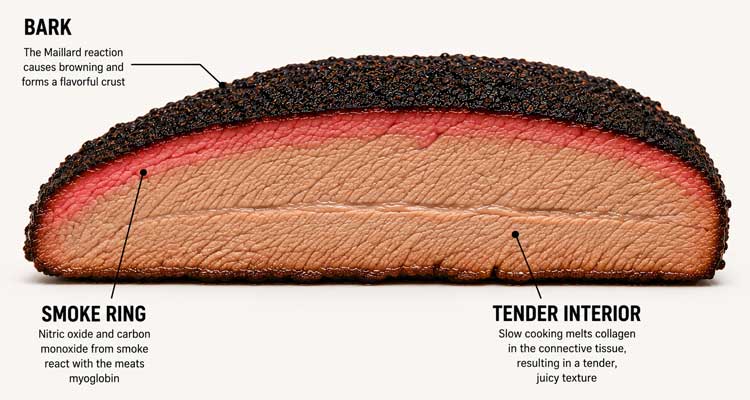
Collagen Conversion
- Around 160°F, collagen begins to convert to gelatin
- This gelatin provides the rich mouthfeel and moisture that good brisket is known for
- Complete conversion requires both time and temperature (usually 195°F-205°F)
The Stall Explained
- As moisture from the meat evaporates, it cools the surface
- This cooling counteracts the heat from the smoker
- The result is a plateau in temperature that can last several hours
- Wrapping helps trap this moisture, reducing evaporation and pushing through the stall
Fat Rendering
- The external fat cap provides protection and basting for the meat beneath
- Intramuscular fat (marbling) melts slowly, lubricating muscle fibers
- Properly rendered fat adds flavor and juiciness to the final product
Smoke Ring Formation
- Forms when nitrogen dioxide in wood smoke reacts with myoglobin in the meat
- Is purely aesthetic with no impact on flavor (but looks impressive)
- Only develops in the first few hours of cooking while the meat surface is cool and moist
Bark Development
- The Maillard reaction creates new flavor compounds as proteins and sugars react
- Smoke particles adhere to the meat surface
- Moisture evaporation concentrates flavor compounds
- Applied rub ingredients undergo their own transformations
Regional Brisket Styles
While brisket is beloved across many culinary traditions, several regions have developed distinctive approaches to preparing this versatile cut:
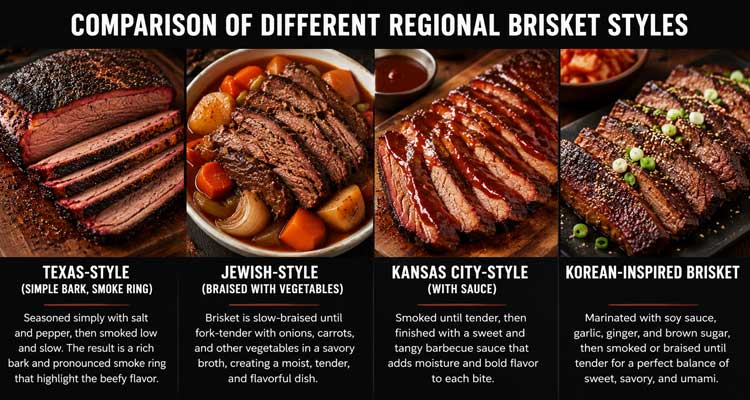
Texas-Style Brisket
- The meat is seasoned simply with coarse salt and black pepper (known as “Dalmatian rub”)
- Oak is the predominant smoking wood
- The focus is on showcasing the meat’s natural flavor
- Sauce is typically served on the side, if at all
- The point section may be returned to the smoker after slicing to create “burnt ends”
Jewish-Style Braised Brisket
- The brisket is braised with onions, carrots, and aromatics
- Sweet and savory flavors often combine with ingredients like tomatoes, red wine, and dried fruits
- The emphasis is on fork-tender meat with a rich sauce
- It’s traditionally served with potato kugel or other starchy sides
- This style typically uses the flat cut for even slicing
Kansas City-Style Brisket
- The brisket is seasoned with a complex sweet and spicy rub
- Hickory and fruit woods are common for smoking
- The meat is often finished with a thick, sweet-tangy sauce
- Burnt ends are highly prized and often served as a separate dish
- Sides typically include sweet baked beans and coleslaw
Korean-Inspired Brisket
- The meat is marinated with soy sauce, ginger, garlic, and Asian pears
- It’s often thinly sliced and served in lettuce wraps with accompaniments
- This style may incorporate gochujang (Korean chili paste) for heat
- The cooking method might combine smoking and braising techniques
Common Brisket Pitfalls and How to Avoid Them
Even experienced cooks can encounter challenges when cooking brisket. Here are the most common issues and how to prevent them:
Dry, Tough Brisket
Causes:
- Cooking at too high a temperature
- Not cooking long enough to break down connective tissues
- Using too lean a cut
- Slicing with (instead of against) the grain
Solutions:
- Maintain a consistent low temperature (225°F-250°F)
- Cook until properly probe-tender (typically 195°F-205°F)
- Choose a well-marbled brisket with adequate fat
- Always slice perpendicular to the grain direction
The Eternal Stall
Causes:
- Normal evaporative cooling
- Opening the smoker repeatedly
- Fluctuating smoker temperatures
Solutions:
- Consider wrapping in butcher paper or foil once the bark has developed
- Be patient and maintain consistent temperature
- Minimize opening the cooking chamber
- Use a water pan to stabilize humidity and temperature
Bitter or Excessive Smoke Flavor
Causes:
- Dirty smoke (thick, white, billowing)
- Using too much wood or the wrong type
- Poor airflow in the smoker
Solutions:
- Aim for clean, thin blue smoke
- Use properly seasoned hardwoods
- Ensure adequate airflow in your smoker
- Consider using milder woods like fruit woods if smoke flavor is too strong
Uneven Cooking
Causes:
- Hot spots in your cooker
- Irregular thickness of the brisket
- Poor airflow around the meat
Solutions:
- Rotate the brisket periodically
- Trim for more even thickness where possible
- Understand your smoker’s hot spots and plan accordingly
- Consider separating the point and flat for more control
Tough Bark
Causes:
- Too much sugar in the rub
- Cooking temperature too high
- Over-smoking
Solutions:
- Limit sugar in your rub, especially if cooking at higher temperatures
- Maintain proper cooking temperature
- Create a moisture-rich environment in your cooker
How to Slice and Serve Brisket
Proper slicing is the final crucial step in serving brisket – even perfectly cooked meat can become tough if sliced incorrectly. Here’s how to finish your brisket masterpiece:
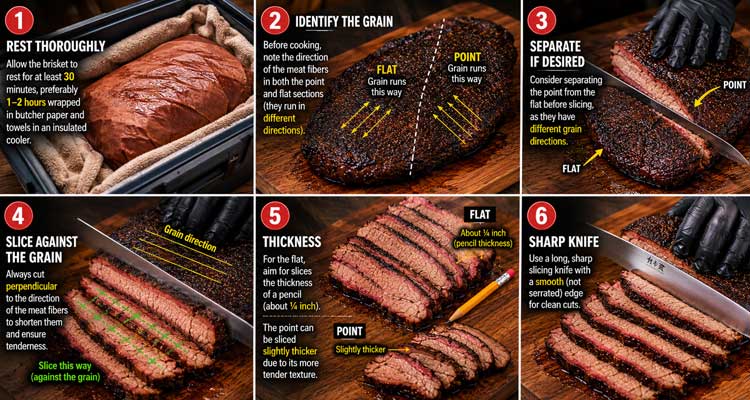
Slicing Technique
- Rest Thoroughly: Allow the brisket to rest for at least 30 minutes, preferably 1-2 hours wrapped in butcher paper and towels in an insulated cooler.
- Identify the Grain: Before cooking, note the direction of the meat fibers in both the point and flat sections (they run in different directions).
- Separate if Desired: Consider separating the point from the flat before slicing, as they have different grain directions.
- Slice Against the Grain: Always cut perpendicular to the direction of the meat fibers to shorten them and ensure tenderness.
- Thickness: For the flat, aim for slices the thickness of a pencil (about ¼ inch). The point can be sliced slightly thicker due to its more tender texture.
- Sharp Knife: Use a long, sharp slicing knife with a smooth (not serrated) edge for clean cuts.
Serving Suggestions
- Traditional: Serve on butcher paper with simple sides like potato salad, coleslaw, pickles, and white bread.
- Sandwiches: Pile thinly sliced brisket on soft buns with minimal toppings to let the meat shine.
- Burnt Ends: Cube the point section, toss with sauce, and return to the smoker for caramelized, intensely flavored morsels.
- Tacos: Chop brisket and serve in warm tortillas with simple toppings like onion, cilantro, and lime.
Leftover Ideas
- Breakfast Hash: Chop and crisp brisket with potatoes and top with eggs.
- Baked Beans: Stir chopped brisket into baked beans for added richness.
- Chili: Use as the meat base in a smoky, rich chili.
- Nachos: Top tortilla chips with chopped brisket, cheese, and fixings for the ultimate game-day snack.
- Quesadillas: Combine with cheese in tortillas for a simple, satisfying meal.
When storing leftovers, keep the brisket in its juices and refrigerate promptly. Reheat gently with added moisture to prevent drying out.
Frequently Asked Questions About Brisket
What part of the cow is brisket from?
Brisket comes from the lower chest or breast section of the cow. This muscle supports about 60% of the animal’s body weight when standing, which explains why it’s so tough and full of connective tissue.
Why is brisket popular in BBQ?
Brisket became popular in BBQ culture because it’s a relatively affordable cut that, when cooked properly, transforms dramatically from tough to tender. Its high collagen content melts into rich gelatin during slow cooking, creating a remarkable eating experience.
What’s the best cooking method for brisket?
The best cooking method for brisket is low and slow smoking at 225°F-250°F, which allows the connective tissues to break down gradually while keeping the meat moist. However, braising in an oven or slow cooker also produces excellent results with different flavor profiles.
How long does brisket take to smoke?
Brisket typically takes about 1-1.5 hours per pound to smoke, meaning a 12-pound brisket could take 12-18 hours. Variables include the specific cut, cooking temperature, wrapping method, and desired doneness.
Do you cook brisket fat-side up or down?
This is debated among pitmasters, but many prefer fat-side down when smoking, as this position protects the meat from direct heat while still allowing fat to render and baste the meat. In an oven or slow cooker, fat-side up is often preferred.
What internal temperature should brisket reach?
Brisket should reach an internal temperature between 195°F and 205°F to achieve optimal tenderness. However, temperature alone isn’t the sole indicator – the meat should also feel “probe tender,” meaning a thermometer probe slides in with little resistance.
Can you freeze cooked brisket?
Yes, cooked brisket freezes well. Slice it after cooking, store with some of the juices, and freeze in airtight containers for up to three months. Thaw in the refrigerator and reheat gently with added moisture.
How do you reheat leftover brisket?
The best way to reheat brisket is in a 325°F oven. Place sliced brisket in a baking dish with some beef broth or reserved juices, cover tightly with foil, and heat until it reaches 165°F (about 20-30 minutes). Avoid microwaving, which can make the meat tough.
What wood is best for smoking brisket?
Oak and hickory are traditional choices for smoking brisket, offering robust flavor. Post oak is the classic Texas choice. Fruitwoods like apple or cherry provide milder smoke profiles that work well for those who prefer a more subtle smoke flavor. For more information on wood selection, check out our guide to the best wood pellets for smoking.
Is brisket expensive?
Brisket is generally more affordable than premium cuts like ribeye or tenderloin, though prices have increased as its popularity has grown. USDA Prime brisket will cost more but offers superior marbling and flavor. Prices vary significantly by region and grade.
What is brisket “bark”?
Bark refers to the flavorful, crusty exterior that forms on the brisket during smoking. It develops through the Maillard reaction (a browning process), moisture evaporation, and the interaction between the meat and seasoning rub. A good bark is highly prized for its concentrated flavor and textural contrast.
What are brisket burnt ends?
Burnt ends are cubes cut from the point section of the brisket that are typically cooked further to render more fat and caramelize. Originally considered leftovers, they’re now a delicacy prized for their intense flavor, rich fattiness, and perfect balance of tenderness and chew.
Can you cook brisket in an oven?
Absolutely! While smoking provides a distinctive flavor, oven-braised brisket can be exceptionally tender and flavorful. Cook it covered with liquid in a Dutch oven at 300°F until fork-tender, typically 3-4 hours depending on size.
Why do pitmasters rest brisket?
Resting brisket allows the juices to redistribute throughout the meat instead of running out when sliced. It also allows the meat’s temperature to drop slightly, helping it retain moisture. A proper rest (1-2 hours for a whole brisket) is essential for maximum tenderness and juiciness.
Conclusion: The Art and Science of Brisket
Understanding what is brisket and how to cook it properly opens up a world of culinary possibilities. This humble cut of beef has rightfully earned its place as one of the most celebrated meats in barbecue culture, delivering an unmatched combination of deep flavor and remarkable texture transformation when cooked with care and patience.
The journey of cooking brisket teaches valuable lessons that extend beyond the smoker or kitchen – patience, attention to detail, respect for tradition while embracing innovation, and the rewards of putting time and effort into creating something truly special. Whether you’re smoking your first brisket or your hundredth, each cook offers an opportunity to refine your technique and deepen your appreciation for this remarkable cut of meat.
As you embark on your own brisket adventures, remember that while recipes and guidelines are helpful, the best teacher is experience. Don’t be discouraged by early attempts that don’t meet your expectations – even the most renowned pitmasters were once beginners. Keep notes on what works and what doesn’t, adjust your approach accordingly, and before long, you’ll be creating brisket worthy of any barbecue tradition.
So fire up your smoker, preheat your oven, or dust off that slow cooker. The world of brisket awaits, promising delicious rewards for those willing to invest the time and care this magnificent cut deserves.