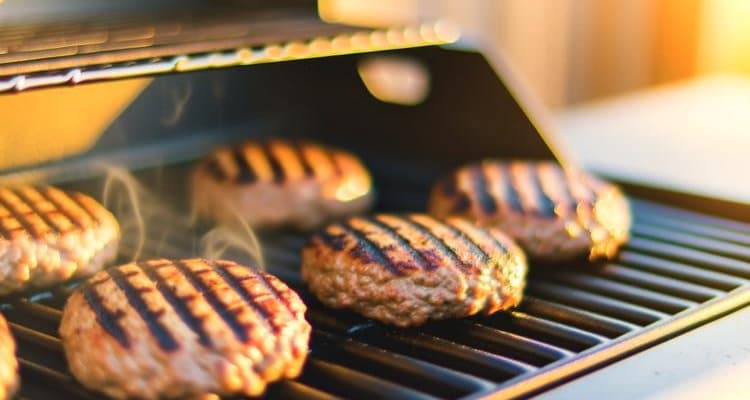
There’s a reason the backyard hamburger has become the unofficial mascot of American summer cooking. A perfectly grilled burger — golden crust on the outside, juicy and flavorful inside — is one of the most satisfying things you can pull off the grill. But most home cooks settle for mediocre burgers without realizing just a few adjustments would make an enormous difference. The good news is that grilling hamburgers is genuinely straightforward once you understand the fundamentals. This guide walks you through every step, from selecting the right ground beef to nailing doneness every time. Whether you’ve been burning burgers for years or you’re firing up your grill for the first time, this is the only resource you need.
What You Need Before You Start
Having the right equipment on hand before you start grilling makes the entire process smoother. You don’t need a lot of gear to grill great burgers on gas, but a few specific tools make a real difference. Essential equipment:
- Gas grill — A two-burner or larger gas grill gives you the control to create direct and indirect heat zones. If you’re shopping for one, budget-friendly options from brands like Weber and Char-Broil perform exceptionally well for burgers.
- Wide, thin-bladed spatula — Not a fork. Piercing the patties releases precious juices onto the grates. A flat spatula lets you get under the burgers cleanly without tearing them.
- Instant-read meat thermometer — This is non-negotiable. An instant-read thermometer takes all the guesswork out of burger doneness and prevents both undercooking and overcooking.
- Grill brush and oil — Clean grates are non-stick grates. Always start with a clean grill surface, and brush the grates with a folded paper towel dipped in high-smoke-point oil (canola or vegetable) before adding the burgers.
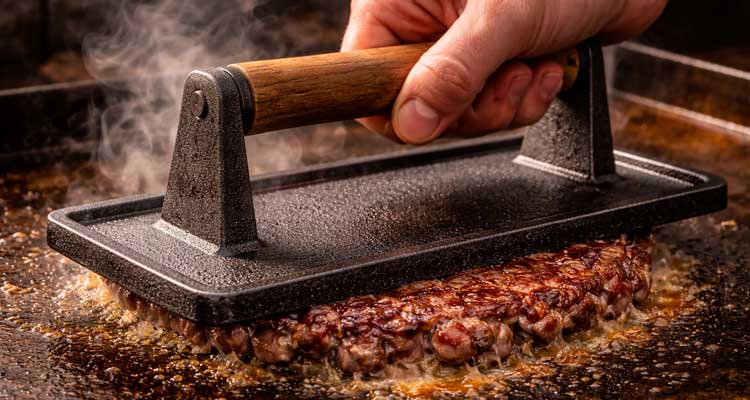
- Cast-iron griddle or plancha (optional) — Required if you plan to use the smash burger technique, discussed later. Do not attempt to smash burgers directly on standard grill grates.
Ingredients for great burgers:
- Ground beef (80/20 fat ratio preferred — see below)
- Kosher salt and freshly ground black pepper
- Hamburger buns (brioche or potato buns toast beautifully)
- Sliced cheese (American, cheddar, or Swiss melt well)
- Toppings and condiments of your choice
Choosing the Right Ground Beef
The single most important decision you make about your burger happens before you ever turn on the grill: choosing the right ground beef. Fat content determines flavor, juiciness, and texture more than any seasoning or technique. Why 80/20 is the gold standard Ground beef labeled 80/20 contains 80% lean beef and 20% fat. That fat renders during grilling, basting the burger from the inside and creating the rich, beefy flavor everyone loves. It also acts as a buffer against overcooking — lean burgers dry out fast; 80/20 burgers stay juicy even if you take them a minute past your target doneness. Ground chuck (from the shoulder) is the most common source of 80/20 meat and widely available at any grocery store. Avoid pre-seasoned or pre-formed patties when possible — freshly ground chuck forms better and cooks more evenly.
Ground Beef Fat Percentage Guide
| Fat Ratio | Best For | Flavor | Juiciness |
|---|---|---|---|
| 80/20 (Chuck) | Most burgers — ideal everyday choice | Rich, beefy | High |
| 85/15 | Leaner grilling with good results | Good | Medium |
| 90/10 | Health-conscious cooks | Mild | Lower — needs careful timing |
| 70/30 | Smash burgers (requires griddle) | Very rich | Very high |
Higher fat content means more flavor and juiciness — 80/20 is the go-to for grilled burgers.
How to Form Perfect Burger Patties
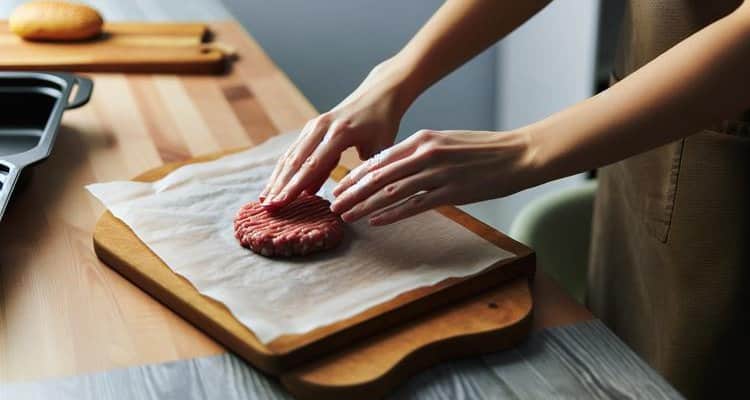
How you form your patties has a direct impact on how they cook. Overworked meat becomes dense and tough. Properly formed patties hold together on the grates and stay juicy. Patty formation steps:
- Start cold. Keep the meat refrigerated right up until you’re ready to form the patties. Cold ground beef holds its shape better and stays together on the grill.
- Portion correctly. Aim for 4 to 6 ounces per patty — roughly the size of a baseball when loosely packed. Divide it gently before shaping.
- Shape without overworking. Use your palms to form each portion into a round, flat disk about ¾ inch thick. Each one should be slightly wider than your buns, since they shrink as they cook.
- Make a thumb indent. Press your thumb firmly into the center of each one, creating a dimple about ¼ inch deep. This prevents the burger from doming up in the center as it grills — a common problem that leaves the middle undercooked while the edges overcook.
- Season on the outside only. Apply a generous pinch of kosher salt and black pepper all over immediately before putting them on the grill. Do not mix seasoning into the meat — it changes the texture and can make them tough.
Setting Up Your Gas Grill for Perfect Hamburgers
Your gas grill setup matters more than most cooks realize. Proper preheat and grate preparation are the difference between burgers that stick and tear versus burgers that release cleanly with perfect grill marks. Preheat the grill properly: Turn all burners to high and close the lid. Allow the grill to preheat for 10 to 15 minutes. You want the grates to reach 500–550°F before any burgers go on. This high temperature creates an immediate sear that locks in flavor and prevents sticking. Clean and oil the grates: Once the grill is hot, use a stiff grill brush to scrub the grates clean. Then fold a paper towel into a small pad, dip it in vegetable oil, and use tongs to wipe the grates in one direction. This seasons the surface just before use. Create a two-zone setup: For gas grills with two or more burners, set one gas burner to medium-high for direct grilling and leave the other on low or off. This gives you a safety zone — if a burger flares up or needs more time without more color, you can slide it to the cooler zone without losing it to the flames. Always cook burgers with the lid closed: Grilling burgers with the lid down is essential. This creates an oven-like environment that surrounds the patties with consistent heat from all sides. It speeds up the process, prevents flare-ups from getting out of control, and helps maintain consistent heat across the grates. Every time you open up, you drop the heat and add time to your cook. Popular Weber grills are particularly well-regarded for their build quality and heat retention, which translates directly to more consistent burgers.
- Temperature tool: ThermoMaven instant-read meat thermometer is useful for checking burger doneness without cutting into the patty.
- Cast iron option: Lodge cast iron skillet is a good fit for the smash-burger variation or indoor backup cooks.
Mastering Doneness: Time and Temperature Guide
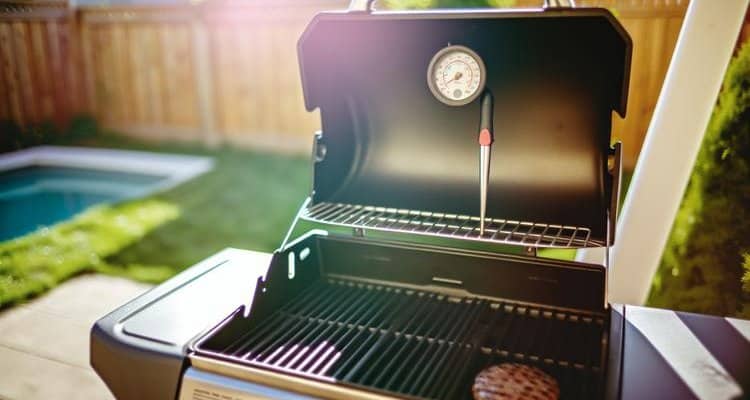
Here is the most important principle in this entire guide: internal temperature tells you when a burger is done; time is only an estimate. Every grill runs differently, every patty has a slightly different thickness, and ambient conditions affect the pace. The only reliable method is a meat thermometer (a reliable instant-read thermometer takes the guesswork out of knowing exactly when you’ve hit your target).
Burger Internal Temperatures by Doneness
| Doneness | Internal Temperature | Description |
|---|---|---|
| Rare | 120–125°F | Cool red center — not recommended for ground beef |
| Medium Rare | 130–135°F | Warm red center — use only with high-quality fresh ground beef |
| Medium | 140–145°F | Pink center — most popular choice for flavor and safety balance |
| Medium Well | 150–155°F | Slightly pink center — minimal juices remain |
| Well Done | 160°F+ | No pink — USDA safe minimum for ground beef |
The USDA recommends cooking all ground beef to 160°F for food safety. If serving young children, elderly guests, or anyone immunocompromised, always cook to well done.
Gas Grill Hamburger Time Chart
Use the following times as a starting reference only. Always confirm with a thermometer before pulling burgers off the grill.
| Patty Thickness | Heat Level | Time Per Side | Total Time |
|---|---|---|---|
| ½ inch | Medium-high | 2–3 min per side | 4–6 min |
| ¾ inch | Medium-high | 3–4 min per side | 6–8 min |
| 1 inch | Medium | 4–5 min per side | 8–10 min |
| 1¼ inch | Medium | 5–6 min per side | 10–12 min |
Flip burgers once, halfway through the total time. Times assume fresh (not frozen) patties.
The flip rule: Flip your burgers once — exactly once. When the burger releases cleanly from the grate without sticking, it’s ready to flip. Forcing a flip too early tears the crust and causes sticking. Once you flip, leave it alone until your thermometer says otherwise.
The Smash Burger Method on Gas Grills
The smash burger technique has taken backyard grilling by storm, and for good reason: smashing creates an incredible lacy, caramelized crust through maximum beef-to-heat contact. But doing it correctly requires one critical piece of equipment. You must use a cast-iron griddle or plancha insert on your grates. Never attempt to smash burger patties directly on open grill grates — the loose meat will fall through, cause immediate flare-ups from the high fat content, and create a mess. A flat cast-iron surface placed on the grates is the only safe and effective way to smash burgers on the grill. How to smash burgers on your grill:
- Place your cast-iron griddle on the grates and preheat the grill for at least 15 minutes with the cover on. The griddle should be ripping hot — 450°F or above.
- Use 70/30 ground beef for best results. The extra fat renders out and creates the signature crispy edges.
- Form loose balls (about 3 ounces each) rather than shaped patties. Do not pack them tightly.
- Place a ball on the griddle. Immediately within the first 30 seconds — before a crust forms — press it flat with a heavy spatula or burger press, using firm, even downward pressure. Aim for about ¼ inch thickness.
- Season the top with salt and pepper. Grill undisturbed for 2 to 3 minutes until the edges look lacey and browned.
- Flip once and add cheese. It cooks much faster after the flip — about 1 more minute.
Double-stacking two smash burger patties per bun is the move for maximum impact.
Common Mistakes to Avoid When Grilling Burgers
Even experienced backyard cooks make these errors. Eliminating them immediately upgrades your burgers.
- Pressing down on the patties. This is the most common mistake when grilling burgers. Pressing a patty squeezes juices directly into the fire, creating flare-ups and leaving you with dry burgers. Resist the urge completely — unless you’re executing the smash burger technique deliberately.
- Flipping too many times. Multiple flips prevent a proper crust from forming. Commit to a single flip per session.
- Skipping the thermometer. Cutting into a burger to check doneness releases all the juices you’ve worked to preserve. A two-second read from a thermometer gives you accurate information without the sacrifice.
- Cold grates. Burgers placed on insufficiently preheated grates stick instantly. Always preheat the grill for a full 10 to 15 minutes.
- Opening the lid constantly. Every time you open the lid, you lose 50–100°F of grate heat. Burgers cook best with the lid down and the heat consistent.
- Skipping the rest period. Pulling burgers directly from grill to bun causes juices to run out immediately. A 2-minute rest lets the juices redistribute through the patty — this step costs nothing and improves the burgers meaningfully.
- Using lean meat. Burgers made from 90/10 or leaner ground beef lack the fat needed for moisture and flavor. Stick with 80/20 unless you have a specific dietary reason not to.
Pro-Tips for Finishing and Serving
The final two minutes on the grill and the moments after burgers come off determine how much of your hard work makes it to the table. Melting cheese on the grill: Add your cheese slice 60 to 90 seconds before your burgers reach your target doneness. Close it immediately. The enclosed heat melts the cheese evenly and completely without burning the patties. American cheese melts fastest; sharp cheddar needs the full 90 seconds. Thick slices of Swiss or Gruyère benefit from a 10-second splash of water near (not on) the cheese just before you close it to create a steam effect. Toasting the buns: Split your buns and place them facing down directly on the grates during the last 1 to 2 minutes of grilling. Watch them carefully — buns go from perfectly golden to burnt in under 30 seconds on a hot grill. Brushing with softened butter before grilling adds richness and helps them brown evenly. Rest before serving: Transfer burgers from the grill to a clean plate and let them rest for 2 to 3 minutes before serving. Do not tent with foil — this traps steam and softens the crust you worked to build. A brief open rest is all that’s needed. Build the burger correctly: For structural stability, apply mayo or sauce to the bottom bun first — it acts as a moisture barrier. Then stack the burger, followed by wet toppings like tomato and onion. Crisp toppings like lettuce go on top of the wet items. This layering approach prevents the bottom bun from getting soggy.
Frequently Asked Questions
What temperature should a gas grill be for hamburgers?
Preheat your gas grill to 500–550°F before placing burgers on the grates. This high heat creates an immediate sear that builds flavor and prevents sticking. For thicker patties (1 inch or more), you can reduce to medium after the initial sear to ensure the center cooks through without burning the outside.
How long do you grill hamburgers on a gas grill?
Total time depends on patty thickness and your target doneness. A standard ¾-inch patty at medium-high heat typically takes 6 to 8 minutes total with the cover on. Always use a meat thermometer to confirm doneness rather than relying solely on time.
Do you grill burgers with the lid open or closed?
Always closed. Grilling burgers with the lid closed creates even, consistent heat that surrounds the patties from all sides. An open lid turns the grill into an open flame rather than a controlled environment, leading to uneven results and heat swings.
How do you know when a burger is done without a thermometer?
Without a thermometer, the most reliable visual cue is juice color. Burgers at medium doneness release clear juices when lightly pressed; well-done burgers release very little juice at all. The touch test also helps — medium burgers feel like the base of your thumb when your hand is relaxed; well-done burgers feel firm. That said, the only way to confirm a safe internal reading of 160°F is with a thermometer.
Should I press down on burgers while grilling?
No — never press a burger down during regular grilling. Pressing forces out the juices that keep them moist and flavorful. The only exception is the intentional smash burger technique, which requires pressing within the first 30 seconds of contact with a very hot flat surface to maximize the Maillard reaction.
What is the best ground beef for grilling burgers?
80/20 ground chuck is the best all-around choice for grilled burgers. The 20% fat content renders during grilling, keeping the burgers juicy and flavorful. For smash burgers specifically, 70/30 produces the crispiest edges. Avoid anything leaner than 85/15 unless you have dietary constraints — leaner meat dries out quickly on a hot grill.
How do I prevent burgers from sticking to the grill?
Three steps prevent sticking: preheat fully (never place burgers on lukewarm grates), oil the grates just before use, and don’t try to flip too early. Burgers that haven’t released naturally from the grates aren’t ready to flip. Give them another 30 to 60 seconds — they will let go cleanly once the crust has properly formed.
Can I grill frozen burgers on a gas grill?
Yes. Set the grill to medium heat and cook frozen patties for 5 to 6 minutes per side rather than 3 to 4 minutes. Keep the cover on throughout. The lower heat and longer time allows the center to thaw and cook through without burning the outside. Always verify with a thermometer — frozen burgers are harder to judge by time alone.
When do you add cheese to burgers on the grill?
Add cheese 60 to 90 seconds before the burgers reach your target doneness. Place the slice on top of each burger and immediately close the grill lid. Trapped heat melts the cheese completely without overcooking the burgers.
How do you keep burgers juicy on a gas grill?
Start with 80/20 ground beef, avoid overworking the meat when shaping, season on the outside only, never press the burgers while they grill, and rest them for 2 to 3 minutes before serving. Every one of these steps preserves moisture. The most common mistake is pressing — a single press mid-cook can eliminate much of the juiciness you’ve built up.
Why do burgers puff up in the middle when grilling?
As the muscle fibers in the meat contract from heat, the patty shrinks at the edges faster than the center, causing the middle to dome upward. The simple fix is to press a shallow thumb indent into the center of each raw patty before grilling. The dimple compensates for the shrinkage and the burgers cook flat.
How do you get grill marks on a burger?
For defined grill marks, place your burger at a 45-degree angle to the grill grates. After 2 minutes, rotate 90 degrees without flipping to create a crosshatch pattern. Then flip and repeat if desired. Using a clean, well-oiled grill surface and not moving the burger between rotations produces the sharpest marks.
Are charcoal grills better than gas for burgers?
Charcoal can impart additional smoky flavor, but proper technique matters more than fuel type. With either grill, the keys are adequate preheating, proper temperature control, minimal handling, and letting the burger release naturally before flipping. The fundamentals in this guide apply regardless of whether you’re cooking over gas or charcoal.
What is the best bun for a burger?
The ideal bun should be substantial enough to hold up to the juices without falling apart, but not so dense that it overwhelms the burger. Brioche, potato buns, and sesame seed buns are all excellent choices. Whatever you choose, lightly toasting the cut sides on the grill adds flavor and helps prevent sogginess.
Conclusion
Grilling hamburgers is one of the most rewarding skills in backyard cooking — and with the right fundamentals, the results speak for themselves. Start with 80/20 ground beef, form your patties gently with a thumb indent, preheat your grill fully, keep it closed throughout, and always verify doneness with a thermometer. Follow those five principles every time and you’ll produce consistently juicy, flavorful burgers. Once you’ve mastered the classic grilled burger, the technique opens up from there. The smash burger method, different meat blends, and experimenting with cheese and toppings are all natural next steps. You might even want to expand your grill repertoire — learning to grill riblets follows many of the same direct-heat principles and is a natural progression once burgers feel second nature. The grill is fired up and the technique is in your hands. Now go make great burgers.