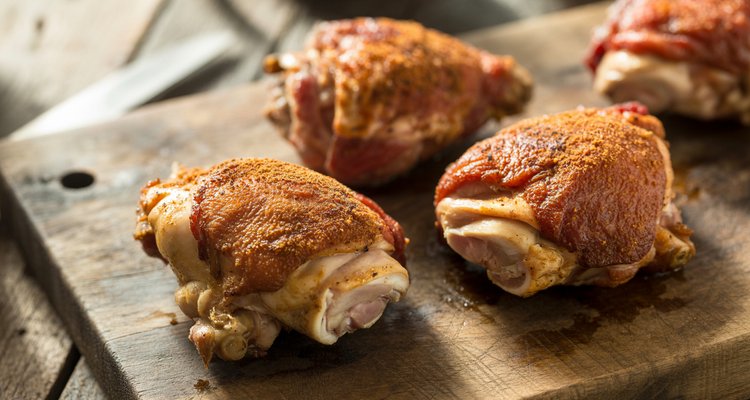
That first whiff of smoke drifting across the yard – you know something great is happening. Smoked chicken thighs are one of the most forgiving, most flavorful things you can put on a smoker, and once you nail the technique, you’ll make them on repeat. Bone-in, skin-on thighs from rub to rest – including the one move that finally gets the skin crispy.
Why Chicken Thighs Are Made for the Smoker
Chicken thighs are the ideal cut for low-and-slow cooking, and there’s real science behind it. Unlike chicken breasts, which dry out the moment they hit 165°F, thighs are loaded with intramuscular fat and connective tissue (collagen). At low smoking temperatures, that collagen slowly breaks down into gelatin – the same process that makes pulled pork melt in your mouth. The result is meat that stays moist and rich even if you take it a few degrees past the minimum safe temperature. Bone-in, skin-on thighs are the gold standard for smoking. The bone acts as a heat conductor, promoting even cooking from the inside out. The skin, when properly prepared, turns into a crispy, spiced shell that seals in moisture. Boneless, skinless thighs work too – they’ll cook faster and still taste great – but you lose that textural contrast that makes smoked chicken thighs so satisfying. See the FAQ below for notes on boneless.
The Dry Rub
A well-balanced dry rub is what separates a memorable smoked chicken thigh from a forgettable one. The rub does double duty: it seasons the meat and helps form a flavorful bark on the surface during smoking.
Ingredients and Measurements
This rub makes enough for 6-8 bone-in thighs:
- 2 tablespoons brown sugar – helps bark formation and adds subtle sweetness
- 1 tablespoon smoked paprika – the foundation of that BBQ color and flavor
- 1 tablespoon kosher salt – draws moisture to the surface, then reabsorbs for a dry brine effect
- 1 teaspoon garlic powder
- 1 teaspoon onion powder
- 1 teaspoon black pepper
- ½ teaspoon cayenne pepper – adjust up or down for heat
Mix all ingredients thoroughly and store any leftovers in an airtight jar. This dry rub also works well on chicken wings, drumsticks, and pork chops.
How to Apply the Rub
First, pat the chicken thighs completely dry with paper towels. Moisture on the surface is the single biggest reason for rubbery, pale skin – eliminating it before you even add the rub gives you a major head start on crispiness. Apply the rub generously on all sides, and don’t skip under the skin. Loosen the skin with your fingers and work a good pinch of rub directly onto the meat. This gives the seasoning direct contact with the flesh, not just the outer skin layer. Once coated, let the thighs sit uncovered in the refrigerator for at least 30 minutes – overnight is even better. This dry-brine period lets the salt draw out a small amount of moisture, then reabsorb it along with the seasonings into the meat.
Setting Up Your Smoker
Smoked chicken thighs work on any smoker – pellet grill, offset, charcoal kettle, or electric. The fundamentals are the same: indirect heat and controlled temperature. What changes is how you achieve it on each rig, but the chicken won’t know the difference. Temperature choice: You have two main options.
- 225°F – The classic low-and-slow approach. Maximum smoke absorption, longest cook time (~2 to 2.5 hours), most tender result. The trade-off: skin can be tougher to crisp up at this temperature, so you’ll need to finish at high heat.
- 275°F – A faster option (~1.5 hours) that naturally produces crispier skin without as dramatic a temp spike at the end. Many pitmasters prefer this as the “sweet spot” for chicken thighs.
Wood selection: Chicken has a mild flavor profile, so lighter woods work best. Heavy smoke can easily overpower it.
- Apple or cherry – Sweet, mild smoke with beautiful color. Highly recommended for chicken.
- Pecan – Slightly nutty, medium intensity. Excellent with the brown sugar in the rub.
- Hickory – Strong and bold. Use sparingly – one or two chunks, not a full load.
Arrange thighs skin-side up on the grates over indirect heat with space between each piece. Crowded grates trap steam, which is the enemy of crispy skin. Set up your smoker for indirect cooking and let it come to a stable temperature before loading the chicken.
How to Smoke Chicken Thighs – Step by Step
Follow this sequence for consistent, perfectly cooked smoked chicken thighs every time:
- Preheat your smoker to 225°F (or 275°F if you prefer the faster method). Add your wood – apple or cherry work best.
- Place thighs skin-side up on the grates with at least an inch of space between each piece. Do not flip them during the cook.
- Smoke until internal temp reaches 155-160°F – approximately 1.75-2 hours at 225°F, or about 1-1.25 hours at 275°F. Use a leave-in probe thermometer so you don’t have to open the lid repeatedly.
- Optional – brush with BBQ sauce during the last 15-20 minutes of the cook, once the skin has set and dried. Applying sauce too early causes it to burn.
- Raise the smoker temp to 375-400°F for the final 10-15 minutes. This is the crispy skin phase – see the section below for details.
- Pull at 165°F minimum – the USDA safe temperature for all poultry. For maximum tenderness and full collagen breakdown, 175°F is even better. Smoked chicken thighs can safely and deliciously go to 185°F without drying out.
- Rest for 5-10 minutes before serving. Resting lets juices redistribute and the skin firms up slightly.
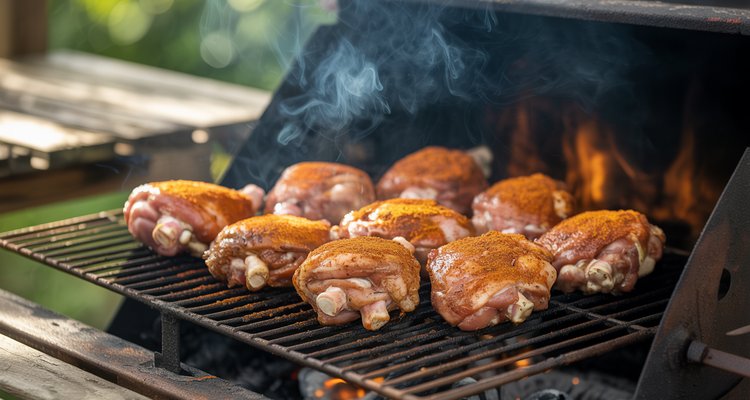
How to Get Crispy Skin on Smoked Chicken Thighs
Rubbery chicken skin is the most common complaint about smoked chicken. It happens because the low temperatures used during smoking aren’t high enough to render the fat under the skin and drive off moisture. The fix is a two-phase cook:
- Smoke low-and-slow to build flavor and reach your target internal temperature (Step 3 above)
- Crank the heat to 375-400°F for the final 10-15 minutes to blast the skin crispy
The prep work matters just as much as the finishing temperature. Patting the skin dry before applying the rub removes surface moisture. Working rub under the skin prevents steam from building up between the skin and meat. And leaving space between pieces on the grates ensures hot air circulates around every thigh instead of creating a steamy microclimate. If your smoker can’t reach 375°F (some offsets and electric smokers struggle), transfer the thighs skin-side down to a screaming-hot cast iron skillet for 2-3 minutes. Same result, different method.
Do You Flip Chicken Thighs While Smoking?
No – keep them skin-side up the entire time. Flipping breaks the surface bark that’s forming on the skin, and pressing the skin against hot grates can cause it to stick and tear. The indirect heat environment of a smoker cooks the meat evenly from all sides without flipping. The only exception: if the skin is darkening too fast (charring rather than browning), move the pieces to a cooler zone of the smoker, but keep them skin-side up.
Serving Suggestions
Smoked chicken thighs are flexible enough to be the star of the plate or a building block for other dishes. Serve them whole with classic BBQ sides – coleslaw, cornbread, smoked corn on the cob, or baked beans. Slice the meat off the bone and pile it onto sandwiches with pickles and a tangy vinegar slaw. Shred the meat for BBQ chicken tacos or nachos. For sauce, a sweet and smoky Kansas City-style sauce complements the paprika and brown sugar dry rub beautifully. If you prefer brightness, an Alabama white sauce (mayo-based) or a South Carolina-style mustard sauce cuts through the richness of the thigh meat. Apply sauce at the table rather than during cooking if you want the skin to stay at peak crispiness.
Smoking Chicken Thighs on Different Smoker Types
The technique is the same regardless of what type of smoker you own, but there are a few setup differences worth knowing:
- Pellet grill – The most beginner-friendly option. Set the temperature and the grill manages fuel and airflow automatically. Use the “smoke” or “super smoke” setting for the first 45-60 minutes if your pellet grill has one – it maximizes smoke output at lower temperatures. Then increase to your target cooking temperature. Apple or cherry pellets are the top picks for chicken.
- Offset smoker – The most traditional setup, and it produces outstanding smoked chicken thighs when managed properly. Place the chicken on the side farthest from the firebox for indirect heat. With an offset, the temperature runs hotter near the firebox, so rotate the thighs halfway through the cook to ensure even cooking.
- Charcoal grill – Set up a two-zone fire by piling charcoal on one side and leaving the other side empty. Place the chicken over the empty (indirect) side, add a small chunk of wood to the coals, and vent the lid slightly for airflow. A kettle can easily maintain 225-275°F with this setup.
- Electric smoker – Excellent temperature consistency and very beginner-friendly. The main limitation is that electric smokers often struggle to reach 375-400°F for the skin-crisping finish. If that’s your setup, finish the thighs skin-side down in a hot cast iron skillet for 2-3 minutes after smoking.
Helpful gear for this cook:
- Temperature control: AMMZO digital meat thermometer checks doneness without guessing.
- Handling: HOTEC silicone basting brushes layers sauce, glaze, or oil without loose bristles.
- Prep: Hotec stainless kitchen tongs turns food cleanly without piercing it.
Recommended Tools
You don’t need expensive equipment to smoke great chicken thighs, but a few key tools make the process noticeably easier:
- Instant-read thermometer – The single most important tool in BBQ. A Thermapen or similar fast-reading thermometer lets you confirm doneness at any point without guessing. Monitoring the internal temperature of each thigh individually is the only reliable way to know when they’re done – every piece of chicken cooks at a slightly different rate.
- Leave-in wireless probe thermometer – Insert the probe at the start of the cook and monitor the internal temperature from a distance without opening the smoker lid. Every time you open the lid, you lose 10-15 minutes of cook time. Set an alert at 155°F so you know when to prepare for the high-heat finish.
- Smoker of any type – Pellet grills, offset smokers, charcoal kettles, and electric smokers all produce excellent smoked chicken thighs. See the section above for setup notes specific to your rig.
- Cast iron skillet – Optional but useful if your smoker can’t reach 375°F for the skin-finishing step. A screaming-hot cast iron skillet skin-side down for 2-3 minutes replicates that high-heat finish perfectly.
Beyond the dry rub, your most important preparation tool is a paper towel – don’t skip the step of thoroughly drying the chicken skin before seasoning. It’s the single easiest thing you can do to improve your results.
Frequently Asked Questions
Can I use boneless, skinless chicken thighs?
Yes. Boneless, skinless thighs cook faster – expect about 1 to 1.5 hours at 225°F, or 45-60 minutes at 275°F. Apply the same dry rub, but skip the high-heat skin-crisping finish since there’s no skin to work with. The target internal temperature for boneless thighs is the same: 165°F for safety, or 175°F for the best texture. They’ll absorb slightly less smoke flavor than bone-in, but they’re still tender and delicious. Great for meal prep or shredding for sandwiches and tacos.
How do I store and reheat smoked chicken thighs?
Store leftover smoked chicken thighs in an airtight container in the refrigerator for up to 4 days, or freeze for up to 3 months. To reheat without drying them out, place in a 275°F oven or smoker, loosely tented with foil, for 20-25 minutes until warmed through. Avoid the microwave – it makes the skin rubbery and can dry out the meat quickly.
What side dishes go best with smoked chicken thighs?
Classic BBQ sides are perfect here. Creamy coleslaw balances the smoky heat of the rub. Mac and cheese is always a crowd-pleaser. Smoked baked beans cooked low-and-slow alongside the chicken pull double duty on your smoker. Cornbread, grilled corn, and pickled jalapeños round out a full spread. For a lighter option, a simple cucumber and tomato salad with vinegar dressing cuts through the richness.
Why is my smoked chicken skin rubbery, and how do I fix it?
Rubbery skin usually means one of three things: the skin wasn’t dried before applying the rub, the smoker never got hot enough to render the fat, or the grates were overcrowded and created steam. Fix it by patting the skin completely dry, finishing at 375-400°F for 10-15 minutes, and leaving space between pieces on the grate. If you’re getting consistent rubbery skin, switch to cooking at 275°F from the start – the higher baseline temperature does more work on the skin throughout the cook.
Smoked Chicken Thighs
Equipment
- Smoker pellet grill, offset smoker, or kettle charcoal grill
- Instant-read meat thermometer Thermapen or similar — essential for accurate doneness
- Wireless leave-in probe thermometer optional but highly recommended
- Paper towels for patting chicken dry before applying rub
Ingredients
Chicken
- 6 bone-in skin-on chicken thighs about 3–4 lbs total
Dry Rub
- 2 tablespoons brown sugar helps bark formation
- 1 tablespoon smoked paprika
- 1 tablespoon kosher salt
- 1 teaspoon garlic powder
- 1 teaspoon onion powder
- 1 teaspoon black pepper freshly ground preferred
- 1/2 teaspoon cayenne pepper reduce to 1/4 tsp for milder heat
Instructions
- Mix all dry rub ingredients together in a small bowl until evenly combined.
- Pat chicken thighs completely dry with paper towels — this is the most important step for crispy skin.
- Apply the dry rub generously on all sides of the chicken, including under the skin. Loosely tent and refrigerate for at least 30 minutes, or overnight for a dry brine effect.
- Preheat your smoker to 225°F (or 275°F for a faster cook). Add apple, cherry, or pecan wood for smoke.
- Place thighs skin-side up on the smoker grates with at least 1 inch of space between each piece. Do not flip during smoking.
- Smoke until the internal temperature reaches 155–160°F — approximately 1.75–2 hours at 225°F, or 1–1.25 hours at 275°F.
- Optional: brush with BBQ sauce during the last 15–20 minutes once the skin has set.
- Raise the smoker temperature to 375–400°F and cook for an additional 10–15 minutes until skin is golden-brown and crispy.
- Remove when internal temperature reaches 165°F minimum (175°F for maximum tenderness). Rest for 5–10 minutes before serving.
Notes