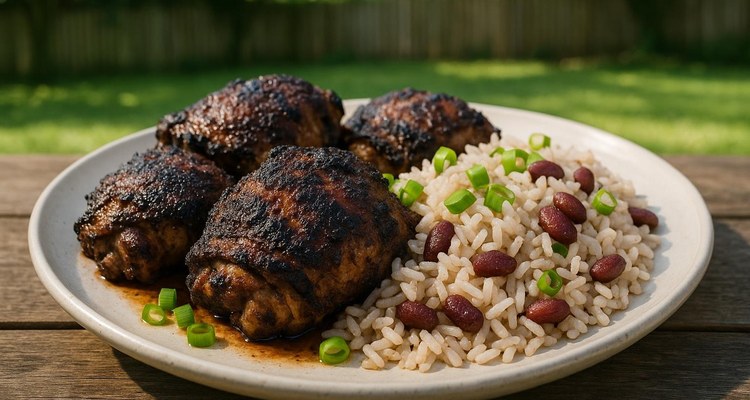
This Jamaican jerk chicken recipe uses Scotch bonnet peppers, ground allspice, and fresh thyme to build authentic island flavor. Grill bone-in chicken thighs over indirect heat at 350-375°F for 30-35 minutes. For oven jerk chicken, roast at 375°F for 35-45 minutes. The USDA requires all poultry to reach a minimum internal temperature of 165°F for safe consumption[USDA]. Marinate the chicken for 12-24 hours to allow the acidic lime juice and aromatic spices to penetrate deep into the meat. Shorter marinating times produce surface-level flavor only.
The History and Culture of Jerk
The origins of jerk cooking trace back to the 17th century with the Maroons of Jamaica. Escaped African slaves who found refuge in the island’s mountainous regions developed this unique preservation and cooking method. They used native ingredients, including pimento (allspice) and Scotch bonnet peppers, to season and smoke wild boar.
The term “jerk” is believed to come from the Spanish word “charqui,” meaning dried meat, which evolved to describe the poking or “jerking” of holes in the meat to stuff with spices. This historical cooking style, done over smoldering pimento wood, created a smoky, spicy, and deeply flavorful result. Today, this authentic jerk chicken recipe honors that tradition by using the same core flavor principles.
The Secret to Authentic Jerk Chicken
Authentic jerk chicken depends on three core ingredients working together: Scotch bonnet peppers for fruity heat, ground allspice (called pimento in Jamaica) for warm earthiness, and fresh thyme for herbal brightness. Balancing these three elements separates real Jamaican jerk chicken from generic spicy grilled chicken.
Scotch bonnet peppers register 100,000-350,000 Scoville heat units, but they carry a distinctly fruity, almost apricot-like flavor underneath the heat. Habaneros are the closest substitute, with similar heat levels and a comparable flavor profile. Allspice is not a blend of spices. It is a single dried berry from the Pimenta dioica tree, native to Jamaica. Ground allspice delivers notes of clove, cinnamon, and nutmeg in one ingredient, forming the signature warm spice backbone of any jerk chicken recipe. The jerk marinade must be a wet paste, not a dry rub. Blending the aromatics with soy sauce, lime juice, and oil creates a thick paste that clings to the chicken and penetrates during marination.
Gear We Recommend for This Cook
 Grill Tongs· Everyday essentialHotec Stainless Steel Tongs HotecThese tongs offer a secure grip for handling food.Why we picked it: for easily flipping chicken on the grill.
 Grill Brush· Everyday essentialThermoMaven Bristle-Free Brush ThermoMavenThis brush safely cleans grill grates without wire bristles.Why we picked it: to keep your grill grates clean for consistent cooking.
 Meat Thermometer· Everyday essentialThermoMaven Instant Read ThermoMavenThis thermometer provides quick, accurate temperature readings.Why we picked it: to ensure your jerk chicken reaches a safe internal temperature.
Essential Jerk Chicken Ingredients
A traditional jerk marinade combines fresh aromatics, ground spices, and acidic liquids into a thick wet paste that coats and tenderizes the chicken during an overnight soak. Each ingredient serves a specific purpose in building layered island flavor. Sourcing high-quality, fresh components is the first step to a successful jerk chicken recipe.
The Meat
Bone-in, skin-on chicken thighs or leg quarters are the standard for authentic jerk chicken. The bones insulate the meat during high-heat grilling, and the skin protects against drying out during the 30-35 minute cook time. Chicken thighs contain more fat and collagen than leaner cuts, which renders during cooking to create exceptionally juicy and flavorful results.
This higher fat content also helps absorb the complex flavors of the jerk marinade more effectively. While you can use other cuts like wings or drumsticks, you may need to adjust cooking times. Boneless skinless breasts are not recommended as they dry out too quickly and lack the rich flavor needed for this dish.
The Heat
Scotch bonnet peppers provide the signature heat of authentic jerk chicken. Use 2-4 peppers for a traditional heat level, or remove the seeds and white membranes to reduce intensity by roughly 50%. Always wear gloves when handling Scotch bonnet peppers, as their oils can cause severe skin irritation. If Scotch bonnets are unavailable, substitute habanero peppers at the same quantity. Both peppers share a similar fruity heat profile in the 100,000-350,000 Scoville range.
The Spices
Ground allspice is the backbone of Jamaican jerk seasoning. Use 1 tablespoon per 3-4 pounds of chicken. For a more potent flavor, you can grind whole allspice berries just before making the marinade. Add 1/2 teaspoon each of ground nutmeg, cinnamon, and black pepper to round out the spice blend. These warming spices complement the allspice and add layers of complexity to the final flavor profile.
The Aromatics
Fresh scallions (6-8 stalks), 4-6 garlic cloves, a 1-inch piece of fresh ginger, and 4-5 sprigs of fresh thyme form the aromatic base. Fresh aromatics are non-negotiable – dried substitutes produce a flat, one-dimensional flavor. The enzymes in fresh ginger help tenderize the chicken, while the pungent oils from fresh garlic and scallions are crucial for the marinade’s vibrant character. Do not substitute with powders.
The Liquids
Soy sauce adds salt and umami depth, which enhances the Maillard reaction during grilling for a better crust. Lime juice or white vinegar provides acidity that tenderizes the chicken thighs during marination. A tablespoon of vegetable oil helps the paste blend smoothly and ensures it coats the chicken evenly. The oil also helps transfer the fat-soluble flavors of the spices into the meat.
The Sweetness
Brown sugar (2-3 tablespoons) balances the heat from the Scotch bonnet peppers and promotes caramelization on the grill. Dark brown sugar delivers a stronger molasses note that pairs well with allspice. For a different flavor profile, you can substitute with an equal amount of honey or a few tablespoons of pineapple juice. Be aware that these sugars can burn even more quickly on the grill.
How Long Should Jerk Chicken Marinate?
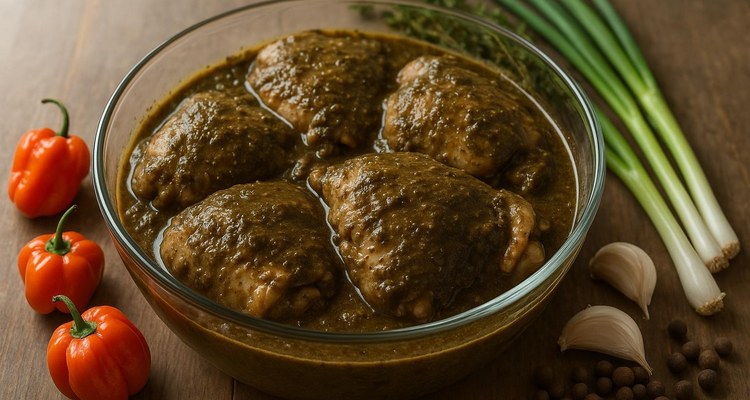
Jerk chicken requires a minimum of 4-6 hours of marination, with 12-24 hours producing the deepest flavor penetration. The acidic lime juice and enzymatic ginger work together to break down surface proteins and carry the spice blend into the meat.
During this time, the process of osmosis draws the salty and flavorful marinade into the chicken cells. This not only seasons the meat thoroughly but also helps it retain moisture during cooking, resulting in a juicier final product. A 30-minute marinade coats the surface only and produces bland interior meat. The difference between 4-hour and 24-hour marination is dramatic and visible – properly marinated jerk chicken turns dark green-brown throughout.
| Marination Time | Flavor Depth | Best For |
|---|---|---|
| 30 minutes | Surface only | Not recommended |
| 4-6 hours | Moderate penetration | Weeknight cooking |
| 12-24 hours | Full penetration | Authentic flavor (recommended) |
| 24-48 hours | Maximum (texture may soften) | Competition or events |
Cooking Methods: The Grill vs. The Oven
Grilling over charcoal with wood chips produces the closest flavor to traditional Jamaican jerk chicken, while oven roasting at 375°F delivers reliable results without outdoor equipment. Both methods require indirect heat for the bulk of the cook to prevent burning the sugar in the jerk marinade.
Grilling Method (Preferred)
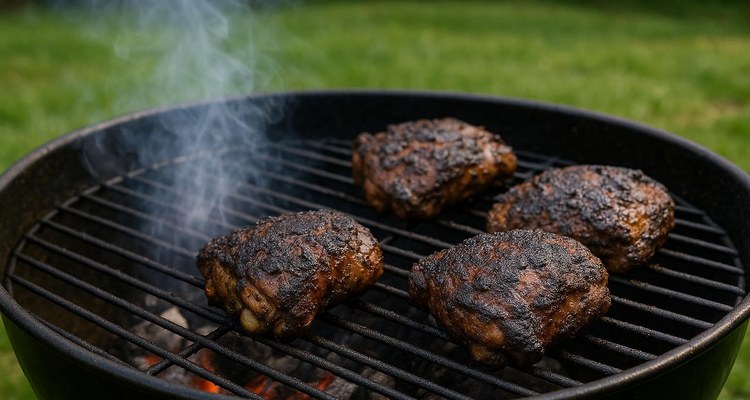
Set up a two-zone fire by banking coals to one side of the grill. For a gas grill, light the burners on one side only. Place chicken thighs skin-side down over direct heat for 3-4 minutes per side to develop a charred crust. The brown sugar in the jerk marinade caramelizes quickly, so watch for flare-ups.
Move the chicken to the indirect side, close the lid, and maintain 350-375°F for 25-30 minutes until the internal temperature reaches 165°F[USDA]. For juicier thigh texture, cook chicken thighs to 175-185°F to break down the collagen in the joints. Add 2-3 chunks of pimento wood, pecan, or hickory to the coals before placing the chicken.
Pimento wood is traditional but can be hard to find; it provides a unique, sweet smoke that is synonymous with authentic jerk. Pecan offers a similar sweet, nutty smoke, while hickory provides a stronger, more classic barbecue flavor.
Oven Method
Preheat the oven to 375°F. Place marinated chicken thighs on a wire rack set over a foil-lined sheet pan, skin side up. The wire rack is crucial for allowing hot air to circulate, which helps crisp the skin on all sides and prevents the bottom from becoming soggy. Roast for 35-45 minutes until the internal temperature reaches at least 165°F.
This method of creating an oven jerk chicken is straightforward and delivers consistent results. The roasted jerk chicken will be tender and flavorful. Switch to the broiler on high for 2-3 minutes at the end to char the skin and caramelize the marinade. Watch closely – the sugar in the jerk paste burns within seconds under a broiler. Roasted jerk chicken from the oven produces excellent results for weeknight cooking when grilling is not an option.
Making a Quick Jerk Chicken Sauce
A jerk chicken sauce for serving starts with the reserved portion of uncooked marinade that was set aside before touching raw chicken. Simmer this reserved paste with 1/4 cup of chicken broth and 2 tablespoons of ketchup over medium heat for 8-10 minutes until it thickens into a rich dipping sauce.
The ketchup adds body and a touch of sweetness that balances the Scotch bonnet heat. Adjust consistency by adding more broth for a thinner sauce or reducing longer for a glaze. For a tropical variation, add 2-3 tablespoons of pineapple or mango puree to the sauce while it simmers. For extra heat, add a finely minced Scotch bonnet pepper. This versatile sauce can be customized to your preference.
What to Serve with Jerk Chicken
Authentic jerk chicken pairs beautifully with traditional Jamaican side dishes that complement its bold, spicy flavor. These sides often provide a cooling or starchy contrast to the heat.
Rice and Peas
This is the most classic side dish for jerk chicken. Despite the name, it’s typically made with kidney beans cooked in coconut milk with thyme and scallions. The creamy, savory rice is the perfect counterpoint to the spicy chicken.
Fried Plantains
Sweet, caramelized fried plantains offer a delightful contrast to the heat of the jerk marinade. Use ripe plantains (with black spots on the peel) for the sweetest flavor. Simply slice and fry in a little oil until golden brown.
Jamaican Festival
Festival is a type of sweet, fried dumpling made from cornmeal, flour, and sugar. Its slightly sweet taste and dense, chewy texture make it ideal for soaking up any extra jerk sauce on your plate.
Common Mistakes Making Jerk Chicken
Four common errors ruin otherwise good jerk chicken: rushing the marinade, cooking over direct heat only, using boneless skinless breasts, and substituting dried aromatics for fresh ingredients. Each mistake weakens flavor, texture, moisture, or the charred crust that defines the dish.
Rushing the Marinade
Cooking jerk chicken after only 30 minutes of marinating leaves the interior bland and colorless. The minimum effective marination time is 4-6 hours. For authentic jerk chicken, plan ahead and marinate for 12-24 hours.
Burning the Chicken
Brown sugar in the jerk marinade burns rapidly over direct flames. Cooking entirely over high heat chars the exterior while leaving the interior undercooked. Use two-zone cooking: sear briefly over direct heat, then finish over indirect heat at 350-375°F.
Using Boneless Skinless Breasts
Chicken breasts lack the fat content and connective tissue that keep jerk chicken juicy through high-heat cooking. Bone-in, skin-on chicken thighs retain moisture and absorb the jerk marinade more effectively than any other cut.
Skipping Fresh Aromatics
Dried garlic powder and dried onion flakes cannot replicate the bright, pungent flavor of fresh scallions, ginger, and garlic. Fresh aromatics release oils during blending that form the aromatic backbone of an authentic jerk chicken recipe.
Not Scoring the Meat
Failing to make shallow cuts in the chicken, especially thicker pieces like thighs and leg quarters, can prevent the jerk marinade from penetrating deeply. Score the chicken 1/4-inch deep before marinating to create more surface area for flavor absorption.
Storing and Reheating Leftovers
Properly storing and reheating leftover jerk chicken ensures it stays moist and flavorful. Allow the chicken to cool completely before storing to prevent condensation from making the skin soggy. Store leftovers in an airtight container in the refrigerator for up to 3-4 days. For longer storage, freeze the chicken in a freezer-safe bag or container for up to 3 months.
Thaw overnight in the refrigerator before reheating. The best way to reheat jerk chicken is in a 350°F oven for 10-15 minutes, or until warmed through. Adding a splash of water or chicken broth to the pan can help keep the chicken moist.
Frequently Asked Questions
What is the secret to jerk chicken?
The secret to authentic jerk chicken is balancing three core ingredients: Scotch bonnet peppers for fruity heat, ground allspice for warm earthiness, and fresh thyme for herbal brightness. These three elements work together in a wet marinade paste that must soak into bone-in chicken thighs for at least 12 hours to develop full flavor.
What are the main ingredients in jerk chicken?
A traditional jerk marinade includes Scotch bonnet peppers, ground allspice, fresh thyme, scallions, garlic, ginger, soy sauce, lime juice, brown sugar, nutmeg, cinnamon, and black pepper. These ingredients are blended into a thick wet paste and applied to bone-in, skin-on chicken thighs before a 12-24 hour marination.
What ingredients are in Jamaican jerk seasoning?
Jamaican jerk seasoning is built on a foundation of allspice (pimento) and Scotch bonnet peppers. Other essential ingredients include fresh thyme, scallions, garlic, ginger, soy sauce, and lime juice, along with complementary spices like nutmeg and cinnamon to create its signature complex flavor.
Can I freeze the jerk marinade?
Jerk marinade freezes well for up to 3 months in an airtight container or freezer bag. Blend a double batch and freeze individual portions for quick weeknight jerk chicken. Thaw overnight in the refrigerator before applying to chicken. The flavor remains intact after freezing.
Is jerk chicken always spicy?
Authentic jerk chicken is moderately to very spicy due to the Scotch bonnet peppers. Home cooks can reduce the heat significantly by removing the seeds and white membranes from the peppers before blending, which cuts the heat by roughly 50% while preserving the fruity flavor.
How long should jerk chicken marinate?
Marinate jerk chicken for a minimum of 4-6 hours, with 12-24 hours producing deeper flavor. The acidic lime juice and enzymatic ginger tenderize the meat while the allspice and Scotch bonnet flavors penetrate through the chicken thighs. Marinating for less than 4 hours produces surface-level seasoning only.
Authentic Jamaican Jerk Chicken
Equipment
- Blender or food processor For making the wet jerk marinade
- Large nonreactive bowl or zip-top bag For marinating the chicken safely in the refrigerator
- Grill Two-zone charcoal or gas setup preferred
- Tongs For moving chicken between direct and indirect heat
- Instant-read thermometer For checking poultry doneness
- Small saucepan For simmering reserved marinade into serving sauce
- Sheet pan and wire rack Optional oven method for indoor cooking
Ingredients
For the Chicken
- 3-4 pounds bone-in skin-on chicken thighs or leg quarters score thick pieces 1/4 inch deep before marinating
For the Jerk Marinade
- 2-4 Scotch bonnet peppers or habaneros; remove seeds and membranes for less heat
- 6-8 stalks scallions roughly chopped
- 4-6 cloves garlic peeled
- 1 inch fresh ginger peeled and sliced
- 4-5 sprigs fresh thyme leaves stripped
- 1 tablespoon ground allspice also called pimento in Jamaican cooking
- 1/2 teaspoon ground nutmeg
- 1/2 teaspoon ground cinnamon
- 1/2 teaspoon black pepper freshly ground if possible
- 1/4 cup soy sauce adds salt and umami
- 2 tablespoons lime juice or white vinegar for acidity
- 2-3 tablespoons brown sugar balances heat and helps caramelize
- 1 tablespoon vegetable oil helps the paste blend and coat evenly
For the Optional Serving Sauce
- 1/2 cup reserved jerk marinade set aside before the marinade touches raw chicken
- 1/4 cup chicken broth for thinning the sauce
- 2 tablespoons ketchup adds body and sweetness
Instructions
- Wear gloves when handling Scotch bonnet peppers, then blend the peppers, scallions, garlic, ginger, thyme, allspice, nutmeg, cinnamon, black pepper, soy sauce, lime juice, brown sugar, and oil into a thick wet paste.
- Reserve 1/2 cup of the jerk marinade before it touches raw chicken if you want a serving sauce.
- Score thicker chicken pieces 1/4 inch deep, then coat the chicken thoroughly with the jerk marinade, working it under the skin where possible.
- Cover and refrigerate for 12 hours for deep flavor, or up to 24 hours if your schedule allows.
- Set up a grill for two-zone cooking and stabilize the indirect side at 350-375 degrees F.
- Sear the chicken skin-side down over direct heat for 4 minutes per side to develop color, watching closely for flare-ups.
- Move the chicken to indirect heat, close the lid, and cook for 30 minutes more, until it reaches at least 165 degrees F; thighs are best around 175-185 degrees F.
- For serving sauce, simmer the reserved marinade with chicken broth and ketchup for 10 minutes until thickened.
- Rest the chicken for 5 minutes, then serve with the jerk sauce, rice and peas, fried plantains, or festival.
Notes