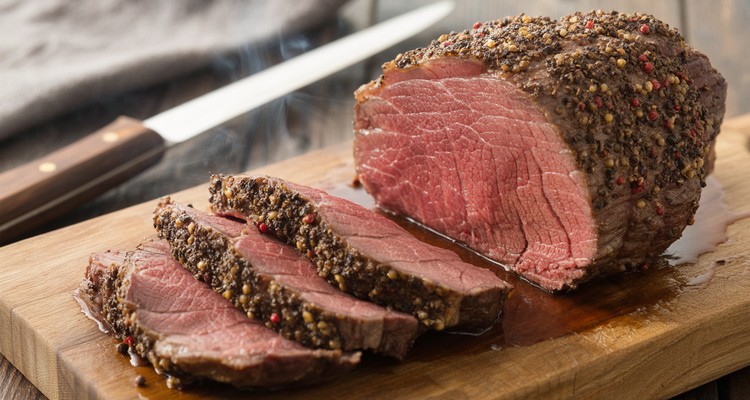
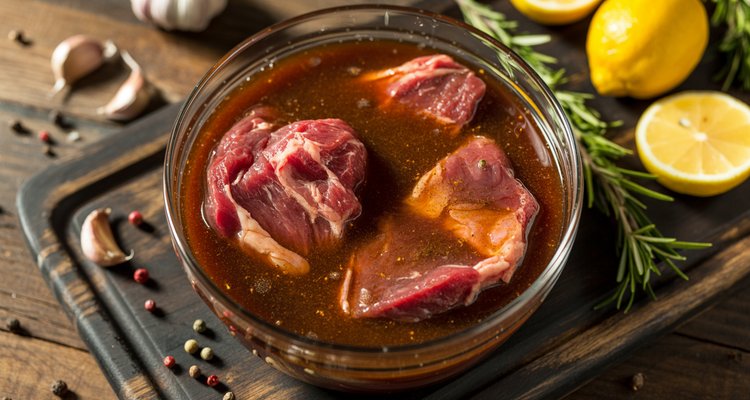
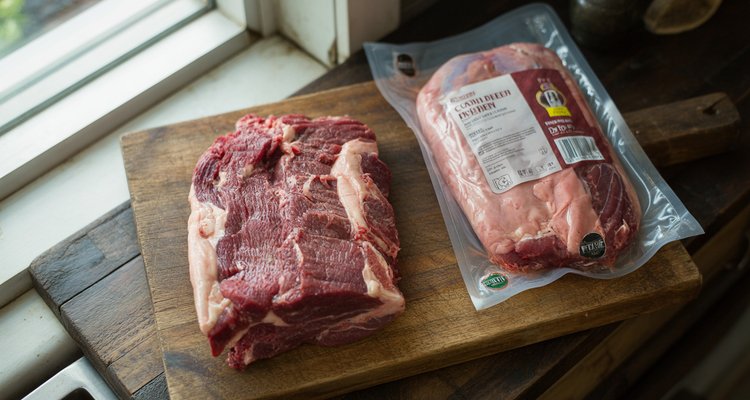
 You’re standing at the meat counter staring at two labels – “beef brisket” and “corned beef brisket.” They look completely different, yet they share the same name. Here’s the short answer: brisket is the raw cut of beef, and corned beef is that same cut after it’s been salt-cured in a spice brine. One is an ingredient. The other is a finished preparation.
Helpful gear for this cook:
- Bryco Goods pink butcher paper — works for wrapping brisket, ribs, and pork during the stall
- Spice Guru BBQ rub set — gives you several BBQ seasoning options for the cook
- Typhur Sync WiFi Wireless Meat Thermometer Digital — helps verify doneness without guessing
What Is Brisket?
Brisket is one of the nine primal cuts of beef, taken from the lower chest of the cow. It’s the pectoral muscle that supports roughly 60% of the animal’s body weight, which is why it’s loaded with tough connective tissue and collagen. That toughness is exactly what makes brisket ideal for low-and-slow smoking – hours of gentle heat break down those fibers into melt-in-your-mouth tenderness. A full “packer” brisket typically weighs 10-16 pounds and contains two distinct subprimals: the flat and the point. Understanding these two sections helps you pick the right cut whether you’re smoking, braising, or buying corned beef.
Flat vs Point
The flat (also called the “first cut”) is the leaner, more uniform section. It slices cleanly and looks great on a plate. Most grocery store briskets are flat cuts, and most corned beef is made from the flat. The point (or “second cut”) sits on top of the flat, separated by a thick layer of fat called the deckle. It has significantly more marbling, which means richer flavor but messier slices. The point is what pitmasters use for burnt ends – those caramelized, candy-like cubes of smoky beef.
What Is Corned Beef?
Corned beef is beef that has been preserved through salt curing – specifically, soaking in a seasoned brine for 5-10 days. The word “corned” has nothing to do with corn the vegetable. It refers to the large grains (“corns”) of rock salt that were historically packed around the meat to preserve it before refrigeration.
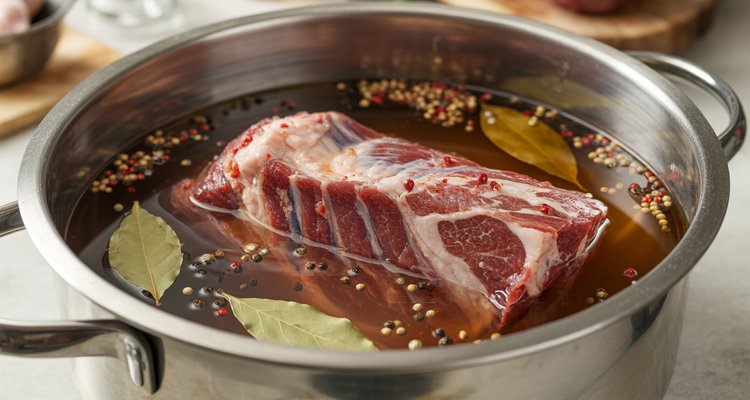
The brine typically contains kosher salt, sodium nitrite (pink curing salt), and a blend of pickling spices – mustard seed, coriander, black peppercorn, bay leaves, cloves, and allspice. The sodium nitrite is what gives corned beef its signature pink color and helps prevent bacterial growth. Corning was a critical preservation method for centuries. Irish immigrants in 19th-century New York adopted corned beef brisket from Jewish delis, eventually making it the centerpiece of the American St. Patrick’s Day tradition. Today, most commercial corned beef is made from the brisket flat, though beef round and navel are also used.
Key Differences Between Corned Beef and Brisket
The easiest way to understand corned beef vs brisket is this: brisket is the raw material, corned beef is the finished product. Think of it like the difference between fresh pork and ham – same animal, completely different treatment.
| Feature | Brisket | Corned Beef |
|---|---|---|
| What it is | A raw cut of beef | Brisket cured in salt brine |
| Color (raw) | Deep red | Pink/reddish (from nitrites) |
| Flavor | Rich, natural beef | Salty, tangy, spiced |
| Texture | Tough raw; tender when slow-cooked | Partially tenderized by brine |
| Cooking method | Smoking, braising, roasting | Simmering, oven braising, slow cooker |
| Cooking time | 10-14 hours (smoked) | 2.5-3 hours (simmered) |
| Sodium | Low (natural) | High (from curing brine) |
| Shelf life | 3-5 days refrigerated | Several weeks in brine |
| Classic dishes | Texas-style BBQ, burnt ends | Boiled dinner, Reuben sandwiches |
| Price per pound | Varies by grade and retailer (whole packer) | Varies by grade and retailer (curing adds cost) |
How Curing Changes the Meat
The brine does more than just add flavor. It fundamentally transforms the brisket in four ways: Color. Fresh brisket is deep red from myoglobin, a protein in muscle tissue. Sodium nitrite in the curing brine reacts with myoglobin to form nitrosomyoglobin, which locks in a stable pink color – the same reaction that makes hot dogs and ham pink. Flavor. The brining process replaces the pure, beefy taste with a complex flavor profile. Salt penetrates the meat while pickling spices infuse their aromatic compounds. The result is tangy, savory, and distinctly different from uncured beef. Texture. Salt in the brine begins breaking down muscle proteins and connective tissue before you ever turn on the stove. That’s why corned beef cooks to tenderness in 2-3 hours while a raw brisket needs 10-14 hours of smoking. Shelf life. Fresh brisket lasts 3-5 days in the fridge. A properly brined corned beef can last several weeks submerged in its curing liquid, which was the whole point of corning before modern refrigeration.
When to Buy Raw Brisket vs Corned Beef
Your choice depends entirely on what you’re cooking. Here’s a quick guide:
| Use Case | Buy This | Why |
|---|---|---|
| Texas-style BBQ | Raw brisket | Clean beef flavor takes smoke well |
| Burnt ends | Raw brisket (point) | Fat-rich point caramelizes perfectly |
| Braised pot roast | Raw brisket (flat) | Neutral flavor absorbs braising liquid |
| St. Patrick’s Day dinner | Corned beef | Traditional recipe needs the cure |
| Reuben sandwiches | Corned beef | Salty-tangy flavor pairs with sauerkraut |
| Homemade pastrami | Corned beef | Pastrami starts as corned beef before smoking |
| Hash or tacos | Either works | Corned beef adds salt; raw brisket is milder |
The Pastrami Connection
If you’ve ever wondered where pastrami fits into the picture, it’s actually the bridge between corned beef and brisket. Pastrami starts as corned beef – a salt-cured brisket. But instead of being boiled or simmered, it gets coated in a coarse pepper-and-coriander rub and then smoked. The key distinction is simple:
- Corned beef = cured brisket, simmered or boiled
- Pastrami = cured brisket, rubbed and smoked
- Smoked brisket = uncured brisket, rubbed and smoked
All three start from the same cut. The preparation method determines the final product.
Helpful gear for this cook:
- TempPro TP20 500FT Wireless Meat Thermometer with Dual Meat — helps verify doneness without guessing
- MEATER Plus: Smart Bluetooth Wireless Meat Thermometer Digital — helps verify doneness without guessing
- ThermoMaven wireless meat thermometer — helps verify doneness without guessing
Cooking Methods Compared
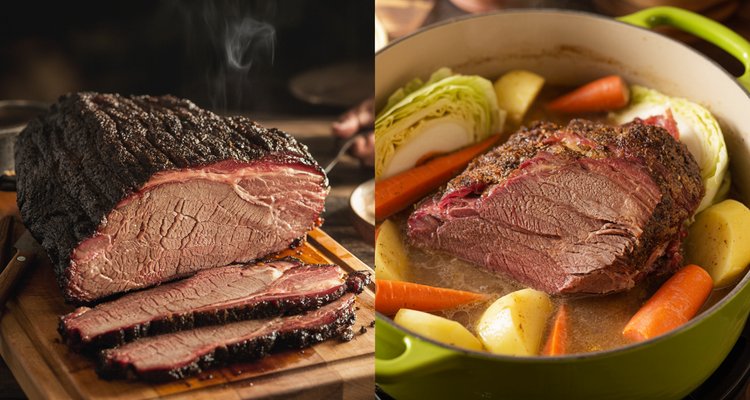
How to Cook Brisket
Raw brisket needs long, slow cooking to break down its dense connective tissue. The most popular methods include:
- Smoking: Cook at 225-275°F for 10-14 hours until the internal temperature reaches 195-205°F. This is the gold standard for Texas-style BBQ.
- Braising: Sear first, then cook in a covered Dutch oven with liquid at 300°F for 3-4 hours.
- Oven roasting: Slow roast at 250-275°F for 4-6 hours, wrapped in foil with a small amount of liquid.
Always let your brisket rest for at least 30 minutes after cooking. Slice against the grain for maximum tenderness.
How to Cook Corned Beef
Because the brine has already partially broken down the meat’s fibers, corned beef cooks much faster:
- Stovetop simmering: Cover with water, add the included spice packet, and simmer gently for 2.5-3 hours (roughly 1 hour per pound).
- Oven braising: Place fat-side up in a roasting pan with 1 inch of water. Cover tightly and cook at 300°F for 3-4 hours.
- Slow cooker: Cover with water, cook on low for 8-10 hours or high for 4-5 hours.
Slice corned beef against the grain. The grain direction on corned beef often runs differently than you’d expect – look carefully before making your first cut.
Nutritional Comparison
Both brisket and corned beef are protein-rich, but the curing process significantly changes the nutritional profile. Here’s how they compare per 3-ounce cooked serving:
| Nutrient | Smoked Brisket | Corned Beef |
|---|---|---|
| Calories | 245 | 213 |
| Protein | 20g | 15g |
| Fat | 17g | 16g |
| Sodium | 65mg | 827mg |
| Iron | 2.3mg | 1.9mg |
The biggest difference is sodium. Corned beef contains roughly 12 times more sodium than smoked brisket because of the salt-heavy curing process. If you’re watching your sodium intake, rinsing and soaking the corned beef before cooking can reduce the salt content by 10-20%.
Frequently Asked Questions
Is Corned Beef Always Made from Brisket?
No. While brisket flat is the most popular cut for corning, it’s not the only option. Beef round (a leaner, tougher cut from the rear leg) is commonly sold as corned beef round. Beef navel – the plate section below the brisket – is another traditional choice, especially in Jewish delicatessens. Brisket gives the best balance of flavor and tenderness after curing.
Can You Smoke Corned Beef Like Brisket?
Yes – and when you do, you’re essentially making pastrami. Soak the corned beef in cold water for 2-4 hours first to draw out excess salt. Pat it dry, apply a coarse black pepper and coriander rub, then smoke at 225-250°F until the internal temperature hits 195-203°F. The result is a homemade pastrami that rivals any NYC deli.
Is Pastrami the Same as Corned Beef?
No. Pastrami and corned beef share the same starting point – a salt-cured brisket – but the final cooking method is different. Corned beef is simmered or boiled in water. Pastrami is coated in a pepper-coriander rub and smoked. The smoking step gives pastrami its distinctive bark, deeper flavor, and slightly firmer texture.
Why Is Corned Beef Pink?
The pink color comes from sodium nitrite (pink curing salt) in the brine. Nitrite reacts with myoglobin – the protein that makes raw meat red – to form a stable compound called nitrosomyoglobin. This locks in the pink hue even after cooking. It’s the same chemistry that makes bacon, ham, and hot dogs pink.
What Does “Corned” Mean?
“Corned” refers to the large grains (or “corns”) of rock salt that were historically rubbed into or packed around the meat to preserve it. The word has nothing to do with corn the grain. In old English, “corn” simply meant a small particle or kernel – so “corned beef” literally means “salted with large grains of salt.”
Is Corned Beef Brisket Flat or Point?
Most commercial corned beef uses the flat cut. The flat’s uniform thickness allows the brine to penetrate evenly, producing consistent flavor and texture throughout. The point is sometimes sold as corned beef too, but its irregular shape and higher fat content make it less common. If you want richer, fattier corned beef, ask your butcher for a corned point.
Can You Substitute Corned Beef for Brisket?
You can, but it’s not a straight swap. Corned beef is already heavily salted and partially tenderized by the brine. If you substitute it in a recipe calling for raw brisket, you’ll need to eliminate any added salt and significantly reduce cooking time. Going the other direction – using raw brisket where corned beef is called for – means you’ll miss the tangy, spiced flavor that defines dishes like corned beef and cabbage.
What Is Poor Man’s Brisket?
Poor man’s brisket typically refers to a chuck roast that’s been seasoned and smoked like a brisket. It has nothing to do with corned beef. Chuck has a similar collagen-rich structure and responds well to low-and-slow smoking, producing tender, brisket-like results at a lower price per pound.
Is Corned Beef Healthy?
Corned beef is a solid source of protein, iron, and B vitamins. However, it’s also high in sodium – a single 3-ounce serving packs over 800mg, roughly a third of the daily recommended limit. Enjoy it in moderation, especially if you’re managing blood pressure or following a low-sodium diet. Rinsing and soaking before cooking helps reduce the salt content.
What Part of the Cow Is Brisket?
Brisket comes from the lower chest area of the cow – the pectoral muscles between the front legs. It’s one of the nine primal cuts of beef. Because this muscle supports so much of the animal’s weight, it’s naturally tough and fibrous. That dense connective tissue is what breaks down during slow cooking to create the rich, silky texture BBQ lovers chase.