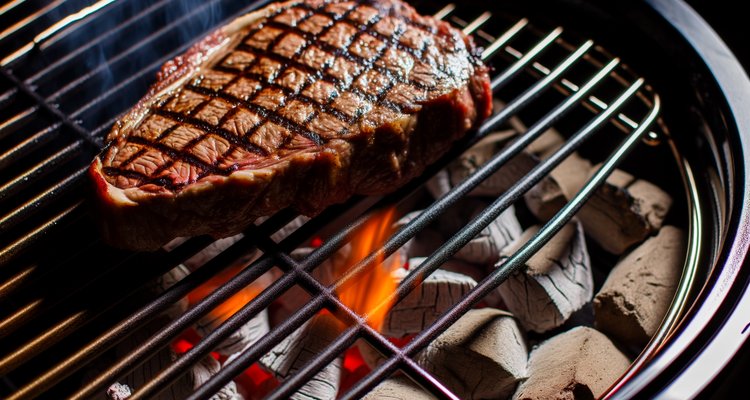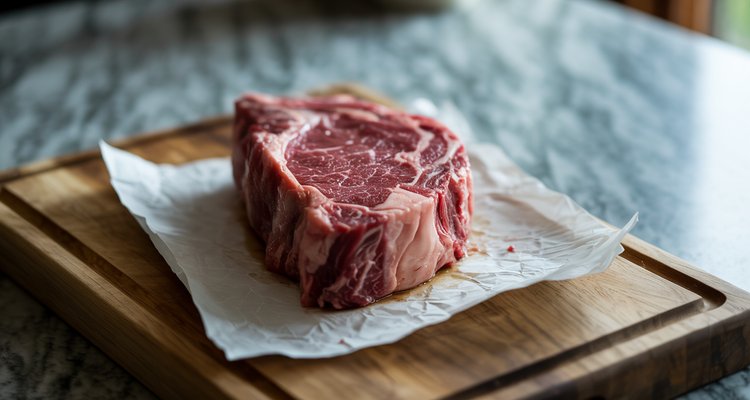
Salting steak before grilling is the single most important step for achieving a restaurant-quality crust at home. The process – known as dry brining – draws moisture out of the meat, dissolves that moisture into a concentrated brine on the surface, and then pulls the seasoned liquid back into the muscle fibers for deep flavor penetration. This guide covers the science behind salting, exact timing for every scenario from last-minute grilling to overnight dry brining, and a step-by-step method you can follow for any cut. Whether you salt 40 minutes ahead or 24 hours in advance, the approach changes your steak fundamentally.
Helpful gear for this cook:
- Temperature control: AMMZO digital meat thermometer checks doneness without guessing.
- Handling: Hotec stainless kitchen tongs turns food cleanly without piercing it.
- Prep: Stargazer cast iron skillet builds a hard sear indoors, on a grill, or on a side burner.
The Science of Salting: How It Transforms Meat
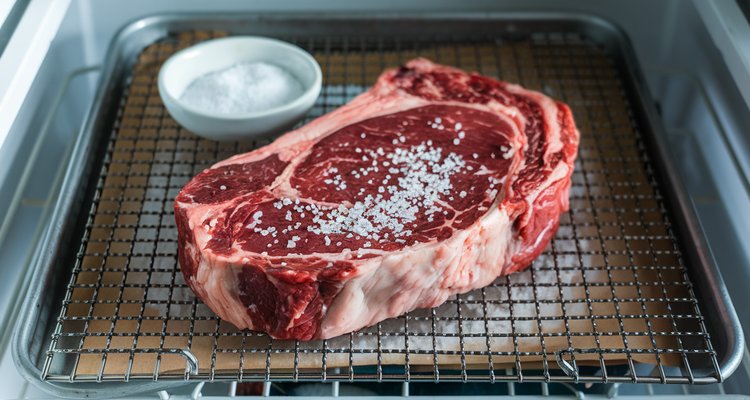
Salt transforms steak through a three-phase osmosis process: it draws surface moisture out within 3-5 minutes, dissolves into a concentrated brine, then gets reabsorbed into the muscle fibers over 40 minutes to 24 hours. This process seasons the interior, tenderizes the meat, and creates a dry surface for superior browning.
The Osmosis Process
When salt hits raw meat, osmotic pressure pulls water from inside the muscle cells to the surface. Within 3-5 minutes, visible moisture beads appear around the salt crystals. The salt dissolves into this surface moisture, creating a concentrated brine. Over the next 30-40 minutes, the brine reverses direction and gets drawn back into the meat, carrying the dissolved salt deep into the muscle fibers.
How Salt Tenderizes
The absorbed salt breaks down myosin, one of the primary muscle proteins responsible for toughness. When these proteins denature, they lose their ability to contract tightly during grilling. The result is a steak that stays juicier and more tender because the muscle fibers hold onto moisture instead of squeezing it out under heat.
Why Kosher Salt Is the Best Choice
Coarse kosher salt is the standard for dry brining steak. The large, flat crystals are easy to pinch and distribute evenly across the surface without clumping. Fine table salt dissolves too quickly and makes it easy to over-salt. Kosher salt’s larger grain size also draws moisture more effectively during the initial osmosis phase. Use approximately 3/4 teaspoon of kosher salt per pound of meat.
Timing Guide: How Long to Salt a Steak Before Grilling?
Salt steak either immediately before grilling or at least 40 minutes ahead. The worst window is 10-39 minutes after salting, when drawn-out moisture pools on the surface and prevents a proper sear. For everyday grilling, 1-2 hours is ideal; for maximum flavor, salt overnight.
The Immediate Method vs. The 40-Minute Rule
You have two safe timing windows. Salt the steak and cook it right away – within 3 minutes, before significant moisture is drawn out. Or salt it and wait at least 40 minutes for the brine to fully reabsorb. Between 10 and 39 minutes after salting, the surface is covered in drawn-out moisture that has not yet reabsorbed. Grilling in this window means a wet surface, poor browning, and a steamed rather than seared crust.
Salt Steak 2 Hours Before Cooking
For everyday grilling, 1-2 hours is the practical sweet spot. The brine has fully reabsorbed by this point, the surface is dry to the touch, and the salt has penetrated deep enough to season beyond just the outer layer. Pat the steak dry with paper towels, apply the salt, and leave it uncovered on a wire rack in the refrigerator. The circulating fridge air further dries the surface.
How to Salt Steak Overnight (Dry Brining)
Overnight dry brining – 12 to 24 hours – delivers the deepest flavor penetration and driest surface of any timing method. Apply kosher salt generously, place the steak on a wire rack over a baking sheet, and refrigerate uncovered. The extended time allows salt to penetrate the center of thick cuts like ribeyes and porterhouses. Keep the refrigerator at 40°F or below to maintain food safety[USDA].
How Long to Leave Steak in the Fridge After Salting
| Cut Thickness | Minimum Time | Ideal Time | Maximum Time | Result |
|---|---|---|---|---|
| 3/4 inch (thin cuts) | 40 min | 1 hour | 12 hours | Even seasoning, dry surface |
| 1-1.5 inches (standard) | 40 min | 1-2 hours | 24 hours | Deep flavor, excellent crust |
| 2+ inches (thick cuts) | 1 hour | 12-24 hours | 48 hours | Maximum penetration, competition-quality |
Step-by-Step Guide to Salting Steak
The four-step salting process is straightforward: pat the steak completely dry, apply kosher salt evenly on all surfaces including edges, elevate on a wire rack over a baking sheet, and rest uncovered in the refrigerator for your chosen time window before grilling.
Follow these steps for any steak cut and any timing window from 40 minutes to 24 hours.
- Pat Dry: Remove the steak from its packaging and blot every surface with paper towels. Starting with a dry surface ensures the salt adheres evenly instead of dissolving immediately into surface moisture.
- Apply the Salt: Sprinkle kosher salt from 8-10 inches above the steak for even distribution. Season both flat sides and all thick edges. Use approximately 3/4 teaspoon per pound of meat.
- Elevate: Place the seasoned steak on a wire rack set over a rimmed baking sheet. This allows air to circulate around the entire cut, drying the bottom as well as the top.
- Rest: Leave the steak uncovered in the refrigerator for your chosen time – 40 minutes minimum, 1-2 hours for standard cuts, or overnight for thick cuts and maximum flavor.
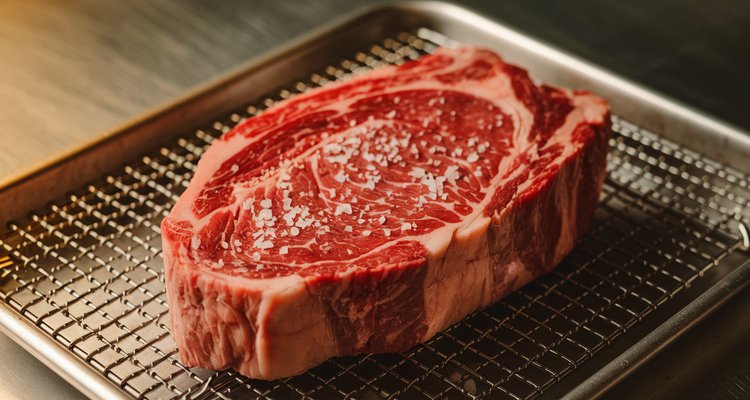
Kosher Salt Amounts by Steak Size
Use these amounts as a starting point, then adjust slightly for unusually thick or thin cuts. Morton kosher salt is denser than Diamond Crystal, so use about 25% less if that is what you have.
| Steak Size | Diamond Crystal | Morton Kosher | Best Use |
|---|---|---|---|
| 8 oz steak | 3/8 tsp | 1/4 tsp | Thin strip or filet |
| 1 lb steak | 3/4 tsp | 1/2 tsp | Standard ribeye or NY strip |
| 1.5-2 lb steak | 1 1/8-1 1/2 tsp | 3/4-1 tsp | Thick ribeye, porterhouse, tomahawk |
Do You Rinse Salt Off Steak Before Cooking?
No. Never rinse salt off a dry-brined steak. Rinsing adds unwanted moisture to the surface, destroying the dry exterior you spent hours building. It also washes away dissolved salt seasoning that has not yet fully absorbed. The dry surface is exactly what you want. It enables rapid Maillard browning the moment the steak hits the hot grill grates.
Advanced Techniques and Industry Secrets
Professional steakhouses use aggressive salting, extended dry aging, and precise grilling techniques to produce their signature results. Understanding these methods reveals why restaurant steaks taste different from home-grilled versions and how to close that gap with better seasoning and timing practices.
Why Do Chefs Put So Much Salt on Steak?
Thick restaurant-cut steaks require more salt than most home cooks expect because the seasoning needs to penetrate a large volume of meat. A 2-inch ribeye has significantly more interior mass than a 3/4-inch supermarket steak. Additionally, a large portion of the salt falls off during grilling as juices drip and the steak gets flipped. What appears excessive on the raw surface produces a well-seasoned interior after cooking.
What Does Texas Roadhouse Do to Make Their Steaks So Tender?
Texas Roadhouse uses a combination of hand-cut USDA Choice steaks, a proprietary seasoning blend applied before cooking, and a disciplined resting period after grilling. The seasoning blend functions as a dry brine when applied before the steak hits the grill. For a wetter flavor-building approach, use a dedicated steak marinade instead of treating marinade and dry brine as the same technique. Their consistency comes from standardized portioning and training rather than any single secret ingredient. Replicating their results at home starts with quality Choice or Prime cuts and proper salting technique.
What Is the 3-3-3 Rule for Steak?
The 3-3-3 rule is a grilling method: sear for 3 minutes per side over high heat, then rest for 3 minutes before serving. This works for steaks approximately 1 inch thick cooked to medium-rare; use a steak temperature guide if you are adjusting the method for thicker cuts. Pre-salting is what makes this short cook window effective. A dry-brined surface browns faster during those 3 minutes because there is no surface moisture to evaporate before browning can begin. This is one approach among many – adjust times for thicker cuts.
How Long to Salt Steak Before Sous Vide
For sous vide cooking, dry brine the steak overnight (12-24 hours) before vacuum sealing. Salt penetrates differently in a sealed bag because the drawn-out moisture has nowhere to evaporate. If you salt after bagging, the steak can develop a cured, ham-like texture from prolonged contact with undissolved salt in a closed environment. Pre-brining and then patting dry before sealing produces the best results.
Frequently Asked Questions
How long should you salt a steak before grilling?
Salt the steak either immediately before grilling or at least 40 minutes ahead. The 1-2 hour window works for most everyday grilling situations. For thick cuts or maximum flavor penetration, salt overnight in the refrigerator for 12-24 hours on a wire rack.
Can you salt a steak too long?
Yes. Beyond 48-72 hours, the salt begins to cure the meat rather than season it. The texture shifts from tender steak toward something resembling bresaola or corned beef. Keep dry brining to 48 hours maximum for standard cuts and no more than 24 hours for thin steaks.
Should I add black pepper when I salt the steak?
Add pepper right before grilling, not during the dry brining phase. Black pepper compounds burn at high grill temperatures, creating a bitter flavor. Salt benefits from time to absorb; pepper does not. Season with fresh cracked pepper immediately before the steak hits the grates.
Do you salt both sides of a steak?
Always salt every exposed surface: both flat sides and all thick edges. The edges contain the same muscle fibers as the faces and benefit equally from dry brining. Skipping the edges leaves an unseasoned band visible in every slice.
What kind of salt is best for dry brining steak?
Coarse kosher salt is the standard choice. Diamond Crystal and Morton are the two most common brands. Diamond Crystal has larger, hollower flakes that dissolve more gradually, making it slightly more forgiving. If using Morton (denser crystals), reduce the amount by about 25%.
Does salting steak make it dry?
No – salting actually improves moisture retention when done correctly. The reabsorbed brine denatures muscle proteins so they hold onto water during grilling instead of squeezing it out. A properly dry-brined steak loses less juice than an unsalted one cooked identically.
How much salt per pound of steak?
Use approximately 3/4 teaspoon of kosher salt per pound of meat. This provides thorough seasoning without making the steak taste salty. For thick cuts over 2 inches, increase to 1 teaspoon per pound since the salt needs to penetrate a larger volume of meat.
Should you oil steak before or after salting?
Oil after salting, right before grilling. Oil applied during the dry brining phase creates a barrier that prevents salt from contacting the meat surface. Pat the dry-brined steak with a very thin layer of high-smoke-point oil immediately before placing it on the grill grates.
What is the best steak for dry brining?
Every steak benefits from dry brining, but thick, well-marbled cuts like ribeye, New York strip, and porterhouse show the most dramatic improvement. The fat marbling keeps the interior moist while the salt creates flavor depth and tenderness that complements the natural richness.
Can you dry brine frozen steak?
Thaw the steak first. Salt cannot penetrate frozen muscle fibers effectively because the water inside the cells is locked as ice. Thaw overnight in the refrigerator, then apply salt and dry brine for your chosen time window before grilling.