Your cast iron skillet can last generations, but only if you season it correctly. Seasoning creates a natural, nonstick surface that protects the metal from rust and improves with every cook. This guide covers the complete process for how to season cast iron, whether you’re working with a brand-new pan, a rusty antique, or large cast iron griddles.
Helpful gear for this cook:
- Temperature control: ThermoMaven bristle-free grill brush cleans grates without leaving wire bristles behind.
- Handling: TrendPlain glass oil sprayer applies a thin, even coat of cooking oil.
- Prep: Hotec stainless kitchen tongs turns food cleanly without piercing it.
What Exactly Is Cast Iron Seasoning?
Cast iron seasoning is a layer of polymerized oil bonded to the metal surface through high heat. When fat or oil heats past its smoke point, it breaks down and chemically bonds to the iron, creating a slick, durable coating that prevents rust and provides naturally nonstick cookware performance.
The term “seasoning” has nothing to do with salt, pepper, or spices. It refers to the thin, hardened layer of polymerized fat that coats the pan’s surface. This layer builds up over time with regular use. Polymerization happens when oil molecules break apart under intense heat and re-bond to the iron in a cross-linked pattern. The result is a smooth, glass-like patina that repels moisture and releases food cleanly. A properly seasoned cast iron skillet resists corrosion even in humid environments. Each time you cook with oil or fat, you add another microscopic layer of seasoning to the surface.
The Best Oils for Seasoning Cast Iron
Grapeseed oil, canola oil, vegetable oil, and vegetable shortening like Crisco are the top choices for seasoning cast iron. These oils have high smoke points between 400-475°F that allow full polymerization at oven temperatures, creating a durable and even seasoning layer.
The smoke point of your chosen oil matters because seasoning requires heating oil past that threshold. Oils with higher smoke points polymerize more evenly at standard oven seasoning temperatures of 450°F.
| Oil Type | Smoke Point | Seasoning Rating | Notes |
|---|---|---|---|
| Grapeseed Oil | 420°F | Excellent | Neutral flavor, even polymerization |
| Canola Oil | 400°F | Excellent | Widely available, affordable |
| Vegetable Shortening (Crisco) | 360°F | Excellent | Traditional choice, easy to apply evenly |
| Vegetable Oil | 400-450°F | Good | Affordable kitchen staple |
| Flaxseed Oil | 225°F | Poor | Prone to flaking despite online popularity |
| Olive Oil (Extra Virgin) | 325-375°F | Fair | Too low for oven seasoning; fine for cooking |
| Bacon Grease / Lard | 370-400°F | Good | Great for cooking; can go rancid if stored long |
Avoid flaxseed oil despite its online popularity. It polymerizes quickly but creates a brittle layer that chips and flakes within weeks of regular use. Animal fats like bacon grease and lard work well for everyday cooking but can go rancid if the pan sits unused for long periods. Stick to plant-based oils for initial oven seasoning.
- Skillet option: Lodge cast iron skillet is a practical baseline pan for seasoning practice and everyday BBQ sides.
- Temperature tool: ThermoMaven instant-read thermometer can spot-check pan or grill-surface temperature during stovetop seasoning.
How to Season Cast Iron in the Oven (The Standard Method)
The proper way to season cast iron is to wash the pan, dry it completely, apply a very thin layer of high-smoke-point oil, and bake it upside down at 450°F for 1 hour. This oven method provides the most even and durable seasoning coat across the entire surface of the cookware.
Step 1: Wash and Scrub
Wash the skillet thoroughly with warm, soapy water. Modern dish soap like Dawn is safe for cast iron when used briefly, and USDA food-safety guidance emphasizes clean food-contact surfaces before cooking[USDA]. Use a stiff brush or scrub pad to remove any factory coating, old food residue, or surface rust. This is the only time you should use soap aggressively on cast iron cookware.
Step 2: Dry Completely
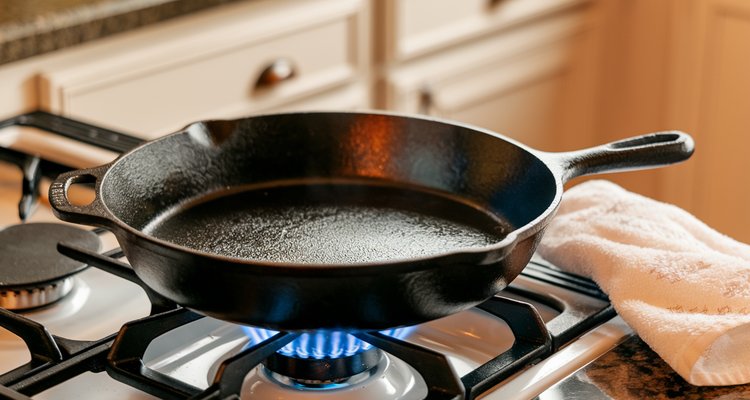
Dry the skillet immediately with a clean towel. Cast iron is highly susceptible to flash rust, especially when wet. Place the pan on the stove over low heat for 2-3 minutes to evaporate every trace of moisture. You should see no water spots or dampness before moving to the next step.
Step 3: Apply a Thin Layer of Oil
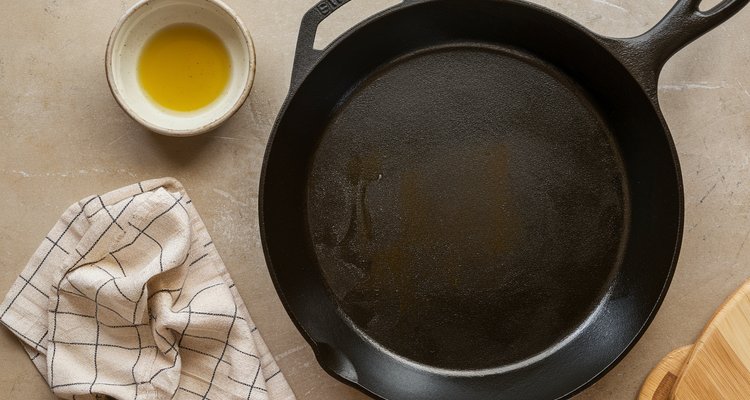
Pour a small amount of your chosen oil onto a paper towel or lint-free cloth. Rub it across every surface of the pan: inside, outside, and handle. Now buff the oil out with a clean paper towel until the pan looks almost dry. This is the single most important technique. Leaving too much oil causes sticky, splotchy seasoning.
Step 4: Bake Upside Down at 450°F
Place the oiled skillet upside down on the center rack of your oven. Set a sheet of aluminum foil on the rack below to catch any oil drips. Bake at 450°F for 1 hour. This temperature exceeds the smoke point of most recommended oils, ensuring full polymerization. Seasoning at 350°F is too low and typically leaves a sticky residue.
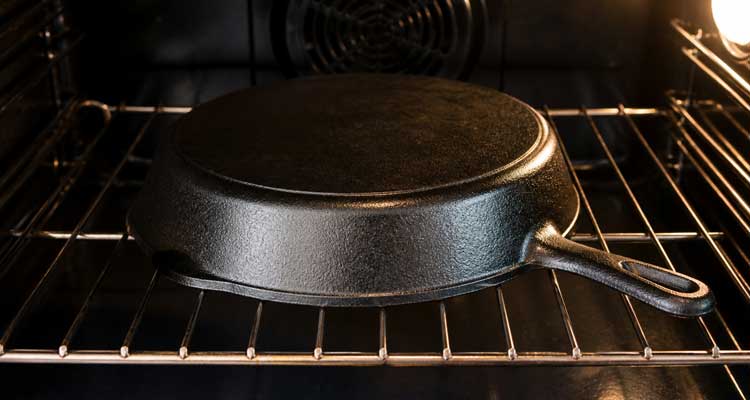
Turn the oven off after 1 hour and let the pan cool completely inside. Do not remove it while hot. Repeat the oil-and-bake cycle 2-3 times for a strong initial seasoning base.
How to Season Cast Iron Without an Oven
You can season cast iron on the stovetop by heating the pan over medium-high heat and wiping on a very thin layer of oil with tongs and a folded paper towel. Let the oil smoke for 2-3 minutes, then repeat 3-4 times for a quick seasoning layer without turning on the oven.
Stovetop Seasoning Method
Heat the clean, dry skillet over medium-high heat until it just begins to smoke. Use tongs to hold a folded paper towel dipped in oil and wipe a thin coat across the cooking surface. Let the oil smoke for 2-3 minutes until the smoking stops. Repeat this process 3-4 times. The stovetop method is excellent for quick touch-ups but does not season the outside of the pan as effectively as the oven method.
Seasoning a Cast Iron Griddle or BBQ Cookware
Large cast iron griddles and BBQ cookware often will not fit inside a standard kitchen oven. Use an outdoor gas grill instead. Preheat the grill to 450-500°F with all burners on high. Apply a thin oil layer the same way you would for oven seasoning. Place the griddle on the grill grates, close the lid, and let it bake for 45-60 minutes. Repeat 2-3 times for a solid base layer.
Cast Iron Maintenance and Troubleshooting
A well-seasoned cast iron pan rarely needs a full oven re-seasoning. Regular cooking with oil or fat naturally maintains and builds the nonstick layer over time. Clean with hot water and a stiff brush after each use, then apply a light oil wipe to keep the seasoning intact.
How Often to Season Cast Iron
A full oven seasoning is only needed when the pan is new, stripped, or significantly damaged. Most cast iron owners only do a full seasoning 1-2 times in the pan’s lifetime. Regular cooking with fats naturally maintains the seasoning. A quick stovetop touch-up after washing is enough if the pan looks dull or food starts to stick slightly.
Common Mistakes When Seasoning Cast Iron
- Too much oil: The number-one cause of sticky, gummy, or splotchy seasoning. Buff off all visible oil before baking.
- Temperature too low: Baking at 350°F fails to fully polymerize the oil. Use 450°F or slightly above your oil’s smoke point.
- Soaking in water: Extended water contact causes rust. Wash quickly, dry immediately, and heat on the stove to remove all moisture.
- Using flaxseed oil: Despite online recommendations, flaxseed oil creates a hard but brittle seasoning that chips and flakes with regular use.
Health Benefits of Cooking with Cast Iron
Cooking in cast iron cookware can increase the iron content of food by 1.5 to 3 times, according to published research. This dietary iron boost is especially noticeable when cooking acidic foods like tomato sauce, which promotes iron transfer from the pan into the food.
Can Cast Iron Help with Iron Deficiency?
Iron is an essential mineral the body uses to make hemoglobin, a protein in red blood cells that carries oxygen throughout the body[NIH]. Cooking in cast iron cookware can leach small, safe amounts of dietary iron into your food. This effect is strongest with acidic foods like tomato sauce, citrus-based sauces, and vinegar-based BBQ sauces. Longer cook times and higher moisture content also increase iron transfer from the pan. For individuals with iron deficiency or anemia, regularly cooking in a well-seasoned cast iron skillet can provide a meaningful dietary supplement[NIH]. However, cast iron cooking should complement medical treatment, not replace it.
Frequently Asked Questions
Why is my cast iron skillet sticky after seasoning?
A sticky pan means too much oil was applied or the oven temperature was too low. Strip the sticky layer with a paste of coarse salt and oil, scrub vigorously, then re-season at 450°F with a much thinner oil layer. Buff until the surface looks nearly dry before baking.
Can I use steel wool on cast iron?
Steel wool should only be used when intentionally stripping seasoning or removing heavy rust. For daily cleaning, a stiff nylon brush, chain mail scrubber, or coarse salt paste is sufficient. Using steel wool routinely will remove your seasoning layer and require a full re-season.
Do I have to season a pre-seasoned pan?
Pre-seasoned pans from brands like Lodge are ready to use out of the box. However, the factory seasoning is a single thin layer. Adding 2-3 oven seasoning rounds yourself builds a more durable nonstick surface that performs noticeably better than the factory coating alone.
Should I season cast iron at 350 or 450?
Season at 450°F. This temperature exceeds the smoke point of most recommended seasoning oils, which is required for full polymerization. At 350°F, the oil may not fully break down and bond to the metal, leaving a sticky or uneven finish.
Is Dawn dish soap safe for cast iron?
Yes, modern Dawn and similar dish soaps are completely safe for cast iron. The myth about soap destroying seasoning comes from the era of lye-based soaps, which could dissolve polymerized oil. Today’s dish detergents do not contain lye and will not harm your seasoning.
What oil is best to season cast iron?
Grapeseed oil and canola oil are the top choices due to their high smoke points and neutral flavors. Vegetable shortening like Crisco is another excellent option that spreads evenly. Avoid flaxseed oil, which creates a brittle seasoning layer prone to flaking within weeks of regular use.
How do I remove rust from cast iron?
Scrub surface rust with steel wool or a 50/50 mixture of white vinegar and water. For heavy rust, soak the pan in the vinegar solution for 30-60 minutes, then scrub. Rinse thoroughly, dry immediately on the stove, and perform a full oven seasoning cycle to restore the protective coating.
Can I season cast iron with olive oil?
Extra virgin olive oil has a smoke point of 325-375°F, which is too low for effective oven seasoning at 450°F. It works fine for everyday cooking in the pan, where it will contribute to seasoning naturally. For dedicated oven seasoning, use grapeseed, canola, or vegetable oil instead.
How long does cast iron seasoning last?
With proper care, a cast iron seasoning layer lasts indefinitely and improves with age. Regular cooking with oil or fat builds additional layers over time. Stripping only becomes necessary if the seasoning is badly damaged by heavy rust, prolonged water exposure, or dishwasher use.
Can I put cast iron in the dishwasher?
Never put cast iron in the dishwasher. The harsh detergents and extended water exposure will strip the seasoning completely and cause significant rust. Always hand wash with hot water and a brush, dry immediately, and apply a thin oil wipe after each cleaning.