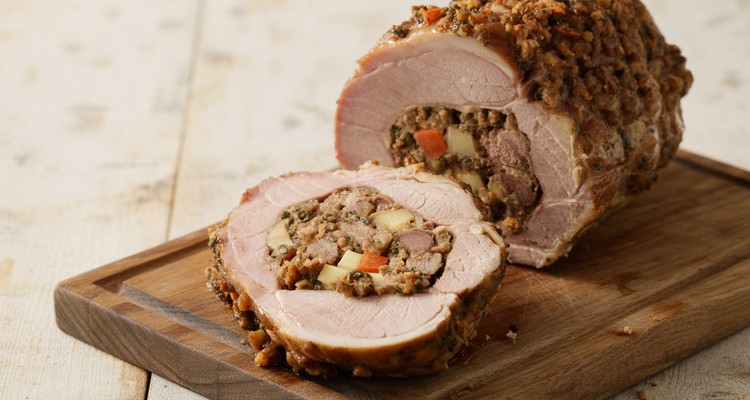
A perfectly roasted stuffed pork loin or a thick, juicy stuffed pork chop can anchor any meal from a weeknight dinner to a holiday feast. The secret is in the stuffing — it needs to be savory, moist, and layered with flavor to truly complement the pork. A well-made pork stuffing elevates the cut from good to unforgettable.
This guide covers everything from building the core flavor profile to the food safety rules that keep stuffed pork safe to eat. You’ll learn how to adapt the recipe for different cuts, use a thermometer correctly, and explore variations worth trying. By the end, you’ll have a reliable, tested stuffing recipe for pork in your permanent rotation.
Quick Summary
- Flavor Balance: A great pork stuffing balances savory richness with brightness, using ingredients like sausage, aromatics, herbs, and a touch of apple to create a complex, complementary flavor profile.
- Food Safety: When cooking stuffing inside pork, both the meat and stuffing must reach specific internal temperatures: 145°F for pork (with a 3-minute rest) and 165°F for stuffing, verified with an instant-read thermometer.
- Preparation & Technique: The method for stuffing varies by cut; thick pork chops require a pocket, while a pork loin is butterflied and rolled. Always cool stuffing completely before placing it into raw pork to prevent bacterial growth.
- Versatile Variations: Once the core recipe is mastered, easily adapt the stuffing with variations like cornbread and sausage for a Southern twist, or sourdough and mushrooms for an earthy, savory profile.
What Makes a Great Stuffing for Pork?
A great stuffing for pork balances savory richness with brightness. Sausage, aromatics, herbs, and a touch of apple hit all the right notes — earthy, fatty, fragrant, and just slightly sweet. Sturdy toasted bread cubes hold everything together without turning mushy during cooking.
Getting the flavor balance right starts with choosing ingredients that work with pork’s natural richness rather than against it. These four elements form the backbone of any great pork stuffing:
- Pork sausage provides a savory base and the fat needed to keep the stuffing moist throughout cooking.
- Diced onion and celery are the foundational aromatics — they soften into the stuffing and carry the flavor forward.
- A tart apple like Granny Smith adds brightness and moisture that cuts through the richness of the sausage and pork.
- Fresh sage, thyme, and rosemary are the classic herb pairings for pork, lending earthy, aromatic depth to every bite.
 Pitmaster Tip: Use fresh herbs when possible. Dried sage and thyme work, but fresh herbs give the stuffing a brighter, more aromatic finish that dried versions simply cannot match.
The Role of Bread Cubes
Bread is the structural component of the stuffing — it absorbs the stock, sausage fat, and egg to bind everything together. The wrong bread will turn to paste before you even get it into the pork. Choosing correctly matters.
- Use day-old, sturdy bread like a French loaf, sourdough, brioche, or Italian loaf. Fresh bread absorbs too much moisture too quickly and disintegrates.
- Cut the bread into uniform 3/4-inch cubes so every piece toasts and absorbs liquid at the same rate.
- Toast the bread cubes in a 350°F oven for 10-15 minutes before mixing. Dry bread absorbs flavor from the stock and sausage without going soggy.
Is It Safe to Cook Stuffing Inside Pork?
Yes, cooking stuffing inside pork is safe when you follow the correct temperature rules. Both the pork and the stuffing must reach their respective minimum internal temperatures — the meat at 145°F and the stuffing at 165°F. A reliable instant-read thermometer is non-negotiable.
The Food Safety Rules for Stuffed Meats
The core risk with in-the-meat stuffing is bacteria from raw pork juices soaking into the porous bread mixture. Heat must penetrate all the way to the center of the stuffing to eliminate that risk. These rules keep you on the right side of food safety:
- The stuffing must reach at least 165°F at its center to kill any bacteria. Check this with an instant-read thermometer.[USDA]
- The pork itself must reach a minimum internal temperature of 145°F, followed by a 3-minute rest.[USDA]
- Never stuff pork ahead of time. Always prepare the stuffing and stuff the pork just before it goes into the oven or smoker.
- Cool the stuffing completely before putting it into raw pork. Warm stuffing in contact with raw meat creates a dangerous temperature window for bacterial growth.[USDA]
When to Bake Stuffing Separately
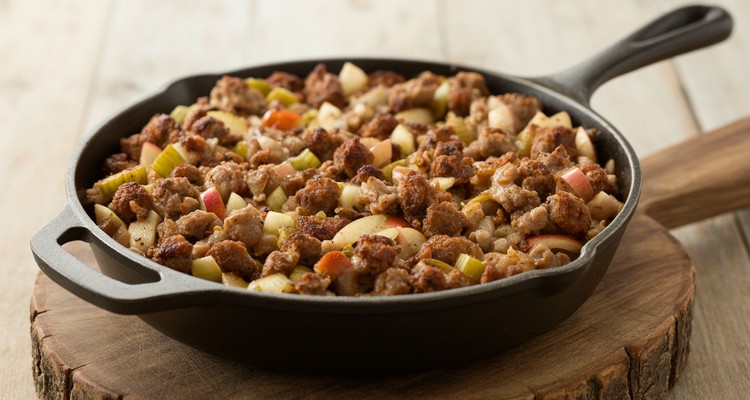
Sometimes the pork reaches 145°F before the stuffing hits 165°F. Rather than overcooking the meat while waiting, baking the stuffing in a separate casserole dish is the safer and more reliable approach for large roasts or holiday meals.
- If your pork cut is done before the stuffing reaches 165°F, remove the stuffing, place it in an oven-safe dish with a splash of stock, and heat to 165°F separately.
- For very large roasts or when cooking for guests with food safety concerns, bake the stuffing in a separate casserole dish from the start.
- To replicate the flavor of in-the-meat stuffing, spoon some pan drippings from the cooked pork over the separately baked stuffing before serving.
Pro Tip: When baking stuffing separately, cover the dish with foil for the first 25 minutes to trap steam and keep the top from drying out. Remove the foil for the final 10 minutes to get a lightly golden, slightly crisp top layer.Our Go-To Savory Stuffing Recipe for Pork
This recipe builds a balanced, versatile stuffing that works equally well inside stuffed pork chops, a rolled stuffed pork loin, or a pork tenderloin. The apple-sausage base keeps the stuffing moist during cooking without making it dense or heavy.
Helpful gear for this cook:
- TempPro TP20 500FT Wireless Meat Thermometer with Dual Meat — helps verify doneness without guessing
- ThermoMaven wireless meat thermometer — helps verify doneness without guessing
- Typhur Sync WiFi Wireless Meat Thermometer Digital — helps verify doneness without guessing
Equipment List
- Large skillet
- Large mixing bowl
- Rimmed baking sheet (for toasting bread)
- Chef’s knife and cutting board
- Instant-read digital thermometer
- Butcher’s twine (for stuffed pork loin)
Ingredients
- 1 lb day-old sturdy bread, cut into 3/4-inch cubes (about 8 cups)
- 1 lb ground pork sausage
- 1 large yellow onion, diced
- 2 stalks celery, diced
- 1 large Granny Smith apple, peeled, cored, and diced
- 2 cloves garlic, minced
- 1/4 cup fresh flat-leaf parsley, chopped
- 1 tbsp fresh sage leaves, finely chopped
- 1 tsp fresh thyme leaves, chopped
- 1/2 cup chicken or pork stock, plus more if needed
- 1 large egg, lightly beaten
- Salt and black pepper to taste
Step-by-Step Instructions
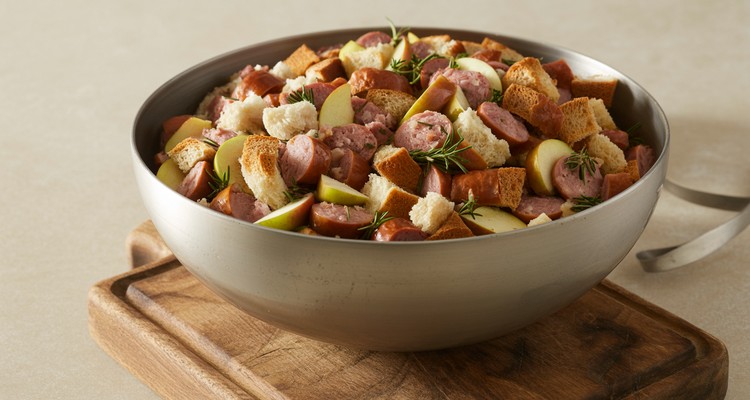
- Toast the bread: Spread the bread cubes on a rimmed baking sheet and bake at 350°F for 10-15 minutes, until lightly golden and fully dry. Transfer to a large mixing bowl and set aside.
- Cook the sausage: In a large skillet over medium heat, cook the sausage, breaking it up with a spoon, until fully browned and no pink remains. Use a slotted spoon to transfer the sausage to the bowl with the bread, leaving the rendered fat in the pan.
- Soften the aromatics: Add the onion, celery, and apple to the skillet with the remaining fat. Cook over medium heat for 5-7 minutes, until softened and translucent. Add the garlic and cook for one more minute until fragrant. Add this mixture to the bowl.
- Add the herbs: Add the parsley, sage, and thyme to the bowl. Season generously with salt and black pepper. Toss everything together until the herbs are distributed throughout.
- Moisten and bind: Drizzle in the chicken stock and add the beaten egg. Gently fold until just combined and evenly moistened. The stuffing should hold together when pressed but not feel wet or saturated. Add a splash more stock if it seems too dry.
- Cool completely: Spread the stuffing on the baking sheet or transfer it to a shallow container. Allow it to cool to room temperature before using it inside any raw pork. This step is critical for food safety.
 Quick Facts: Always cool stuffing completely before placing it inside raw pork to prevent bacterial growth.[USDA] This critical step ensures food safety and optimal texture.
How to Stuff Different Cuts of Pork
The technique for stuffing pork changes depending on the cut. Thick pork chops require a pocket method, while a pork loin is butterflied and rolled for an even layer. Each approach has specific texture needs, as stuffing for chops benefits from a finer mix that stays put, while loin stuffing can be coarser.
For Stuffed Pork Chops
Thick-cut bone-in chops give you the most surface area for a generous stuffing pocket. Thin chops will tear and are not suitable for this method.
- Choose bone-in pork chops at least 1.5 inches thick. Thinner chops don’t have enough space for a safe, well-filled pocket.
- Use a sharp paring knife to cut a deep horizontal pocket into the side of each chop, stopping about 1/2 inch from the edges and the bone. Work carefully to avoid cutting through the top or bottom.
- For chops, chop the stuffing ingredients a bit finer than you would for a loin so the mixture packs neatly without gaps. Spoon the cooled stuffing into the pocket, filling it firmly but not overstuffing — the stuffing expands during cooking. Secure the opening with two or three toothpicks.
For a Stuffed Pork Loin
A butterflied pork loin makes an impressive presentation and holds a generous amount of stuffing. The rolled and tied method ensures even cooking and a beautiful spiral when sliced.
- Butterfly the pork loin by placing it fat-side down on a cutting board. Make a horizontal cut along the length of the loin, stopping about 3/4 inch before you reach the other side. Open it like a book and pound it gently to an even thickness if needed.
- Spread an even layer of cooled stuffing over the surface of the opened loin, leaving a 1-inch border around all edges to prevent spillover during rolling.
- Roll the stuffed pork loin back into a tight cylinder, starting from the long edge. Tie it securely with butcher’s twine at 1-inch intervals to hold its shape during cooking.
Cooking Stuffed Pork to Perfection
Cooking time for stuffed pork is always an estimate. The only reliable method for confirming both safety and doneness is a digital meat thermometer. You need to check both the center of the meat and the center of the stuffing before pulling anything from the heat.
The Importance of Internal Temperature
Insert the thermometer probe into the thickest part of the meat first to confirm the pork has reached 145°F. Then reinsert into the geometric center of the stuffing — the coldest point — to verify it has hit 165°F.
If the pork is done but the stuffing lags behind, remove the stuffing and finish it in an oven-safe dish as described above.
Always rest stuffed pork for at least 3 minutes after pulling it from the heat. Resting allows the juices to redistribute and the carryover heat to finish bringing the stuffing to temperature.[USDA]
Pork and Stuffing Doneness Temperature Chart
| Cut of Pork | Target Pork Temp | Target Stuffing Temp | Notes |
|---|---|---|---|
| Stuffed Pork Chops | 145°F + 3 min rest | 165°F | If pork is done first, remove stuffing, add a splash of stock, and finish in oven-safe dish at 350°F until 165°F. |
| Stuffed Pork Loin | 145°F + 3 min rest | 165°F | Insert thermometer into the thickest part of the meat, then separately probe the center of the stuffing roll. |
| Stuffed Pork Tenderloin | 145°F + 3 min rest | 165°F | Tenderloin cooks quickly — don’t pack the stuffing too densely or the center will lag far behind the meat. |
| Separately Baked Stuffing | N/A | 165°F | Bake covered at 350°F for 25 min, then uncovered 10-15 min. Probe the center before serving. |
Stuffing Variations to Try
Once you have the core recipe down, the variations are straightforward to execute. Each one swaps one or two ingredients to shift the flavor profile in a different direction — from Southern-inspired to earthy and tangy to festive and sweet.
Cornbread and Sausage Stuffing
Swapping standard bread for cornbread creates a Southern-style stuffing with a denser, slightly sweet crumb. The cornbread soaks up the sausage fat beautifully.
- Replace the white or sourdough bread with an equal amount of crumbled day-old cornbread. Homemade or store-bought works — just make sure it’s fully cooled and dried out before cubing.
- Add a pinch of cayenne pepper or a small diced jalapeño with the aromatics for a bit of heat that plays well against the sweet cornbread and rich sausage.
Sourdough, Mushroom, and Herb Stuffing
Sourdough adds a mild tang, and cremini mushrooms bring earthy depth that pairs especially well with a smoked pork loin or roast pork. This variation skips the apple for a more savory-forward profile.
- Replace the standard bread with sourdough bread cubes, toasted the same way.
- Sauté 8 oz of sliced cremini mushrooms alongside the onion and celery. They will release moisture first — keep cooking until that liquid evaporates and the mushrooms are golden.
- Omit the apple, and increase the sage and thyme slightly to lean into the earthy, herbal notes.
Cranberry and Pecan Stuffing
This variation shines at holiday meals. The dried cranberries bring sweet-tart flavor, and the pecans add crunch that contrasts nicely with the soft stuffing texture.
- Omit the apple. Add 1/2 cup of dried cranberries and 1/2 cup of toasted, roughly chopped pecans to the stuffing mixture.
- A tablespoon of orange zest added with the herbs brightens the dish and complements both the cranberry and the pork.
What to Serve with Stuffed Pork
Stuffed pork is rich and substantial, so the sides should provide contrast — something bright, acidic, or lightly textured works best alongside it. Simple preparations let the stuffed pork stay the focus of the plate.
- Roasted root vegetables — carrots, parsnips, or sweet potatoes — can go in the oven alongside the pork and pick up any drippings that fall to the pan.
- A simple green salad with apple cider vinaigrette echoes the apple in the stuffing and provides acidity to cut through the richness.
- Mashed potatoes or a creamy polenta are classic pairings that soak up the pan juices well.
- For a sauce, pour the rested pan drippings through a strainer and spoon directly over the sliced pork — no reduction required.
Storage and Reheating
Leftover stuffed pork and extra baked stuffing store well for several days. Proper reheating keeps the stuffing moist and prevents the pork from drying out.
- Store leftover stuffed pork slices and any extra stuffing in separate airtight containers in the refrigerator for up to 3-4 days.
- To reheat, place stuffing in an oven-safe dish with a splash of stock, cover with foil, and warm at 325°F for 15-20 minutes until heated through to 165°F.[USDA]
- Reheat pork slices covered in a low oven (300°F) with a spoonful of stock or pan drippings added to the dish to prevent drying. Pull at 140°F internal temperature since it is already cooked.
- Do not refreeze previously frozen pork stuffing — the texture degrades significantly.
Take Home Message
A great pork stuffing comes down to three core principles: using sturdy toasted bread, building a well-seasoned sausage-apple base, and strictly monitoring internal temperatures for safety. Mastering these fundamentals ensures your stuffing is moist, flavorful, and perfectly cooked every time, elevating any cut of pork from simple to spectacular.
Whether you’re stuffing bone-in pork chops for a weeknight dinner or rolling a pork loin for a holiday table, this recipe scales to the occasion. Try the cornbread variation for a Southern spin, or go with the mushroom-sourdough version when cooking smoked pork on the grill.
If you want to explore more pork cooking techniques, check out our guides on how to smoke a pork loin and smoked pork chops for ideas on how to add a wood smoke dimension to your stuffed pork dishes.
Frequently Asked Questions
How do you keep pork stuffing from getting dry?
Use enough stock that the mixture is damp throughout but not dripping when squeezed — the egg also helps bind moisture into the bread. Including high-moisture ingredients like apple and onion adds further insurance. Avoiding overcooking the pork is equally important, since the stuffing dries out when the surrounding meat goes past temperature.
Can I make pork stuffing ahead of time?
You can prepare the components up to a day in advance. Toast the bread cubes and cook the sausage-apple mixture separately, then store each in its own airtight container in the refrigerator. Combine them — and add the stock and egg — only when you’re ready to stuff and cook.
Never pre-combine and refrigerate the raw stuffing inside the pork.
What’s the best bread for pork stuffing?
Sturdy, day-old bread that can absorb moisture without disintegrating is the goal. French bread, Italian loaves, sourdough, brioche, and challah all work well. Avoid soft pre-sliced sandwich bread — it breaks down during mixing and produces a dense, pasty stuffing rather than one with distinct, tender cubes.
How much stuffing do I need for a pork loin?
Plan for roughly 3/4 to 1 cup of prepared stuffing per pound of pork loin. A 4-pound loin needs approximately 3 to 4 cups. It’s better to have a bit extra — bake the overflow in a small dish alongside the roast — than to under-fill the loin and get gaps in the spiral when sliced.
Can you freeze pork stuffing?
Unbaked stuffing freezes reasonably well for up to one month. Freeze it in a sealed container before adding the egg and stock, then thaw overnight in the refrigerator and add those two ingredients just before stuffing and cooking. Baked stuffing that has already been cooked inside pork does not freeze as well — the texture suffers on reheating.
What temperature should stuffed pork chops be cooked to?
The pork must reach 145°F at its thickest point, followed by a 3-minute rest.[USDA] The stuffing at the center of the pocket must separately reach 165°F. Check both with an instant-read thermometer before removing the chops from the heat — one reading alone is not enough to confirm safety.
Does the type of sausage matter for pork stuffing?
Yes. Plain ground pork sausage gives you the most control over seasoning. Italian sausage (sweet or mild) adds fennel and garlic notes that work well with the apple.
Spicy breakfast sausage creates a bolder, punchier stuffing. Avoid heavily spiced sausages that could overpower the sage and herb profile you’re building.
How do you butterfly a pork loin for stuffing?
Place the loin fat-side down on a cutting board. Make a horizontal cut along the full length, stopping 3/4 inch before the far edge — do not cut all the way through. Open the loin like a book.
For a thicker roast, you can make a second cut into the thicker half to open it further, creating a larger flat surface. Pound gently with a meat mallet to even the thickness if needed before spreading the stuffing.
Go-To Savory Stuffing Recipe for Pork
Equipment
- Large skillet For browning the sausage and cooking the aromatics.
- Large mixing bowl For combining all stuffing ingredients.
- Rimmed baking sheet For toasting the bread cubes.
- Chef's knife and cutting board For dicing vegetables and herbs.
- Instant-read digital thermometer Essential for checking food safety temperatures.
- Butcher's twine Needed if making a stuffed pork loin.
Ingredients
- 1 lb day-old sturdy bread cut into 3/4-inch cubes (about 8 cups)
- 1 lb ground pork sausage
- 1 large yellow onion diced
- 2 stalks celery diced
- 1 large Granny Smith apple peeled, cored, and diced
- 2 cloves garlic minced
- 1/4 cup fresh flat-leaf parsley chopped
- 1 tbsp fresh sage leaves finely chopped
- 1 tsp fresh thyme leaves chopped
- 1/2 cup chicken or pork stock plus more if needed
- 1 large egg lightly beaten
- Salt and black pepper to taste
Instructions
- Toast the bread: Spread the bread cubes on a rimmed baking sheet and bake at 350°F for 10-15 minutes, until lightly golden and fully dry. Transfer to a large mixing bowl and set aside.
- Cook the sausage: In a large skillet over medium heat, cook the sausage, breaking it up with a spoon, until fully browned and no pink remains. Use a slotted spoon to transfer the sausage to the bowl with the bread, leaving the rendered fat in the pan.
- Soften the aromatics: Add the onion, celery, and apple to the skillet with the remaining fat. Cook over medium heat for 5-7 minutes, until softened and translucent. Add the garlic and cook for one more minute until fragrant. Add this mixture to the bowl.
- Add the herbs: Add the parsley, sage, and thyme to the bowl. Season generously with salt and black pepper. Toss everything together until the herbs are distributed throughout.
- Moisten and bind: Drizzle in the chicken stock and add the beaten egg. Gently fold until just combined and evenly moistened. The stuffing should hold together when pressed but not feel wet or saturated. Add a splash more stock if it seems too dry.
- Cool completely: Spread the stuffing on the baking sheet or transfer it to a shallow container. Allow it to cool to room temperature before using it inside any raw pork. This step is critical for food safety.
Notes