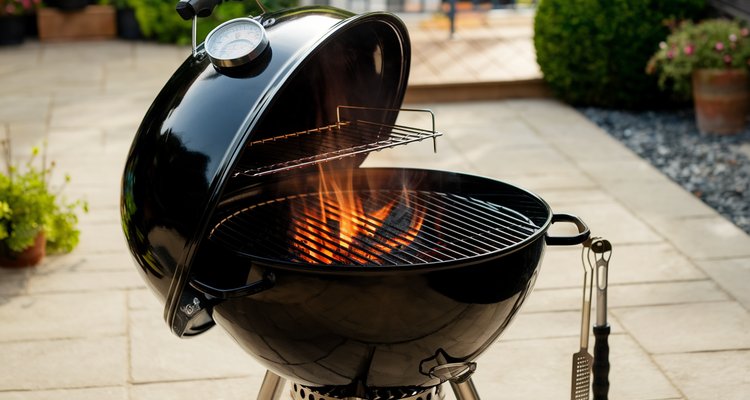
Fire is simple – until it isn’t. Anyone who has watched a perfectly arranged bed of coals suddenly spike to 500°F when they were aiming for 250°F knows the feeling. Charcoal grill temperature control is the skill that separates good backyard cooks from great ones. This guide covers everything from basic vent adjustments to advanced charcoal arrangements for low and slow BBQ. A standard charcoal grill, managed correctly, can perform just as reliably as a dedicated smoker. You just need to understand the controls.
Helpful products for this guide:
- Hotec stainless steel kitchen tongs — make turning and moving food easier
- TrendPlain oil sprayer — helps apply a light, even coat before grilling
- ThermoMaven bristle-free grill brush — cleans grill grates without wire bristles
The Fundamentals of Airflow and Heat
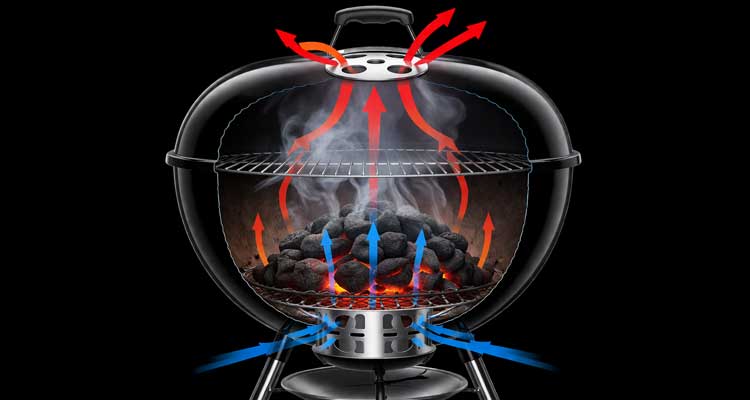
Every fire needs three things: fuel, heat, and oxygen. On a charcoal grill, you already have the first two once the coals are lit. Airflow is your only real-time control, which makes it the steering wheel of your entire grill. More oxygen feeds the combustion reaction, producing more heat. Less oxygen slows the burn, dropping the temperature. Once you understand this, temperature control becomes intuitive rather than guesswork.
How Do You Regulate Temperature on a Charcoal Grill?
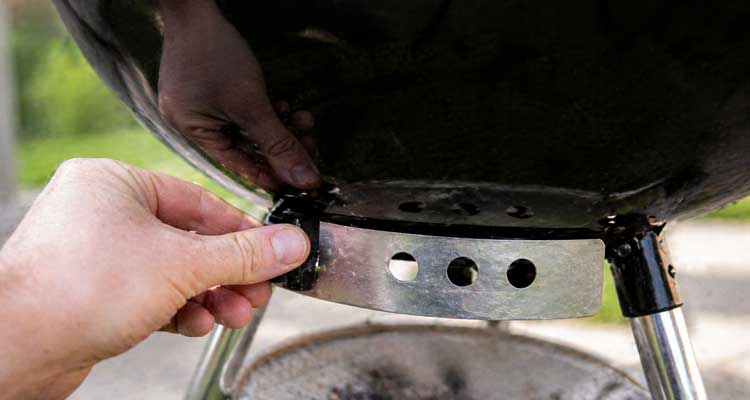
A kettle-style charcoal grill has two main controls: the bottom intake damper and the top exhaust damper. The bottom vent controls how much oxygen enters to feed the fire. The top vent controls the vacuum that pulls air up through the entire cooking chamber. Think of the bottom vent as the gas pedal and the top vent as the throttle. Most temperature adjustments happen at the bottom vent. The top vent should generally stay at least partially open to maintain steady airflow and prevent the fire from going out.
Does Opening the Vents Make a Charcoal Grill Hotter?
Yes – opening the bottom vent allows more oxygen to reach the coals, increasing combustion and raising the temperature. The more open the vent, the more aggressively the fire burns. Closing the bottom vent starves the fire of oxygen, lowering the heat and eventually putting the fire out if closed completely. The top vent has a similar but less dramatic effect. Fully opening it increases the draft pulling air through the grill, raising heat. Partially closing it slows the draft, helping you fine-tune temperature after making a major adjustment at the bottom vent.
Weber Charcoal Grill Settings and Temperature Guide
Kettle-style grills – the most common charcoal grill style – use the same fundamental vent logic regardless of brand. These settings are dialed in for a standard 22-inch kettle and serve as an excellent starting point for any similar grill.
Low and Slow (225°F – 250°F)
Set the bottom vent to 1/8 to 1/4 open. Set the top vent to 1/3 to 1/2 open. This combination severely restricts incoming oxygen while still allowing enough draft to keep the fire alive. You’ll need a charcoal arrangement designed for long burns, such as the Snake Method described below.
Medium Roasting (325°F – 350°F)
Set the bottom vent to 1/2 open and the top vent to 1/2 to fully open. This is the workhorse range for whole chickens, turkeys, and sausages cooked indirectly. The fire burns steadily without racing, giving you a comfortable margin to make adjustments.
Hot and Fast (450°F+)
Open both the bottom and top vents fully. Use a full chimney of lit charcoal arranged directly under the cooking grate. This setup is ideal for searing steaks, getting a hard crust on burgers, and anything that benefits from intense direct heat.
Charcoal Grill Temperature Chart
Use this quick-reference chart to match your target temperature to vent settings and ideal foods. These settings assume a standard 22-inch kettle with a full chimney of quality charcoal briquettes.
| Temperature Range | Cooking Style | Bottom Vent | Top Vent | Ideal Foods |
|---|---|---|---|---|
| 225°F – 250°F | Smoking / Low and Slow | 1/8 – 1/4 open | 1/3 – 1/2 open | Brisket, Pork Butt, Ribs |
| 325°F – 350°F | Indirect Roasting | 1/2 open | 1/2 – fully open | Whole Chicken, Turkey, Sausages |
| 400°F – 450°F | High Heat Roasting | 3/4 open | Fully open | Burgers, Vegetables, Spatchcock Chicken |
| 500°F+ | Direct Searing | Fully open | Fully open | Steaks, Chops, Pizza |
Mastering Low and Slow BBQ
Holding a charcoal grill at 225°F-250°F for 8 or more hours is the central challenge of BBQ smoking. You can’t do it with a standard fire bed – you need a charcoal arrangement that burns slowly and consistently without constant intervention. Two methods have proven themselves in backyards and competition pits alike: the Snake Method and the Minion Method. Both work by controlling how quickly unlit charcoal ignites, which controls how fast the fire burns.
Helpful products for this guide:
- TempPro TP20 500FT Wireless Meat Thermometer with Dual Meat — helps verify doneness without guessing
- MEATER Plus: Smart Bluetooth Wireless Meat Thermometer Digital — helps verify doneness without guessing
- TempPro TP19H Waterproof Digital Meat Thermometer with Ambidextrous Backlit — helps verify doneness without guessing
The Snake Method
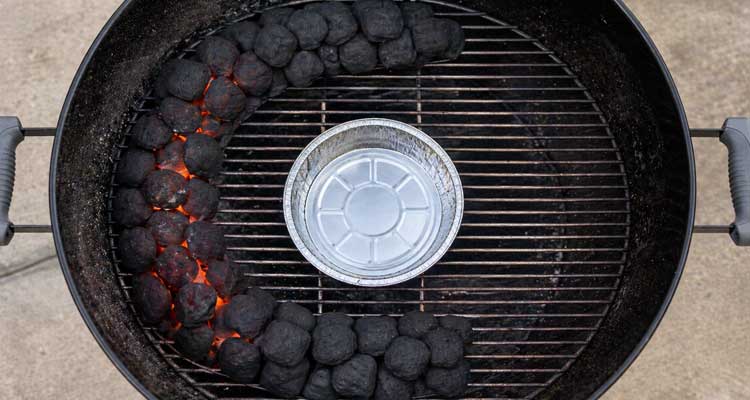
Arrange unlit charcoal briquettes in two to three rows in a C-shape along the outer edge of the charcoal grate. Lay wood chunks on top of the briquettes at regular intervals for smoke. Light 8-10 briquettes in a chimney starter and place them at one end of the snake. The lit coals slowly ignite adjacent briquettes as they burn, crawling around the C-shape over 8-12 hours. Place a water pan in the center of the charcoal grate to act as a heat sink. This stable, long-burning setup is the key to charcoal grill temperature control for serious low and slow cooks.
The Minion Method
Fill the charcoal basket or the center of your charcoal grate with unlit briquettes. Light a small number of briquettes – about 10 to 15 – in a chimney starter and pour them directly on top of the unlit pile. The lit coals slowly ignite those beneath them. This method is popular for ceramic cookers and barrel smokers, but it works on a kettle grill too. It produces a slightly more uneven burn than the Snake Method but is faster to set up and performs well for cooks in the 4-6 hour range.
Using a Water Pan
A water pan placed between the fire and the food serves two important functions. First, it acts as a thermal mass, absorbing heat spikes and releasing it slowly to stabilize the cooking environment. Second, the moisture it releases keeps the cooking chamber humid, which helps the meat’s surface stay receptive to smoke and slows moisture loss. Fill the pan about halfway with hot water before placing it in the grill. Refill it as needed during long cooks – a dry pan loses its temperature-buffering effect and can warp from direct heat.
How Do I Keep My Charcoal Grill at 250°F?
Use the Snake Method with bottom vent set to 1/4 open and top vent at 1/3 open. Add a water pan. After lighting, let the grill stabilize for 20-30 minutes before placing food inside – temperature management is much easier once the grill is fully up to heat. Check the temperature every 30 minutes for the first hour. If it climbs above 275°F, close the bottom vent slightly. If it drops below 225°F, open it a fraction. Small adjustments at the bottom vent produce slow, predictable changes – avoid large swings.
Can I Cook a Brisket on a Charcoal Grill?
Yes. A standard kettle grill using the Snake Method can absolutely smoke a whole packer brisket. Set up a two-zone fire by keeping all the charcoal on one side and placing the brisket on the opposite side, fat-side up, away from direct heat. Maintain 225°F-250°F throughout the cook. A whole packer brisket typically runs 12-18 hours at this temperature. Wrap in butcher paper or foil once the bark is set (usually around 165°F internal temperature) to push through the stall. The grill performs like a smoker when airflow and charcoal arrangement are dialed in correctly.
Managing Heat Spikes and Flare-Ups
Even a well-managed charcoal grill will occasionally spike in temperature. A gust of wind hits the vents, someone lifts the lid at the wrong moment, or the fat from a thick cut drips directly onto the coals. Knowing how to respond quickly is essential.
How to Cool Down a Charcoal Grill While Cooking
Follow these steps in order when temperature spikes above your target range: Step 1: Close the bottom intake vent almost completely to choke off the oxygen supply. This is the fastest way to slow combustion. Leave the top vent slightly open so smoke can still escape. Step 2: Move food to the indirect side of the grill, away from the coals. Even if the overall temperature is high, the indirect zone will be significantly cooler and protect the food from burning while you bring things under control. Step 3: Close the lid fully. Restricting the ambient oxygen inside the cooking chamber slows the fire further. Combined with closing the bottom vent, this usually brings a spike under control within 5-10 minutes. Step 4: Never spray water directly on the coals. It creates a cloud of ash that coats everything inside the grill, ruins the flavor of your food, and can crack or chip porcelain enamel finishes. Use only vent control and lid closure to manage temperature.
Grill Preparation and Maintenance
Clean grates are not just a food safety issue – they directly affect temperature management. Accumulated grease and carbonized buildup on the cooking grate acts as an insulator and can flare unpredictably when hot coals are below. Starting with clean, seasoned grates gives you a stable, predictable cooking surface.
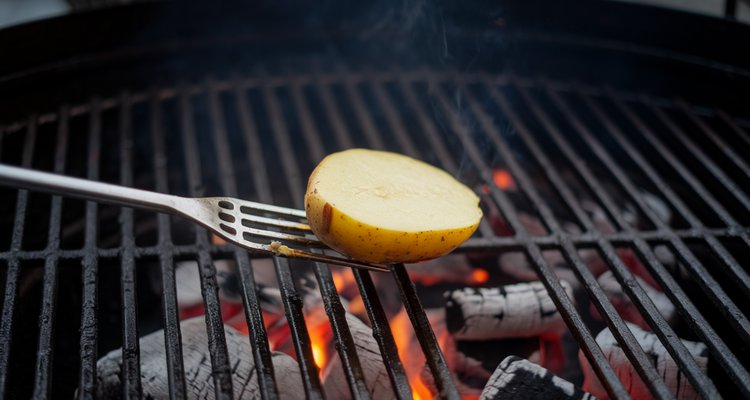
What Does Rubbing a Potato on a Grill Do?
Cutting a raw potato in half and rubbing the cut face along hot grill grates releases starchy residue that creates a natural, temporary non-stick coating on the metal. This prevents delicate proteins like fish fillets or thin chicken pieces from tearing when you flip them. The technique works on cast iron and stainless steel grates alike. It does not affect temperature control directly, but a properly seasoned grate allows you to cook at higher heat without food sticking and causing you to disturb the arrangement of your fire.
Ash Management and Airflow
Accumulated ash beneath the charcoal grate blocks the bottom vent and restricts airflow. On a long cook, ash buildup can cause the temperature to drop unexpectedly even when your vent settings haven’t changed. Empty the ash catcher before every cook and gently stir the ash mid-cook on sessions longer than 4 hours.
Upgrading Your Setup
Once you’ve mastered manual vent control, you may want to explore automatic temperature management. A charcoal grill with temperature control technology – sometimes called a fan controller or pit controller – attaches to the bottom vent and replaces manual adjustment with a data-driven, motorized system. These devices use a digital thermometer probe clipped to the cooking grate to read the actual cooking temperature. When the temperature drops below your target, the fan spins up and forces air into the fire. When it climbs above target, the fan slows or stops, reducing airflow. The result is a standard charcoal grill that behaves like an automated smoker. Fan controllers are particularly valuable for overnight brisket cooks or any session longer than 6 hours. The charcoal grill essentially becomes a set-it-and-forget-it BBQ machine, freeing you from the need to monitor and adjust vents manually. They range from simple single-speed units to advanced systems with Wi-Fi connectivity and smartphone alerts.
Frequently Asked Questions
How do you regulate the temperature on a charcoal grill?
Adjust the bottom intake vent to control how much oxygen reaches the fire – more open means more heat, more closed means less. Use the top exhaust vent for fine-tuning. Keep the lid on as much as possible, and use a reliable grill thermometer to monitor actual cooking temperature rather than estimating by feel.
How do I keep my charcoal grill at 250°F?
Use the Snake Method charcoal arrangement with the bottom vent at 1/4 open and the top vent at 1/3 open. Add a water pan to buffer temperature swings. Allow 20-30 minutes for the grill to stabilize before placing food inside, and make only small, gradual vent adjustments to hold your target range.
Does opening the vents on a charcoal grill make it hotter?
Yes. Opening the bottom vent lets more oxygen feed the coals, which increases combustion and raises the temperature. Closing the bottom vent restricts oxygen and cools the fire. The top vent works similarly but has a smaller effect – it primarily controls the draft that pulls air through the cooking chamber.
Can I cook a brisket on a charcoal grill?
Yes. Use the Snake Method to sustain 225°F-250°F over 12-18 hours and set up a two-zone indirect cooking area with the brisket opposite the coals. Wrap in butcher paper or foil around 165°F internal temperature to push through the stall. A properly managed charcoal grill produces results comparable to a dedicated smoker.
What does rubbing a potato on a grill do?
Rubbing a halved raw potato on hot grill grates deposits starch onto the metal surface, creating a natural non-stick coating. This helps prevent delicate foods like fish and thin chicken cuts from tearing when flipped. It is a quick, chemical-free preparation step that works on cast iron and stainless steel grates alike.
How much charcoal do I need for low and slow cooking?
For the Snake Method targeting 225°F-250°F, you typically need about 100 briquettes laid out in the C-shape, with 8-10 lit briquettes at the starting end. For higher-temperature direct grilling, a full chimney – roughly 80-100 lit briquettes – is the standard starting point for most 22-inch kettle grills.
How long does charcoal last on a grill?
A standard chimney of fully lit briquettes burns hot for about 45-60 minutes of direct grilling. For low and slow cooks using the Snake Method, 100 briquettes can sustain 225°F-250°F for 8-12 hours without adding fuel. Lump charcoal burns hotter but faster; briquettes burn cooler and more consistently, making them the preferred choice for long cooks that demand stable temperature control.
Why does my charcoal grill temperature keep dropping?
The most common causes are accumulated ash blocking the bottom vent, a charcoal arrangement that has burned through, or vents that are too closed for the amount of charcoal remaining. Check the ash catcher and gently clear any blockage. If the coals are mostly ash-covered, you may need to add a small amount of fresh lit charcoal to bring the temperature back up.
Should I use lump charcoal or briquettes for temperature control?
Briquettes are easier to manage for precise temperature control because they burn at a more consistent rate and produce predictable heat output. Lump charcoal burns hotter and cleaner but can vary in size and burn rate, making steady temperature harder to maintain. For low and slow BBQ where holding 225°F-250°F is critical, briquettes are the better choice.
Can I add charcoal to a grill mid-cook?
Yes, but always add lit charcoal rather than unlit briquettes. Dumping raw briquettes onto a hot fire causes a temporary temperature drop and can produce acrid smoke from the binder chemicals as the new coals light. Light a small batch in a chimney starter first, then carefully add the glowing coals to the existing fire bed.
Does the type of charcoal grill affect temperature control?
Yes. Kettle grills with tight-fitting lids and adjustable vents offer the best temperature control among traditional charcoal grills. Barrel and offset smokers have larger fireboxes that require more fuel but provide excellent consistency once up to temperature. Ceramic kamado grills – sometimes called the gold standard of charcoal grill temperature control – have thick ceramic walls that retain heat exceptionally well and respond slowly to vent changes, making precise adjustments very manageable.