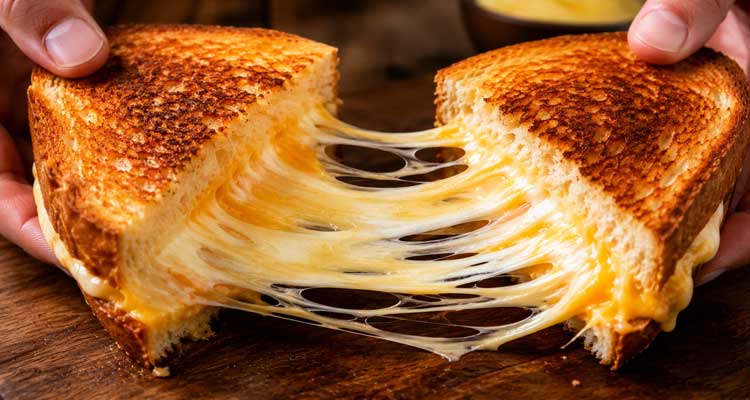
The difference between an ordinary grilled cheese and an unforgettable gooey one comes down to three things: the right cheese blend, low-and-slow heat, and a steam-trap trick that most home cooks skip. This guide covers all three so you get that epic cheese pull every time.
The Best Cheeses for Maximum Gooeyness
The best cheeses for a gooey grilled cheese are those with high moisture content and reliable meltability: American cheese, Gruyere, Fontina, Provolone, and young Gouda. Combining two cheeses — one for smooth melt, one for bold flavor — produces the best results every time.
Why Cheese Meltability Matters
Not all cheeses melt the same way. High-acid aged cheeses like extra-sharp cheddar have tightly bound proteins that can turn greasy or grainy when heated. Younger, lower-acid cheeses with higher moisture content melt smoothly and create that stretchy, gooey texture.
American cheese melts so reliably because it contains sodium citrate, an emulsifying salt that keeps the proteins and fats blended together under heat. This is why adding a slice of American to any cheese blend guarantees a smooth, cohesive melt without separation.
The Best Cheese Blends for Gooey Results
- American + sharp cheddar: American melts perfectly while cheddar adds flavor. Classic ratio is 60/40.
- Gruyere + Fontina: Nutty, complex, and stretchy — excellent for a gourmet version.
- Provolone + mozzarella: Mild and extremely stretchy with an impressive cheese pull.
- Young Gouda + American: Buttery, creamy, and reliably smooth.
| Cheese | Melt Quality | Flavor | Best Role | Stretch Factor |
|---|---|---|---|---|
| American | Excellent | Mild, creamy | Melt anchor | Moderate |
| Gruyere | Excellent | Nutty, complex | Flavor + melt | High |
| Fontina | Very good | Buttery, mild | Stretch factor | Very high |
| Sharp Cheddar | Fair (can break) | Sharp, bold | Flavor only (blend with American) | Low |
| Mozzarella (low-moisture) | Good | Very mild | Stretch booster | Very high |
Should You Shred or Slice the Cheese?
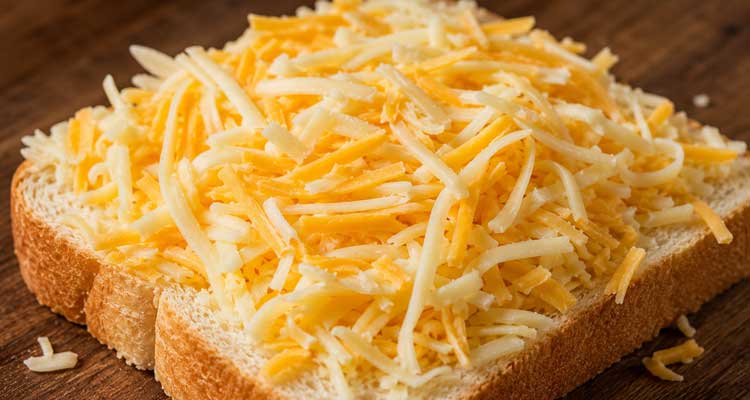
Shredding cheese creates more surface area that melts faster and more evenly than sliced cheese.
A few tools that make gooey grilled cheese easier:
- Lodge Seasoned Cast Iron Skillet with Silicone Handle — even heat for controlled low-and-slow cooking
- OXO Good Grips Box Grater — shred cheese to maximize melt surface area
- ThermoMaven Professional Digital Meat Thermometer — monitor pan surface temperature for consistent results
For the gooiest result, always grate your own cheese from a block. Pre-shredded bagged cheese contains cellulose and potato starch as anti-caking agents that coat the shreds and inhibit smooth melting.
Bring your cheese to room temperature before cooking. Cold cheese takes longer to melt, which means more time on the heat and more risk of burning the bread before the center gets gooey.
Choosing the Right Bread for a Gooey Grilled Cheese
For the best gooey grilled cheese, use thick-cut bread (3/4 to 1 inch) with enough structure to hold the cheese without getting soggy. Classic white sandwich bread, sourdough, brioche, and Texas toast are all excellent choices.
Best Bread Options
- Texas toast (thick-cut white): Ideal thickness, toasts evenly, holds cheese well.
- Sourdough: Excellent crust with a tangy flavor that complements gooey cheese.
- Brioche: Rich, slightly sweet, produces a golden exterior.
- Classic white sandwich bread: Reliable and accessible — great for beginners.
Avoid dense whole-grain breads that do not toast evenly at low heat. Very thin bread also tends to go soggy from the cheese moisture before it has time to crisp properly.
The Right Fat: Butter, Mayo, or Ghee?
For a gooey grilled cheese, butter delivers the best flavor while mayonnaise delivers the crispiest, most evenly browned crust. Ghee (clarified butter) offers butter flavor with a higher smoke point. Apply the fat to the bread, not to the pan, for the most even coverage.
| Fat | Smoke Point | Browning | Flavor | Best For |
|---|---|---|---|---|
| Butter | ~300°F | Uneven (milk solids burn) | Rich, classic | Traditional flavor |
| Mayonnaise | ~450°F | Very even (emulsion spreads flat) | Neutral (cooks off) | Maximum crispness |
| Ghee | ~485°F | Even (no milk solids) | Nutty, buttery | Butter flavor + burn resistance |
 Pro Tip: Spread fat all the way to the edges of the bread. Uncoated edges turn pale and soft instead of crispy and golden brown.
How to Cook a Gooey Grilled Cheese Step by Step
Heat a cast iron skillet over medium-low heat for 2-3 minutes. Place the sandwich fat-side down and cook for 3-4 minutes until deeply golden. Use the steam-trap technique to melt the cheese fully, then flip and cook another 3 minutes.
Step 1: Build the Sandwich Correctly
Apply your fat to the outside surfaces of the bread. Add your cheese blend generously — use at least 2-3 ounces of shredded cheese for a proper cheese pull. Do not overload with fillings; too many additions create barriers between cheese layers and prevent even melting.
Step 2: Low and Slow Heat Is Non-Negotiable
Set the burner to medium-low. A pan that is too hot burns the bread before the cheese melts, which is the single most common grilled cheese failure. Slow, even heat transfer toasts the bread while giving the cheese time to melt completely from edge to edge.
Preheat the skillet for 2-3 minutes before adding the sandwich. A cast iron skillet is ideal because it holds heat evenly and eliminates the hot spots that cause uneven browning.
Step 3: The Steam-Trap Technique for a Full Melt
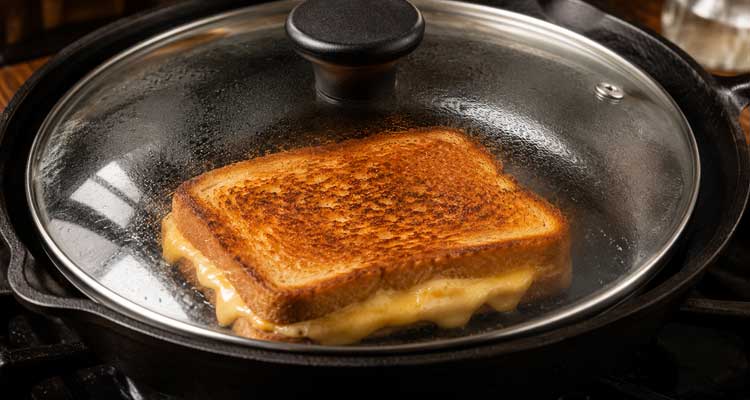
After placing the sandwich in the pan, add a small splash of water (about a teaspoon) to the pan away from the sandwich and immediately cover with a lid for 1-2 minutes. The trapped steam creates a mini-oven effect that melts the cheese rapidly from all sides.
Remove the lid for the final minute of cooking on each side. This lets the steam escape and allows the crust to crisp back up. The result is a sandwich that is perfectly gooey inside and crunchy on the outside.
Pitmaster Tip: If you want an extra-gooey center, place a second slice of American cheese on top of your cheese blend before closing the sandwich. The sodium citrate in American cheese acts as an emulsifier that keeps the entire blend smooth and cohesive.Common Gooey Grilled Cheese Mistakes
The most common mistakes are using too-high heat, relying on aged hard cheese alone, skipping the steam-trap technique, and using pre-shredded bagged cheese. Each of these errors directly reduces the gooey factor of the finished sandwich.
- Heat too high: Burns bread before cheese melts. Use medium-low and be patient.
- Only aged cheese: Extra-sharp cheddar and Parmesan melt poorly on their own. Always blend with a smooth-melting cheese like American or Fontina.
- Pre-shredded cheese from a bag: Contains anti-caking agents (cellulose, potato starch) that coat the shreds and prevent smooth melting. Grate your own from a block.
- Cold cheese: Cheese straight from the refrigerator takes longer to melt, increasing the risk of burning the bread. Bring it to room temperature first.
- Too much filling: Vegetables, meats, and sauces create barriers between cheese layers. Keep add-ins minimal or the cheese will not fuse into one gooey mass.
- Covering the whole cook: The lid should only be on for 1-2 minutes to create steam. Leaving it on the entire time traps too much moisture and makes the bread soggy instead of crispy.
Frequently Asked Questions
What cheese makes the gooiest grilled cheese?
American cheese is the most reliable single cheese for a smooth, gooey melt thanks to its sodium citrate content. For the best overall result, blend American with Gruyere, Fontina, or Provolone. The American ensures a smooth melt while the second cheese adds complexity and stretch.
Why does my grilled cheese cheese not melt properly?
The most common causes are heat that is too high, using aged hard cheeses that do not melt smoothly, or using pre-shredded bagged cheese with anti-caking agents. Switch to medium-low heat, choose meltable cheeses, grate them fresh from a block, and use the steam-trap lid technique.
Should I use butter or mayo for grilled cheese?
Both work well but serve different purposes. Mayonnaise creates a crispier, more evenly browned crust because of its higher smoke point.
Butter adds richer flavor but browns less evenly. For the best result, use mayonnaise on the outside for browning and add a thin layer of softened butter for flavor.
How much cheese should I put in a grilled cheese?
Use at least 2-3 ounces (about 1/2 to 3/4 cup shredded) for a satisfying gooey result. Less than 1.5 ounces produces a thin, unsatisfying melt. More than 4 ounces makes the sandwich too heavy to flip cleanly and may leak.
What is the steam-trap technique?
Add a teaspoon of water to the pan next to the sandwich and immediately cover with a lid for 1-2 minutes. The trapped steam creates an oven-like environment that melts the cheese from all sides. Remove the lid for the final minute to let the crust crisp back up.
How do you get that pull-apart stringy cheese effect?
Use highly stretchy cheeses like mozzarella, Fontina, young Provolone, or young Gouda. Combine one of these stretch cheeses with American for a blend that is both gooey and visually dramatic. Shred and mix the cheeses together before adding to the bread for even distribution.
Why does pre-shredded cheese not melt as well?
Pre-shredded bagged cheese is coated in cellulose (wood pulp fiber) and potato starch to prevent the shreds from clumping in the bag. These coatings form a barrier that prevents the cheese from melting into a smooth, cohesive mass. Grate your own from a block for noticeably better results.
Can you mix different cheeses for grilled cheese?
Mixing cheeses is the best approach for a gooey grilled cheese. Pair a reliable melter (American, Gruyere, Fontina) with a flavor cheese (sharp cheddar, aged Gouda, Havarti). The melter ensures smooth texture while the flavor cheese adds depth and complexity.
What bread works best for gooey grilled cheese?
Thick-cut bread (3/4 to 1 inch) with a sturdy crumb structure works best. Texas toast, sourdough, brioche, and classic white sandwich bread are all excellent choices. Avoid very thin bread that goes soggy and dense whole-grain bread that does not toast evenly at medium-low heat.
Can you make gooey grilled cheese on an outdoor grill?
Yes — preheat the grill to medium-low (around 300-325°F) and place the sandwich on a cast-iron griddle over indirect heat. Use the lid-down technique to trap heat and melt the cheese evenly, cooking 3-4 minutes per side. Refrigerate leftover sandwiches within 2 hours and reheat to 165°F per USDA FSIS guidelines.
Gooey Grilled Cheese Sandwich
Equipment
- Cast iron skillet or heavy-bottomed pan holds heat evenly and eliminates hot spots
- Lid for skillet used for the steam-trap technique
- Box grater or cheese grater grate from block — do not use pre-shredded bagged cheese
- Spatula wide spatula for clean flip
Ingredients
Sandwich
- 2 slices thick-cut bread Texas toast or sourdough, 3/4 to 1 inch thick
- 2 oz shredded cheese blend to 3 oz; 60% American + 40% Gruyere or Fontina, grated from block, brought to room temperature
- 1½ tablespoons softened butter or mayonnaise spread on outside of bread slices
Optional Steam Technique
- 1 teaspoon water for the steam-trap technique
Instructions
- Apply softened butter or mayonnaise to the outside surfaces of both bread slices, spreading all the way to the edges. Add the room-temperature shredded cheese blend evenly on one inside face. Close the sandwich.
- Preheat a cast iron skillet or heavy-bottomed pan over medium-low heat for 2–3 minutes. Place the sandwich fat-side down. Cook for 3–4 minutes until the bottom is deeply golden brown.
- Add 1 teaspoon of water to the pan away from the sandwich. Immediately cover with a lid for 1–2 minutes — the trapped steam creates a mini-oven effect that melts the cheese from all sides. Remove the lid for the final minute to allow the crust to crisp back up.
- Flip the sandwich and cook for 3 more minutes until the second side is deeply golden brown. Serve immediately.
Notes