A precooked ham is one of the easiest centerpiece dishes you can make, yet drying it out is the number one mistake home cooks run into. Since the ham is already fully cooked, your only job is to heat it through and add a caramelized crust without overcooking the meat.
This guide covers the complete process for cooking a precooked ham in the oven at 325°F to a target internal temperature of 140°F. You will learn the exact timing by weight, how to apply a glaze for maximum caramelization, and how to avoid every common mistake along the way.
Quick Summary
- Temperature Control — Reheat a precooked ham to an internal temperature of 140°F at 325°F in the oven, using a meat thermometer to prevent overcooking and dryness.
- Moisture Retention — Cover the ham tightly with heavy-duty foil for the first two-thirds of the cooking time to trap steam and moisture, especially for spiral-cut hams.
- Glaze Application — Apply your chosen glaze during the final 20-30 minutes of baking, basting every 10 minutes, to create a rich, caramelized crust without burning.
- Resting Period — Allow the ham to rest for at least 15 minutes after removing it from the oven to allow juices to redistribute, ensuring a moist and tender result.
Understanding Precooked Ham
A precooked ham has been cured and fully cooked at the processing plant. It is safe to eat cold straight from the package, but reheating it in the oven dramatically improves both flavor and texture. The goal is to warm it through to 140°F without pushing past that point, which causes dryness.
What Does “Precooked” or “Fully Cooked” Mean?
These labels mean the ham has already been cured, smoked, and cooked to a safe temperature during processing. You are not cooking it from raw — you are reheating it. This is an important distinction because overcooking is the primary cause of dry precooked ham.
Types of Cures: City Ham vs. Country Ham
The vast majority of hams found in supermarkets are City Hams. These are wet-cured, meaning they are injected with or soaked in a brine of salt, water, and seasonings. They are sold fully cooked and are the type this recipe is designed for.
Country Hams are dry-cured with a salt rub and aged for a long period. They are intensely salty, sold uncooked, and require soaking for hours or even days before cooking to remove excess salt. They have a much more concentrated, prosciutto-like flavor and are prepared very differently.
Common Cuts: Shank, Butt, and Whole Ham
When you buy a half ham, it will be either the shank or the butt portion. The shank end is the lower part of the leg. It has a classic tapered shape and a single, straight bone, making it easier to carve, and the meat is slightly leaner than the butt portion.
The butt end (or sirloin end) is the upper part of the leg. It is more tender and fatty, which many people find more flavorful. However, it contains the large, T-shaped pelvic bone, which can make carving more challenging.
Choosing the Right Ham for Your Meal
When selecting a precooked ham, your main choices are bone-in, boneless, and spiral-cut. Each has distinct advantages depending on your priorities for flavor, convenience, and presentation.
Bone-in hams are often considered more flavorful due to the bone contributing to moisture retention during heating. They can be whole or half (shank or butt) and take slightly longer to heat through. The leftover bone is also excellent for making soup stock.
Boneless hams are easier to carve with no waste. Their uniform shape makes for even heating and consistent slices across the entire cut. They are a great choice when ease of serving is the top priority.
Spiral-cut hams are the most popular for convenience since they come pre-sliced. The slices allow glaze to penetrate deeply between each layer. However, spiral-cut hams are more prone to drying out because of the exposed surface area, so careful foil coverage is essential.
 Pro Tip: Plan for about half a pound per person when buying a bone-in ham, or a third of a pound per person for boneless. This accounts for the bone weight and ensures enough for leftovers.
Essential Tools and Ingredients
You do not need specialized equipment to heat a precooked ham well. A roasting pan, heavy-duty foil, and a meat thermometer are the three essentials that make the difference between a juicy result and a dry one.
A few tools that make this cook easier:
- ThermoMaven Professional Digital Meat Thermometer — pull the ham at exactly 140F without guessing
- Farberware Nonstick Roaster with Flat Rack — elevates the ham for even heat circulation in the oven
- Dalstrong Slicing Knife 12 Inch — long blade for clean, even ham slices after resting
Equipment List
- Large roasting pan with a rack (rack is optional but helps air circulate)
- Heavy-duty aluminum foil
- Instant-read or leave-in digital meat thermometer
- Basting brush
- Carving knife and fork
Core Ingredients
- 1 fully cooked ham (8-12 lbs), bone-in, boneless, or spiral-cut
- 1/2 cup water, broth, or apple cider for the bottom of the pan
 Quick Facts: A precooked ham is already safe to eat, so the goal is to reheat it to 140°F for optimal flavor and texture, not to cook it from raw.
How to Cook a Precooked Ham in the Oven (Step-by-Step)
Cooking a precooked ham in the oven follows a simple pattern: cover it with foil to trap moisture for the first two-thirds of cooking, then uncover and glaze for the final stretch. The key numbers are 325°F oven temperature, 15-18 minutes per pound, and 140°F internal temperature at the finish.
Step 1: Preheat Your Oven and Prep the Ham
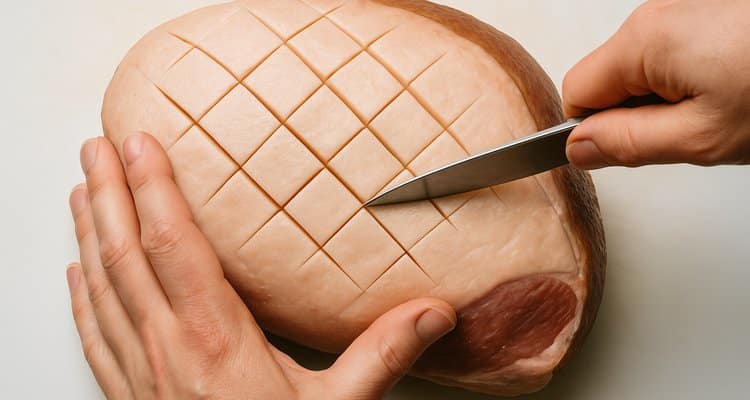
Adjust your oven rack to the lowest position and preheat to 325°F. Remove the ham from its packaging and pat dry with paper towels. A dry surface helps the glaze adhere better later in the cooking process.
Place the ham cut-side down in the roasting pan. For spiral-cut hams, keep the slices pressed together to minimize moisture loss. Pour water or broth into the bottom of the pan to create steam during the initial heating phase.
Step 2: Calculate Your Cooking Time
The general rule is 15-18 minutes per pound for a whole or half bone-in ham. Spiral-cut hams heat faster at about 12-15 minutes per pound because of the increased surface area.
These are estimates. A meat thermometer is the only reliable way to know when the ham is done. Pull it when the internal temperature hits 140°F, not a degree more.
Step 3: Cover and Bake
Cover the roasting pan tightly with heavy-duty aluminum foil. This traps moisture and steam, creating a humid environment that prevents the ham from drying out during the initial heating phase. This step is especially critical for spiral-cut hams.
The moderate oven temperature of 325°F is ideal. It’s hot enough to heat the ham through efficiently but gentle enough to prevent the exterior from overcooking and toughening before the center is warm. Place in the preheated oven and let it work undisturbed.
Step 4: Prepare and Apply Glaze
While the ham heats, prepare your chosen glaze in a small saucepan. About 30 minutes before the estimated total cooking time is up, remove the ham from the oven.
Remove the foil and brush a generous layer of glaze over the entire surface. Get the glaze into the spiral cuts if you are using a pre-sliced ham.
Step 5: Finish Uncovered
Return the ham to the oven uncovered. Continue baking for the final 20-30 minutes, basting with more glaze every 10 minutes. Each layer builds on the last, creating a thick, sticky caramelized crust.
For an even more intense crust, switch to the broiler for the final 1-2 minutes. Watch it constantly — glaze can go from caramelized to burnt in seconds under a broiler.
Step 6: Verify Internal Temperature
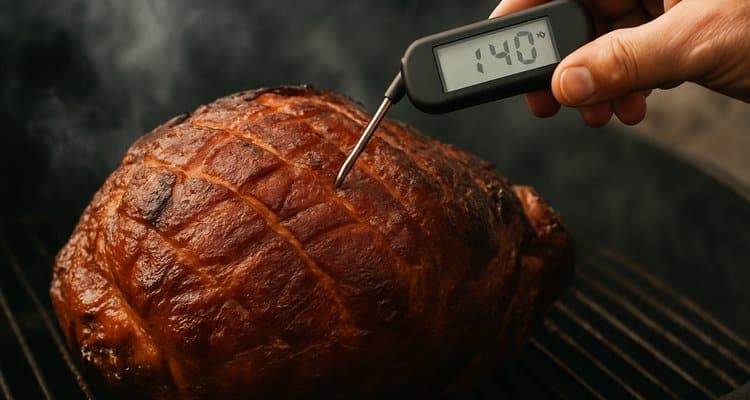
Insert a meat thermometer into the thickest part of the ham, avoiding the bone. The ham is ready when it reads 140°F[USDA]. Do not overcook past this point — this is the primary cause of dry precooked ham.
Step 7: Rest Before Carving
Transfer the ham to a cutting board and tent loosely with foil. Let it rest for at least 15 minutes before carving. This crucial step allows the muscle fibers, which tensed up during cooking, to relax and reabsorb the juices.
Skipping the rest will cause the juices to spill out onto the cutting board as soon as you slice, resulting in drier meat. Properly resting the ham ensures a moist, flavorful result with every slice.
Pitmaster Tip: Save the pan drippings after removing the ham. Mixed with the glaze residue, they make an incredible sauce for drizzling over carved slices or spooning over mashed potatoes.Ham Cooking Time Chart (at 325°F)
Use this chart as a reliable starting point for estimating the total cooking time based on your ham’s weight. Remember that bone-in hams may take slightly longer than boneless, and spiral-cut hams heat the fastest. Always trust a digital meat thermometer for the final word on doneness.
| Ham Weight | Estimated Cooking Time | Target Internal Temp |
|---|---|---|
| 5-7 lbs | 1.25-1.75 hours | 140°F |
| 8-10 lbs | 2-2.5 hours | 140°F |
| 11-13 lbs | 2.75-3.25 hours | 140°F |
| 14-16 lbs | 3.5-4 hours | 140°F |
Easy Glaze Recipes for Your Ham
A great glaze is the key to transforming a simple reheated ham into a memorable holiday centerpiece. These recipes balance sweetness, acidity, and spice for a perfect caramelized crust. All can be prepared in just a few minutes on the stovetop while the ham is in its initial heating phase.
Classic Brown Sugar and Mustard Glaze
- 1 cup packed brown sugar
- 1/4 cup Dijon mustard
- 2 tablespoons apple cider vinegar
Combine all ingredients in a small saucepan over medium-low heat. Stir until the sugar dissolves and the mixture is smooth. This timeless glaze offers a perfect balance of sweet and tangy notes.
Maple-Bourbon Glaze
- 1/2 cup maple syrup
- 1/4 cup bourbon
- 1/4 cup brown sugar
- 1 tablespoon whole-grain mustard
Whisk all ingredients together in a saucepan. Bring to a simmer and cook for 2-3 minutes until slightly thickened. The bourbon adds depth and a hint of smokiness without overpowering the natural ham flavor.
Honey-Pineapple Glaze
- 1 cup pineapple juice
- 1/2 cup honey
- 1/4 cup brown sugar
- 1 teaspoon ground ginger
In a saucepan, combine all ingredients and bring to a simmer over medium heat. Cook, stirring occasionally, for 5-7 minutes until the glaze has thickened enough to coat the back of a spoon. This glaze provides a bright, fruity counterpoint to the salty ham.
Tips for Customizing Your Glaze
Feel free to use these recipes as a starting point. A great glaze often has a balance of sweet, acidic, and spiced elements. Try these substitutions or additions to create your own signature flavor:
- Sweet: Swap brown sugar for maple syrup, honey, or even marmalade or apricot preserves.
- Acid: Use orange juice, balsamic vinegar, or pineapple juice instead of apple cider vinegar.
- Spice: Add warmth with spices like cinnamon, cloves, allspice, or a pinch of cayenne for heat.
- Liquid: For a unique twist, replace some of the liquid with Dr. Pepper, Coca-Cola, or a dark beer.
Troubleshooting Common Ham Problems
Even a simple dish like a precooked ham can present challenges. Most issues, however, trace back to temperature control and timing the glaze application. This quick guide provides the direct cause and solution for the most common problems, ensuring your ham comes out perfect every time.
| Problem | Common Cause | Solution |
|---|---|---|
| Ham is dry | Overcooked past 140°F, oven too hot, or not covered with foil initially | Use a thermometer and pull at 140°F. Cover tightly with foil for first two-thirds. Add liquid to pan. Serve with pan sauce to add moisture. |
| Glaze is burning | Glaze applied too early or oven temperature too high | Apply glaze only in last 20-30 minutes. Tent loosely with foil if darkening too fast. Ensure oven rack is not too high. |
| Ham heated unevenly | Hot spots in oven or irregular ham shape | Rotate roasting pan halfway through cooking for even heating. Use a rack to promote air circulation all around the ham. |
How to Carve a Ham
After the ham has rested for at least 15 minutes, it’s time to carve. This crucial step allows the juices to redistribute for maximum flavor. Using a long, sharp carving knife and a carving fork for stability, you’ll slice against the grain for the most tender results.
Carving a Bone-In Ham
For a bone-in ham, place it on a large cutting board. Use a carving fork to hold it steady. Make a long, vertical cut along the side of the bone to serve as a guide.
Then, make thin, parallel slices perpendicular to the bone, cutting down until you reach your guide cut. The slices will fall away easily.
Carving a Boneless or Spiral-Cut Ham
Boneless hams are the easiest to carve. Simply place the ham on its flat side and slice thinly against the grain to your desired thickness. For a spiral-cut ham, the work is mostly done.
Run your knife along the bone to release the pre-cut slices, which will fall away ready to serve.
Storing and Using Leftover Ham
Leftover ham is a versatile ingredient perfect for many follow-up meals, from sandwiches to soups. To ensure it stays fresh and safe to eat, proper storage is essential. Following correct refrigeration and freezing guidelines will preserve its quality for days or even months.
Refrigeration and Freezing
Store leftover ham in an airtight container in the refrigerator for 3-4 days. For longer storage, wrap it tightly in plastic wrap and foil, then freeze for up to 2 months. Always refrigerate leftovers within two hours of cooking[USDA].
Leftover Ham Ideas
- Diced into omelets, frittatas, or scrambled eggs.
- Added to split pea soup or potato chowder.
- Used in sandwiches, sliders, or wraps.
- Mixed into pasta dishes like carbonara or mac and cheese.
- Fried up for a classic ham and eggs breakfast.
- Cubed for scalloped potatoes and ham casserole.
- Made into a classic ham salad for sandwiches.
- Use the ham bone to make a flavorful stock for soups and beans.
What to Serve with Baked Ham
A beautifully cooked ham is the star, but the right side dishes complete the meal. The ham’s sweet and savory profile pairs wonderfully with starchy, creamy, and fresh vegetable accompaniments. Balancing these flavors creates a memorable and satisfying holiday spread for everyone at the table.
Classic Side Dishes
- Scalloped or mashed potatoes: Creamy, starchy potatoes are the perfect comforting base to soak up any extra glaze or pan sauce.
- Roasted asparagus or green beans: The fresh, slightly bitter flavor of green vegetables cuts through the richness of the ham.
- Macaroni and cheese: A rich, cheesy pasta bake is a crowd-pleasing side that complements the savory ham.
- Dinner rolls or cornbread: Essential for soaking up juices and making mini ham sandwiches right at the table.
- A fresh garden salad: A simple salad with a vinaigrette provides a light, acidic contrast to the meal.
Wine and Drink Pairings
For wine, a slightly sweet Riesling or a fruity, low-tannin red like Pinot Noir or Gamay complements the ham’s flavor without overpowering it. A dry Rosé is also an excellent and versatile choice.
For non-alcoholic options, sparkling apple cider or a spiced iced tea are excellent choices. The sweetness and spice in these drinks pair beautifully with the flavors of a glazed ham.
Take Home Message
Reheating a precooked ham to perfection is a straightforward process that guarantees a juicy, flavorful centerpiece for any meal. By following the key steps of precise temperature control, strategic foil coverage, and timely glaze application, you can easily avoid common pitfalls like dryness.
Remember to always use a meat thermometer to ensure the ham reaches 140°F and allow it to rest before carving. With these techniques, you’ll consistently achieve a beautifully caramelized and moist ham that will impress your guests.
Frequently Asked Questions
How long do you cook a precooked ham per pound?
For a fully cooked ham at 325°F, plan on 15-18 minutes per pound for whole or half bone-in hams. Spiral-cut hams heat faster at 12-15 minutes per pound due to increased surface area. These are estimates — use a meat thermometer and cook until the internal temperature reaches 140°F.
What is the safe internal temperature for a reheated precooked ham?
A precooked ham only needs to reach an internal temperature of 140°F. Since it is already fully cooked, this temperature makes it warm, juicy, and safe to eat. Going beyond 140°F risks drying out the meat, which is the most common mistake when reheating ham.
Should you cover a precooked ham with foil while baking?
Yes, cover the ham tightly with heavy-duty foil for the majority of baking time. The foil traps steam and moisture, preventing the ham from drying out as it heats. Remove the foil for the last 20-30 minutes to apply the glaze and let it caramelize into a crust.
When is the best time to add the glaze to the ham?
Apply the glaze during the last 20-30 minutes of cooking. Most glazes contain sugar that burns if exposed to oven heat for too long. Adding it near the end allows the glaze to thicken and caramelize without scorching, creating a sticky, lacquered finish.
Oven-Baked Precooked Ham
Equipment
- Large roasting pan with a rack Rack is optional but helps with air circulation.
- Heavy-duty aluminum foil
- Instant-read or leave-in digital meat thermometer
- Basting Brush
- Carving knife and fork
Ingredients
- 1 fully cooked ham (8-12 lbs) bone-in, boneless, or spiral-cut
- 1/2 cup water, broth, or apple cider for the bottom of the pan
Instructions
- Adjust your oven rack to the lowest position and preheat to 325°F. Remove the ham from its packaging and pat dry with paper towels.
- Place the ham cut-side down in the roasting pan. Pour water, broth, or apple cider into the bottom of the pan.
- Cover the roasting pan tightly with heavy-duty aluminum foil to trap moisture. Place in the preheated oven.
- Bake for 15-18 minutes per pound (or 12-15 for spiral-cut), or until the ham is about 20-30 minutes away from reaching its target temperature.
- Remove the ham from the oven and discard the foil. Brush a generous layer of your chosen glaze over the entire surface.
- Return the ham to the oven uncovered. Continue baking for the final 20-30 minutes, basting with more glaze every 10 minutes to build a caramelized crust.
- Insert a meat thermometer into the thickest part of the ham, avoiding the bone. The ham is ready when it reads 140°F. Do not overcook.
- Transfer the ham to a cutting board and tent loosely with foil. Let it rest for at least 15 minutes before carving to allow juices to redistribute.
Notes