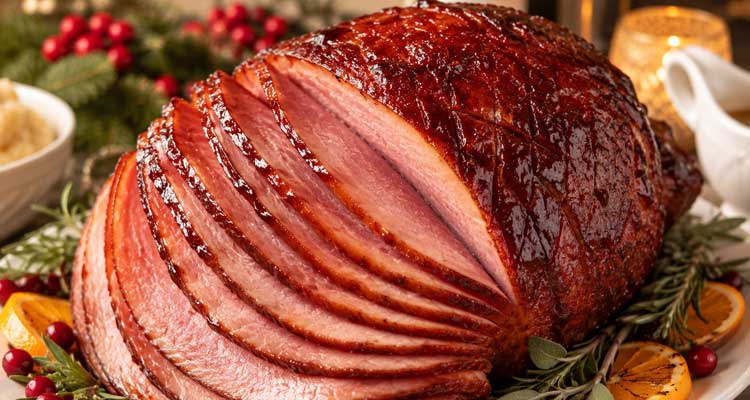
Nothing matches the deep, savory flavor of a homemade hickory smoked ham. Store-bought versions come close, but smoking your own from a fresh ham delivers a richness and smoke intensity that no packaged product can replicate. This process transforms a simple cut of pork into a stunning holiday centerpiece. This guide walks you through the complete process from curing to carving. You will learn both wet and dry curing methods, how to manage hickory wood for clean smoke, and the exact internal temperatures needed for a perfectly juicy result every time. Get ready to master the art of true smokehouse ham.
Quick Summary
- Authentic Flavor — Smoking a fresh ham from scratch delivers a deep, savory, and slightly sweet flavor profile with a rich, bacon-like smokiness that store-bought hams can’t match.
- Curing is Key — Fresh ham requires either a wet or dry cure using Prague Powder #1 to achieve its characteristic pink color, preserve the meat, and prevent bacterial growth.
- Precision Smoking — Maintain a smoker temperature of 225-250°F, use hickory wood chunks for clean smoke, and pull the ham at an internal temperature of 145°F for optimal juiciness.
- Glaze and Rest — Apply a sweet glaze during the final stage of smoking to build a caramelized crust, and always rest the ham for 30-60 minutes after cooking to ensure maximum juiciness.
What Makes Hickory Smoked Ham Special?
Hickory smoked ham is prized for its robust, savory, and slightly sweet flavor profile, often described as bacon-like. It delivers the classic American smokehouse taste that deeply penetrates the meat without overwhelming the natural flavor of the pork. This creates a perfect balance for a memorable holiday centerpiece.
The Flavor Profile of Hickory
Hickory wood produces a dense, bacon-like smokiness that is stronger and more complex than milder fruitwoods like apple or cherry. This intense smoke is what gives the exterior of the ham a beautiful mahogany color. That deep, dark bark is a clear signal of significant smoke penetration and rich flavor development. Compared to other smoking woods, hickory sits in the middle of the intensity spectrum. While apple and cherry produce milder, sweeter smoke, hickory provides a more assertive taste. It’s stronger than oak but less harsh than mesquite, which can turn bitter over long cooks like this one.
A Holiday Tradition
The hickory smoked ham is more than just a meal; it’s a cornerstone of American culinary tradition, especially during holidays like Easter and Christmas. Its impressive presentation and rich flavor make it a natural focal point for family gatherings. Crafting one from scratch is a rewarding project that connects you to a long history of food preservation and celebration.
 Quick Facts: Hickory smoked ham offers a robust, savory, and slightly sweet flavor profile, making it a classic holiday centerpiece. The deep mahogany bark signifies excellent smoke penetration and rich flavor development.
Fresh Ham vs. Pre-Cured: What’s the Difference?
A fresh ham is raw, uncured pork from the hind leg that must be cured before smoking to develop its characteristic flavor and pink color. A pre-cured ham from the store is already processed and cooked — you are simply reheating it while adding smoke flavor. This recipe focuses on smoking a fresh ham from scratch for an authentic, smokehouse-quality result.
Understanding Fresh Ham (Uncured)
A fresh ham is a raw cut of pork that has not been treated with any curing salts or smoke. It must be cured before smoking to be considered a true ham. Without the crucial step of curing, it is essentially a large pork roast with a very different flavor and texture. The food-safe target internal temperature for a fresh ham is 145°F, followed by a three-minute rest period[USDA]. This ensures the meat is safe to eat while remaining juicy and tender.
Working with Pre-Cured or Cooked Ham
Most hams found in grocery stores, including spiral-sliced varieties, are pre-cured and fully cooked. The goal with these hams is to gently reheat them on the smoker while infusing hickory smoke flavor into the exterior. This adds a new dimension of flavor that you can’t get from oven heating alone. The target internal temperature for most USDA-inspected, fully cooked hams is 140°F. Reheat leftovers or hams that were not processed in a USDA-inspected plant to 165°F[USDA].
Selecting a High-Quality Fresh Ham
When buying a fresh ham, look for one with a thick fat cap, which will baste the meat as it cooks. You’ll often have a choice between bone-in or boneless. A bone-in ham generally provides more flavor and moisture, while a boneless ham is easier to carve. For this recipe, a bone-in, skin-on fresh ham weighing between 10 and 15 pounds is ideal. The skin can be scored and crisped up at the end for delicious crackling, or removed before curing if you prefer a softer bark.
How to Cure Your Ham Before Smoking
Curing is a necessary step for fresh ham that preserves the meat, adds flavor, and creates the classic pink color. The pink comes from curing salt (Prague Powder #1), a mix of table salt and sodium nitrite that prevents dangerous bacteria like botulism while giving ham its signature appearance. You can use a wet cure or dry cure method. Choosing between a wet or dry cure depends on your available space, time, and desired final texture. A wet cure, or brine, tends to produce a juicier, more mildly flavored ham. It ensures very even salt penetration but requires a large, food-safe container and significant refrigerator space.
Wet Cure vs. Dry Cure: A Detailed Comparison
A dry cure involves rubbing the salt mixture directly onto the meat. This method results in a firmer texture and a more concentrated, intense ham flavor. It requires less space but demands more hands-on attention to ensure the cure is redistributed evenly every few days.
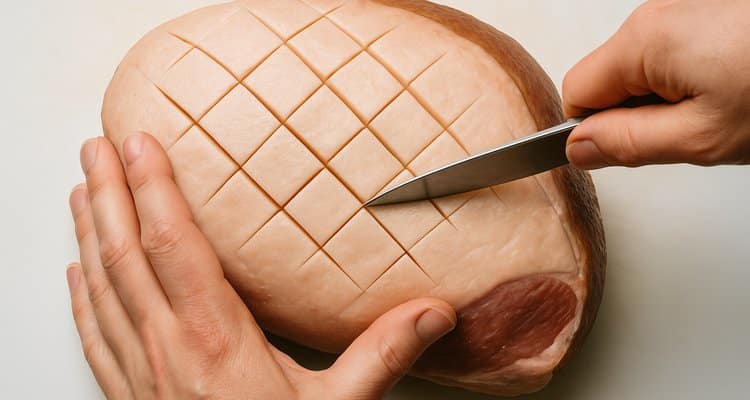
Method 1: The Wet Cure (Brining)
Wet curing submerges the fresh ham in a flavored saltwater solution. This method produces even salt distribution and works well for larger cuts.
- 1 gallon water
- 1 cup kosher salt
- 1 tablespoon Prague Powder #1 (curing salt)
- 1 cup brown sugar
- 4 bay leaves and 1 tablespoon black peppercorns (optional)
- Combine all ingredients in a large stockpot and bring to a simmer, stirring until salt and sugar are fully dissolved. Cool the brine completely to below 40°F before using.[USDA]
- Place the fresh ham in a large, non-reactive, food-safe container (like a brining bag or food-grade bucket). Pour the cooled brine over the ham, ensuring it is fully submerged.
- Refrigerate for approximately 1 day per 2 pounds of ham. A 10-pound ham will need about 5 days.
- After curing, remove the ham, discard the brine, and rinse the ham thoroughly under cold water. Soak it in fresh cold water for 1-2 hours to reduce surface saltiness before smoking.
Method 2: The Dry Cure (Rubbing)
Dry curing rubs the cure mixture directly onto the ham surface. This method takes less space and produces a firmer texture with more concentrated flavor.
- 1/2 cup kosher salt
- 1 tablespoon Prague Powder #1
- 1/4 cup brown sugar
- 1 tablespoon coarse black pepper
- Combine all dry ingredients. Pat the fresh ham dry and rub the mixture thoroughly over the entire surface, getting into every crevice.
- Place the ham in a large, food-safe sealable bag, pressing out as much air as possible. Refrigerate on a tray to catch any potential leaks.
- Cure for 1 day per 2 pounds of ham. Turn and massage the ham every other day to redistribute the cure and juices that will form in the bag.
- After curing, rinse the ham completely. Air-dry it uncovered in the refrigerator on a rack for 24 hours to form a pellicle — a dry, tacky surface that helps smoke adhere.
 Pitmaster Tip: The pellicle is critical for a good smoke ring. After rinsing the cure, pat the ham dry and place it uncovered on a rack in the refrigerator overnight. The tacky surface that forms grabs smoke particles far better than a wet surface.
Preparing Your Smoker and Wood
Set up your smoker for indirect cooking at a target temperature of 225-250°F. Use hickory wood chunks for consistent smoke over the long cook time. A water pan inside the smoker maintains humidity and helps the ham stay moist throughout the process.
Choosing Your Hickory Wood
Wood chunks are the right choice for smoking a whole ham. They smolder slowly and produce consistent smoke for hours without needing constant replenishment. Wood chips burn too quickly and require frequent additions, making them better suited for shorter cooks like fish or chicken wings. Always use well-seasoned, dry hickory wood. Do not soak wood chunks before smoking, as this creates steam and dirty smoke, which can make the ham taste acrid. Dry chunks ignite properly and produce the thin, blue smoke you want from the start.
Setting Up the Smoker
Configure your smoker for indirect heat to avoid burning the exterior before the center reaches the target internal temperature. Aim for a stable 225-250°F throughout the cook. Use a reliable dual-probe thermometer to monitor both the smoker’s ambient temperature and the ham’s internal temperature.
A few tools for smoking a ham from scratch:
- ThermoMaven Smart Bluetooth Wireless Meat Thermometer — monitors ham temp remotely during a 4-7 hour hickory smoke
- ThermoPro TP20 Wireless Meat Thermometer with Dual Probe — dual probe tracks both ham internal temp and ambient smoker temp
- MEATER Plus Bluetooth Wireless Meat Thermometer — leave-in probe for hands-free monitoring across the full cook
- Bryco Goods Pink Butcher Paper Roll — wrap the ham during the rest phase to retain heat and moisture
Place a water pan on the grate below or beside the ham. This serves two purposes: it moderates temperature swings and adds humidity to the cooking environment. A humid environment helps develop a better smoke ring and keeps the surface from drying out.
Smoker-Specific Tips
- Pellet Smokers: Set your temperature to 225°F and use a hickory pellet blend. Place a water pan on the main grate next to the ham to add humidity.
- Offset Smokers: Manage a small, clean fire using hickory splits or chunks. Keep the firebox vent mostly open and control temperature with the chimney vent.
- Kettle Grills: Use the snake method or charcoal baskets on one side for indirect heat. Place hickory chunks along the charcoal snake for sustained smoke.
A water pan in your smoker is crucial for maintaining humidity, which helps prevent the ham from drying out and promotes a better smoke ring.
The Smoking Process: Step-by-Step
Place the cured ham in a 225-250°F smoker and cook until the internal temperature reaches about 135°F. Then apply a glaze every 20 minutes while continuing to smoke until the ham hits a final internal temperature of 145°F. Use a leave-in meat thermometer for accuracy.
Step 1: Bringing the Ham to Temperature
After curing and rinsing (and forming a pellicle for dry cures), let the ham sit at room temperature for 60-90 minutes before smoking. Starting with slightly warmer meat promotes more even cooking and helps develop a better smoke ring.
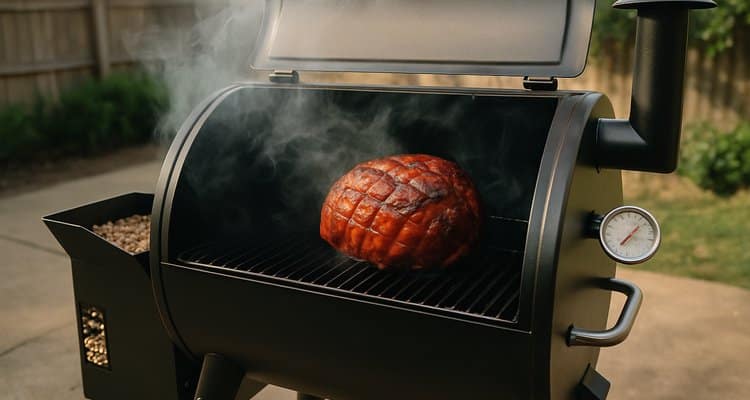
Before it goes on the smoker, pat the surface completely dry with paper towels. Any moisture on the surface will block smoke absorption during the critical early hours of the cook.
Step 2: Smoking Before the Glaze
Place the ham on the smoker grate and insert a leave-in digital thermometer into the thickest part, avoiding bone. Smoke until the internal temperature reaches approximately 135°F. This initial phase is all about absorbing that classic hickory smoke flavor. Patience during this initial phase is key to developing a deep, smoky flavor before you begin adding the sweet glaze. Resist the urge to open the smoker lid, which releases heat and smoke.
Step 3: Making and Applying the Glaze
Begin glazing once the internal temperature reaches 135°F. Applying it too early can cause the sugars to burn before the ham is cooked through. For a classic glaze, combine the following in a small saucepan:
- 1 cup packed brown sugar
- 1/2 cup maple syrup or honey
- 1/4 cup apple juice or pineapple juice
- 2 tablespoons Dijon mustard
Warm the mixture over low heat until smooth. Brush a thin layer over the entire surface of the ham. Reapply every 15-20 minutes until the ham is done. Each layer builds on the last, creating a sticky, caramelized crust that contrasts with the smoky meat underneath.
Step 4: Finishing to the Perfect Temperature
Continue smoking the glazed ham until the internal temperature reaches 145°F[USDA]. Always rely on an accurate thermometer rather than cooking time alone. Every ham cooks differently based on size, shape, and how cold it started.
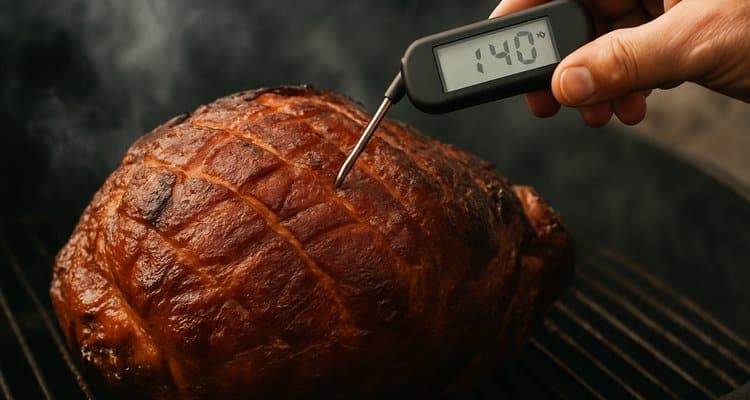
Pro Tip: If the glaze starts darkening too fast during the final hour, tent the ham loosely with foil. This slows the browning while still allowing heat to reach the center.How Long Does It Take to Smoke a Ham?
As a general guideline, smoking a fresh hickory smoked ham at 225°F takes approximately 25 to 30 minutes per pound to reach 145°F. For a typical 10-pound ham, this means you should plan for a 4 to 5-hour cook time. However, these are only estimates; always rely on an accurate internal meat thermometer to determine doneness.
| Ham Weight | Estimated Time (at 225°F) | Target Internal Temp |
|---|---|---|
| 8 lbs | 3.5-4 hours | 145°F |
| 10 lbs | 4-5 hours | 145°F |
| 12 lbs | 5-6 hours | 145°F |
| 15 lbs | 6-7.5 hours | 145°F |
| 20 lbs | 8.5-10 hours | 145°F |
Resting and Slicing for Maximum Juiciness
After removing the ham from the smoker, let it rest for at least 30 minutes before slicing. This allows muscle fibers to relax and reabsorb juices that were pushed toward the center during cooking. Cutting too soon sends those juices onto the cutting board instead of staying in each slice.
The Importance of Resting
Tent the ham loosely with foil and let it rest for 30-60 minutes on a cutting board. During cooking, the muscle fibers tighten and squeeze moisture toward the center. Letting the ham rest allows these fibers to relax and reabsorb that moisture, ensuring a juicy slice every time. The internal temperature will continue rising 5-10°F during the rest through carryover cooking. Factoring this in is important for hitting the perfect final temperature without overcooking. Pulling the ham at 145°F means it will finish resting around 150-155°F.
How to Carve Your Smoked Ham
Use a long, sharp carving knife and a sturdy carving fork. For a bone-in ham, start by placing it on the cutting board with the largest meaty side facing up. Make vertical slices perpendicular to the bone until your knife reaches it. Next, make a single horizontal cut along the top of the bone to release the slices you just made. For the remaining meat, turn the ham and slice parallel to the bone to remove large sections. Place each boneless section flat on the board and slice against the grain to your desired thickness. Save the bone after carving. It makes an incredible base for split pea soup, bean soup, or a rich pork stock that captures every last bit of hickory flavor.
Serving Your Hickory Smoked Ham
A beautifully smoked ham deserves equally delicious companions. The rich, smoky, and sweet flavors pair wonderfully with classic sides like scalloped potatoes or glazed carrots, making it a versatile and impressive centerpiece for any holiday feast or family gathering.
Classic Side Dish Pairings
Complement your hickory smoked ham with classic holiday sides. Creamy scalloped potatoes, brown sugar-glazed carrots, and roasted asparagus are excellent choices. For a bit of freshness, a simple green salad with a vinaigrette dressing cuts through the richness of the pork.
Creative Ways to Use Leftovers
Leftover ham is a gift that keeps on giving. Dice it for ham and bean soup, slice it thin for sandwiches with sharp cheddar and mustard, or chop it into omelets and quiches. The ham bone is liquid gold for creating a flavorful stock for soups and stews. Leftover ham can be used in countless dishes, from sandwiches and omelets to flavorful soups, making it a versatile ingredient for post-holiday meals.
Troubleshooting Common Smoking Issues
Even with careful planning, issues like a temperature stall or bitter smoke can arise during a long cook. This section covers how to handle common problems to ensure your hickory smoked ham turns out juicy, flavorful, and perfectly cooked every time.
The Stall: When Internal Temperature Stops Rising
The stall is when the internal temperature of the meat plateaus, often for hours. This happens due to evaporative cooling on the meat’s surface. If you’re short on time, you can wrap the ham tightly in foil or butcher paper (the Texas Crutch) to push through it, though this may soften the bark.
Why Does My Ham Taste Bitter?
A bitter taste is usually caused by dirty smoke. This happens when wood smolders without enough oxygen, producing thick, white smoke instead of clean, thin blue smoke. Ensure your fire has good airflow and your wood chunks are smoldering cleanly, not just sitting on cold coals.
How to Prevent a Dry Ham
The three keys to a moist ham are curing, humidity, and temperature control. A proper cure helps the meat retain moisture. Using a water pan in the smoker adds humidity to the cooking environment. Most importantly, pull the ham from the smoker the moment it hits the target internal temperature of 145°F.
Take Home Message
Mastering a hickory smoked ham from scratch is a rewarding culinary journey that yields a deeply flavorful and juicy centerpiece. By understanding the nuances of curing, maintaining precise smoker temperatures, and applying a sweet glaze, you can achieve a smokehouse-quality ham that will impress at any gathering. Don’t forget the crucial resting period to lock in those precious juices for the perfect slice every time.
Frequently Asked Questions
What is the difference between smoking a fresh ham and a pre-cured ham?
Smoking a fresh ham is a multi-day process that involves curing raw pork from scratch before smoking it to a final internal temperature of 145°F[USDA]. Smoking a pre-cured ham is much simpler; you are reheating a fully cooked product, usually to 140°F for USDA-inspected hams or 165°F for leftovers/non-USDA products, while adding smoke flavor.
Do you need to cure a ham before smoking it?
Yes, if you are starting with a fresh ham (raw pork), you must cure it before smoking. Curing is what gives ham its characteristic flavor, pink color, and texture, while also preserving the meat. Without curing, you are simply making a smoked pork roast. Pre-cured or pre-cooked hams from the store do not need to be cured again.
Hickory Smoked Ham
Equipment
- Smoker or grill Must be able to maintain a stable 225-250°F with indirect heat.
- Leave-In Digital Thermometer Essential for monitoring internal temperature without opening the lid.
- Hickory Wood Chunks Provides the signature smoke flavor for a long cook.
- Large Food-Safe Container Required for brining if using the wet cure method.
- Spray bottle Optional, for spritzing the ham if the surface dries out.
Ingredients
For the Ham
- 1 fresh ham, bone-in Approximately 10-15 lbs. This is a raw, uncured cut of pork.
Method 1: Wet Cure (Choose One)
- 1 gallon water
- 1 cup kosher salt
- 1 tablespoon Prague Powder #1 Also known as curing salt.
- 1 cup brown sugar
- 4 bay leaves Optional
- 1 tablespoon black peppercorns Optional
Method 2: Dry Cure (Choose One)
- 1/2 cup kosher salt
- 1 tablespoon Prague Powder #1
- 1/4 cup brown sugar
- 1 tablespoon coarse black pepper
For the Glaze
- 1 cup packed brown sugar
- 1/2 cup maple syrup
- 1/4 cup apple juice or pineapple juice
- 2 tablespoons Dijon mustard
Instructions
- Choose your curing method. A wet cure produces even salt distribution, while a dry cure creates a firmer texture and more concentrated flavor. You must complete one of these methods before smoking.
- For a Wet Cure: Combine water, kosher salt, Prague Powder #1, brown sugar, and optional spices in a pot. Simmer until dissolved, then cool completely below 40°F. Submerge the fresh ham in the brine in a large, food-safe container. Refrigerate for approximately 1 day per 2 pounds of ham.
- For a Dry Cure: Combine kosher salt, Prague Powder #1, brown sugar, and black pepper. Rub the mixture thoroughly over the entire surface of the fresh ham. Place the ham in a large, food-safe sealable bag and refrigerate for 1 day per 2 pounds of ham, turning and massaging it every other day.
- After curing is complete (for either method), rinse the ham thoroughly under cold water. For a wet cure, soak it in fresh cold water for 1-2 hours. Pat the ham completely dry and place it uncovered on a rack in the refrigerator for 24 hours to form a tacky surface called a pellicle.
- Prepare your smoker for indirect cooking at a stable temperature of 225-250°F. Add hickory wood chunks for smoke and place a water pan inside to maintain humidity.
- Remove the ham from the refrigerator and let it sit at room temperature for 60-90 minutes. Place the ham on the smoker grate and insert a leave-in digital thermometer into the thickest part, avoiding the bone.
- Smoke the ham until the internal temperature reaches 145°F. This can take several hours, and the temperature may stall around 130-140°F, which is normal.
- While the ham smokes, prepare the glaze by combining the brown sugar, maple syrup, juice, and mustard in a small saucepan. Warm over low heat until smooth.
- Once the ham's internal temperature passes 130°F, begin applying the glaze. Brush a layer over the entire surface and reapply every 15-20 minutes until the ham reaches its final temperature of 145°F.
- Remove the ham from the smoker and let it rest for at least 20-30 minutes before carving. This allows the juices to redistribute for a more tender result.
Notes