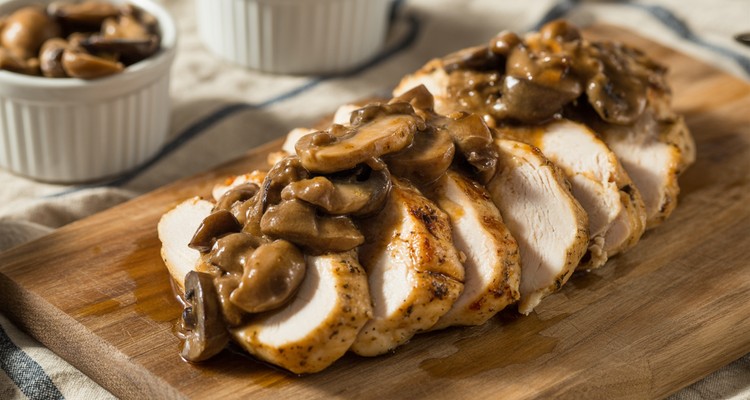
Marsala sauce transforms a simple chicken dinner into something genuinely impressive — a rich, glossy pan sauce built from dry Marsala wine, earthy mushrooms, and a butter finish. The technique is straightforward once you understand the sequence: brown the mushrooms for deep flavor, deglaze with wine, reduce, then build with stock and a butter finish off the heat. This guide covers everything from choosing the right bottle to thickening options, grilled chicken pairings, and storage. Follow the steps below and you will have a repeatable process that produces restaurant-quality results every time.
What Is Marsala Sauce?
Marsala sauce is an Italian-American pan sauce made with Marsala wine — a fortified Sicilian wine — combined with mushrooms, shallots, garlic, stock, and butter. It is best known as the sauce in Chicken Marsala. The sauce is savory, lightly complex from the wine, and finished with butter for a glossy, restaurant-quality texture. Unlike cream-based sauces, an authentic version gets its richness from simmering and the butter finish — not from added cream. The key to its depth is the fond: the caramelized browned bits left in the pan after sautéing them, which dissolve into the sauce during deglazing and give it a meaty, roasted backbone.
Key Characteristics of Authentic Marsala Sauce
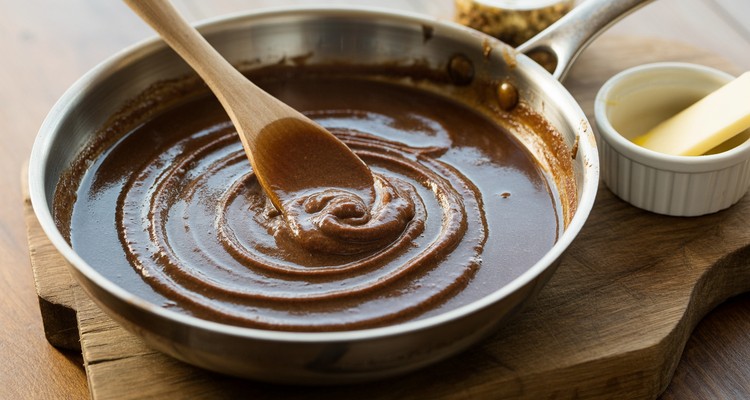
A properly made sauce has a deep mahogany color, a slightly syrupy consistency, and a complex flavor that balances the nutty, oxidized character of the wine with the earthiness of browned mushrooms. It should coat the back of a spoon cleanly without being gluey or watery. It should never taste boozy — proper reduction is what eliminates harsh alcohol notes.
Helpful products for this guide:
- ThermoMaven Sub-1G Smart Wireless Meat Thermometer — tracks long cooks without opening the smoker
- HOTEC silicone basting brushes — apply sauce, butter, or glaze evenly
- Grill Armor Oven Gloves — protect hands around hot grates and pans
Choosing the Right Marsala Wine
The single most important decision in this recipe is which type of Marsala wine to buy. Marsala comes in two primary styles — dry and sweet — and using the wrong one fundamentally changes the sauce.
Dry Marsala vs. Sweet Marsala
Dry Marsala (labeled “Secco”) is the correct choice for a savory chicken dish. It has a nutty, complex flavor that complements poultry without adding cloyingly sweet notes. Sweet Marsala is reserved for desserts like tiramisu — using it here produces an unbalanced, sugary result that overwhelms the other ingredients. A reputable imported dry Marsala from a wine shop will outperform any generic cooking wine. Avoid bottles sold near the vinegar aisle that contain added salt and preservatives — they flatten the flavor and make the sauce taste harsh.
 Pitmaster Tip: You do not need an expensive bottle — a mid-range imported Sicilian dry Marsala in the $10-$18 range is ideal for cooking. Just avoid anything labeled “cooking wine” or found near the vinegar aisle. The quality difference in the finished sauce is significant.
Chicken Marsala Ingredients
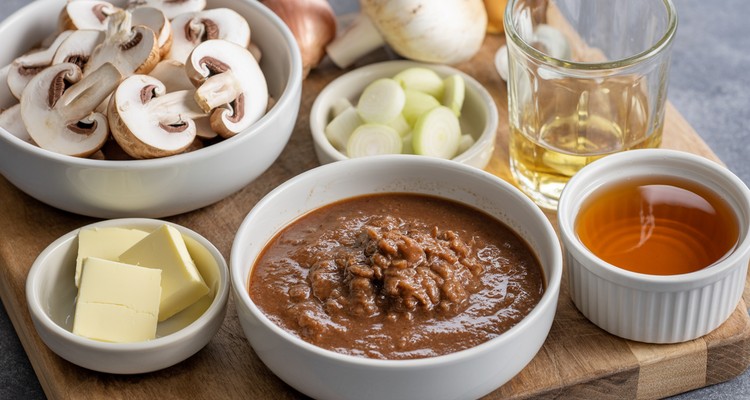
Before you start cooking, gather everything and measure the sauce ingredients. The components are simple, but quality matters — especially for the wine, stock, mushrooms, and butter that define the final flavor. Having the pan-ready ingredients nearby also helps the sauce reduce smoothly without overcooking the aromatics.
- Dry Marsala wine — 3/4 cup; the flavor foundation
- Cremini mushrooms — 8 oz, sliced; browned deeply before any liquid is added
- Shallots — 2 medium, finely diced; provide a mild, sweet onion base
- Garlic — 2 cloves, minced; added after shallots to prevent burning
- Low-sodium chicken stock — 3/4 cup; builds body and balances the wine
- Unsalted butter — 3 tablespoons, cold, divided; half for sautéing, half for finishing
- Olive oil — 1 tablespoon; for the initial sauté
- Fresh thyme — 2 sprigs; woodsy note during simmering
- Fresh parsley — 2 tablespoons chopped; added at the end for brightness
- Kosher salt and black pepper — to taste
Optional thickener: 1 teaspoon cornstarch mixed with 1 tablespoon cold water, or 1 tablespoon flour mixed with 2 tablespoons cold water. See the thickening comparison table below for guidance on which method to choose.
How to Make Marsala Sauce: Step-by-Step
The sauce is built in stages in a single skillet, with each step layering flavor onto the last. Total time is about 20-25 minutes from start to finish. A wide, heavy-bottomed stainless steel or cast-iron skillet gives the best sear and fond development.
Step 1: Brown the Mushrooms
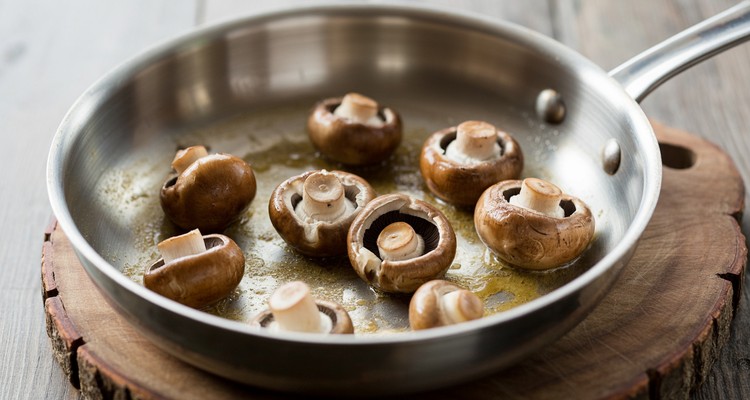
Heat 1 tablespoon of olive oil and 1 tablespoon of butter in a large skillet over medium-high heat. Add the sliced mushrooms in a single layer and resist stirring for 2-3 minutes. They release a lot of moisture when disturbed — patience is essential. Continue cooking, stirring occasionally, for another 3-4 minutes until deeply golden brown. This browning creates the fond — the caramelized layer on the pan bottom — which is the flavor backbone of the entire sauce. Underbrowning is the most common mistake in this recipe.
Step 2: Saute the Aromatics
Reduce the heat to medium. Add the diced shallots and cook for 2 minutes until softened. Add the minced garlic and cook for 30-60 seconds more, just until fragrant. Do not let the garlic brown, because that bitterness carries through the finished sauce.
Step 3: Deglaze and Reduce with Marsala Wine
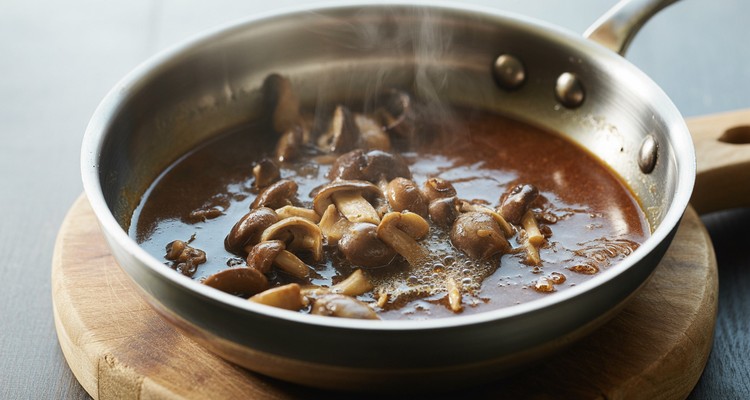
Pour in the dry Marsala wine and immediately use a wooden spoon to scrape up all the browned fond from the pan bottom. This deglazing step is where much of the flavor is unlocked. Increase heat to medium-high and bring the wine to a steady simmer. Let it reduce for 4-5 minutes, until the volume drops by roughly half and the wine tastes nutty instead of harsh.
Step 4: Add Stock and Simmer
Pour in the chicken stock and add the thyme sprigs. Bring to a simmer and cook for 5-8 minutes, stirring occasionally, until the sauce reduces slightly and the flavors meld. You want a sauce that lightly coats a spoon — it will thicken further with the butter finish.
Pro Tip: Always use low-sodium chicken stock. If the sauce reduces significantly with regular-sodium stock, it can become too salty to correct at the end. Low-sodium stock gives you full control over the overall seasoning at every stage.Step 5: Thicken (If Needed)
If the sauce is still too thin after the simmer, add a slurry — either 1 teaspoon cornstarch in 1 tablespoon cold water, or 1 tablespoon flour in 2 tablespoons cold water. Stir it in and cook for 1-2 minutes. Alternatively, continue simmering uncovered for 3-4 more minutes to thicken by reduction alone. See the comparison table below for the full trade-off breakdown.
Step 6: Finish with Butter and Herbs
Remove the skillet from the heat entirely and discard the thyme sprigs. Add the remaining cold butter in small pats and swirl the pan continuously until fully emulsified into the sauce. This technique — monter au beurre — creates the velvety, glossy finish. Adding butter to a boiling sauce will cause it to break into greasy pools instead of emulsifying smoothly. Stir in the chopped parsley just before serving. Taste and adjust salt and pepper as needed.
Thickening Methods Compared
Choosing how to thicken your sauce affects both texture and cooking time. Each method has real trade-offs, so pick the one that fits your timeline, dietary needs, and desired glossy finish. The best option depends on whether you want a classic reduction, a quicker weeknight sauce, or a gluten-free adjustment.
| Method | How to Use It | Texture Result | Best For |
|---|---|---|---|
| Flour slurry | Whisk 1 tbsp flour with 2 tbsp cold water; stir into simmering sauce and cook 2-3 min | Opaque, velvety, classic | Traditional presentation, pan-seared chicken |
| Cornstarch slurry | Whisk 1 tsp cornstarch with 1 tbsp cold water; stir into simmering sauce and cook 1-2 min | Glossy, translucent, firm | Gluten-free, quick finish |
| Natural reduction | Simmer uncovered 5-10 min after adding stock until sauce reaches desired consistency | Intense, concentrated, rich | Maximum flavor depth; low-sodium stock required |
| Butter finish only | Swirl cold butter off-heat after reducing; emulsification adds body without starch | Silky, light, glossy | Cream-free richness, authentic preparation |
Sauce Variations
The classic recipe is a reliable baseline, but it adapts easily to common preferences and ingredient restrictions. Use these variations when you want a creamier finish, a gluten-free thickener, or a deeper mushroom flavor. Keep the same reduction method so the sauce still tastes balanced instead of watered down.
Without Cream (Authentic Method)
The traditional preparation contains no heavy cream. Richness comes entirely from the reduction and the butter emulsification at the end. This version is lighter on the palate and lets the wine’s flavor carry more clearly. If a recipe calls for cream, it is a modern adaptation rather than the traditional approach.
With Cream
For a richer, more indulgent sauce, stir in 1/4 cup heavy cream after the stock has simmered down. Simmer for 2-3 minutes before finishing with butter. The cream softens the wine’s edge and adds body — this version works especially well served over pasta alongside the chicken.
Without Mushrooms
Skip the mushrooms and go straight from cooking the aromatics to deglazing with dry Marsala wine. The sauce will be lighter and will require longer simmering to build body, but still delivers the wine’s signature character. This version works well when serving guests who prefer a smooth, uninterrupted sauce texture.
Non-Alcoholic Version
Combine 1/2 cup of high-quality mushroom or chicken stock with 2 tablespoons white grape juice and 1 tablespoon sherry vinegar. The vinegar’s acidity mimics the wine’s structure; the grape juice provides subtle sweetness. The result is not identical to the original, but it produces a genuinely good savory sauce with a similar flavor direction.
Pairing with Grilled Chicken
The sauce was originally developed as a pan sauce — built in the same skillet as the sautéed chicken — but it adapts well to grilled chicken with a small adjustment in approach. Keep the sauce separate, then spoon it over rested chicken.
As a Finishing Sauce
Grill chicken breasts or thighs over direct heat until cooked through to an internal temperature of 165°F[USDA]. Let the meat rest for 5 minutes, then slice or plate it. Spoon the warm sauce generously over the top just before serving. This keeps the grill char intact and lets the sauce complement rather than mask the smoky flavor.
Pitmaster Tip: Make the sauce in a small cast-iron skillet set directly on the grill grates over medium heat while the chicken finishes cooking. The smoky environment adds a subtle char note to the sauce that you simply cannot replicate indoors.As a Grill Glaze
You can brush a reduced version of the sauce onto grilled chicken as a glaze, but timing is critical. The sugars in the wine caramelize quickly over direct heat and can scorch. Apply the glaze only during the final 2-3 minutes of cooking over indirect heat — let it set without burning before pulling the chicken.
Best Cuts for Grilled Chicken Marsala
Boneless, skinless thighs are the most forgiving cut — they stay moist even if slightly overcooked, and their richer flavor stands up to the bold sauce. Chicken breasts work well when brined for 30-60 minutes first, which helps retain moisture through the grill’s direct heat. Bone-in thighs and chicken drumsticks also pair beautifully but require longer cooking time.
Common Mistakes and Fixes
Most Marsala sauce problems come from rushing reduction, crowding the mushrooms, or adding butter while the pan is too hot. Use the fixes below to bring the sauce back into balance without starting over or flattening the wine’s flavor.
Sauce Is Too Thin
If the sauce is watery after simmering, it has not reduced long enough. Increase heat slightly and simmer uncovered for 3-5 more minutes. For a quick fix, add a cornstarch slurry — 1 teaspoon cornstarch in 1 tablespoon cold water — stir it in and cook for 1-2 minutes.
Tastes Too Alcoholic or Harsh
An unpleasant boozy aftertaste means the wine was not reduced enough. After deglazing, the wine must simmer actively until the volume drops by at least half and the alcohol edge has cooked off. Return the sauce to a simmer and continue reducing — the harshness will fade with time.
Mushrooms Are Soggy, Not Golden
Crowding the pan is the culprit — they release moisture when they touch each other and steam rather than sear. Cook in a single uncrowded layer over high heat, resisting the urge to stir for the first 2-3 minutes. For smaller skillets, cook in two separate batches.
Pro Tip: Pat your mushrooms dry with a paper towel before slicing. Any surface moisture causes them to steam instead of brown. They brown faster, caramelize more deeply, and produce better fond — which means a better-tasting final sauce.What to Serve with Chicken Marsala
The richness of the sauce calls for sides that absorb or balance it. Starchy options work especially well because they soak up the glossy sauce naturally, while crisp vegetables keep the plate from feeling too heavy.
- Creamy mashed potatoes — the classic pairing; the sauce pools beautifully in the center
- Egg noodles or linguine — toss the pasta directly in the warm sauce for a restaurant-style plate
- Creamy polenta — especially good with grilled thighs at a summer cookout
- Roasted asparagus — mild bitterness offsets the wine’s sweetness
- Crusty Italian bread — essential for mopping up any leftover sauce
- Sauteed spinach or arugula — a lighter green side that does not compete with the sauce
Storing and Reheating
The sauce stores and reheats well, making it practical for make-ahead meal prep. Cool it quickly, keep it covered, and reheat gently so the butter emulsion stays smooth. A splash of stock during reheating restores the texture if the sauce thickens in the refrigerator.
How to Store
Cool the sauce at room temperature for no more than two hours, then transfer to an airtight container and refrigerate. Properly stored, it keeps for 3-4 days[USDA]. For longer storage, freeze in a sealed container for up to 2 months.
How to Reheat
Reheat gently in a saucepan over low heat, stirring occasionally. Avoid boiling — high heat breaks the butter emulsification and causes the sauce to separate. If the sauce has thickened too much after refrigeration, whisk in a tablespoon of chicken stock or water to loosen it back to the original consistency.
Frequently Asked Questions
These quick answers cover the most common substitutions, timing questions, storage concerns, and pairing decisions that come up when making Marsala sauce for chicken at home. They also clarify the small technique choices that affect flavor, body, and reheating.
What kind of Marsala wine should I use for chicken?
Always use dry Marsala (labeled “Secco”) for a savory chicken dish. It has a nutty, complex flavor that works well with poultry. Sweet Marsala is intended for desserts and produces a cloying result in savory sauce. Look for an imported Sicilian bottle at a wine shop rather than a supermarket cooking wine.
Can I substitute Marsala wine with something else?
The closest substitutes are dry sherry or Madeira — they share a similar oxidized, nutty character. For a non-alcoholic version, combine 1/2 cup chicken stock with 1 tablespoon sherry vinegar and 1 tablespoon white grape juice. This approximates the acidity and sweetness of the wine, though the authentic nutty Marsala character will not be fully replicated.
How do you thicken Marsala sauce?
Three methods work well: natural reduction, cornstarch slurry, or flour slurry. For reduction, simmer uncovered until the sauce reaches the right consistency. For slurry thickening, stir cornstarch or flour mixed with cold water into the simmering sauce and cook briefly. The butter finish also adds body through emulsification.
Can you make Marsala sauce without cream?
Yes — the authentic recipe contains no cream. The rich, velvety texture in a traditional version comes from cold butter swirled off-heat into the reduced wine and stock. This produces a glossy, silky result without dairy heaviness. Cream is an optional addition in modern adaptations, not a requirement.
Can I make Marsala sauce ahead of time?
Yes — it is an excellent candidate for make-ahead cooking. Prepare the sauce fully, cool it, and store in an airtight container in the refrigerator for up to 3 days. Reheat gently over low heat, adding a splash of stock if it has thickened too much. Hold off adding fresh parsley until just before serving to keep it bright.
What mushrooms are best for Marsala sauce?
Cremini mushrooms (baby bellas) are the traditional choice. They have a deeper, earthier flavor and firmer texture than white buttons, and hold up well through sautéing. For more complexity, use a blend of cremini and wild varieties like shiitake or oyster. Avoid very delicate varieties, which tend to dissolve during simmering.
Why is my Marsala sauce bitter?
Bitterness usually comes from two sources: burned garlic, or under-reduced wine. Garlic turns bitter quickly when it over-browns, so add it after the shallots and keep the heat moderate. If the wine was not simmered long enough, harsh alcohol compounds remain in the sauce. Reduce the wine by at least half before adding any stock to avoid this.
Is Marsala sauce gluten-free?
The base ingredients — wine, stock, shallots, butter — are naturally gluten-free. The sauce becomes non-gluten-free only if you use a flour-based slurry to thicken it. Use a cornstarch slurry instead, or rely on the butter finish to achieve the right consistency without any gluten-containing ingredients.
How do you pair Marsala sauce with grilled chicken?
The most reliable approach is to make the sauce separately and spoon it over the chicken as a finishing sauce at the table. Grill the chicken to 165°F internal temperature, let it rest, then plate it. Pour the warm sauce on top just before serving. If you want to use it as a glaze, apply only during the final 2-3 minutes over indirect heat.
Can Marsala sauce be frozen?
Yes — it freezes well for up to 2 months. Cool completely before freezing in a sealed container. Thaw overnight in the refrigerator and reheat gently over low heat, stirring to re-emulsify any separated butter. Add a splash of stock if the sauce needs to loosen.
What is the difference between Chicken Marsala and Chicken Piccata?
Both are Italian-American pan sauces for chicken, but they use different bases. Chicken Marsala uses Marsala wine with earthy cremini for a rich, savory sauce. Chicken Piccata uses dry white wine with lemon juice, capers, and butter for a bright, briny sauce. Marsala is warmer and richer; piccata is lighter and sharper.
Final Thoughts
A well-made Marsala sauce is one of the most rewarding pan sauces to have in your cooking repertoire. The technique is repeatable once you understand the building blocks: Marsala wine, deeply browned cremini, a proper reduction, and a cold butter finish off the heat. Whether you are pan-searing chicken indoors or grilling outside and finishing with the sauce tableside, the result is a glossy, complex dish that looks more sophisticated than the time it takes to prepare. Give the mushrooms time to brown, do not rush simmering, and add the final butter off the heat. Those three steps cover most of what separates an excellent result from a mediocre one.
Marsala Sauce for Chicken
Equipment
- Large heavy-bottomed skillet (12-inch) stainless steel or cast iron; wide surface essential for mushroom browning and fond development
- Wooden spoon for scraping up fond when deglazing
- Whisk for slurry if thickening; also for emulsifying butter finish
Ingredients
Marsala Sauce
- 8 oz cremini mushrooms sliced; pat dry before cooking — surface moisture prevents browning
- 2 medium shallots finely diced
- 2 cloves garlic minced; add after shallots to prevent burning
- 3/4 cup dry Marsala wine labeled Secco; imported Sicilian preferred — avoid cooking wine from vinegar aisle
- 3/4 cup low-sodium chicken stock low-sodium essential — sauce reduces significantly
- 3 tablespoons unsalted butter cold, divided: 1 tbsp for sautéing, 2 tbsp cold pats for finishing
- 1 tablespoon olive oil
- 2 sprigs fresh thyme removed before serving
- 2 tablespoons fresh parsley finely chopped; added off-heat at the end
- kosher salt and black pepper to taste
Optional Thickener (if needed)
- 1 teaspoon cornstarch mixed with 1 tablespoon cold water; gluten-free option
Instructions
- Heat 1 tablespoon olive oil and 1 tablespoon butter in a large skillet over medium-high heat. Add sliced mushrooms in a single layer — do not crowd. Cook undisturbed for 2-3 minutes, then stir and continue for 3-4 minutes more until deeply golden brown. Deep browning creates the fond that flavors the entire sauce. Underbrowning is the most common mistake.
- Reduce heat to medium. Add diced shallots and cook 2 minutes until softened. Add minced garlic and cook 30-60 seconds until fragrant — do not let it brown. Burned garlic causes bitterness that carries through the finished sauce.
- Pour in the dry Marsala wine and immediately scrape up all browned fond from the pan bottom with a wooden spoon. Increase heat to medium-high and simmer actively for 4-5 minutes until the wine reduces by roughly half and no longer tastes harsh or alcoholic.
- Pour in chicken stock and add thyme sprigs. Bring to a simmer and cook 5-8 minutes, stirring occasionally, until the sauce lightly coats the back of a spoon.
- If the sauce is still too thin: stir in the cornstarch slurry (1 tsp cornstarch + 1 tbsp cold water) and cook 1-2 minutes. Alternatively, simmer uncovered 3-5 more minutes. Remove and discard thyme sprigs.
- Remove skillet from heat entirely. Add remaining 2 tablespoons cold butter in small pats and swirl the pan continuously until fully emulsified and the sauce turns glossy and velvety. Adding butter while the pan is still on high heat will break the emulsion into greasy pools. Stir in chopped parsley. Taste and adjust salt and pepper. Serve immediately over chicken.
Notes