Leftover ribs can taste just as good as the day they came off the smoker – if you reheat them correctly. The key is low heat, added moisture, and a tight seal to trap steam. This guide covers every reliable method to reheat ribs, from the oven and air fryer to the microwave and sous vide, with exact reheating temperatures and times for each approach.
Helpful gear for this cook:
- Temperature control: Stock Your Home aluminum pans catches drips, holds sides, or manages covered reheating.
- Handling: AMMZO digital meat thermometer checks doneness without guessing.
- Prep: Grill Armor extra-long heat-resistant gloves protects your hands around hot grates, pans, and smoker parts.
The Secret to Reheating Ribs Without Drying Them Out
Successful rib reheating depends on three factors: proper refrigerator storage within two hours of cooking, adding liquid such as apple juice or broth before warming, and targeting an internal temperature of 140-145°F for serving quality while the USDA recommends 165°F for food safety.
Proper Storage Comes First
How you store leftover smoked ribs determines how well they reheat. Wrap racks tightly in heavy-duty aluminum foil or place them in airtight containers within two hours of cooking. Refrigerated ribs stay safe for 3-4 days at 40°F or below[USDA]. For longer storage, follow proper rib storage steps and freeze them for up to 2-3 months.
Adding Moisture Back
Ribs lose moisture during refrigeration as the meat fibers contract and release liquid. Before reheating, add a splash of apple juice, pork or beef broth, or a thin layer of BBQ sauce directly onto the meat. This liquid creates steam inside the foil wrap, gently warming the ribs without pulling additional moisture from the meat.
- Temperature tool: ThermoMaven instant-read meat thermometer helps confirm reheated ribs are warm without drying them out.
- Handling option: heat-resistant BBQ gloves are useful when moving hot foil packs or trays.
Target Internal Temperature
The USDA recommends reheating all leftovers to an internal temperature of 165°F[USDA]. Many pitmasters pull ribs at 140-145°F to preserve tenderness, accepting a lower margin above the 140°F danger zone threshold[USDA]. Use an instant-read thermometer inserted into the thickest part of the meat, avoiding the bone, to verify temperature.
How to Reheat Ribs in the Oven (The Best Overall Method)
The oven is the most reliable method for reheating ribs because it delivers even, gentle heat that warms the meat through without overcooking the exterior. Set the temperature to 250°F, wrap the ribs in foil with added liquid, and heat for 20-30 minutes until warmed through.
How Long to Reheat Ribs in Oven at 250°F
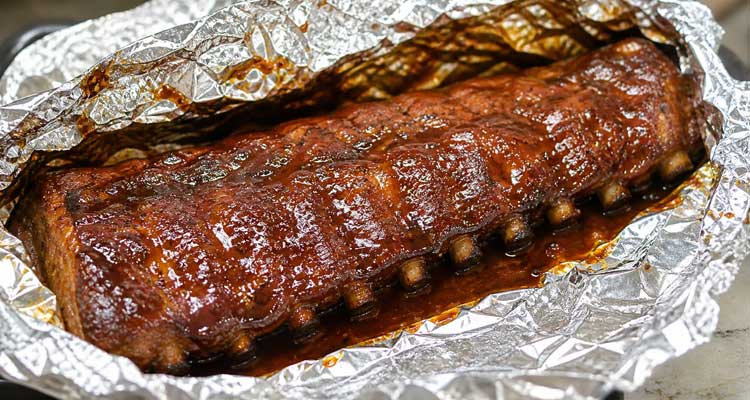
Preheat the oven to 250°F. Place the ribs bone-side down on a sheet of heavy-duty aluminum foil. Add 2-3 tablespoons of apple juice, broth, or water over the meat, then brush a thin layer of BBQ sauce on top. Wrap the foil tightly to create a sealed pouch that traps steam. Place the wrapped ribs on a baking sheet and heat for 20-30 minutes. A full rack takes closer to 30 minutes, while individual ribs may only need 15-20 minutes.
How to Reheat Ribs in Oven Without Foil
Place the ribs on a wire rack set over a rimmed baking sheet. Pour about 1/4 cup of water into the baking sheet to create ambient steam. Set the oven to 250°F. Baste the ribs with sauce every 10 minutes to replace surface moisture. This method takes 25-35 minutes and produces a firmer bark than the foil-wrapped approach.
How to Reheat Ribs in the Air Fryer (The Quickest Crispy Method)
An air fryer reheats ribs in 3-5 minutes at 350°F, making it the fastest method that also restores a crispy, caramelized exterior. Cut the rack into individual ribs before placing them in the basket to ensure even airflow and heating.
Preheat the air fryer to 350°F. Separate the rack into individual ribs so air circulates evenly around each piece. Lightly brush with BBQ sauce or spritz with cooking oil to prevent drying. Heat for 3-5 minutes, checking at the 3-minute mark. The high convection heat caramelizes sauce quickly but can dry out thin spots just as fast. Do not walk away during this short cook.
How to Reheat Ribs in the Microwave (When You’re in a Hurry)
The microwave is the fastest reheating option but produces the lowest quality results. Cover ribs with a damp paper towel and heat on 50% power in one-minute intervals to reduce moisture loss and prevent rubbery texture.
Place ribs in a single layer on a microwave-safe plate. Drape a damp paper towel over the top – this is the single most important step for microwave reheating, as it releases steam that keeps the surface from drying out. Heat on medium power (50%) in 1-minute bursts. Check after each interval and stop as soon as the meat is warmed through, typically 2-3 minutes total. Full power causes the proteins to seize, turning tender ribs rubbery.
Alternative Methods: Sous Vide and Stovetop
Sous vide delivers the best moisture retention of any reheating method by holding ribs at a precise temperature in a water bath. The stovetop method uses a covered skillet with added liquid to steam ribs in 5-7 minutes for a quick weeknight option.
The Sous Vide Method
Vacuum-seal the leftover ribs or place them in a zip-lock bag using the water displacement method to remove air. Set the sous vide circulator to 150°F and submerge the bag for 45-60 minutes. The ribs cannot overcook at this temperature. The meat warms evenly from edge to center, retaining virtually all of its original moisture. This method is ideal for large batches or competition-quality leftovers.
How to Reheat Ribs on the Stove
Use a skillet or sauté pan with a tight-fitting lid. Add 2-3 tablespoons of water or broth to the pan and place the ribs in a single layer. Cover and heat over medium-low for 5-7 minutes. Check at the 5-minute mark. The trapped steam warms the ribs gently, similar to the foil-wrapped oven technique but faster.
Reheating Method Comparison
Each reheating method offers a different balance of speed, texture quality, and moisture retention. The oven and sous vide produce the best results, the air fryer is fastest with crispy texture, and the microwave is a last resort that sacrifices quality for convenience.
| Method | Temperature | Time | Texture Quality | Moisture Retention |
|---|---|---|---|---|
| Oven (foil-wrapped) | 250°F | 20-30 min | Excellent | Excellent |
| Oven (no foil) | 250°F | 25-35 min | Very Good | Good |
| Air Fryer | 350°F | 3-5 min | Very Good | Moderate |
| Microwave | 50% Power | 2-3 min | Fair | Fair |
| Sous Vide | 150°F | 45-60 min | Excellent | Excellent |
| Stovetop | Medium-Low | 5-7 min | Good | Good |
Common Mistakes When Reheating Ribs
The three most common reheating mistakes are using high oven temperatures above 300°F without foil protection, skipping the added liquid step, and microwaving on full power. Each of these causes the meat to dry out, toughen, or develop a rubbery texture.
- Using High Heat: Setting the oven to 350°F or higher without foil causes rapid moisture evaporation. Stick to 250°F for gentle, even reheating.
- Skipping the Liquid: Ribs lose moisture in the fridge overnight. Adding apple juice, broth, or water before wrapping in foil replaces that lost moisture as steam.
- Microwaving on High: Full-power microwaving causes meat proteins to contract rapidly, squeezing out moisture and creating a rubbery texture. Always use 50% power.
- Reheating From Frozen: Frozen ribs should thaw overnight in the refrigerator before reheating. Heating from frozen creates uneven hot and cold spots.
- Leaving Ribs Uncovered: Whether using foil in the oven or a damp paper towel in the microwave, covering is essential. Open reheating accelerates moisture loss.
Frequently Asked Questions
What’s the best way to reheat cooked ribs?
The low-and-slow oven method at 250°F with foil and added liquid is the gold standard. Wrap ribs tightly in foil with a splash of apple juice or broth, then heat for 20-30 minutes. This approach warms the meat evenly while trapping steam to preserve moisture and tenderness.
How long does it take to reheat ribs at 250 in the oven?
A full rack of foil-wrapped ribs takes 20-30 minutes at 250°F. Individual ribs or half racks may only need 15-20 minutes. Use an instant-read thermometer to verify the internal temperature reaches at least 140°F before serving.
Is it better to reheat ribs in the microwave or oven?
The oven is vastly superior for texture, bark quality, and moisture retention. The microwave works in a pinch for 2-3 minutes on 50% power with a damp paper towel, but it cannot replicate the even heating and gentle steam environment that the oven provides.
Can you freeze leftover ribs and reheat them later?
Yes. Wrap ribs tightly in plastic wrap and then aluminum foil, or use a vacuum sealer. Frozen ribs stay safe for 2-3 months. Thaw overnight in the refrigerator before reheating using the oven or sous vide method for the best results.
What temperature should reheated ribs reach?
The USDA recommends reheating all leftover meat to an internal temperature of 165°F for food safety. Many BBQ enthusiasts pull ribs at 140-145°F to preserve tenderness. Always use a meat thermometer to verify the temperature.
How do you reheat ribs in an air fryer?
Cut ribs into individual pieces, lightly brush with sauce, and heat at 350°F for 3-5 minutes. The air fryer produces a crispy, caramelized exterior faster than any other method. Watch closely because the high convection heat can dry out thinner sections quickly.
How long do leftover ribs last in the fridge?
Properly stored leftover ribs last 3-4 days in the refrigerator at 40°F or below. Store them in airtight containers or wrapped tightly in foil within two hours of cooking. If you cannot eat them within that window, freeze for longer storage.
Can you reheat ribs with sauce already on them?
Yes. Sauce actually helps during reheating by adding a moisture barrier that slows evaporation. Wrap sauced ribs in foil for oven reheating, or brush a fresh thin layer on for air fryer reheating to create a caramelized glaze.
What’s the best way to reheat pork without drying it out?
Use low heat (250°F or below), add liquid before reheating, and cover the meat to trap steam. These three principles apply to all pork cuts including ribs, pulled pork, and pork chops. The sous vide method at 150°F provides the highest moisture retention.
Should you add liquid when reheating ribs?
Always add liquid. Apple juice, pork or beef broth, water, or even a thin layer of BBQ sauce all work. The liquid creates steam inside the foil wrap or covered container, replacing moisture lost during refrigeration and preventing the meat surface from drying.