You do not need an expensive dedicated smoker to produce authentic, low-and-slow BBQ at home. A standard charcoal grill – including a basic Weber Kettle – can smoke ribs, brisket, pork shoulder, and chicken with excellent results when set up correctly. The technique relies on 2-zone cooking, careful temperature control through vent management, and the right combination of charcoal and smoking wood. This guide walks through the complete process from equipment setup to food safety, so you can start smoking on your charcoal grill with confidence.
- 2-Zone Setup: Master indirect heat by arranging coals on one side and cooking meat on the other, maintaining a consistent 225-275°F for tender, smoke-infused results.
- Essential Gear: Equip yourself with a lidded grill, quality briquettes, wood chunks or chips, a water pan for humidity, and a dual-probe thermometer for precise temperature monitoring.
- Temperature Control: Regulate grill temperature primarily with the bottom intake vent, keeping the top exhaust vent partially open to ensure clean, thin blue smoke and prevent creosote buildup.
- Safe Smoking: Ensure meat reaches 140°F within 4 hours to avoid the USDA danger zone, always starting with fully thawed meat for optimal safety and results.
Quick Roundup List
Helpful gear for this cook:
- Spice Guru BBQ rub set — gives you several BBQ seasoning options for the cook
- HOTEC silicone basting brushes — apply sauce, butter, or glaze evenly
- Grill Heat Aid heat-resistant BBQ gloves — protect hands around hot grates and pans
The Basics of Charcoal Smoking for Beginners
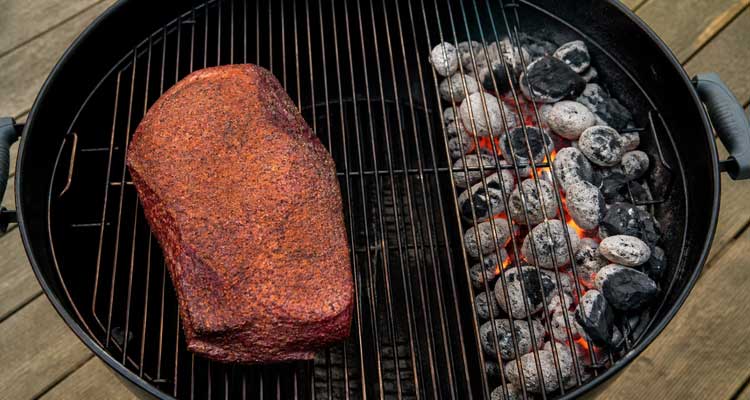
Charcoal smoking uses indirect heat at 225-275°F to cook meat slowly over hours, producing tender, smoke-flavored results. Any charcoal grill with a lid and adjustable vents can function as a smoker by arranging coals on one side and placing the meat on the opposite cool side.
The fundamental difference between grilling and smoking is heat placement. Direct grilling places food directly over hot coals at 400-500°F for fast cooking. Smoking positions the meat away from the coals at 225-275°F, using indirect heat and wood smoke for 2-12 hours depending on the cut.
Any charcoal grill with a tight-fitting lid and adjustable vents can function as a smoker. The classic Weber Kettle is the most popular choice for beginners because its round shape circulates smoke evenly and its damper system provides precise airflow control.
Helpful gear for this cook:
- Temperature control: Grill Armor extra-long heat-resistant gloves protect your hands around hot grates, pans, and smoker parts.
- Handling: ThermoMaven bristle-free grill brush cleans grates without leaving wire bristles behind.
- Prep: AMMZO digital meat thermometer checks doneness without guessing.
Essential Equipment for Your Smoking Set Up
A successful charcoal smoking set up requires five core items: a lidded grill with adjustable vents, quality charcoal briquettes, smoking wood chips or chunks, a water pan for temperature stability, and a dual-probe thermometer to monitor both grate and meat temperatures simultaneously.
Charcoal Grill Requirements
Any grill with a tight-fitting lid and both intake (bottom) and exhaust (top) vents will work. The Weber Kettle, barrel grills, and kamado-style cookers are all excellent choices for smoking.
Choosing Your Charcoal
Briquettes burn more consistently and longer than lump charcoal. This makes them the better choice for beginners who need predictable, stable heat over several hours for a low-and-slow cook.
Selecting Smoking Wood
Use wood chunks for long smokes (3+ hours) and wood chips for shorter sessions. Chunks burn slowly without needing to be soaked. If using chips, soaking them for 30 minutes slows combustion and extends smoke production.
The Importance of a Water Pan
A disposable aluminum pan filled with water, placed between the coals and the meat, is crucial. The water absorbs heat spikes, adds humidity, and helps stabilize the cooking chamber temperature.
Why a Dual-Probe Thermometer is Crucial
One probe monitors the grate temperature where the meat sits, while the second probe tracks the internal temperature of the meat. Both readings are essential for food safety and achieving perfect results.
Charcoal Smoking Setup Checklist
- Clean grates: Start with a clean cooking surface so smoke and rendered fat do not pick up stale flavors.
- Two-zone fire: Keep the charcoal on one side and leave the cooking side indirect for steady low heat.
- Water pan: Place the pan under the food or between the fire and food to buffer temperature swings.
- Thermometer probes: Measure grate temperature where the food sits, not just the lid thermometer.
- Wood chunks: Add two or three chunks early in the cook so the meat gets clean smoke while the surface is still moist.
Mastering the 2-Zone Cooking Method
The 2-zone method divides the grill into a hot side with lit charcoal and a cool side where the meat cooks by indirect heat. Two popular charcoal arrangements – the Snake Method and the Minion Method – extend burn times to 4-8 hours without needing to add fuel.
Push all lit charcoal to one side of the grill. Leave the opposite side completely empty. Place the water pan on the empty side, directly on the charcoal grate. The meat sits on the cooking grate above the water pan, away from direct heat.
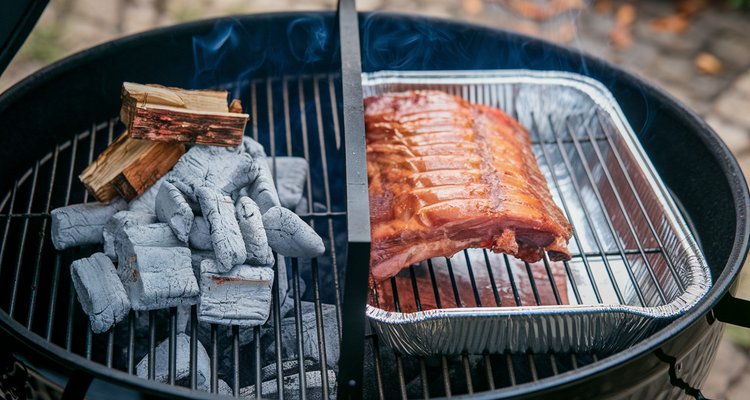
Position the lid with the exhaust vent directly over the meat. This draws smoke from the coal side across the food before exiting, maximizing smoke flavor contact.
| Setup Method | Best For | Typical Burn Time | Difficulty |
|---|---|---|---|
| Standard 2-Zone Fire | Chicken, ribs, sausage, shorter smokes | 2-4 hours | Beginner |
| Snake Method | Ribs, pork shoulder, long kettle cooks | 4-6 hours | Beginner-friendly |
| Minion Method | Pork butt, brisket flats, larger charcoal grills | 6-8 hours | Moderate |
| Offset Firebox | Traditional stick-burning flavor | 45-60 minutes per fuel addition | Hands-on |
The Snake Method
Arrange unlit briquettes in a C-shaped row, two briquettes wide and two briquettes high, around the inside edge of the grill. Place wood chunks on top of the unlit briquettes at intervals. Light 8-10 briquettes in a chimney starter and place them at one end of the snake. The lit coals gradually ignite the next briquettes in line, providing 4-6 hours of consistent 225-250°F heat without opening the lid.
The Minion Method
Fill one side of the charcoal grate with unlit briquettes. Nestle wood chunks throughout the pile. Light 10-15 briquettes in a chimney and pour them on top of the unlit pile. The lit coals slowly ignite the briquettes beneath them. This method produces longer burn times (6-8 hours) and works well in larger grills or when smoking thick cuts like pork shoulder.
Temperature Control and Managing Smoke
Temperature control on a charcoal grill relies entirely on oxygen management through the intake and exhaust vents. The intake vent at the bottom controls how much air feeds the fire, while the exhaust vent at the top should stay partially open to maintain clean smoke flow and prevent creosote buildup.
Using the Vents
The bottom intake vent is your primary temperature control. Opening it wider feeds more oxygen to the coals, raising the temperature. Closing it partially starves the fire and lowers the heat.
The top exhaust vent should stay at least partially open during the entire cook. Closing it completely smothers the fire and traps stale smoke that deposits bitter creosote on the meat. Aim for 1/4 to 1/2 open for most smoking sessions at 225-250°F.
Reading the Smoke
Thick, billowing white smoke in the first 15-20 minutes is normal as the wood ignites. This early smoke contains volatile compounds and creosote that taste bitter if absorbed by the meat in large quantities. The target is thin blue smoke – barely visible, wispy, and clean-smelling.
Thin blue smoke indicates complete combustion and deposits the desirable flavor compounds without bitterness. Wait until the smoke transitions before placing the meat on the grill.
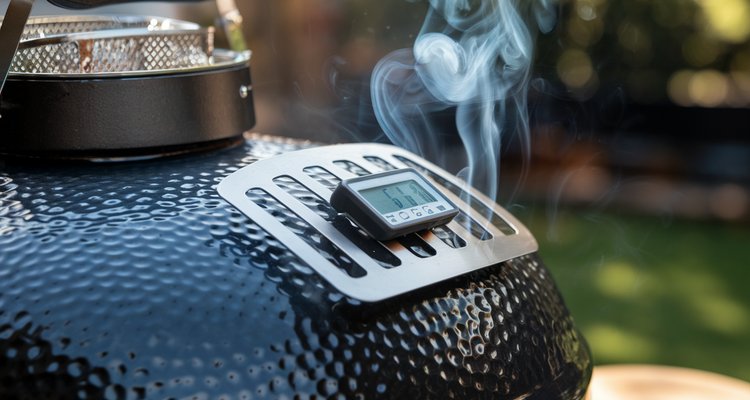
 Pitmaster Tip: If the smoke turns thick and white mid-cook, the fire is smoldering from lack of oxygen. Open the bottom vent slightly to increase airflow and restore clean combustion.
Is Smoke from Charcoal Dangerous?
Inhaling any smoke is not healthy in large, prolonged doses. However, cooking outdoors with proper ventilation and achieving clean thin blue smoke prevents harmful compounds from accumulating on the food. The concern with charcoal smoking is primarily about incomplete combustion, which produces creosote and excess carbon monoxide. Proper vent management and good airflow eliminate both issues for normal backyard cooking sessions.
Step-by-Step: Smoking Your First Cut of Meat
The smoking process follows four steps: prep the grill grates for non-stick performance, position the meat on the cool side of the 2-zone setup, monitor internal temperature for food safety, and maintain 225-275°F grate temperature throughout the cook by adjusting the bottom vent.
Step 1: Prep the Grill Grates
Clean the grates with a wire brush, then rub a cut raw potato across the hot metal surface. The natural starches create a non-stick layer that prevents delicate meats like fish or chicken skin from tearing when flipped or removed.
Step 2: Position the Meat
Place the meat on the cool side of the grill, directly above the water pan. Close the lid with the exhaust vent positioned over the meat to draw smoke across it before exiting.
Step 3: Monitor and Adjust Temperature
Check the grate temperature every 30-45 minutes. Adjust the bottom vent in small increments – 1/4 inch at a time – and wait 10-15 minutes before adjusting again. Charcoal responds slowly to vent changes.
Step 4: Follow the 4-Hour Rule
The meat must reach an internal temperature of 140°F within 4 hours to stay safely outside the USDA danger zone (40-140°F), where harmful bacteria multiply rapidly.[USDA] Always start with fully thawed meat to avoid lingering in the danger zone.[FSIS]
Pro Tip: Resist the urge to open the lid frequently. Every time you lift the lid, you lose 15-25°F of accumulated heat and extend the cook time. If you are looking, you are not cooking.Smoking Temperature and Time Reference
Different cuts of meat require different smoking temperatures and cook times to reach their target internal temperatures. This reference table covers the most common beginner-friendly cuts with the grate temperature, estimated time per pound, and safe finished internal temperature for each.
| Cut | Grate Temp | Time per Pound | Target Internal Temp |
|---|---|---|---|
| Pork Shoulder / Butt | 225-250°F | 1.5-2 hours | 195-205°F |
| Baby Back Ribs | 225-250°F | 4-5 hours total | 190-203°F |
| Whole Chicken | 250-275°F | 45-60 min | 165°F |
| Beef Brisket | 225-250°F | 1-1.5 hours | 195-205°F |
| Salmon Fillet | 200-225°F | 1-2 hours total | 145°F |
Adapting for Other Charcoal Grill Types
The 2-zone smoking technique works on barrel grills, offset smokers, and kamado-style cookers with minor adjustments for coal placement and airflow. Barrel grills require banking coals to one end, while offset smokers use a separate firebox to keep the main chamber entirely indirect.
Smoking on a Charcoal Barrel Grill
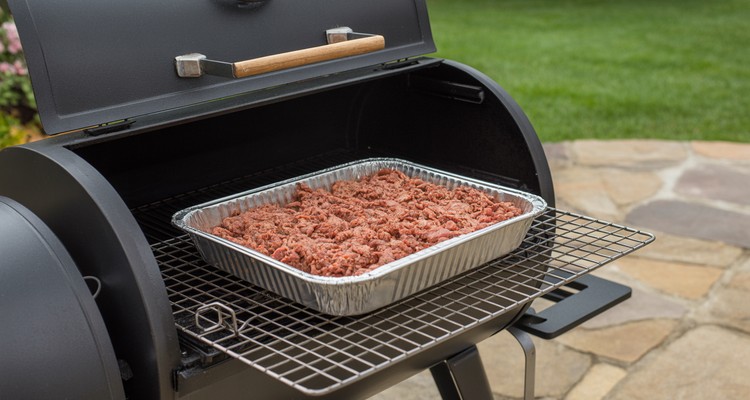
Barrel grills have more distance between the coal grate and the cooking grate compared to a kettle. Bank all coals to one end of the barrel and place the water pan in the center. The meat goes on the far end, opposite the coals.
Monitor temperature carefully – the longer shape creates a wider temperature gradient from the hot end to the cool end. Rotate the meat 180 degrees halfway through the cook for even results.
Using an Offset Smoker Attachment
If your charcoal grill has an offset firebox, build and manage the fire entirely in the firebox. The main cooking chamber stays completely indirect. Add small splits of wood or handfuls of charcoal every 45-60 minutes to maintain 225-250°F.
Offset smokers require more attention than a kettle because the fire burns faster in the smaller firebox. Keep a chimney of lit charcoal ready as a backup heat source during long smokes.
Frequently Asked Questions
How do you smoke on a normal charcoal grill?
Set up a 2-zone fire by pushing all lit charcoal to one side and leaving the other side empty. Add a water pan on the cool side, place your meat above it, and close the lid with the exhaust vent over the meat. Control the temperature at 225-250°F using the bottom intake vent.
How do you turn a charcoal grill into a smoker?
Any charcoal grill with a lid and adjustable vents becomes a smoker when you create an indirect cooking zone. Use the Snake Method or Minion Method for long, unattended burns. Add wood chunks to the charcoal for smoke flavor and use a water pan for temperature stability.
Do you wait for charcoal to stop smoking before cooking?
Wait for the thick white smoke to thin out and transition to barely visible thin blue smoke before placing the meat on the grill. White smoke contains bitter creosote compounds that taste harsh on food. This transition typically takes 15-20 minutes after lighting.
What is the 4-hour rule for smoking meat?
The meat must reach an internal temperature of 140°F within 4 hours to stay safely outside the USDA danger zone where bacteria multiply rapidly.[USDA] Starting with fully thawed meat and maintaining a grate temperature of at least 225°F ensures you clear this threshold well within the time limit.
What does rubbing a potato on a grill do?
Rubbing a halved raw potato across hot grill grates releases natural starches that create a non-stick coating. This prevents delicate foods like fish fillets and chicken skin from tearing when moved or removed. It is a traditional pitmaster technique that works on both smoking and direct grilling setups.
How to smoke on a charcoal grill with wood chips?
Soak wood chips in water for 30 minutes, then scatter them directly on the hot coals. The wet chips smolder slowly, producing smoke for 20-30 minutes per batch. For longer smokes, add a fresh handful of soaked chips every 30-45 minutes. Dry chips burn faster but produce a more intense initial burst of smoke.
How long does charcoal last when smoking?
A standard Weber Kettle loaded with a full snake of briquettes burns for 4-6 hours at 225-250°F. The Minion Method extends this to 6-8 hours. Larger grills and kamado cookers can hold temperature for 10-12 hours on a single load of charcoal thanks to better insulation.
Can you smoke with just charcoal and no wood?
Charcoal alone produces mild smoke flavor, especially lump charcoal made from hardwood. However, adding wood chunks or chips significantly increases the smoke intensity and complexity. For a noticeable smoky flavor, always include at least 2-3 wood chunks per smoking session.
Take Home Message
Smoking on a charcoal grill is an accessible and rewarding way to achieve authentic BBQ flavors without specialized equipment. By mastering the 2-zone setup, precise temperature control, and proper smoke management, you can confidently smoke a variety of meats.
Remember to prioritize food safety by monitoring internal temperatures and adhering to the 4-hour rule, ensuring delicious and safe results every time.