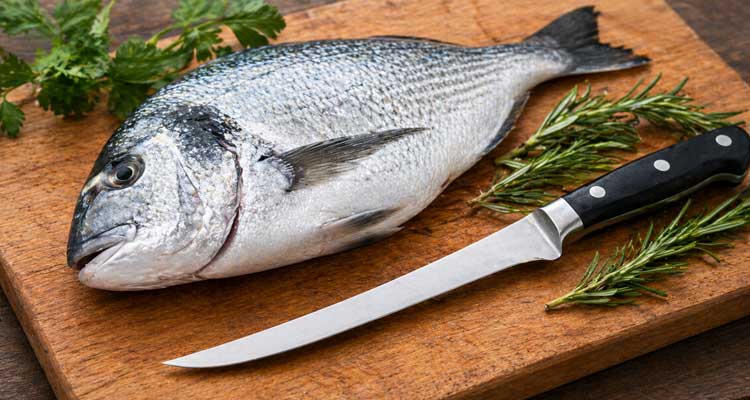
A sharp, reliable fillet knife is one of the most important tools you can own for preparing fish and meat before they hit the grill or smoker. Its flexibility and precision are unmatched for delicate tasks. Whether you are breaking down a whole salmon, working through saltwater catches, or trimming excess fat from a brisket, the right blade makes every cut cleaner and faster. The best fillet knife feels like an extension of your hand, providing the control needed to separate meat from bone with minimal waste. This is as true for a delicate trout as it is for trimming the silverskin from a rack of ribs. This guide covers the top options on the market, from traditional manual knives to powerful cordless electric models. We’ll help you find the best fillet knife for your cooking style and outdoor adventures.
Quick Roundup List
- Best 7-Inch Japanese Style: HOSHANHO 7 Inch Fillet Knife
- Best Cordless Electric: VLOXO Electric Fillet Knife
- Best for Outdoors: DURATECH 12V Cordless Electric Fillet Knife
- Best Heavy-Duty Electric: WORKPRO 12V Cordless Electric Fillet Knife
Fillet Knife Comparison Table
A side-by-side comparison of four fillet knives details blade length, blade material, power source, and weight. Blade lengths range from 7 inches on the manual knife up to interchangeable 7-inch and 8-inch blades on electric models. Power sources include manual operation and lithium-ion rechargeable batteries rated between 1500 mAh and 2000 mAh.
| Product | Type | Blade Length | Handle Material |
|---|---|---|---|
| HOSHANHO 7 Inch Fillet Knife | Manual | 7 Inches | Pakkawood |
| VLOXO Electric Fillet Knife | Cordless Electric | 5 & 8 Inches | Contoured Grip |
| DURATECH 12V Cordless Electric Fillet Knife | Cordless Electric | 8 & 10 Inches | Soft TPE |
| WORKPRO 12V Cordless Electric Fillet Knife | Cordless Electric | 8 & 10 Inches | Rubber-Coated |
Top Fillet Knives Reviewed
Each review assesses blade flexibility, edge retention, handle ergonomics, and cutting performance on fish and meat. Manual knife reviews focus on steel hardness and flex for bonework. Electric knife reviews cover motor power measured in RPM, battery runtime per charge, blade change mechanism, and included accessories such as carrying cases and extra blade sets.
We evaluated each knife based on blade material, flexibility, handle ergonomics, and real-world performance for BBQ prep tasks like trimming brisket, breaking down whole fish, and portioning salmon. Below are our top picks across manual and electric categories.
HOSHANHO 7 Inch Fillet Knife – Best 7-Inch Japanese Style

The HOSHANHO 7 Inch Fillet Knife is an excellent choice for trimming chicken thighs, breaking down pork ribs, and working through medium-sized fish before they hit the smoker. The high-carbon stainless steel blade holds an edge exceptionally well, even after repeated use. Its flexibility allows the blade to hug bones and contours, reducing waste on every cut. The pakkawood handle is one of the standout features here. It provides a secure grip whether your hands are dry at the prep table or wet from rinsing fish. This is the kind of daily-use knife that hands-on cooks reach for repeatedly.
 Pitmaster Tip: Use the 7-inch blade to trim silverskin from beef tenderloin and pork loins before seasoning. A single clean pass saves time and improves bark formation on the smoker.
Pros
- Exceptional edge retention from Japanese high-carbon steel.
- Ergonomic pakkawood handle offers a secure, comfortable grip.
- Versatile 7-inch blade is suitable for both fish and meat prep.
- Well-balanced design reduces hand fatigue during extended use.
Cons
- Blade may be less flexible than some dedicated fish-only knives.
- High-carbon steel requires immediate hand washing and drying to prevent rust.
Highlights
- Premium 10Cr15CoMoV Japanese high-carbon stainless steel
- Hand-polished edge at 15 degrees per side
- Ergonomic pakkawood handle for reduced fatigue
- Flexible blade adapts to fish and meat contours
Specifications
- Blade Length: 7 Inches
- Material: High Carbon Stainless Steel
- Handle: Pakkawood
Customer Reviews
- “I use it to trim the fat from large cuts of meat that I get from Sam’s or Costco and even from our butcher when we have our cows slaughtered.”
- “The quality is solid, it’s easy to use, and it performs reliably.”
- “Really nice knife. It looks good and feels good in my hand. Very sharp right out of the box.”
VLOXO Electric Fillet Knife – Best Cordless Electric

The VLOXO Electric Fillet Knife saves time when you are processing a large catch or batch quantities of fish. It includes a 5-inch blade for smaller trout and panfish plus an 8-inch blade for walleye, salmon, and thicker cuts. The cordless design offers complete freedom of movement at the cleaning station. The included carry case keeps both blades organized and safe during transport, making this an easy grab-and-go option for fishing trips or tailgate prep. The safety lock also prevents accidental activation when storing or reaching into a bag.
Pro Tip: Swap to the 5-inch blade when filleting crappie or bluegill. The smaller profile gives you better control around the rib cage and minimizes flesh loss on smaller panfish.Pros
- Includes two versatile blade sizes (5-inch and 8-inch).
- Excellent hard-shell case for organization and transport.
- Cordless design provides freedom of movement.
- Effective safety lock prevents accidental starts.
Cons
- Handle may feel bulky for users with smaller hands.
- Comes with only one battery.
Highlights
- Includes 5-inch and 8-inch titanium nitride coated blades
- Cordless design with up to 40 minutes of continuous use
- Ergonomic, lightweight handle minimizes wrist strain
- Safety lock prevents accidental activation
Specifications
- Type: Cordless Electric
- Blade Lengths: 5 Inches and 8 Inches
- Battery Life: Up to 40 minutes
Customer Reviews
- “The zipper, foam insert, and slim overall design make it super convenient. Everything stays in one place—no loose cords, no digging through drawers trying to find blades.”
- “The blades are easy to insert and are very sharp.”
- “This cordless electric fillet knife handles fish cleaning and kitchen prep better than I expected. The 5 inch and 8 inch razor sharp blades swap out fast and cut through trout, walleye, and even thicker cuts with smooth control.”
DURATECH 12V Cordless Electric Fillet Knife – Best for Outdoors
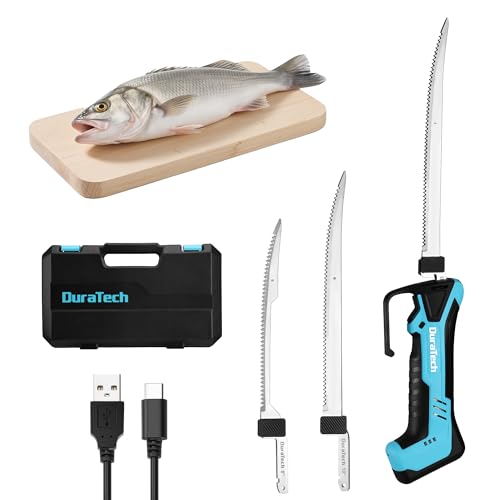
The DURATECH 12V Cordless Electric Fillet Knife is built for dock, campsite, and outdoor prep work where an outlet is not close by. It includes 8-inch and 10-inch blades, a built-in 2.0Ah lithium-ion battery, Type-C charging, and a storage case, so it fits the same outdoor-focused role as the unavailable IVIIN knife without duplicating the WORKPRO pick later in this guide. The non-slip handle helps maintain grip when hands are wet, and the safety lock helps prevent accidental starts while handling the knife around a cleaning table. The built-in battery and Type-C charging are convenient for travel because you can top it up from common chargers instead of packing a dedicated charging dock.
Pro Tip: Charge the knife before you leave home and pack a short USB-C cable in the case. It is easier to top off a built-in battery at the dock than to hunt for a proprietary charger.Pros
- Built-in rechargeable battery avoids loose battery packs.
- 8-inch and 10-inch blades cover both medium and larger fish.
- Rubber-coated grip helps control the knife in wet conditions.
- Type-C charging and carry case make it easy to pack for outdoor trips.
Cons
- Still bulkier than a manual fillet knife for small panfish.
- Built-in battery is less flexible than swappable packs for very long cleaning sessions.
Highlights
- Built-in 2.0Ah lithium-ion battery
- 8-inch flex blade and 10-inch stiff blade
- Rubber-coated non-slip handle
- Type-C charging, safety lock, and carry case included
Specifications
- Type: Cordless Electric
- Blade Lengths: 8 Inches and 10 Inches
- Power: 12V rechargeable built-in battery
Customer Reviews
- “The USB-C charging is convenient for travel and dock use.”
- “The handle feels secure, and the blades handle larger fish well.”
- “Having two blade sizes and a case makes it easy to keep everything together.”
WORKPRO 12V Cordless Electric Fillet Knife – Best Heavy-Duty Electric

The WORKPRO 12V Cordless Electric Fillet Knife earns its heavy-duty designation with two 2.0Ah lithium-ion battery packs. Reviewers note it powers through crappie, bass, and catfish without a noticeable drop in performance. The rubber-coated handle provides a solid, confidence-inspiring grip. Both the 8-inch flex and 10-inch stiff blades are razor-sharp from the factory. They cut cleanly through fish, poultry, and red meat. If you clean everyone’s catch at camp, this is the knife built for that job.
Pro Tip: The dual-battery setup lets you rotate batteries during long camp filleting sessions. Label them “A” and “B” with tape so you always know which is fresh off the charger.Pros
- Includes two high-capacity 2.0Ah batteries for maximum runtime.
- Powerful motor cuts through bones and tough skin with ease.
- Durable rubber-coated handle ensures a secure grip.
- Comes with both a flexible and a stiff blade for versatility.
Cons
- Heavier weight may cause fatigue for some users.
- The included case is functional but bulky.
Highlights
- Includes two 2.0Ah Lithium-ion rechargeable battery packs
- 8-inch flex blade and 10-inch stiff blade included
- Rubber-coated handle for comfortable grip
- Heavy-duty storage case for easy transport
Specifications
- Type: Cordless Electric
- Blade Lengths: 8 Inches and 10 Inches
- Power: 12V Fast Charger with Dual Batteries
Customer Reviews
- “It makes filleting fast and efficient; I was able to clean fish in just a few minutes with minimal effort.”
- “I’ve used it 3 or 4 times now on the same charge cleaning crappie without losing any power. Having 2 batteries is GREAT because I can always have 1 charged as a backup.”
- “Solid grip, sturdy and feels well made. For the quality of this and the value, I would never buy a bigger name brand for an extra $100.”
Helpful products for this guide:
- stainless steel grill basket set — keeps small foods from falling through the grates
- BBQ-AID stainless steel skewers — hold kabobs and smaller grilled pieces securely
- ThermoMaven instant-read meat thermometer — checks doneness quickly at the grill
Buying Advice: How to Pick a Good Fillet Knife
Choose blade length based on the fish you process most often. A 6 to 7-inch blade handles panfish and trout, while 8 to 9-inch blades suit salmon and larger species. Flexible blades follow contours for thin fillets, stiffer blades offer more control on thick cuts. Cordless electric models reduce hand fatigue during high-volume processing sessions.
Choosing the right fillet knife comes down to matching the tool to your primary catch or prep task. Think about whether you are mostly working with small freshwater fish, large saltwater species, or breaking down bulk cuts of meat for the smoker. The right combination of blade material, flexibility, and handle design will determine how efficient and safe your prep sessions are. A quality fillet knife should feel balanced in your hand and hold an edge through repeated use without constant resharpening.
Manual vs. Electric Fillet Knives
Manual fillet knives give you complete tactile control, which is valuable for removing pin bones or following the contours of smaller fish. They require no charging, have no moving parts to maintain, and are usually easier to maneuver in tight spaces. A quality manual knife is also a longer-term investment that can last decades with proper care. Electric fillet knives trade some precision for speed and reduced fatigue. If you process large quantities of fish after a day on the water, the powered blade movement does the heavy lifting so your wrist and forearm stay fresh. Cordless models are particularly practical for use at a cleaning station, on a boat, or at a remote campsite where outlets are not available.
Blade Material: The Heart of the Knife
The steel used in the blade dictates its sharpness, durability, and corrosion resistance. High-carbon stainless steel, like that in the HOSHANHO, offers superior edge retention but requires more diligent care to prevent rust. Standard stainless steel is more forgiving and corrosion-resistant but may need more frequent sharpening. Titanium nitride coatings, often seen on electric knife blades, add an extra layer of corrosion resistance and reduce friction for smoother cuts. No matter the material, a quality blade is the most important feature of any fillet knife.
Blade Flexibility: Matching the Blade to the Task
Flexibility is a key characteristic of a fillet knife. A highly flexible blade is ideal for small, delicate fish, as it can bend to move around the rib cage and along the spine without wasting meat. For larger, tougher fish like salmon or when trimming thick cuts of meat, a stiffer blade provides more leverage and control. Some electric knife kits, like the WORKPRO, include both a flexible and a stiff blade, offering the best of both worlds.
Handle Ergonomics and Material
A secure grip is non-negotiable, especially when working in wet conditions. Handle materials range from traditional pakkawood, which offers a classic look and feel, to modern TPE and rubber coatings that provide excellent non-slip performance. The handle should fit comfortably in your hand to minimize fatigue and prevent slipping.
How to Care for a Fillet Knife
Proper maintenance ensures your knife performs well for years. Always hand wash blades immediately after use with warm, soapy water and dry them thoroughly before storage. High-carbon steel is especially prone to rust if left wet, so a quick wipe-down is essential. For electric knives, rinse the blades under warm water and allow them to air dry completely before storing them. Avoid submerging the motor housing. Keep blades sharp using a honing rod or a knife sharpener designed for thin-profile blades, as dull blades tear rather than slice cleanly.
Frequently Asked Questions
What is a fillet knife used for?
A fillet knife is a thin, flexible blade used primarily to remove fish flesh from the skin and bones. It is also used to trim fat, silverskin, and connective tissue from meat before cooking. The flexible blade allows it to follow curves and contours that a rigid chef’s knife cannot navigate cleanly.
What is the best blade length for a fillet knife?
Blade length should match the size of your primary fish or meat cut. A 5-7 inch blade works well for smaller freshwater species like trout, perch, and crappie. For larger saltwater fish, whole salmon, or long strips of brisket flat, an 8-10 inch blade provides the reach needed for clean, continuous strokes.
What is a Japanese fillet knife?
Japanese fillet knives are characterized by their high-carbon steel construction and thin, hard blade geometry. Models like the HOSHANHO use steel that is ground to a finer edge angle than most Western-style knives. These knives are favored for their exceptional edge retention and precise cutting feel.
Are Rapala fillet knives good?
Yes, Rapala is a well-respected brand known for its classic wood-handled, flexible fillet knives that have been a favorite of anglers for generations. Legacy brands like Rapala and Victorinox are frequently cited by culinary publications like Serious Eats for their consistent performance and durability, making them a benchmark in the industry.
What is the best brand of fillet knife?
The “best” brand depends entirely on your needs. For those who value traditional craftsmanship and precision for varied kitchen tasks, HOSHANHO is an excellent choice. For anglers needing high-volume, portable power, brands like IVIIN and WORKPRO excel with their dual-battery cordless electric models.
What are the top 3 knives to own?
For a complete BBQ and outdoor cooking kit, you should own a sturdy chef’s knife for general prep, a flexible fillet or boning knife for fish and meat trimming, and a reliable paring knife for detailed work. These three knives cover virtually every prep task you will encounter.
What is the difference between a boning knife and a fillet knife?
A boning knife is typically stiffer and designed for working around larger bones in beef, pork, and poultry. A fillet knife is more flexible and optimized for the delicate work of skinning fish and separating thin fillets from a spine. Some versatile knives can perform both tasks reasonably well.
Are electric fillet knives worth it?
Electric fillet knives are worth the investment if you regularly process 10 or more fish at a time. They dramatically reduce the time and hand fatigue associated with manual filleting. For occasional use or precision work, a quality manual knife is often the better choice.
Why does blade flexibility matter in a fillet knife?
Blade flexibility allows the knife to bend and follow the natural contours of a fish, staying close to the spine and ribs without cutting through bones. This results in more meat recovered per fish and cleaner fillets. Too much rigidity and you lose meat; too much flex and you lose control.
How do you sharpen a fillet knife?
Fillet knives with high-carbon steel blades respond best to a whetstone or fine ceramic honing rod. Maintain the factory edge angle, which is often around 15 degrees per side for Japanese-style knives. A few passes on a honing rod before each use keeps the edge aligned between full sharpening sessions.
Can you put a fillet knife in the dishwasher?
No. High-carbon and stainless steel fillet knives should never go in the dishwasher. The heat, harsh detergents, and rattling against other utensils damage the edge, erode handle materials like pakkawood, and accelerate corrosion. Hand washing and immediate drying is the only recommended cleaning method.
What is the best fillet knife for salmon?
Salmon require a longer blade for clean single-stroke fillets. Among the products reviewed here, the WORKPRO and IVIIN electric knives are the strongest salmon picks because both include 10-inch blades that handle whole fish with minimal effort. Pair the longer blade with a firm grip and a non-slip cutting mat for the cleanest results.
Take Home Message
Choosing the best fillet knife is crucial for efficient and precise meat and fish preparation, whether you’re a home cook or an avid angler. Consider blade length, material, and handle ergonomics to match your specific needs, opting for manual knives for precision or electric models for high-volume processing. Proper care, including hand washing and immediate drying, will ensure your knife remains a sharp and reliable tool for years to come. A great fillet knife not only saves time but also helps you get the most yield from every fish and cut of meat.