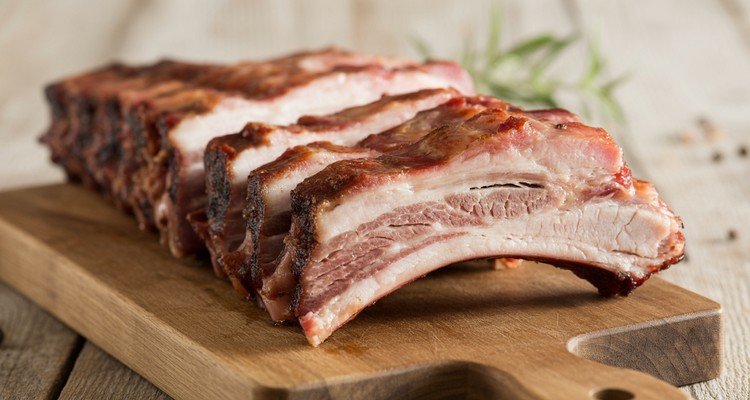
Few things in the BBQ world rival a rack of perfectly cooked pork ribs — tender, juicy, and layered with smoke. Whether you’re firing up a smoker for the first time or refining a recipe you’ve made dozens of times, the principles of great ribs stay the same.
This guide walks you through every step, from choosing the right cut to slicing and serving.
You’ll learn how to select the right rib cut based on your goals. We’ll cover our go-to BBQ rub, the low-and-slow smoking process, how wrapping works, and the most reliable doneness tests. Alternative methods for the oven and grill are included too, so everyone can make great ribs regardless of their setup.
Quick Summary
- Cut Selection — Choose baby back ribs for a faster cook and leaner meat, St. Louis cut for balanced flavor and uniform shape, or full spare ribs for maximum richness and a bolder pork flavor.
- Essential Prep — Always remove the membrane (silverskin) for better texture and smoke penetration. Apply a binder like mustard to help the rub adhere, then generously coat with an all-purpose BBQ rub.
- Low-and-Slow Smoking — Smoke ribs at 225-250°F. Use the 3-2-1 method for St. Louis or spare ribs (3 hours smoke, 2 hours wrapped, 1 hour sauced) or 2-1.5-1 for baby backs. Spritzing helps maintain moisture and bark.
- Doneness Tests — Rely on the bend test (ribs flex and bark cracks), probe tenderness (feels like butter), and visual bone pullback (1/4-1/2 inch exposed bone) to confirm ribs are done, targeting 195-205°F internal temperature.
Understanding the Different Cuts of Pork Ribs
Pork ribs come from different parts of the pig, and each cut has a different flavor, fat content, and cooking time. Baby back ribs cook fastest, full spare ribs offer the most meat, and the St. Louis cut splits the difference with a uniform shape that’s ideal for even cooking.
Knowing which cut you’re working with shapes every decision that follows.
Baby Back Ribs
Baby back ribs come from the upper section of the rib cage, where the ribs meet the backbone near the loin. They’re shorter and more curved than the other cuts, and their proximity to the loin makes them leaner and more tender by default. A full rack typically weighs 1.5-2 lbs and contains 10-13 bones.
Because they’re leaner, baby back ribs cook faster than other cuts. They respond well to a 225-250°F smoke for about 4.5-5 hours using the 3-2-1 method. They’re a great entry point for newer pitmasters or anyone cooking on a time constraint.
Spare Ribs
Spare ribs come from the belly side of the pig, below the baby backs. They’re longer, flatter, and considerably meatier, with more fat and connective tissue running through them. That extra fat is flavor — this cut produces an intensely porky, rich result when cooked low-and-slow.
A full rack can weigh 3-4 lbs and requires more time to become fully tender. Expect 5-6 hours total at 225-250°F. The extra effort pays off with a deeply satisfying bite and plenty of meat per bone.
St. Louis Cut Ribs
St. Louis cut ribs are spare ribs with the sternum bone, cartilage, and rib tips removed. The result is a clean, rectangular rack with uniform thickness that cooks evenly and presents beautifully.
This is the cut most often seen in competition BBQ for good reason — it combines that rich flavor with a more manageable shape.
Cook time falls between baby backs and the full untrimmed rack: roughly 5-6 hours at 225-250°F. The removed rib tips can be smoked separately as a bonus snack.
Quick Comparison: Which Ribs Should You Choose?
| Cut | Average Weight | Flavor & Texture | Smoke Time (225°F) | Best For |
|---|---|---|---|---|
| Baby Back Ribs | 1.5-2 lbs | Lean, tender, mild | 4.5-5 hours | Beginners, shorter cooks |
| St. Louis Cut | 2.5-3.5 lbs | Rich, balanced, uniform | 5-6 hours | Competition, presentation |
| Spare Ribs | 3-4 lbs | Meaty, fatty, bold | 5.5-6.5 hours | Maximum flavor, patient cooks |
Essential Prep Work for Perfect Pork Ribs
Great pork ribs start with three quick prep steps before the meat ever touches heat: removing the membrane, applying a binder, and coating generously with a BBQ rub. Each step takes just a few minutes but has a real impact on the final texture and flavor.
Removing the Membrane (Silverskin)
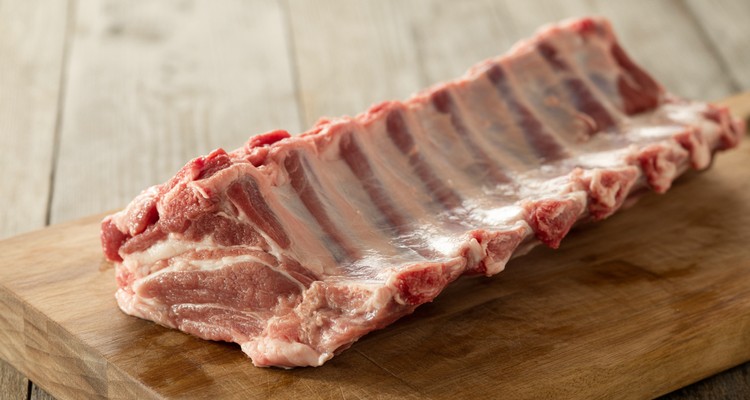
The membrane is a thin, tough layer of tissue that covers the bone side of every rack. It doesn’t render down during cooking the way fat does — it stays rubbery and creates an unpleasant texture. Worse, it blocks smoke and your BBQ rub from penetrating the meat from the bottom.
To remove it, slide a butter knife under one corner of the membrane near the end of the rack. Use a paper towel to grip it firmly and pull in one steady motion — it usually peels off in a single sheet. If it tears, just grab the next edge and continue.
Applying a Binder
A binder is a thin coating applied to the surface of the ribs before the rub. Its job is simple: give the dry seasoning something to stick to so it stays put during the long cook. Yellow mustard is the most common choice — it spreads easily and the flavor cooks off completely, leaving no mustard taste behind.
Other options include olive oil, hot sauce, or even plain water. This step is optional, but a thin binder coat leads to a more even bark and prevents the rub from sliding off when the surface of the ribs gets wet from moisture or spritz.
Our Go-To All-Purpose BBQ Rub
This BBQ rub works across all three rib cuts and holds up through a long smoke. Mix all ingredients together and store any leftover rub in an airtight container for up to 3 months.
- 1/2 cup packed brown sugar
- 1/4 cup paprika
- 1 tablespoon black pepper
- 1 tablespoon kosher salt
- 1 tablespoon chili powder
- 1 teaspoon garlic powder
- 1 teaspoon onion powder
- 1/2 teaspoon cayenne pepper (optional, for heat)
Apply the rub generously to all sides of the ribs — top, bottom, and edges. Press it in lightly with your hands so it adheres to the binder. For best results, season the ribs at least 30 minutes before smoking, or up to overnight in the refrigerator[USDA].
 Pitmaster Tip: Overnight seasoning isn’t just hype. The salt in the BBQ rub draws moisture out of the surface, then pulls it back in with the other flavors over several hours. The result is a deeper, more developed bark with better smoke adhesion.
 The Ultimate Smoked Pork Ribs Recipe
Low-and-slow smoking is the gold standard for pork ribs. A 225-250°F cook gives the collagen and connective tissue in the meat time to break down into gelatin. This produces the tender, pull-clean-from-the-bone texture that defines great BBQ ribs.
This recipe uses the 3-2-1 method for St. Louis cut or full spare ribs, with a modified 2-2-1 version for baby backs.
Helpful gear for this cook:
- ThermoMaven wireless meat thermometer — tracks long cooks without opening the smoker
- Traeger Signature Blend pellets — adds a balanced smoke profile for backyard cooks
- Western BBQ smoking wood chips variety pack — adds wood-smoke flavor on charcoal or gas grills
Equipment List
- Smoker or grill set up for indirect heat
- Wood chunks or chips (hickory, apple, or cherry)
- Heavy-duty aluminum foil
- Instant-read meat thermometer
- Spray bottle with apple juice or apple cider vinegar
- Basting brush
- Tongs
- Sharp knife and cutting board
Step-by-Step Instructions
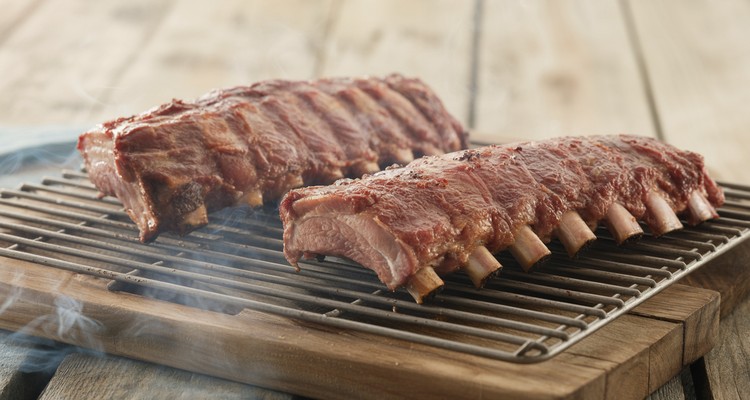
Step 1: Prep and Season the Ribs
Preheat your smoker to 250°F. Remove the membrane from the bone side of each rack. Apply a thin layer of yellow mustard as a binder, then coat all surfaces generously with the BBQ rub.
Let the seasoned ribs sit at room temperature while the smoker reaches temperature.
Step 2: The First Phase — The Smoke
Place the ribs directly on the smoker grate, bone-side down. For larger cuts, smoke uncovered for 3 hours. For baby backs, smoke for 2 hours.
During this phase, spritz the ribs with apple juice every 45-60 minutes to maintain surface moisture and encourage bark development.
This is when the smoke does its work. You’re building a mahogany-colored bark and getting deep smoke penetration into the meat. Resist the urge to open the smoker more than necessary — every peek adds time.
Step 3: The Second Phase — Wrapping
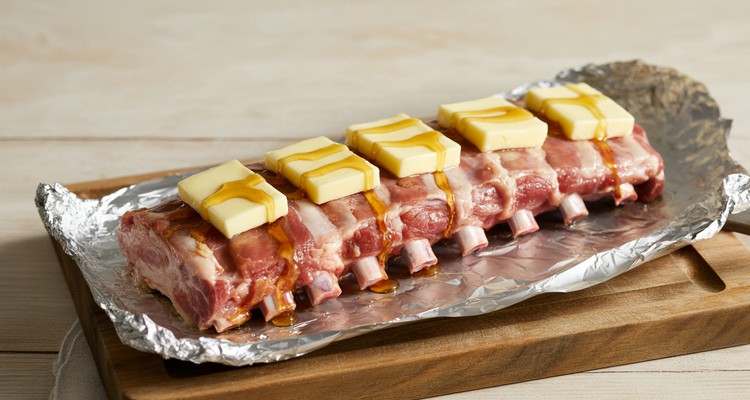
Lay out a large sheet of heavy-duty aluminum foil and place the ribs meat-side down on it. Add 2 tablespoons of butter and a drizzle of honey or maple syrup on top of the bone side for extra moisture and richness. Wrap the ribs tightly, sealing all edges.
Return the wrapped ribs to the smoker. Cook for 2 more hours for larger cuts, or 1.5 hours for baby backs. The foil traps steam and dramatically speeds up collagen breakdown — this is what produces fall-off-the-bone tenderness.
Step 4: The Final Phase — The Sauce
Carefully unwrap the ribs — hot steam will escape, so open the foil away from you. Place them back on the smoker grate, bone-side down. Brush a thin, even layer of BBQ sauce across the meat side.
Cook uncovered for another 30-60 minutes, just until the sauce becomes tacky and set. Don’t rush this step — pulling the ribs too early leaves the sauce wet and runny.
Step 5: Rest and Slice
Remove the ribs from the smoker and let them rest on a cutting board for at least 10-15 minutes before slicing. Resting allows the juices to redistribute through the meat — cutting immediately causes them to run out onto the board instead of staying in each bite. Slice between the bones and serve immediately.
Pitmaster Tip: Wood choice matters. Hickory delivers bold, classic BBQ smoke. Apple and cherry produce a milder, slightly sweet smoke that complements pork without overpowering it. For a balanced result on ribs, try a mix of hickory and apple at a 1:1 ratio. Wrap vs. No-Wrap: Which Method Is Right for You?
Wrapping ribs in foil partway through — often called the Texas Crutch — is a technique that accelerates cooking and produces very tender ribs with a softer bark. The no-wrap method takes longer but rewards patience with a firmer, drier bark and more pronounced smoke flavor.
Both produce excellent ribs; the choice comes down to your priorities and how much time you have.
Wrapping is the better choice when you want consistently tender ribs in a predictable time window. No-wrap is the better choice when you’re chasing maximum bark texture and a slightly chewier bite.
Competition cooks often go no-wrap to preserve bark integrity. Backyard BBQ is usually more forgiving, and wrapping reduces the risk of drying out.
How to Tell When Pork Ribs Are Perfectly Cooked
Seasoned pitmasters use a combination of tests to confirm doneness, not just one. The bend test, probe tenderness, and visual bone pullback are all key indicators. The ideal internal temperature for tender ribs is 195-205°F, where collagen fully converts to gelatin.
Pork is safe to eat at 145°F[USDA], but ribs will still be tough at that temperature. The higher target is for tenderness, not just safety.
The Bend Test
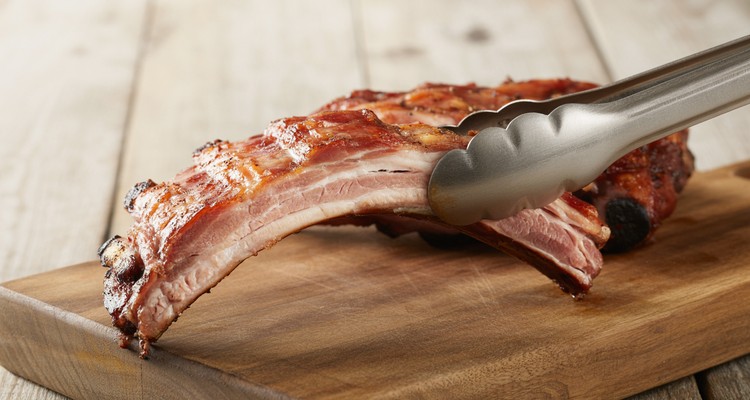
Pick up the rack from one end using tongs. Hold it horizontally and give it a gentle bounce. A done rack will flex significantly, and the bark on the surface will crack visibly as the rack bends.
If the rack is stiff and holds its shape without cracking, it needs more time.
Probe Tenderness
Probe tenderness is the most reliable doneness test. Use an instant-read thermometer probe — but instead of reading the temperature, insert it into the thickest part of the meat between two bones and pay attention to how it feels. Done ribs feel like pushing a probe into room-temperature butter: smooth, with almost no resistance.
If you feel tension or the probe snags on connective tissue, the ribs need more time regardless of what any clock says. Probe tenderness catches the variability that time estimates can’t account for.
Different racks, different smokers, and different ambient temperatures all affect actual cook time.
Visual Cues: Bone Pullback
As ribs cook, the meat contracts and pulls back from the ends of the bones. When about 1/4 to 1/2 inch of bone is exposed at the end of each rib, that’s a positive sign.
Bone pullback is a useful supporting indicator, but don’t use it alone — it can occur on ribs that are still underdone in the thicker sections.
Alternative Cooking Methods for Pork Ribs
Not everyone has a dedicated smoker, but that doesn’t mean you can’t make excellent pork ribs. The same low-and-slow principles apply to oven and grill setups — you just adapt the heat source and compensate for the smoked flavor where needed.
Oven-Baked Ribs
Oven-baked ribs are a great option when a smoker isn’t available. Follow the same prep steps — remove the membrane, apply the binder, and coat generously with BBQ rub. Place the seasoned ribs meat-side up on a foil-lined baking sheet and wrap tightly with another sheet of foil to seal in moisture.
Bake at 275°F for 2.5-3 hours. The internal temperature should probe tender at 195-205°F. Unwrap, brush with BBQ sauce, and finish under the broiler for 3-5 minutes until the sauce caramelizes.
Watch carefully — broiler heat can burn sugary sauces fast.
Grilling Ribs with Indirect Heat
A charcoal or gas grill can produce excellent smoked pork ribs when set up correctly for indirect heat. On a charcoal grill, bank the coals to one side and place the ribs on the opposite side. On a gas grill, light only one or two burners and keep the ribs over the unlit burners.
Maintain a grill temperature of 250-275°F and add wood chips to the coals or a smoker box for smoke flavor. Follow the same time guidelines as the smoker method, spritzing and wrapping as needed. The grill method produces results very close to a dedicated smoker with the right setup.
Common Rib-Cooking Mistakes and How to Fix Them
Most rib failures come from the same handful of mistakes: cooking too hot, saucing too early, or pulling the ribs before they’re truly tender. Here’s how to recognize and recover from the most common problems.
Tough or Dry Ribs
Tough ribs are almost always undercooked, not overcooked. When ribs are tough, the collagen hasn’t fully converted to gelatin yet — more time at low temperature is the fix, not more heat. If the ribs seem dry as well, wrap them in foil with a splash of apple juice and return to the smoker for another 30-45 minutes.
Burnt or Blackened Sauce
BBQ sauce is loaded with sugar, and sugar burns. Applying sauce too early — before the last 30-60 minutes of cooking — guarantees a blackened, bitter exterior. Always hold off on sauce until the final phase of cooking.
If the sauce does burn, scrape off the charred layer and apply a fresh coat for the last few minutes over low heat.
Ribs Falling Apart (Overcooked)
Over-wrapped ribs or ribs left in the foil too long can go past the ideal tenderness window and fall apart when lifted. They’ll still taste good, but slicing becomes difficult and individual ribs lose their structure. If this happens, handle them carefully and serve immediately.
The flavors are intact even if the texture is softer than intended.
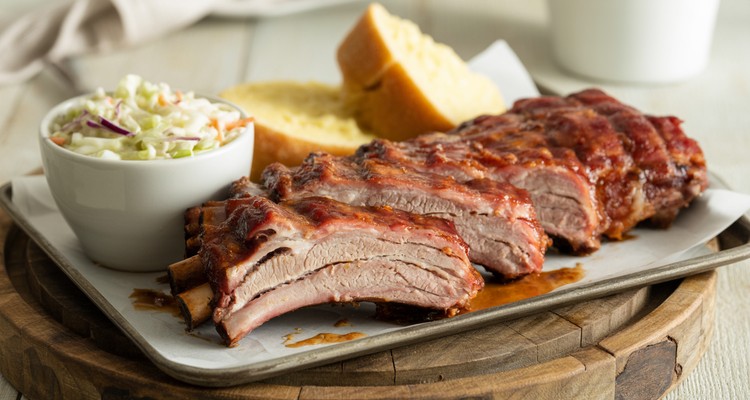
Remember to trust the doneness tests over the clock, and don’t be afraid to experiment with wood choices and rub variations to find your signature flavor.
Mastering smoked pork ribs is a journey of patience and precision, but the reward is an unforgettable BBQ experience. By understanding the different cuts, executing proper prep, and following a low-and-slow smoking process, you can consistently achieve tender, flavorful ribs with a beautiful bark.
Take Home Message
Achieving perfectly smoked pork ribs is a rewarding endeavor that combines careful preparation with patient, low-and-slow cooking. By selecting the right cut, mastering membrane removal, and applying a flavorful rub, you lay the foundation for success.
Trusting doneness tests like the bend and probe tenderness over strict timing ensures your ribs are consistently tender and juicy, delivering that classic BBQ experience every time.
Frequently Asked Questions
What is the ideal cut of pork ribs for smoking?
St. Louis cut ribs are the top choice for most pitmasters. Their uniform thickness cooks evenly, their fat-to-meat ratio is excellent, and the rectangular shape makes slicing and serving straightforward.
Baby back ribs are a great pick if you want a faster cook or prefer leaner meat, while the full spare rib delivers the most bold, rich pork flavor if you have the time.
How long do pork ribs take on a smoker?
At 225-250°F, baby back ribs take approximately 4.5-5 hours total using a 2-1.5-1 method. Larger cuts like spare ribs take 5-6 hours using the 3-2-1 method. These are estimates — actual cook time varies based on rack thickness, smoker airflow, and weather.
Always use the bend test and probe feel to confirm doneness rather than relying solely on the clock.
What is the ideal internal temperature for tender pork ribs?
Target an internal temperature between 195°F and 205°F for ribs with full tenderness and a clean bone pull. At this range, collagen has converted to gelatin and the connective tissue has broken down completely.
While pork is food-safe at 145°F[USDA], ribs cooked only to that point will be tough. The higher temperature goal is essential for achieving the classic tender texture.
Should pork ribs be wrapped in foil during cooking?
Wrapping accelerates cooking and produces very tender ribs with a softer bark. It’s the recommended approach for most backyard cooks because it reduces the risk of drying out and produces consistent results.
If you prefer a firmer, drier bark with more pronounced smoke flavor, skip the foil and go no-wrap — just budget an extra 1-2 hours and verify doneness through the bend test and probe feel.
How can you tell if ribs are done without a thermometer?
The bend test is your most reliable no-thermometer method. Pick up the rack with tongs from the center and bounce it gently — done ribs will flex and show visible cracks in the bark. Bone pullback is another indicator: look for 1/4 to 1/2 inch of exposed bone at the tips.
Use both cues together for the most accurate read.
Should you boil ribs before grilling or smoking?
No. Boiling ribs drives out the rendered fat and flavor that low-and-slow cooking is designed to develop. It also creates a mushy texture that neither smoke nor saucing can rescue.
The low-and-slow method breaks down connective tissue through slow heat, not water — that process is what produces the tender, juicy result you’re after.
How long should pork ribs rest before cutting?
Rest ribs for at least 10-15 minutes after removing them from the heat. Resting allows muscle fibers to relax and juices to redistribute through the meat. Cutting immediately causes those juices to pool on the cutting board instead of staying in each bite.
A short rest makes a measurable difference in moisture.
Can I make this pork rib recipe without a smoker?
Yes. The oven method at 275°F produces tender, flavorful pork ribs without any smoke equipment. A charcoal or gas grill set up for indirect heat with a smoker box or wood chips added gets even closer to the real thing.
Both alternatives follow the same prep and timing logic as the smoker method — the heat source changes, but the low-and-slow principle doesn’t.
Smoked Pork Ribs (3-2-1 Method)
Equipment
- Smoker
- Heavy-duty aluminum foil
- Instant-read meat thermometer
- Spray bottle
- Basting Brush
- Tongs
- Sharp knife
- Cutting board
Ingredients
Ribs
- 1 rack pork ribs (St. Louis cut, spare ribs, or baby back ribs — 2.5 to 4 lbs)
- 2 tablespoons yellow mustard (binder)
BBQ Rub
- 1/2 cup packed brown sugar
- 1/4 cup paprika
- 1 tablespoon black pepper
- 1 tablespoon kosher salt
- 1 tablespoon chili powder
- 1 teaspoon garlic powder
- 1 teaspoon onion powder
- 1/2 teaspoon cayenne pepper optional, for heat
Wrap and Finish
- 2 tablespoons unsalted butter
- 1 tablespoon honey or maple syrup
- 1/2 cup BBQ sauce for finishing
Spritz
- apple juice or apple cider vinegar for spritzing during cook
Instructions
- Prep and Season
- Preheat your smoker to 250°F. Remove the membrane (silverskin) from the bone side of the rack by sliding a butter knife under one corner, gripping with a paper towel, and pulling in one steady motion.
- Apply a thin layer of yellow mustard across all surfaces of the ribs as a binder. Coat all sides generously with the BBQ rub — top, bottom, and edges — pressing it in lightly with your hands. Let the seasoned ribs sit at room temperature while the smoker reaches temperature.
- Phase 1 — Smoke (3 hours for St. Louis/spare ribs; 2 hours for baby backs)
- Place the ribs directly on the smoker grate, bone-side down. Add wood chunks or chips (hickory, apple, or cherry) to establish smoke. Smoke uncovered for 3 hours for St. Louis or spare ribs, or 2 hours for baby back ribs.
- Spritz the ribs with apple juice or apple cider vinegar every 45-60 minutes to maintain surface moisture and encourage bark development.
- Phase 2 — Wrap (2 hours for St. Louis/spare ribs; 1.5 hours for baby backs)
- Lay out a large sheet of heavy-duty aluminum foil. Place the ribs meat-side down on the foil. Add 2 tablespoons of butter and a drizzle of honey or maple syrup on the bone side. Wrap the ribs tightly, sealing all edges.
- Return the wrapped ribs to the smoker. Cook for 2 more hours for larger cuts, or 1.5 hours for baby backs.
- Phase 3 — Sauce and Set (30-60 minutes)
- Carefully unwrap the ribs — open the foil away from you to avoid hot steam. Place them back on the smoker grate, bone-side down. Brush a thin, even layer of BBQ sauce across the meat side.
- Cook uncovered for 30-60 minutes until the sauce is tacky and set. Do not pull the ribs until the sauce has fully set.
- Rest and Slice
- Remove the ribs from the smoker. Verify doneness using the bend test (rack flexes and bark cracks) and probe tenderness (slides like pushing into room-temperature butter). Internal temperature should read 195-205°F.
- Rest the ribs on a cutting board for at least 10-15 minutes. Slice between the bones and serve immediately.
Notes