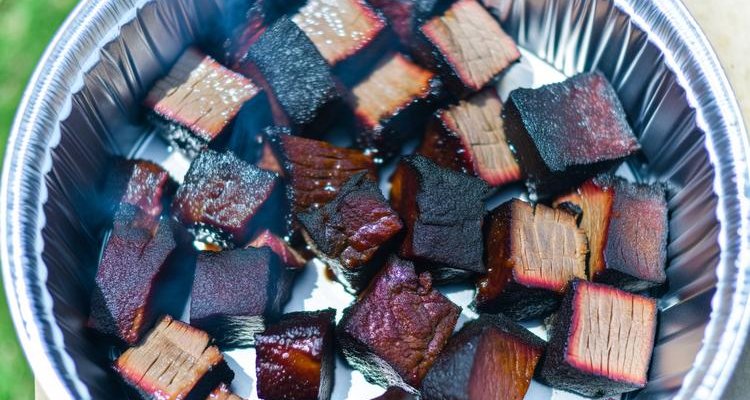
You lift the foil off the pan and a wall of sweet, smoky steam hits you in the face. Inside: glossy, mahogany-colored cubes of pork belly so caramelized they look like candy. That’s the moment pork belly burnt ends ruin you for everything else on the smoker. This recipe walks you through the two-stage cook – uncovered smoke, then a butter-and-sugar braise – that creates that signature candy-glazed exterior with a melt-in-your-mouth center.
What Are Pork Belly Burnt Ends?
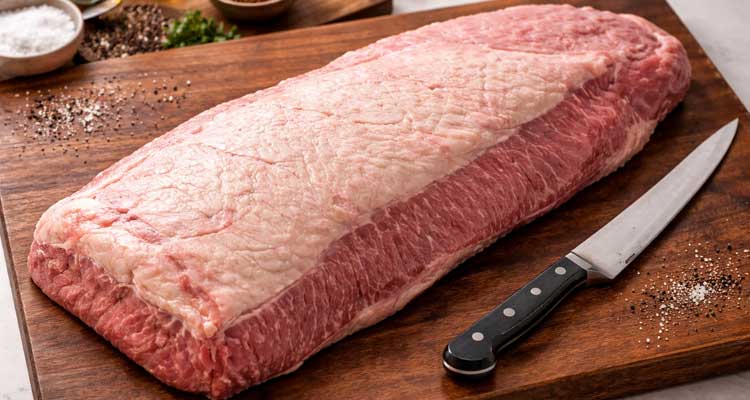
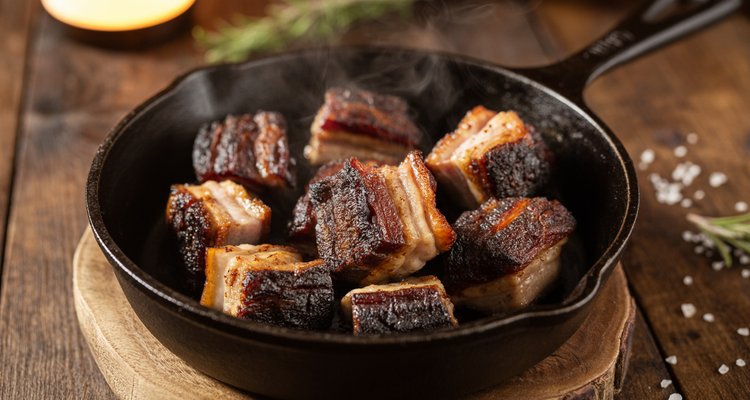
Pork belly burnt ends are bite-sized cubes of pork belly – the same fatty, layered cut used to make bacon – that are smoked, braised in a sweet glaze, then caramelized to finish. The result is often called “pork candy” or “meat candy” for good reason: the fat renders completely during the long cook, leaving cubes that are tender, juicy, and coated in a sticky-sweet BBQ glaze. Burnt ends originally came from the brisket point – the fattier, deckle end of a beef brisket. Pitmasters in Kansas City would smoke whole briskets, slice off the leaner flat, then cube and re-smoke the point with sauce. If you want to try traditional brisket burnt ends, we have that recipe covered too. But pork belly takes the concept further: more fat, more richness, and a candy-like texture that the beefier brisket version can’t quite match. Unlike brisket burnt ends – where you smoke the whole point first and cube it after – pork belly burnt ends are cubed before smoking. This gives every piece maximum surface area for bark development and smoke penetration from all six sides.
Pork Belly vs. Brisket Burnt Ends: What’s the Difference?
If you’re building a BBQ bucket list, you need to understand what sets each version apart:
- Brisket burnt ends – the original Kansas City method, using the beef brisket point. Beefier, slightly leaner fat ratio, classic smoky-savory flavor. The old-school choice.
- Pork belly burnt ends – the richest, fattiest version. Higher fat-to-meat ratio means more rendering, more candy-like texture, and a sweeter finish. This is the version for people who want to go all the way.
- Chuck roast burnt ends (“poor man’s burnt ends”) – the budget-friendly alternative using chuck roast instead of brisket. Coming in a future article.
For the candy experience – the kind that makes guests stop mid-conversation to stare at the pan – pork belly is the answer.
Ingredients You’ll Need
For the Pork Belly
- 3-4 lbs pork belly, skin-off, cut into 1.5-inch cubes
- 2 tablespoons yellow mustard (binder)
Dry Rub
- 3 tablespoons brown sugar
- 1 tablespoon kosher salt
- 1 tablespoon black pepper (coarsely ground)
- 1 teaspoon garlic powder
- 1 teaspoon smoked paprika
- ½ teaspoon cayenne pepper (optional, for heat)
Braise & Glaze
- 4 tablespoons unsalted butter, cubed
- 3 tablespoons brown sugar
- 2 tablespoons honey (or maple syrup)
- ½ cup your favorite BBQ sauce
- 1 tablespoon apple cider vinegar
- Temperature tool: ThermoMaven wireless meat thermometer helps track pork belly through the smoke and braise.
- Rub option: Spice Guru BBQ seasoning fits the sweet-smoky bark for burnt ends.
- Handling option: heat-resistant BBQ gloves help when moving hot pans and sticky pork belly cubes.
Equipment
- Smoker (pellet, offset, kettle, or any indirect-heat setup)
- Wire cooling rack + sheet pan (for first smoke phase)
- Disposable aluminum pan (half-size, for the braise)
- Aluminum foil
- Instant-read meat thermometer
- Cherry, apple, or pecan wood (mild fruit/nut woods work best)
- Braising pan: onlyfire stainless grill pan gives pork belly cubes a sturdy pan for the butter, sugar, and sauce phase.
- Temperature checks: Meatender instant-read thermometer helps confirm tenderness without guessing during the smoke.
- Hot pan handling: Grill Armor heat-resistant gloves make it easier to move pans and racks around the smoker.
Choosing Your Wood for Smoke Flavor
Wood choice has a real impact on the flavor of pork belly burnt ends. The high fat content means the meat soaks up smoke readily, so you want a wood that complements sweetness rather than overwhelming it.
- Cherry – The top pick for pork belly. Mild, fruity, slightly sweet smoke flavor. Adds a beautiful deep red color to the bark. First choice if you have it.
- Apple – Similar to cherry but even milder. Great for a subtle smoke flavor that lets the brown sugar dry rub and glaze shine.
- Pecan – A step up in intensity from fruit woods. Nutty, slightly sweet flavor. A good middle ground between fruit woods and hickory.
- Hickory – Bolder, more assertive smoke flavor. Works well but use sparingly – the richness of pork belly combined with heavy hickory smoke can get too intense.
For best results, use cherry or apple alone, or mix cherry and pecan for a slightly richer smoke profile without losing that fruit-forward sweetness. Avoid mesquite – it’s too aggressive for a 4-5 hour cook on fatty pork.
How to Make Pork Belly Burnt Ends
Pork belly burnt ends are a three-phase cook: smoke uncovered to build bark, braise covered to tenderize and render fat, then glaze uncovered to caramelize. Plan for 4.5 to 5 hours total. Here’s exactly how to do it.
Step 1 – Prep and Cube the Pork Belly
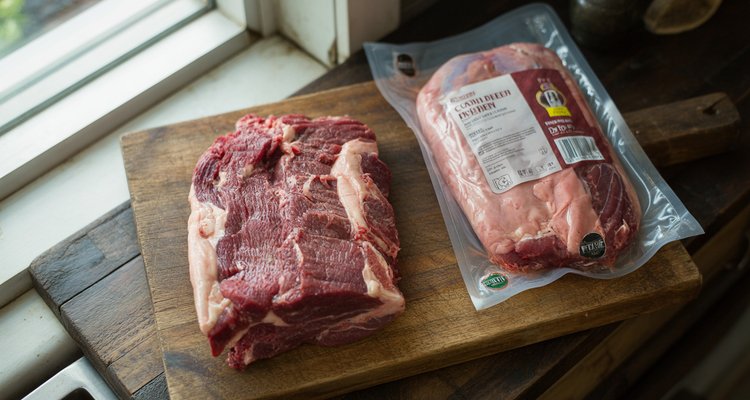
Start with a skinless pork belly slab. If the skin is still on, use a sharp knife to remove it – the skin is a moisture and smoke barrier, and leaving it on will result in chewy, under-smoked pieces. Score the fat cap lightly if it’s very thick, but don’t cut through to the meat. Cut the pork belly into 1.5-inch cubes. This is the sweet spot: small enough to render the fat fully in a reasonable cook time, large enough to stay juicy and not fall apart. If the belly is slippery and hard to cut cleanly, chill it in the freezer for 20 minutes to firm up the fat. Coat each cube lightly with yellow mustard – just enough to make the surface tacky. Then apply your dry rub generously on all six sides, pressing it in. Let the seasoned cubes rest at room temperature for 15-30 minutes while your smoker comes up to temp.
Step 2 – First Smoke (Uncovered, 250°F)
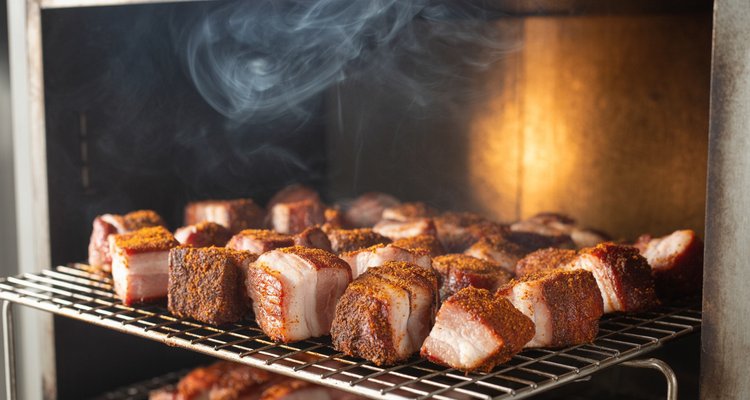 Preheat your smoker to 250°F. Place the seasoned pork belly cubes on a wire cooling rack set over a sheet pan, leaving space between each cube so smoke can circulate on all sides. Set the rack directly on the smoker grates. Smoke uncovered for 2.5 to 3 hours, until the cubes are a deep mahogany color and a firm bark has formed on the outside. Target internal temperature at this stage: 165-175°F. If the surface looks dry at the 90-minute mark, give the cubes a light spritz with apple cider vinegar – just enough to add moisture without washing off the bark. Don’t rush this phase. The bark that forms during the uncovered smoke is what gives pork belly burnt ends their texture contrast: crispy-caramelized outside, silky-tender inside.
Step 3 – The Braise: The Secret to Candy Texture
Transfer the smoked pork belly cubes to a disposable aluminum half-pan. Scatter the cubed butter over the top, sprinkle on the brown sugar, and drizzle with honey. Toss gently to coat each piece, then spread in a single layer. Cover the pan tightly with aluminum foil and return it to the smoker at 250°F for 60 to 90 minutes. During this phase, the butter, sugar, and rendered pork fat combine into a rich braising liquid that penetrates every cube. You’re looking for an internal temperature of 200-205°F – but more importantly, you’re looking for probe tenderness: your thermometer should slide into the meat like it’s going into warm butter. If there’s any resistance, give it another 15 minutes covered. This braise is what separates great pork belly burnt ends from merely good ones. Don’t skip it, don’t cut it short.
Step 4 – Glaze and Caramelize
Remove the foil. Carefully drain most of the liquid from the pan – you can save it to drizzle over the finished burnt ends or use it as a dipping sauce. Toss the cubes with your BBQ sauce and apple cider vinegar, coating each piece evenly. Return the pan to the smoker uncovered for another 15-20 minutes. The sauce will tighten, bubble, and caramelize into a glossy, sticky glaze. Watch carefully during this phase – the high sugar content means the glaze can go from perfect to burnt quickly. Pull the pan when the exterior of each cube looks tacky and glistening.
Step 5 – Rest and Serve
Pull the pan from the smoker and let the pork belly burnt ends rest for 10-15 minutes before serving. This gives the juices time to redistribute and the glaze time to set. Serve directly from the pan with toothpicks for an appetizer, or pile them on brioche buns, over mac and cheese, in tacos, or alongside classic BBQ sides.
Key Tips for Perfect Results
- Remove the skin – always. Pork belly skin doesn’t render in a 5-hour cook. It stays rubbery and blocks smoke penetration. Even a thin layer of skin causes problems. Take it off before you cube.
- 1.5-inch cubes are the target. Smaller cubes over-render and fall apart; larger cubes don’t cook evenly. Cut as consistently as possible so everything finishes at the same time.
- 250°F vs. 225°F. We run slightly hotter at 250°F to help the fat render efficiently without drying the meat. At 225°F the cook works but takes 30-45 minutes longer.
- Wire rack is mandatory. Placing cubes directly on the grate or in a pan for the first smoke phase traps moisture and prevents bark from forming on the bottom. The rack lifts them for 360° smoke exposure.
- Probe tender beats a temperature number. 200-205°F is the guideline, but tenderness is the real test. If your probe meets resistance, the fat hasn’t fully rendered yet – keep going.
- Don’t skip resting. Ten minutes of rest makes a real difference in juiciness.
Common Mistakes to Avoid
- Leaving the skin on. The single biggest mistake. It creates a chewy, smoke-blocking layer that ruins the texture.
- Cutting cubes too small. Cubes under 1 inch will over-render and lose structural integrity during the braise.
- Skipping the braise phase. You’ll end up with dry, smoky pork instead of the candy texture the recipe is known for.
- Pulling at 165°F and calling it done. That’s only the end of Phase 1. The fat hasn’t fully rendered yet. The braise to 200-205°F is not optional.
- Opening the smoker too often. Every lid lift drops the temperature and adds time. Vent, don’t peek.
- Burning the glaze. The final uncovered phase needs attention. High sugar + high heat = fast caramelization. Check every 5 minutes once the sauce goes on.
Serving and Storage
Pork belly burnt ends are best served hot straight from the smoker. That candy glaze and crispy bark are at their absolute best right off the heat. Serve directly from the pan with toothpicks for an appetizer, or use them as a filling for sliders on brioche buns – the richness of the pork belly pairs perfectly with a creamy coleslaw. They also work beautifully piled over smoked mac and cheese, stuffed into tacos with pickled onions, or served over nachos with jalapeños. For make-ahead: the dry rub can be applied up to 24 hours in advance and the seasoned cubes refrigerated overnight. The flavor actually improves with an overnight dry brine. Store leftovers in an airtight container in the refrigerator for up to 4 days. Reheat in a 350°F oven for 10-15 minutes, or on a sheet pan in the smoker at 250°F for 15 minutes to bring back the bark and glaze. They freeze beautifully – freeze in a single layer on a sheet pan first, then transfer to a freezer bag. Reheat from frozen at 325°F for 20-25 minutes. The flavor of the sweet glaze and smoky bark holds surprisingly well after freezing.
Frequently Asked Questions
How long does it take to make pork belly burnt ends?
Plan for 4.5 to 5 hours total: 2.5-3 hours for the initial uncovered smoke, 60-90 minutes for the covered braise, and 15-20 minutes for the final glaze caramelization. Add about 30 minutes for prep and resting.
What internal temperature should pork belly burnt ends reach?
Pork belly burnt ends go through two temperature targets. At the end of the first smoke phase, aim for 165-175°F. At the end of the braise (the done point), you’re looking for 200-205°F and probe tenderness – your thermometer should slide in with no resistance. The final 15 minutes uncovered for glaze caramelization doesn’t require a temperature check; watch for visual doneness.
Do I need to remove the skin from pork belly?
Yes, always. Pork belly skin doesn’t render during this cook – it stays tough and rubbery, and it forms a moisture barrier that blocks smoke from penetrating the meat. Ask your butcher for skinless pork belly, or remove it yourself with a sharp boning knife before cubing.
How are pork belly burnt ends different from brisket burnt ends?
Brisket burnt ends – the original Kansas City method – use the beef brisket point, which is smoked whole and cubed after the cook. They’re beefier and slightly less rich than pork belly. Pork belly burnt ends are cubed before smoking, giving more surface area for bark, and the higher fat-to-meat ratio creates a fattier, more candy-like result. Same concept, completely different eating experience.
Can I make pork belly burnt ends in the oven?
Yes. Preheat your oven to 275°F. Follow the same steps – season and cube the pork belly, then roast on a wire rack uncovered for 2.5-3 hours. Transfer to an aluminum pan with butter, brown sugar, and honey, cover with foil, and return to the oven for 60-90 minutes. Finish uncovered with BBQ sauce for 15-20 minutes. You won’t get the smoke flavor, but the candy texture and glaze will still be excellent. Add a teaspoon of smoked paprika to your rub to compensate.
Pork Belly Burnt Ends
Equipment
- Smoker pellet, offset, kettle, or any indirect-heat setup
- Wire cooling rack for first smoke phase — mandatory for 360° airflow
- Disposable aluminum half-pan for the braise phase
- Aluminum foil to cover pan during braise
- Instant-read meat thermometer for checking internal temp and probe tenderness
- Sharp chef's knife for cubing pork belly — chill belly in freezer 20 min if slippery
Ingredients
Pork Belly
- 3 lbs pork belly skin-off, cut into 1.5-inch cubes
- 2 tablespoons yellow mustard binder
Dry Rub
- 3 tablespoons brown sugar
- 1 tablespoon kosher salt
- 1 tablespoon black pepper coarsely ground
- 1 teaspoon garlic powder
- 1 teaspoon smoked paprika
- 1/2 teaspoon cayenne pepper optional, for heat
Braise & Glaze
- 4 tablespoons unsalted butter cubed
- 3 tablespoons brown sugar
- 2 tablespoons honey or maple syrup
- 1/2 cup BBQ sauce your favorite
- 1 tablespoon apple cider vinegar
Instructions
- Remove the skin from the pork belly if present. Cut the pork belly into 1.5-inch cubes as uniformly as possible. Chill in the freezer for 20 minutes if the fat makes it slippery to cut.
- Coat each cube lightly with yellow mustard on all sides. Combine all dry rub ingredients and apply generously to all six sides of each cube, pressing the rub in. Let rest at room temperature 15–30 minutes.
- Preheat your smoker to 250°F using cherry, apple, or pecan wood.
- Place the seasoned pork belly cubes on a wire cooling rack set over a sheet pan, leaving space between each cube. Place the rack on the smoker grates.
- Smoke uncovered at 250°F for 2.5 to 3 hours until a firm, dark bark forms and internal temperature reaches 165–175°F. At the 90-minute mark, lightly spritz with apple cider vinegar if the surface looks dry.
- Transfer smoked cubes to a disposable aluminum half-pan. Scatter cubed butter over the top, sprinkle with brown sugar, and drizzle with honey. Toss gently to coat, then spread in a single layer.
- Cover the pan tightly with aluminum foil and return to the smoker at 250°F for 60 to 90 minutes, until internal temperature reaches 200–205°F and a thermometer probe slides in with no resistance (probe tender).
- Remove the foil. Carefully drain most of the braising liquid from the pan. Toss the cubes with BBQ sauce and apple cider vinegar, coating each piece evenly.
- Return the pan to the smoker uncovered for 15–20 minutes until the glaze tightens and caramelizes into a glossy, sticky coating. Watch carefully — the glaze can burn quickly. Pull when the exterior of each cube looks tacky and glistening.
- Remove from smoker and let rest 10–15 minutes before serving. Serve directly from the pan with toothpicks, or use as a topping for buns, tacos, mac and cheese, or nachos.
Notes