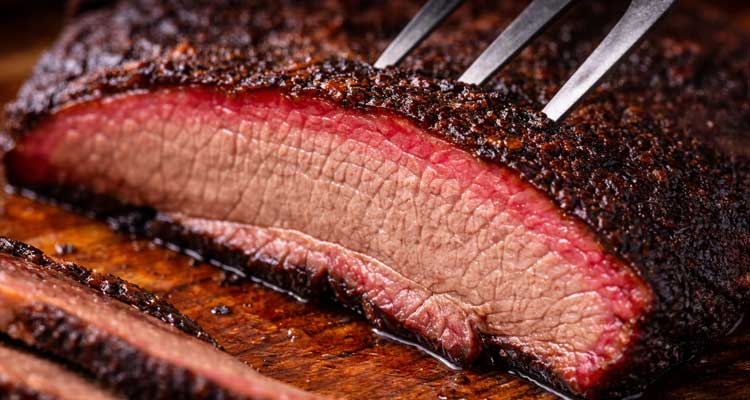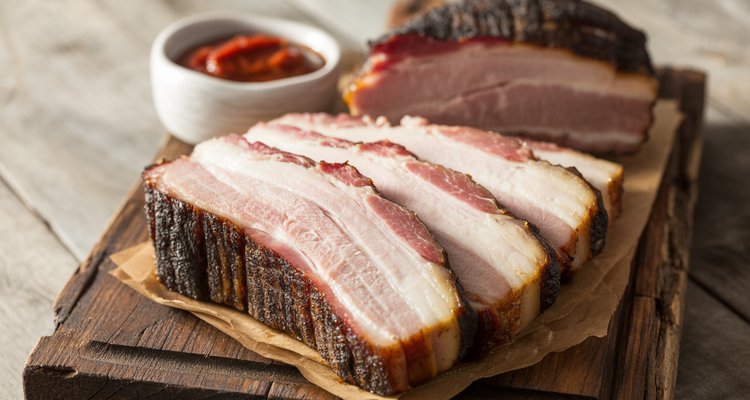
That first sliver of smoked pork belly — mahogany crust giving way to a pink smoke ring and ribbons of tender, rendered fat — is one of BBQ’s most rewarding moments. This cut comes from the same part of the pig as bacon, but smoking it whole is a completely different experience. Low heat and time transform the thick fat cap into something that bastes the meat from the inside out. This recipe covers everything from scoring to the final slice.
What Is Pork Belly?
Pork belly is a boneless slab cut from the underside of the pig. It’s the same cut that gets sliced into bacon after curing and cold-smoking, but when you buy it fresh from a butcher or warehouse store, you get to do the whole process yourself — just without the cure. The defining feature is its fat-to-meat ratio: alternating thick layers of pure white fat and deep pink muscle, stacked like a savory layer cake.
That high fat content is exactly what makes it ideal for smoking. Unlike lean cuts that can dry out over long cooks, this slab only gets better as the fat slowly renders and melts into the surrounding meat. Look for a piece with even thickness throughout — typically 3 to 5 pounds for a manageable backyard cook — and ask the butcher to remove the skin if it’s still attached. Skin-on slabs create a barrier that blocks the rub and smoke from penetrating the fat cap.
How to Prep Pork Belly for Smoking
Removing the Skin
If your slab still has the skin (rind) attached, remove it before putting it on the smoker. Slide a sharp boning knife between the skin and the fat layer at one corner, then work the blade along the surface with short strokes, keeping it parallel to the meat. Most butchers will do this in about 30 seconds if you ask at the counter. Without the skin, the rub soaks into the fat cap and the smoke has a clear path into the meat.
Scoring the Fat Cap
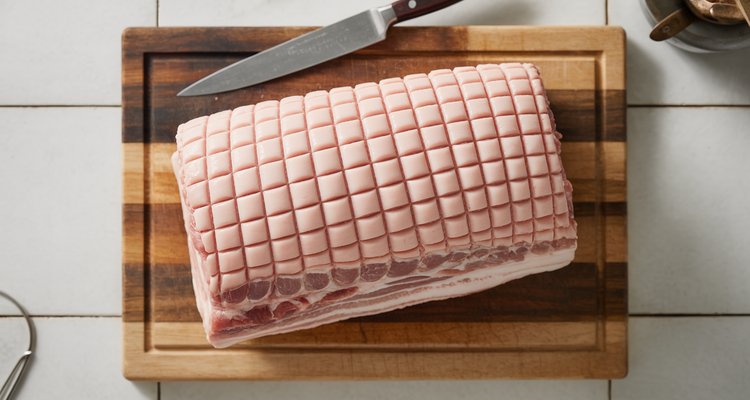
With the skin off, use a sharp chef’s knife to score the fat cap in a crosshatch pattern — cuts spaced about 1 inch apart, roughly ¼ inch deep. You’re barely breaking into the muscle layer, not cutting through it. Those channels increase the surface area for your rub to grip and give the melting fat somewhere to pool and baste the meat as it renders during the smoke.
The Dry Rub
A sweet-savory rub is the classic pairing for smoked pork belly. Combine brown sugar, kosher salt, black pepper, smoked paprika, garlic powder, onion powder, and a pinch of cayenne. Apply it generously on all sides and work it into the scored fat cap so the seasoning gets down into the cuts. For the best results, season the night before and let it rest uncovered on a wire rack in the fridge. The surface dries out slightly overnight, which helps the rub bond to the meat and creates a better base for smoke to adhere to during cooking (a BBQ seasoning sampler works great if you want to experiment with flavors without committing to a full jar).
Choosing Your Wood for Smoked Pork Belly
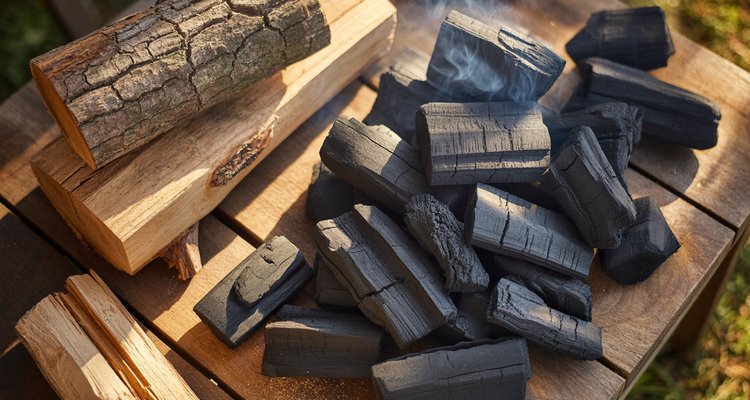
Wood selection shapes the flavor profile more than almost any other variable. Here’s how the most common options compare:
- Apple — Mild and slightly fruity. The most popular choice for this cut. Produces a clean smoke with subtle sweetness that doesn’t compete with the rub.
- Cherry — Slightly sweeter than apple, with the added bonus of producing a deep, dark mahogany color on the exterior. Excellent as a primary wood or blended with apple.
- Hickory — Bold, classic BBQ smoke. Pairs well with pork but use it in smaller quantities or blended with a fruitwood to avoid bitterness on a long cook.
- Pecan — A natural middle ground between hickory and apple. Nutty, rich, and forgiving over a long smoke. An excellent all-around choice for pork.
For most cooks, an apple-cherry blend delivers the best combination of flavor and color. If you’re running a pellet smoker, a competition blend or fruitwood-dominant pellet works well.
How to Smoke Pork Belly Step by Step
- Temperature tool: ThermoMaven wireless meat thermometer helps track pork belly through the smoke and wrap.
- Rub option: Spice Guru BBQ seasoning fits the dry-rub step.
- Wrap option: Bryco Goods pink butcher paper is useful if you wrap to finish the cook.
Equipment Needed
- Smoker (offset, kettle, pellet, or electric — any style works)
- Instant-read or leave-in probe thermometer
- Heavy-duty aluminum foil
- Spray bottle with apple juice
- Sharp boning or chef’s knife
Smoker Setup
Preheat your pit to 225°F before adding the meat. Any smoker style works for this cut — the keys are indirect heat and consistent temperature. If you’re running a charcoal or offset cooker, aim for a clean, thin blue smoke rather than thick white smoke, which can leave a bitter taste on long cooks. Set up your smoke wood before bringing the meat out so the temperature is stable when it hits the grates.
Fat Side Up or Down?
Place the slab fat side up. As the fat cap renders over the long cook, it slowly melts down through the scored channels and self-bastes the meat below. Some pit masters flip halfway through, but our tested method — fat side up the entire cook — produces consistently juicy results with less fuss. Insert your probe thermometer into the thickest part, avoiding the fat layer.
The Smoke Phase — to 165°F
Close the lid and let it cook at 225°F. Every 60 to 90 minutes, open the smoker briefly to spritz the exposed surface with apple juice. The spritz helps develop color and keeps the outer layer from drying out completely during the early phase. Don’t overdo it — a light mist every hour is plenty. Over-spritzing washes off the seasoning and drops the cooking temperature repeatedly.
This phase takes roughly 4 to 6 hours depending on the thickness of your slab. You’re waiting for the internal temperature to reach 165°F. At that point, the exterior should have set to a firm, dark crust and the fat cap will be visibly softening.
The Wrap — 165°F to 200°F
Once the probe reads 165°F, pull the meat off the grates and wrap it tightly in a double layer of heavy-duty foil. Before sealing, pour in about ¼ cup of apple juice — this creates steam inside the packet that pushes the internal temperature through the stall and keeps the meat from drying out as the remaining collagen breaks down.
Return the wrapped slab to the smoker and continue cooking until the internal temperature reaches 195–203°F. At this range, a probe or toothpick should slide in and out of the thickest part with almost no resistance — like pushing into soft butter. Total cook time from start to finish is typically 6 to 8 hours for a 4 to 5 pound cut.
Rest and Slice
When it hits 200°F and passes the probe test, remove it from the smoker and crack the foil open slightly to let some steam escape. Rest for at least 30 minutes — an hour is better if you can wait. Resting allows the muscle fibers to relax and reabsorb the juices driven toward the center during cooking. Skip the rest and you’ll lose those juices the moment the knife hits the cutting board.
Slice the smoked pork belly about ¼ inch thick across the grain and serve immediately. The exterior crust provides a satisfying contrast on each slice while the interior layers are tender and rich with rendered fat.
Tips for the Best Bark on Smoked Pork Belly
The bark is one of the most prized parts of any BBQ cook, and this cut produces an excellent one when you give it the right conditions:
- Season the night before. An overnight dry brine lets the surface dry out in the fridge, which means the rub bonds more firmly and the smoke has more to grip on day one of the cook.
- Keep temperature steady. Fluctuating temperature creates steam pockets inside the cooking chamber. Consistent 225°F is better for developing that crust than cycling between 200°F and 260°F.
- Don’t rush the wrap. If you’re after maximum exterior texture, let the slab stay unwrapped until the surface is truly firm and set — even a few degrees past 165°F before wrapping preserves more of the crust.
- Spritz lightly. A fine mist every 60 to 90 minutes is ideal. Heavy, frequent spritzing softens the forming crust and adds unnecessary cook time by repeatedly cooling the surface.
Serving Suggestions
Smoked pork belly is one of the most versatile cuts to come off a pit. Here are the most popular ways to serve it:
- Thick slices as a main — Serve alongside coleslaw, baked beans, and cornbread for a classic BBQ plate.
- Burnt ends — Cut into 1-inch cubes, toss with BBQ sauce and a drizzle of honey, then return to the smoker at 275°F for 30 minutes until glazed and caramelized. The “pork candy” effect is real.
- Tacos — Thin slices tucked into warm corn tortillas with pickled red onion, cilantro, and a squeeze of lime.
- Ramen or rice bowls — Slice thin and reheat briefly in a pan with soy sauce and sesame oil for an Asian-style finish.
Frequently Asked Questions
How long does it take to smoke pork belly at 225°F?
Plan on 6 to 8 hours total for a 4 to 5 pound slab at 225°F. The unwrapped phase takes roughly 4 to 6 hours to reach 165°F, followed by 1 to 2 hours wrapped in foil to climb to 200°F. Always cook to internal temperature rather than time — thickness varies significantly between slabs, and time estimates can be off by hours in either direction.
What internal temperature should smoked pork belly reach?
The target for smoked pork belly is 195–203°F. At 165°F, the meat is safe to eat but still firm and chewy — that’s the wrap point, not the finish line. Between 195°F and 203°F, the collagen in the fat layers has fully broken down into gelatin and the cut becomes tender enough to slice cleanly or pull apart. Use a probe thermometer and confirm doneness by feel: the probe should slide in with almost no resistance.
Should pork belly go fat side up or down in the smoker?
Fat side up is the standard approach and the one we recommend. The fat cap slowly renders over the long cook, and the melting fat drips down through the scored channels, basting the meat layer underneath. Fat side down places the fat between the meat and the heat source, which can speed up rendering but also creates a barrier that insulates the meat from smoke penetration.
What is the best wood for smoking pork belly?
Apple and cherry are the top choices. Apple delivers mild, clean smoke that lets the pork and seasoning flavors shine. Cherry adds a slightly sweeter note and contributes a deep mahogany color on the exterior. A 50/50 blend of the two is hard to beat. Hickory works well in small amounts but can become overpowering on a 6 to 8 hour cook — use it sparingly or blend it with a fruitwood.
Can you smoke pork belly without wrapping it?
Yes — the no-wrap method is a legitimate option if you want maximum crust texture. Skip the foil and smoke all the way to 200°F uncovered. You’ll need to spritz more frequently to keep the surface from drying out, and the total cook time will typically run 1 to 2 hours longer than the wrapped version. The trade-off is a firmer, crunchier exterior compared to the slightly softer crust that results from wrapping.
Smoked Pork Belly
Equipment
- Smoker offset, kettle, pellet, or electric — any style works
- Probe thermometer instant-read or leave-in for monitoring internal temp
- Heavy-duty aluminum foil for wrapping at 165°F
- Spray bottle filled with apple juice for spritzing
- Sharp chef's knife for scoring the fat cap and slicing
Ingredients
Pork Belly
- 4 pounds pork belly slab skin removed, even thickness throughout
Dry Rub
- 3 tablespoons brown sugar
- 1 tablespoon kosher salt
- 1 tablespoon black pepper coarsely ground
- 1 tablespoon smoked paprika
- 1 teaspoon garlic powder
- 1 teaspoon onion powder
- 1/4 teaspoon cayenne pepper adjust to taste
For the Cook
- 1/4 cup apple juice for spritzing and wrapping
- 2 chunks apple or cherry wood or a 50/50 blend of both
Instructions
- Score the fat cap: Using a sharp knife, cut a crosshatch pattern into the fat cap — cuts 1 inch apart and about 1/4 inch deep. Be careful not to cut too deeply into the muscle.
- Apply the dry rub: Mix all dry rub ingredients together. Apply generously to all sides of the pork belly, working the rub into the scored fat cap. For best results, refrigerate uncovered on a wire rack overnight.
- Preheat smoker: Set your smoker to 225°F. Add apple wood, cherry wood, or a blend of both. Wait until the temperature is stable and producing clean, thin smoke.
- Place pork belly fat side up: Set the slab on the smoker grates fat side up. Insert a probe thermometer into the thickest part of the meat, avoiding the fat layer.
- Smoke to 165°F: Smoke at 225°F, spritzing with apple juice every 60 to 90 minutes. Maintain consistent temperature throughout. This phase takes approximately 4 to 6 hours.
- Wrap in foil: When the internal temperature reaches 165°F, remove the pork belly from the smoker. Place on a double layer of heavy-duty foil, pour in 1/4 cup apple juice, and wrap tightly.
- Continue to 200°F: Return the wrapped pork belly to the smoker at 225°F. Cook until the internal temperature reaches 195-203°F and a probe slides in with almost no resistance. This takes approximately 1 to 2 additional hours.
- Rest: Remove from smoker and crack the foil open slightly. Rest for at least 30 minutes, up to 1 hour, before slicing.
- Slice and serve: Slice the pork belly about 1/4 inch thick across the grain. Serve immediately.
Notes