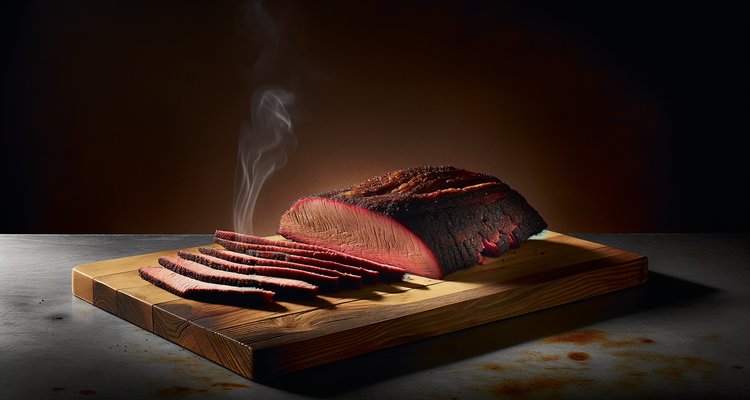
It’s 6am Saturday. Your guests arrive at noon. A traditional brisket takes 14 hours – that ship sailed yesterday. The hot and fast brisket method was built for exactly this situation. Cook at 300-325°F instead of 225°F, wrap at the right time, and you’ll have a tender, juicy brisket on the table in 5 to 6 hours without sacrificing the bark or the smoke.
What Is Hot and Fast Brisket?
Hot and fast brisket is a smoking method where you cook your brisket at 300-325°F instead of the traditional 225-250°F low and slow range. The result is a fully smoked, probe-tender brisket that takes roughly half the time of a conventional cook. The science behind it is straightforward: collagen breakdown in tough cuts like brisket is a function of both time and temperature.
Higher temperatures accelerate the conversion of collagen to gelatin – the process that turns a tough packer brisket into the pull-apart, juicy meat you’re after. You don’t need 14 hours at 225°F if you can reach the same breakdown at 300°F in 6 hours. Competition pitmasters – most famously Myron Mixon – popularized the method on the circuit years ago.
Mixon cooked briskets at 300°F in foil and collected trophies while everyone else tended fires at 225°F all night. The approach has since made its way into backyard BBQ with excellent results. This method works on any smoker capable of holding 300-325°F consistently: pellet grills, offset smokers, kamado grills, and charcoal kettles all work. Pellet grills make temperature management easiest; offsets require more active fire management to hold the higher range.
Hot and Fast vs. Low and Slow: Key Differences
Both methods produce excellent brisket. The differences come down to time, bark development, and how much monitoring the cook requires.
| Factor | Hot and Fast (300-325°F) | Low and Slow (225-250°F) |
|---|---|---|
| Cook Time | 5-6 hours | 12-18 hours |
| Bark Development | Good – needs active management | Deep, well-developed |
| Smoke Ring | Lighter but visible | Prominent |
| Tenderness | Very good with proper rest | Maximum |
| Forgiveness | Lower – more active monitoring | Higher – more forgiving |
| Best For | Same-day cooks, time-constrained | Competition, special occasions |
Neither method produces an inferior brisket. Low and slow gives you a slightly deeper smoke ring and a more developed bark – but a well-executed hot and fast brisket holds its own at any backyard table.
Helpful gear for this cook:
- Bryco Goods pink butcher paper — works for wrapping brisket, ribs, and pork during the stall
- Spice Guru BBQ rub set — gives you several BBQ seasoning options for the cook
- Typhur Sync WiFi Wireless Meat Thermometer Digital — helps verify doneness without guessing
Helpful gear for this cook:
- MEATER Plus: Smart Bluetooth Wireless Meat Thermometer Digital — helps verify doneness without guessing
- TempPro TP20 500FT Wireless Meat Thermometer with Dual Meat — helps verify doneness without guessing
- ThermoMaven wireless meat thermometer — helps verify doneness without guessing
What You Need Before You Start
Brisket Selection
For hot and fast cooking, start with a whole packer brisket – the full cut that includes both the flat (leaner) and the point (fattier, more marbled). USDA Choice is the minimum grade worth running at high heat; Prime or Wagyu will reward you with more moisture buffer at elevated temperatures. Avoid trimmed flats for a first hot and fast cook. The flat has less fat protection and dries out faster at 300°F. Once you understand how your smoker behaves at this temperature range, flats become manageable – but start with the full packer.
Trimming
Trim the fat cap down to a consistent ¼ inch. This is more important for hot and fast than low and slow – thick fat won’t render fully at higher temperatures in the shorter cook time, and excess fat blocks the rub from forming bark. Trim the hard fat (feels denser than the meat itself) aggressively – it won’t render at any temperature.
Seasoning
A simple SPG rub – equal parts coarse kosher salt, coarse black pepper, and garlic powder – is the standard for brisket, and it works perfectly here. Apply liberally and pat it in. For best results, season the night before and let the brisket rest uncovered in the refrigerator overnight. The salt draws moisture to the surface, which then reabsorbs into the meat (dry brining) and helps bark formation.
Equipment
You need a smoker that can hold a steady 300-325°F and a reliable leave-in thermometer to track internal temperature without opening the lid. A dual-probe thermometer – one probe in the brisket, one monitoring chamber temp – is ideal. Any smoker type works: pellet grills hold this temperature range with the least effort, kamados run stable once dialed in, and offsets require the most active fire management.
Step-by-Step Hot and Fast Brisket Method
Step 1 – Prep and Season
Trim the cold brisket straight from the refrigerator – cold fat is firmer and easier to trim cleanly. Get the fat cap to ¼ inch, remove all hard fat deposits, and square up the edges to promote even airflow. Apply mustard as a binder (any yellow mustard works – you won’t taste it after the cook), then coat the entire surface generously with your SPG rub. Season at least 1 hour before cooking, or overnight for maximum bark development.
Step 2 – Fire Up to 300-325°F
Bring your smoker to a stable 300-325°F before placing the brisket on. Consistent temperature matters more than hitting an exact number – swinging between 280°F and 340°F is harder on the brisket than holding a steady 310°F. For wood, oak is the standard for beef brisket at any temperature.
It provides a clean, medium smoke flavor that doesn’t overpower the beef. Add cherry for a richer color on the bark and a slightly sweeter flavor note. Hickory works but can become heavy if used alone – pair it with oak for a balanced smoke profile. Avoid mesquite for a long cook; it turns bitter and masks the natural beef flavor.
Step 3 – The First Phase (0 to 160-170°F)
Place the brisket fat side down on the grate. At 300°F+, the heat coming up from below is more intense than during a low and slow cook – the fat cap acts as a shield to protect the leaner flat muscle from drying out. This phase takes approximately 2.
5-3 hours depending on brisket size and smoker airflow. After about 2 hours, check the surface: if any patches look dry, give them a light spritz with water, apple juice, or apple cider vinegar. Watch the flat-to-point temperature differential. The flat is leaner and thinner; it heats faster than the point. If your flat reads more than 30°F above your point, reduce smoker temperature to 275°F for 30-45 minutes to let the point catch up before you wrap.
Step 4 – Wrap the Brisket (The Critical Move)
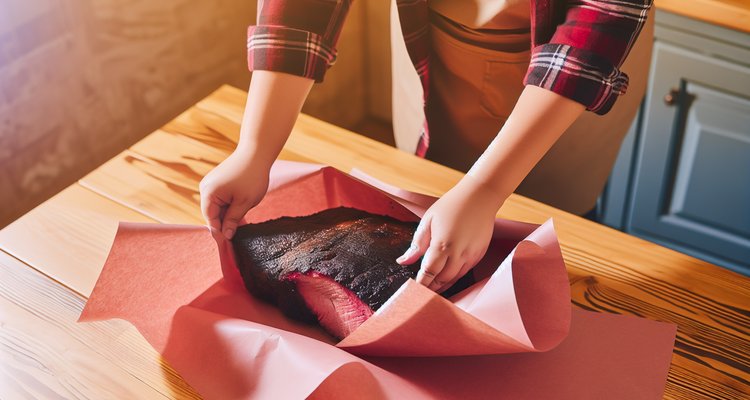 Wrap when the brisket reaches 160-170°F internal temperature. At this point the bark should be set – dark, firm, and not tacky when you press it. Wrapping serves two purposes: it protects the bark from burning under continued high heat, and it traps steam from the meat’s own juices to accelerate collagen breakdown. Hot and fast cooks still hit the stall – the plateau between 150-170°F where evaporative cooling temporarily stops temperature rise. Wrapping eliminates the stall by preventing that evaporation. For hot and fast brisket, foil (the Texas Crutch) is the safer choice. A tight foil wrap creates a high-humidity environment that breaks down collagen quickly at the elevated temperature. Before sealing the foil, add 2-3 tablespoons of beef tallow (rendered beef fat) or butter for extra richness and moisture. Pink butcher paper is a valid option too – it breathes, preserves bark texture better, and won’t steam the brisket into mush – but it adds 30-45 minutes to the finish time.
Butcher Paper vs. Foil for Hot and Fast Brisket
Both wrapping materials are legitimate choices. The right pick depends on your priorities.
| Feature | Pink Butcher Paper | Aluminum Foil |
|---|---|---|
| Bark Preservation | Better – stays firm | Softer bark |
| Moisture Retention | Good | Excellent |
| Cook Time After Wrap | +30-45 min longer | Faster finish |
| Steam Effect | Moderate – paper breathes | High – fully sealed |
| Difficulty | Moderate | Easy |
| Best For | Bark lovers, experienced cooks | Moisture focus, first-timers |
Step 5 – Finish to Probe Tender
Return the wrapped brisket to the smoker at 300°F and continue cooking until probe tender. This phase typically takes 1.5-2 hours. Your target internal temperature range is 203-208°F, but don’t pull the brisket the moment your thermometer hits 203°F.
Temperature is a guideline – probe feel is the real test. Probe tender means exactly what it sounds like: when you slide a thermometer probe or a skewer into the thickest part of the flat, it should glide in with zero resistance, like pushing into room-temperature butter. If you feel any resistance at all, the brisket needs more time. Hot and fast briskets often require reaching 206-210°F before this point is reached – higher than you might expect.
Step 6 – The Rest (Don’t Cut This Short)
The rest is not optional. Pull the brisket from the smoker when probe tender, keep it in its wrap, cover it with a thick towel, and place it in a dry cooler. Rest for a minimum of 1 hour – 2 hours is better. For hot and fast briskets specifically, a longer rest is more important than for low and slow.
The higher cook temperature means more residual carry-over heat inside the meat – the internal temperature can continue rising 5-10°F after you pull it. More critically, the extended rest allows the muscle fibers to relax and reabsorb juices that were squeezed out during cooking. Cut too early and those juices end up on your cutting board rather than in the meat. The rest also allows the fat and gelatin to redistribute through the meat, improving both moisture and flavor in every slice.
Hot and Fast Brisket Time Estimates by Weight
Use these as planning guidelines only. Actual cook times vary based on your smoker’s airflow, ambient temperature, and the individual brisket. Probe tender is the only reliable finish signal.
| Brisket Weight | Time to Wrap (~160°F) | Time After Wrap | Estimated Total |
|---|---|---|---|
| 8-10 lbs | 2-2.5 hours | 1.5-2 hours | 4-5 hours |
| 12-14 lbs | 2.5-3 hours | 2-2.5 hours | 5-6 hours |
| 14-16 lbs | 3-3.5 hours | 2.5-3 hours | 6-7 hours |
Add 1-2 hours rest time to your total planning window regardless of brisket size.
How to Tell When Hot and Fast Brisket Is Done
Doneness for hot and fast brisket has three components that all need to be true.
Internal Temperature
The flat should read 203-208°F on your thermometer. This is the range where collagen has converted to gelatin and the fat has rendered. Some briskets – especially leaner Choice-grade flats – won’t be tender until 208-210°F. The temperature range is a starting point, not a finish line.
The Probe Test
Slide a thermometer probe or a thin metal skewer into the thickest part of the flat. The tool should penetrate the meat with no resistance whatsoever – like pushing into warm butter. If you feel any tug, any slight grab, the connective tissue hasn’t fully broken down. Put the brisket back in for another 30 minutes and test again.
The Jiggle Test
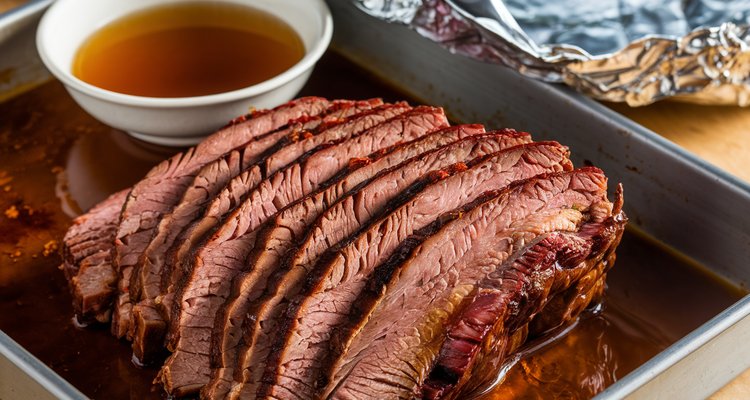
For additional confirmation, gently shake the rack or pick up the wrapped brisket and wiggle it. The flat should have a soft, loose jiggle – almost like gelatin. A brisket that’s still firm and stiff isn’t done yet, even if the temperature reads correctly. When all three signals align – temperature in range, probe slides freely, flat jiggles – pull the brisket and get it into your cooler for the rest.
Common Hot and Fast Brisket Mistakes
Inconsistent Smoker Temperature
Wild swings between 260°F and 350°F create unpredictable results. Dial in your smoker at the target temperature before loading the brisket, and check it every 30-45 minutes. A water pan in the chamber helps buffer temperature swings on charcoal and offset smokers.
Not Trimming Enough
Fat that’s too thick at 300°F creates an insulating layer that prevents the rub from forming bark on the point. Trim to ¼ inch consistently – don’t leave thick patches.
Pulling at Temperature Without the Probe Test
Internal temperature is a guideline, not a command. A brisket at 205°F that resists the probe needs more time. Don’t cut into it and ruin the cook because the thermometer said so.
Skipping or Shortening the Rest
Hot and fast cooks need at least an hour of rest, preferably two. This is where moisture redistribution happens – the juices and rendered fat move back into the meat fibers. Cutting a hot and fast brisket at 30 minutes is a common reason for dry results.
Letting the Flat Run Too Far Ahead of the Point
At 300°F, the flat – being thinner and leaner – heats significantly faster than the point. Monitor both with separate probes. If the differential reaches 30°F+, drop your smoker temp to 275°F for 30-45 minutes before wrapping.
Frequently Asked Questions
How long does hot and fast brisket take?
A typical 12-14 pound packer brisket cooked hot and fast at 300°F takes 5-6 hours of cook time, plus 1-2 hours of rest. Total time from fire-up to slicing is roughly 7-8 hours – about half the time of a traditional low and slow cook.
What temperature do you smoke brisket hot and fast?
The standard hot and fast range is 300-325°F. Most pitmasters settle on 300°F as the target because it’s hot enough to reduce cook time significantly but low enough to give you a workable window before the bark overcooks. Some cook at 325°F for even faster results with very close monitoring.
Should I use butcher paper or foil for hot and fast brisket?
Foil is the safer choice for hot and fast brisket, especially for first-timers. It creates a sealed, high-humidity environment that accelerates collagen breakdown at the elevated temperature and reduces the risk of the flat drying out. Pink butcher paper produces better bark texture but adds 30-45 minutes to the finish time and requires tighter execution.
Can you smoke brisket at 350°F?
Yes, but 350°F significantly compresses your margin for error. At that temperature, the transition from “almost done” to “overcooked” happens fast. Competitive pitmasters sometimes go above 325°F using foil wraps and precise thermometer monitoring. For backyard cooks, 300-325°F is the better range – faster than low and slow with a more manageable window.
Why is my hot and fast brisket tough?
Tough hot and fast brisket almost always means undercooking – not overcooking. The brisket didn’t reach full probe tenderness before you pulled it. Higher cook temperatures don’t eliminate the need for connective tissue breakdown; they just accelerate it. If your brisket is tough, return it to the smoker wrapped and cook another 30-60 minutes, then probe test again.
What internal temperature is hot and fast brisket done?
Target 203-208°F as your starting check range, but use probe tenderness – not temperature alone – as your pull signal. Hot and fast briskets often need to reach 206-210°F before the probe slides in freely, because the shorter cook time at high heat sometimes requires slightly higher internal temps to achieve full collagen conversion.
How long should I rest hot and fast brisket?
Minimum 1 hour, ideally 2 hours. The rest for a hot and fast brisket is more important than for a low and slow cook because carry-over cooking continues longer after a higher-temperature cook. Wrap the brisket in its foil or butcher paper, wrap that in a thick towel, and place it in a dry cooler. It holds safely for up to 4 hours this way.
Does hot and fast brisket have a good smoke ring?
You’ll get a smoke ring, but it’s typically thinner than a low and slow cook. Smoke ring formation requires time for the chemical reaction between smoke particles and myoglobin in the meat. A 6-hour cook produces a lighter ring than a 14-hour cook – but it’s still present and visible when you slice. For maximum smoke ring on a hot and fast brisket, start your cook on a cold brisket straight from the refrigerator.
Is hot and fast brisket as good as low and slow?
Executed well, a hot and fast brisket is excellent BBQ. It won’t have the identical depth of bark or smoke ring of a 14-hour low and slow cook – but the difference is smaller than most people expect, especially when using foil wrap. For a weekend cook where you want great brisket without staying up all night, hot and fast is a legitimate method, not a shortcut.
Can I cook a brisket flat hot and fast?
You can, but it requires extra care. Flats are leaner than packer briskets and have less fat protection against high heat. Keep your smoker at the lower end of the range (300°F, not 325°F), use foil wrap (not butcher paper), and monitor internal temperature closely. Wrap early – around 155-160°F – and add beef tallow or butter inside the foil to compensate for the reduced fat content.
Should I inject a hot and fast brisket?
Injecting is optional but can add insurance moisture and flavor for hot and fast cooks. A simple injection of beef broth, tallow, or a commercial brisket injection applied the night before the cook helps compensate for any moisture loss from the elevated temperature. Competition pitmasters who run hot and fast frequently inject – it’s a hedge against dryness rather than a requirement.