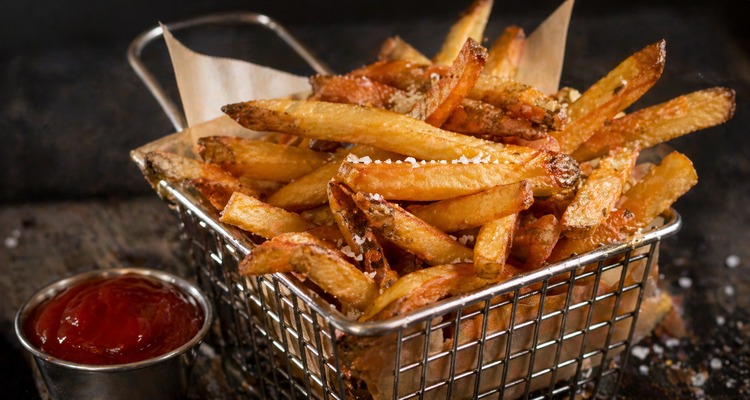
Remember the smell of fast food fries from twenty years ago – that deep, savory, almost meaty aroma that hit you the moment you walked through the door? That scent was beef tallow at work. This recipe walks you through every step to make beef tallow french fries with a shattering crispy crust and a cloud-soft interior. Vegetable oils dominate commercial fryers today, but returning to traditional rendered beef fat elevates the humble potato to something genuinely gourmet.
Quick Summary
- Authentic Flavor – Beef tallow imparts a rich, meaty undertone that vegetable oils simply cannot replicate.
- Superior Texture – Tallow creates an exceptionally crispy crust that holds its crunch far longer than vegetable oil fries.
- Double-Fry Method – Blanch at 325°F to cook through, then crisp at 375°F for a shatteringly golden exterior.
- Ingredient Focus – Use high-starch russet potatoes and quality beef tallow from a butcher or rendered at home.
What’s So Special About Beef Tallow Fries?
Three things set beef tallow fries apart from anything made in vegetable oil: smoke point, flavor, and texture. Smoke Point: Tallow’s 400°F smoke point makes it exceptionally stable under sustained high heat. Unlike many vegetable oils, it doesn’t oxidize or break down quickly – so the fat stays clean and neutral throughout the entire fry session. Flavor: Tallow imparts a rich, savory, lightly beefy undertone that no neutral seed oil can replicate. Every bite carries a depth of flavor that makes these fries taste complete on their own, even before adding any seasoning. Texture: Tallow forms a superior moisture barrier around the potato as it fries, keeping the crust crispy for much longer than vegetable oil fries. If you’ve ever noticed tallow fries hold their crunch all the way to the bottom of the basket, this is why.
 Pitmaster Tip: Use a candy or deep-fry thermometer and clip it to the pot. Consistent oil temperature is the single biggest factor separating good fries from great ones.
The Fast Food Connection: McDonald’s, Steak ‘n Shake, and Chick-fil-A
McDonald’s used a blend of 93% beef tallow and 7% cottonseed oil until 1990, when consumer pressure over saturated fat concerns pushed the chain to switch to 100% vegetable oil. The fries have never tasted the same since. Chick-fil-A takes a fully modern approach – waffle fries in canola oil, signature chicken in peanut oil. Neither fat delivers the old-school savory depth that rendered beef fat provides. The broader fast food industry has largely moved away from tallow entirely. Here’s how the major chains compare:
| Chain | Then | Now |
|---|---|---|
| McDonald’s | 93% beef tallow / 7% cottonseed oil (until 1990) | 100% vegetable oil blend |
| Chick-fil-A | – | Canola oil (fries), peanut oil (chicken) |
| Steak ‘n Shake | Closer ties to traditional frying methods | Largely moved away from tallow |
The shift away from beef tallow was driven by campaigns against saturated fats – campaigns that led to the widespread adoption of partially hydrogenated vegetable oils, which introduced harmful trans fats into the food supply. Today, many culinary experts are re-evaluating traditional animal fats, and homemade beef tallow fries are the only reliable path back to that original taste.
Are Beef Tallow Fries Healthy?
The 1990s demonized animal fats almost entirely on the basis of saturated fat content – a shift that drove the food industry toward highly processed seed and vegetable oils. Modern nutritional research has complicated that picture significantly. Beef tallow is a single-ingredient fat. It contains:
- No trans fats
- No chemical solvents
- No industrial processing
- Natural conjugated linoleic acid (CLA)
- Fat-soluble vitamins (A, D, E, K)
That doesn’t make tallow fries a health food – they are still deep-fried potatoes and should be enjoyed in moderation. But compared to modern vegetable oils that undergo extensive refining, bleaching, and deodorizing, tallow (especially home-rendered or butcher-sourced) is a far more natural product. Tallow’s stability at high temperatures also means it’s less likely to form harmful compounds during frying – a real concern with polyunsaturated seed oils that degrade quickly under heat.
Pro Tip: A reasonable serving of tallow fries (about 3-4 oz of cooked potato) runs roughly 300-380 calories depending on fat absorption. Patting the fries thoroughly dry before each fry session reduces fat uptake noticeably.Helpful gear for this cook:
- Temperature control: Stock Your Home aluminum pans catches drips, holds sides, or manages covered reheating.
- Handling: TrendPlain glass oil sprayer applies a thin, even coat of cooking oil.
- Prep: Grill Armor extra-long heat-resistant gloves protects your hands around hot grates, pans, and smoker parts.
Selecting the Right Ingredients
Choosing Your Potatoes
Russet potatoes are the only correct choice for this recipe. Their high starch and low moisture content create the exact interior texture you’re after – fluffy and light rather than waxy or dense. Waxy varieties like red or Yukon Gold hold too much moisture and work against the double-fry method. What to look for when shopping:
- Large, uniform potatoes for consistent fry stick sizes
- Firm skin with no green spots or sprouts
- Target sticks roughly 1/4-inch wide and 3-4 inches long for a classic french fry shape
Store russets in a cool, dark place until you’re ready to fry.
Sourcing Beef Tallow
You have three main options for sourcing quality beef tallow:
- Local butchers – Best first stop. Many sell rendered tallow by the pound at excellent quality.
- Online specialty retailers or farmers markets – Often carry grass-fed tallow, which some cooks prefer for a slightly richer flavor.
- Render it yourself – Ask your butcher for kidney fat (suet), which yields the cleanest, most neutral-tasting tallow. Slow-render on the stovetop or in the oven at low heat, then strain out the solids. Home-rendered tallow keeps for months in the refrigerator and gives you maximum control over quality.
The Double-Fry Method for Perfect Beef Tallow French Fries
The double-fry method is not optional – it is the structural technique that makes these fries work. A single fry at one temperature produces fries that are either pale and limp, or crispy outside but raw in the middle. The two-stage approach solves this completely.
Step 1: Prep and Soak
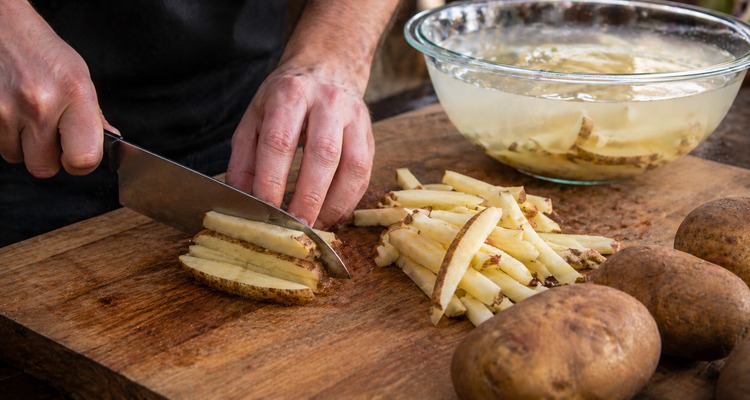
Peel the russet potatoes and cut them into uniform sticks, approximately 1/4-inch thick. Drop the sticks immediately into a large bowl of cold water as you cut. Soaking removes excess surface starch, preventing the fries from sticking together in the oil:
- Minimum: 30 minutes
- Ideal: 1-2 hours
- Best results: Overnight in the refrigerator in fresh cold water
Change the water once or twice if it turns very cloudy – that cloudiness is starch leaving the potato, which is exactly what you want.
Step 2: Dry Thoroughly
Water and hot fat are a dangerous and flavor-destroying combination. Drain the soaked potatoes and spread them across clean kitchen towels or several layers of paper towels. Pat completely dry, including between individual fry sticks.
Pitmaster Tip: Safety first – always lower fries gently into the hot tallow using a spider strainer or long-handled basket. Never drop them from a height. Keep a lid nearby to smother any flare-ups, and never leave hot fat unattended.Step 3: The First Fry (Blanching)
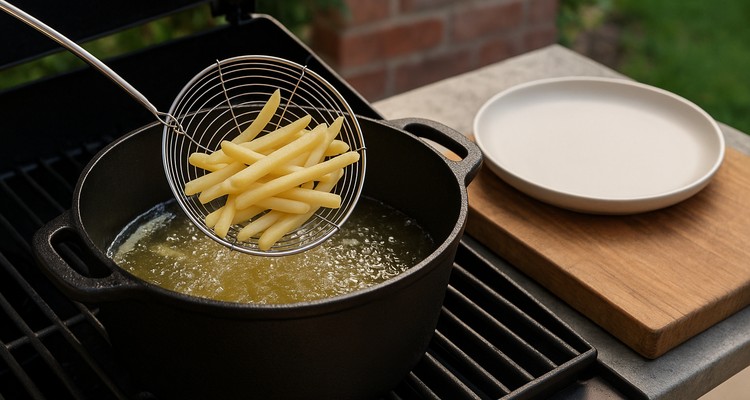
Heat your beef tallow in a heavy Dutch oven or deep cast-iron pot over medium heat. Bring the tallow to 325°F before adding any potatoes. Working in small batches, lower the dried fry sticks into the fat and fry for 5-7 minutes per batch. The fries should be cooked through – a paring knife should slide in easily – but will still look pale and won’t be crispy. Remove with a spider strainer and drain on a wire rack set over a baking sheet.
Step 4: Rest and Chill
Allow the blanched fries to cool completely on the wire rack without piling or covering them. For maximum crispness, transfer the cooled fries to the freezer on the baking sheet for 20-30 minutes. Chilling firms the interior and conditions the exterior for the dramatic crunch in the second fry.
Step 5: The Second Fry (Crisping)
Increase the tallow temperature to 375°F. Working in small batches, lower the chilled fries back into the hot fat for 2-4 minutes per batch. Watch closely – they will go from golden to dark quickly at this temperature. Remove when they reach a rich, even golden-brown color and drain on the wire rack for 30-60 seconds.
Step 6: Season Immediately
Transfer the hot fries into a large bowl and season generously with coarse sea salt the moment they come out of the fat. Tossing immediately while still hot ensures the seasoning adheres rather than sliding off.
Pro Tip: Smoked paprika, onion powder, or a small amount of cayenne are excellent additions to the seasoning blend. Keep it light – the beef tallow flavor should remain the star.Frequently Asked Questions
Can I use frozen fries with beef tallow?
Yes. Frying store-bought frozen fries in beef tallow still delivers a significant flavor improvement over vegetable oil. The tallow imparts its characteristic savory depth regardless of whether the potato was fresh-cut or frozen.
Can I make beef tallow fries in an air fryer?
You can adapt this recipe for an air fryer by melting a small amount of tallow and tossing the cut, soaked, and dried potatoes in it before air frying. The result won’t be identical to deep frying – the fat-to-potato ratio is much lower – but the tallow flavor does transfer.
Where can I get beef tallow fries near me?
Tallow fries have largely disappeared from major fast food chains, but they’re making a comeback in craft burger restaurants, farm-to-table spots, and specialty pop-up vendors. Search for local artisan burger joints or nose-to-tail restaurants in your area.
How do I store and reuse beef tallow after frying?
Allow the used tallow to cool completely until it solidifies. Pour through a fine-mesh sieve or cheesecloth to remove potato bits and sediment. Properly filtered frying tallow keeps in the refrigerator for 2-3 weeks.
What is the best pot for frying with tallow?
A heavy cast-iron Dutch oven is ideal. Cast iron retains heat exceptionally well, helping maintain stable temperatures even when cold potatoes are added. Use a pot with at least 4-quart capacity for enough tallow depth.
How do I know when the tallow is at the right temperature?
A clip-on candy or deep-fry thermometer is the most reliable method. No thermometer? Drop a single fry stick into the fat – at 325°F it should bubble steadily but not aggressively; at 375°F it should sizzle vigorously and begin browning within 60 seconds.
What are the best dipping sauces for beef tallow fries?
Classic ketchup is always a solid choice, but the rich flavor of beef tallow fries pairs exceptionally well with garlic aioli, spicy mayo, or a tangy fry sauce. For something decadent, try a warm cheese sauce or a robust beef gravy.
How do I prevent my fries from getting soggy?
Three things prevent soggy fries:
- Dry the fries completely before each fry stage
- Maintain correct oil temperature throughout
- Fry in small batches – overcrowding drops the temperature and produces greasy, limp results
Always let the tallow recover its full heat between batches.
Take Home Message
Making beef tallow french fries at home is a straightforward process once you understand the double-fry method. The combination of a high-starch russet potato, quality rendered beef fat, and the two-stage temperature approach delivers results that far surpass anything from a modern fast-food joint. Salt them immediately, serve them hot, and enjoy every bite of a genuinely classic American food.