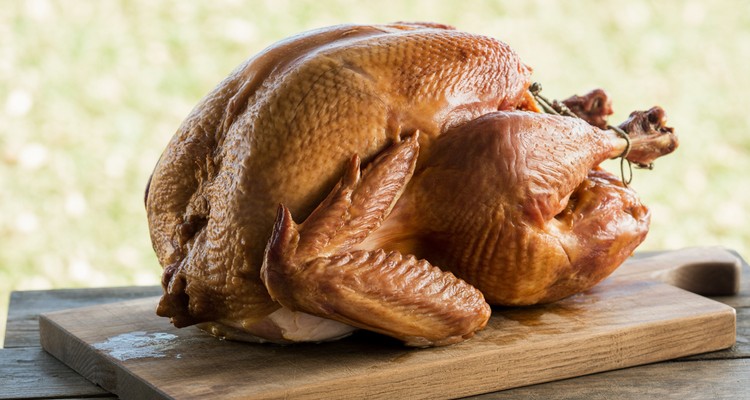
Smoking a whole turkey is one of the most rewarding things you can do on your backyard smoker. But nailing the timing – especially for a big bird – is where most people get tripped up. This guide gives you a comprehensive whole turkey smoking time chart covering every common weight at 225°F, 250°F, 275°F, and 325°F. The most important thing to understand upfront: time is a guideline, not a rule. A reliable meat thermometer is the only way to know when your turkey is truly done. Use the chart to plan your cook, then use your probe to confirm it.
Quick Roundup List
Quick Summary
- Comprehensive Chart: This guide provides a detailed whole turkey smoking time chart, covering various common weights and temperatures (225°F, 250°F, 275°F, and 325°F) to help you plan your cook effectively.
- Temperature is Key: Always rely on a meat thermometer to confirm doneness, aiming for 165°F in the breast and 175-180°F in the thighs, as cook times are estimates and can vary significantly.
- Spatchcocking Benefits: Spatchcocking reduces cook time by 25-30% and promotes more even cooking and crispier skin by flattening the bird, making it an excellent technique for a more forgiving cook.
- Prep for Success: Brining and air-drying the turkey skin are crucial steps for achieving a juicy interior and a coveted golden-brown, crispy exterior, regardless of your chosen smoking temperature.
Helpful products for this guide:
- ThermoMaven wireless meat thermometer — tracks long cooks without opening the smoker
- Hotec stainless steel kitchen tongs — make turning and moving food easier
- Spice Guru BBQ rub set — gives you several BBQ seasoning options for the cook
Whole Turkey Smoking Time Chart
The chart below gives estimated smoking times for a whole, unseasoned turkey at four common smoker temperatures. Times assume the bird starts at refrigerator temperature (around 38°F) and ends at a safe internal temperature of 165°F in the breast. Factors like wind, ambient temperature, opening the smoker lid, and your specific smoker’s efficiency can shift actual times by 30-60 minutes. Always have a probe thermometer in the bird from the start so you can track progress in real time.
| Turkey Weight | 225°F | 250°F | 275°F | 325°F |
|---|---|---|---|---|
| 10-12 lbs | 5-6 hrs | 4-5 hrs | 3.5-4.5 hrs | 2.5-3.5 hrs |
| 12-14 lbs | 6-7 hrs | 5-6 hrs | 4.5-5.5 hrs | 3-4 hrs |
| 14-16 lbs | 7-8 hrs | 6-7 hrs | 5-6 hrs | 3.5-4.5 hrs |
| 16-18 lbs | 8-9 hrs | 7-8 hrs | 5.5-6.5 hrs | 4-5 hrs |
| 18-20 lbs | 9-10 hrs | 8-9 hrs | 6-7 hrs | 4.5-5.5 hrs |
| 20-22 lbs | 10-11 hrs | 9-10 hrs | 6.5-7.5 hrs | 5-6 hrs |
Spatchcocking (removing the backbone and flattening the bird) reduces these times by roughly 25-30%. See the spatchcock section below for a direct comparison. Always cook to a safe internal temperature – time is a planning tool, not a doneness indicator.
 Pitmaster Tip: Start checking the breast temperature about 45 minutes before the low end of your estimated time. Big birds can surprise you by finishing early, especially on efficient pellet smokers running at 275°F or higher.
The Only Temperature That Matters: Food Safety Targets
The USDA requires all poultry – including whole turkey – to reach a minimum internal temperature of 165°F. This applies to both the breast and the thigh. That said, most pitmasters aim higher on the dark meat for better texture.
Why Internal Temperature Beats the Clock
Smoker efficiency, outdoor temperature, wind, lid opening frequency, and the bird’s starting temperature all affect cook time. A 16-pound turkey on a cold November morning cooks significantly slower than the same bird on a warm day. Time estimates cannot account for these variables. A digital remote thermometer with a leave-in probe removes the guesswork entirely. Set an alarm for your target temperature and let the smoker do its job without constant lid-lifting, which drops your cook temperature every time.
Safe Internal Temperatures for Turkey
For the breast, pull the turkey when it hits 165°F. The breast meat is leaner and will dry out quickly if it overshoots much beyond 170°F. For the thighs, aim for 175-180°F. The extra connective tissue in dark meat benefits from higher heat to break down properly and become tender and juicy. If your breast hits 165°F before the thighs reach 175°F, tent the breast loosely with foil to slow it down while the dark meat finishes. This is a common situation with whole birds because the thighs are naturally insulated near the cavity.
Where to Place Your Meat Probe
For the breast: insert the probe into the thickest part of the breast, angling it horizontally toward the center of the meat. Avoid touching the breastbone – bone conducts heat faster than meat and will give a falsely high reading. For the thigh: push the probe into the thickest part of the thigh from the side, again keeping it away from bone. Use an instant-read thermometer to verify safe internal temperatures in multiple spots before pulling the turkey off the smoker.
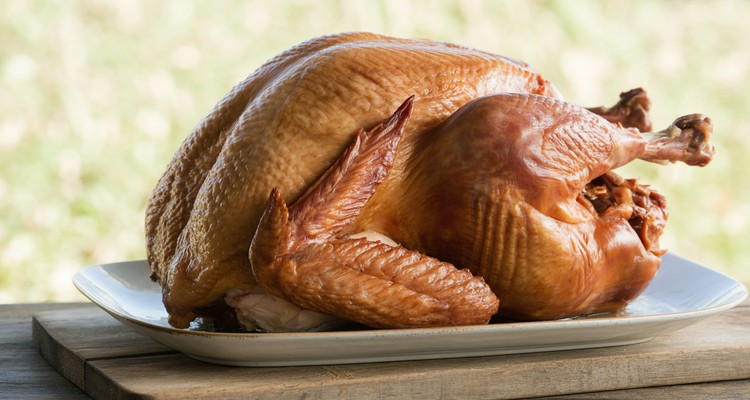
 Quick Facts: Always prioritize internal temperature over estimated cook times for food safety and optimal texture. A digital thermometer is your most reliable tool.
Which Smoker Temperature is Best for Turkey?
There is no single best temperature; it depends on what you value more, like smoke flavor depth or skin texture. The choice between low-and-slow and hot-and-fast methods ultimately comes down to your personal preference for deep smoke flavor versus crispy skin and a faster cooking schedule.
Low and Slow (225°F-250°F): The Classic Smoke Method
Smoking at 225°F or 250°F gives the smoke the most time to penetrate the meat. The result is a deeply flavored bird with a pronounced smoke ring. The gentle heat also keeps the breast meat forgiving if you miss your pull temperature by a few degrees. The tradeoff is skin texture. At these lower temperatures, the fat in the skin does not render fully, leaving it soft, rubbery, or leathery. Many pitmasters address this by cranking the smoker to 325°F for the last 30-45 minutes to crisp up the skin before pulling the bird.
Hot and Fast (275°F-325°F): For Crispier Skin
Running the smoker at 275°F to 325°F renders the fat in the skin much more effectively, producing that golden-brown, crackly exterior everyone wants. It also cuts cook time significantly, which is helpful when you have a packed cooking schedule around the holidays. The tradeoff is smoke penetration. At higher heat, smoke flavor does not absorb as deeply. You can partially compensate by using denser smoke wood like hickory or by adding smoke at the very beginning of the cook when the meat surface is still cool and receptive.
Pitmaster Tip: If smoking at 275°F or higher and the skin starts darkening faster than the meat is cooking, tent the breast loosely with aluminum foil to slow browning while the thighs finish.How to Prep Your Turkey for the Smoker
Proper prep makes more difference than any other single variable in smoked turkey. A well-prepped bird yields juicier meat and crisper skin. Key steps like brining to retain moisture and thoroughly drying the skin are crucial for achieving a juicy interior and that coveted golden-brown exterior.
To Brine or Not to Brine?
Brining is strongly recommended for smoked turkey. The long cook at low temperature can dry out lean breast meat, and a brine seasons the meat from the inside out while helping it retain moisture under heat stress. A wet brine means submerging the whole turkey in a saltwater solution (typically 1 cup kosher salt per gallon of water) for 12-24 hours in the refrigerator. A dry brine means rubbing the bird with a salt-based mixture and letting it rest uncovered in the fridge for 24-72 hours. Dry brining also doubles as a skin-drying step, which helps with crispiness.
Drying the Skin: The Secret to a Crispy Finish
Moisture is the enemy of crispy skin. After brining, pat the entire turkey dry with paper towels, including inside the cavity. Then place the bird uncovered on a wire rack set over a baking sheet and refrigerate for at least 12 hours, or up to 24 hours. The airflow in the refrigerator pulls surface moisture away from the skin, setting it up to crisp rather than steam during the cook. Even without brining, this air-drying step alone makes a meaningful difference. Skip this at your peril if you care about skin texture.
Seasoning Your Bird
Apply a light coat of olive oil or melted butter as a binder first. Then work your rub under the skin wherever possible – directly onto the breast meat – for the most flavor impact. Season the exterior generously with your chosen BBQ rub and season the cavity as well. Keep stuffing out of the cavity when smoking. Stuffing dramatically slows heat penetration to the thighs, making even cooking nearly impossible and creating food safety risks as the stuffing passes through the temperature danger zone slowly.
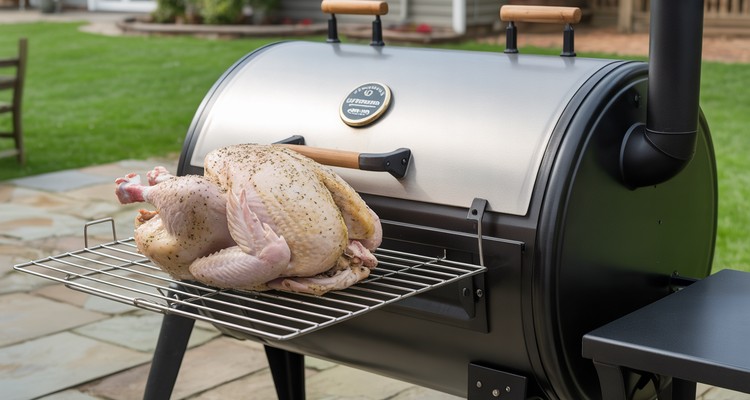
Quick Facts: Brining and air-drying the turkey skin are essential for a juicy interior and crispy skin, while avoiding stuffing the cavity ensures even cooking and food safety.Should You Spatchcock Your Turkey?
Spatchcocking – removing the backbone and pressing the bird flat – is one of the most effective techniques in smoked turkey cooking. It solves two of the biggest problems with smoking a whole bird: uneven cooking and long cook times.
What is Spatchcocking?
Using heavy-duty poultry spatchcocking shears, cut along both sides of the backbone from tail to neck and remove it entirely. Then flip the bird breast-side up and press firmly on the breastbone with both hands until it cracks and the bird lies flat. The whole process takes about five minutes. Flattening the bird creates a uniform thickness from breast to thigh. Both parts of the bird are now exposed to the same direct heat at the same time, which eliminates the breast-overcooks-while-thighs-catch-up problem that plagues whole bird cooking.
Spatchcock vs. Whole Turkey: Timing Comparison
The table below compares estimated cook times for spatchcocked versus whole turkey at 275°F, the most common temperature where both methods shine. Spatchcocking reduces cook time by roughly 25-30% across all weight ranges.
| Turkey Weight | Whole Turkey at 275°F | Spatchcocked at 275°F | Time Saved |
|---|---|---|---|
| 10-12 lbs | 3.5-4.5 hrs | 2.5-3.5 hrs | ~1 hr |
| 12-14 lbs | 4.5-5.5 hrs | 3-4 hrs | ~1.5 hrs |
| 14-16 lbs | 5-6 hrs | 3.5-4.5 hrs | ~1.5 hrs |
| 16-18 lbs | 5.5-6.5 hrs | 4-5 hrs | ~1.5 hrs |
| 18-20 lbs | 6-7 hrs | 4.5-5 hrs | ~2 hrs |
Spatchcock Pros and Cons
Spatchcocking gives you faster, more even cooking and dramatically better skin crispiness since all skin is exposed to direct heat at once. The breast and thigh temperatures converge much more naturally, so you are not fighting the race between overcooked white meat and undercooked dark meat. The downside is presentation. A spatchcocked turkey does not make for a dramatic carving table moment the way a trussed whole bird does. If the visual presentation matters for your gathering, keep the bird whole. If your goal is a flavorful turkey with a more forgiving and even cook, spatchcocking is a highly effective method.
After the Smoke: Resting, Carving, and Storing
Pulling the turkey off the smoker is not the finish line. How you handle the bird in the next 30-45 minutes determines whether you serve juicy meat or dry slices. Properly resting the turkey is a critical step, allowing juices to redistribute for a moist, tender result.
How Long to Rest a Smoked Turkey
Rest the turkey for a minimum of 20-30 minutes for a 12-14 lb bird. Larger turkeys in the 18-22 lb range benefit from a 40-minute rest. During this time the muscle fibers relax and reabsorb juices that were driven to the surface by the heat. Skipping the rest means those juices run out onto the cutting board instead of staying in the meat. Tent the bird loosely with aluminum foil to keep it warm. Do not wrap it tightly – trapping steam will soften the skin you worked hard to crisp.
How to Carve a Smoked Turkey
Use a sharp carving knife and a large cutting board with a juice groove. Start by removing the legs and thighs by cutting through the hip joint where they connect to the carcass. Separate the drumstick from the thigh at the knee joint. Remove the wings by cutting through the shoulder joint. For the breast, run the knife along one side of the breastbone and slice the entire breast lobe away from the carcass in one piece. Then slice the breast meat against the grain into even portions. This approach gives you cleaner slices than trying to carve the breast while it is still on the carcass.
Storing and Reheating Leftovers
For food safety, carve the turkey and refrigerate leftovers in an airtight container within 2 hours of pulling it from the smoker[USDA]. Properly stored, smoked turkey will keep for 3-4 days in the refrigerator or up to 3 months in the freezer. To reheat without drying the meat, place turkey slices in an oven-safe dish with a splash of chicken broth or the drippings from the cook. Cover tightly with foil and heat in a 300°F oven until warmed through, about 20-25 minutes. Avoid microwaving if you can – it heats unevenly and turns the breast meat rubbery.
Take Home Message
Mastering smoked turkey involves understanding that time is a guide, but internal temperature is the ultimate indicator of doneness. By focusing on proper prep, choosing the right smoking temperature for your desired outcome, and allowing for a crucial rest period, you can achieve a perfectly juicy and flavorful bird every time. Don’t be afraid to spatchcock for faster, more even cooking, and always prioritize food safety with accurate temperature readings.
Frequently Asked Questions
How long does a whole turkey take to smoke?
A whole turkey takes approximately 30-45 minutes per pound at 225°F, 25-35 minutes per pound at 250°F, 20-30 minutes per pound at 275°F, and 15-20 minutes per pound at 325°F. Actual time varies based on your smoker’s efficiency and weather conditions. Always cook to an internal breast temperature of 165°F rather than relying on time alone.
What internal temperature should smoked turkey reach?
The USDA minimum safe internal temperature for all poultry is 165°F. For whole turkey, target 165°F in the thickest part of the breast and 175-180°F in the thigh. The higher thigh temperature breaks down connective tissue and produces more tender, juicy dark meat. The bird is food-safe once all parts reach 165°F[USDA].
Is 225°F or 325°F better for smoking turkey?
It depends on your priority. Smoking at 225°F gives you deeper smoke penetration and more smoke flavor, but the skin will be soft and rubbery. Smoking at 325°F produces crispier, golden-brown skin and cuts cook time significantly, but with less smoke flavor. Many pitmasters smoke at 250°F and then crank to 325°F for the final 30-45 minutes to get the best of both.
How long should smoked turkey rest before carving?
Rest a whole smoked turkey for at least 20-30 minutes before carving. Larger birds (18 lbs and up) benefit from a 40-minute rest. Tent the turkey loosely with foil – loose enough to allow some air circulation so the skin does not steam and soften. The rest period allows juices to redistribute through the meat for much moister slices.
How long does a spatchcock turkey take to smoke?
A spatchcocked turkey cooks roughly 25-30% faster than a whole bird of the same weight. A 14-16 lb spatchcocked turkey at 275°F will typically finish in 3.5-4.5 hours, compared to 5-6 hours for the same bird left whole. Because the breast and thigh are at the same height and exposed to the same heat, cooking is far more even and predictable.
Should I stuff the cavity when smoking turkey?
No. Stuffing inside a smoked turkey creates two serious problems. First, the stuffing acts as insulation, slowing heat penetration to the thighs and making even cooking nearly impossible. Second, stuffing spends a long time in the temperature danger zone (40°F-140°F) while the turkey slowly climbs to temperature, creating a food safety risk[USDA]. Cook stuffing separately.
What wood is best for smoking turkey?
Mild fruit woods complement turkey’s delicate flavor best. Apple and cherry are the most popular choices and produce a light, sweet smoke that does not overpower the bird. Pecan is another excellent option with a slightly nuttier profile. Hickory can be used sparingly for a more assertive smoke flavor, but use it in moderation or mix it with a milder wood to avoid bitterness.
Do I need a water pan when smoking turkey?
A water pan is highly recommended, especially at lower smoking temperatures. It adds humidity to the cooking environment, which helps prevent the breast meat from drying out during a long cook. The water pan also helps stabilize smoker temperature by acting as a heat sink. Place it directly under the turkey to catch drippings, which can be used for gravy.
Smoked Whole Turkey Recipe
This straightforward recipe walks you through the essential steps for smoking a whole turkey. From preparation and seasoning to managing the smoker and resting the bird, follow this guide for a perfectly cooked, flavorful turkey that will be the star of your holiday table.
Smoked Whole Turkey
Equipment
- Smoker Any type of smoker (pellet, offset, charcoal) will work.
- Digital Meat Thermometer A leave-in probe thermometer is essential for monitoring temperature.
- Instant-read thermometer For verifying temperatures in multiple spots before pulling.
Ingredients
For the Turkey
- 1 whole turkey 12-14 lbs, thawed and patted completely dry
- 2 tbsp olive oil or melted butter as a binder for the rub
- 1/4 cup your favorite BBQ turkey rub or a simple mix of salt, pepper, and garlic powder
- Wood chunks or pellets Apple, cherry, or hickory work well
Instructions
- Preheat your smoker to your desired cooking temperature (e.g., 250°F). Add your choice of wood for smoke.
- Prepare the turkey by ensuring it is fully thawed and patting the skin completely dry with paper towels. This is key for crispy skin.
- Lightly coat the entire turkey with olive oil or melted butter. Season generously on all sides, including inside the cavity, with your BBQ rub.
- Place the turkey on the smoker grate. Insert a leave-in probe thermometer into the thickest part of the breast, making sure to avoid contact with the bone.
- Smoke the turkey according to the time chart for its weight and your smoker temperature. Use the time as a guideline, but rely on internal temperature for doneness.
- The turkey is done when the breast reaches an internal temperature of 165°F and the thickest part of the thigh reaches 175-180°F. Use an instant-read thermometer to verify the thigh temperature.
- Carefully remove the turkey from the smoker, place it on a carving board, and tent it loosely with aluminum foil. Let it rest for 20-30 minutes before carving. This allows the juices to redistribute.
Notes