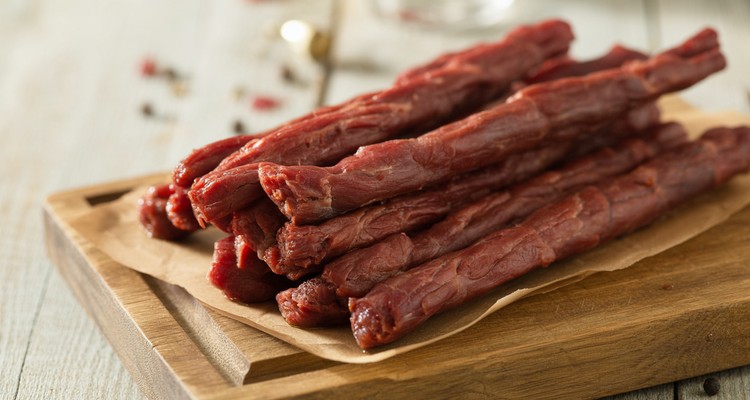
Making your own smoked beef sticks at home is one of the most rewarding smoker projects you can take on. You control every ingredient — the meat quality, the seasoning blend, the smoke flavor — and you end up with a shelf-stable snack that blows commercial versions out of the water.
This guide covers the full process: choosing the right meat and fat ratio, mixing until tacky, stuffing collagen casings, smoking gradually, and finishing with an ice bath and bloom. The method works on pellet grills, electric smokers, and offsets.
Quick Summary
- Ingredient Control: Craft your own smoked beef sticks with complete control over meat quality, seasoning, and smoke flavor, creating a superior, shelf-stable snack.
- Key Takeaway: Step-by-Step Process – Follow a comprehensive guide covering meat selection, mixing, stuffing, a precise step-up smoking schedule, and finishing techniques for perfect texture and safety.
- Safety First: Utilize curing salt and a calibrated thermometer to ensure food safety, reaching an internal temperature of 160°F to prevent bacterial growth during low-temperature smoking.
- Flavor Customization: Experiment with various flavor profiles like jalapeño cheddar or teriyaki, maintaining core ratios while swapping seasonings for endless delicious variations.
Why Make Your Own Smoked Beef Sticks?
Homemade smoked beef sticks give you full control over ingredients, flavor, and quality. You can dial in the fat ratio, skip the fillers and preservatives found in commercial snack sticks, and experiment with flavor profiles that simply don’t exist in a store. The batch size also makes the time investment worthwhile — one smoking session can produce dozens of sticks.
Helpful gear for this cook:
- ThermoMaven wireless meat thermometer — tracks long cooks without opening the smoker
- Traeger Signature Blend pellets — adds a balanced smoke profile for backyard cooks
- Western BBQ smoking wood chips variety pack — adds wood-smoke flavor on charcoal or gas grills
Essential Ingredients and Equipment
The core ingredients are lean ground beef, curing salt, a binder, seasonings, and edible collagen casings. For equipment, you will need a reliable sausage stuffer for consistent filling, a calibrated digital thermometer for safety, and a smoker capable of maintaining very low temperatures for the step-up cooking process.
Choosing the Right Smoker or Grill
An ideal smoker for beef sticks is one that provides stable, low-temperature heat. Modern pellet grills are ideal for this, as their digital controllers can lock in temperatures as low as 150°F. A popular brand like Traeger offers several models, such as the Pro series or Ironwood series, that excel at this type of precision cooking.
Electric smokers are another excellent choice, offering set-it-and-forget-it convenience. Even traditional offset smokers or kettle-style grills can work, but they require more hands-on management to maintain the low heat needed for the initial smoking stages. The key is consistency, regardless of the type of grill you use.
Equipment designed for high-heat cooking, like flat-top griddles, is not suitable for this recipe. The goal is to slowly dry and cook the sticks with smoke, not to sear them. Many modern outdoor kitchens feature a series of appliances, but for this task, only the smoker or low-temperature grill is needed.
Choosing the Right Meat and Fat Ratio
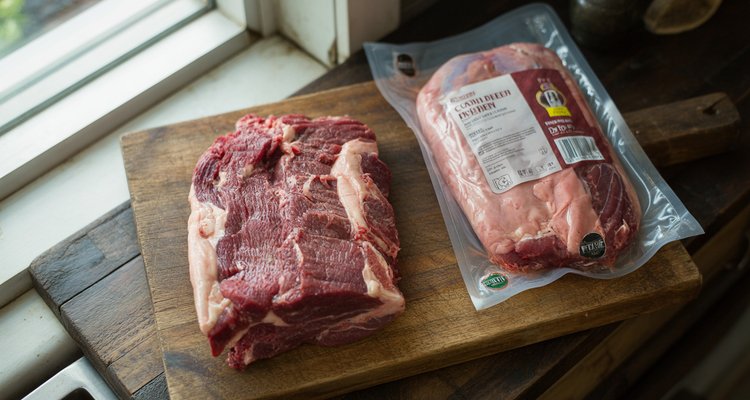
Lean ground beef in the 85/15 or 90/10 range works best for snack sticks. The lower fat content is intentional — too much fat renders out during the long smoke, leaving greasy sticks with a poor texture and potential casing splits. Higher fat also shortens shelf life once the sticks are cured and smoked.
You can also blend in other ground meats. Venison is a popular choice and pairs especially well with the smoky, savory seasoning profile. A 50/50 venison-to-beef blend is common, and because venison is very lean, you can blend in a small amount of pork fat to reach your target ratio if needed.
The Critical Role of Curing Salt
Curing salt — most commonly Prague Powder #1 (also called Instacure #1 or pink curing salt) — is not optional for smoked beef sticks. The low-temperature smoking process holds meat in the food safety danger zone (40°F-140°F) for several hours. Curing salt prevents the growth of Clostridium botulinum, the bacteria that causes botulism, during that extended window.
Use exactly the amount specified in your recipe — typically around 1 teaspoon per 5 pounds of meat. Never substitute table salt, sea salt, or Himalayan salt for curing salt. They look similar but provide zero protection.
Pink curing salt is dyed pink specifically so it won’t be confused with regular salt.
 Pro Tip: The “4-hour rule” in food safety states that raw meat should not spend more than 4 hours total in the danger zone between 40°F and 140°F[USDA]. The step-up smoking schedule for beef sticks can easily exceed this window, which is exactly why curing salt is required — it provides the safety margin that time alone cannot.
How to Make Smoked Beef Sticks: Step-by-Step
The process has four main stages before the sticks ever touch the smoker: seasoning the meat, mixing until tacky, stuffing the casings, and an overnight cure in the refrigerator. Each stage builds on the last, and skipping one — especially the overnight cure — will compromise both food safety and finished texture.
Step 1: Prepare and Season the Meat Mixture
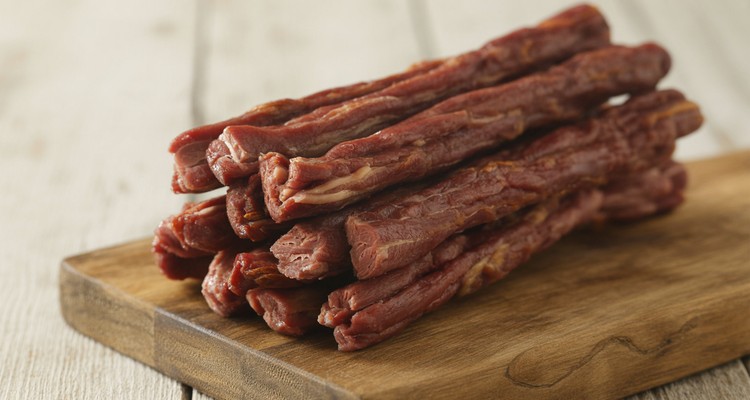
Combine all dry ingredients — the curing salt, binder, and spice blend — in a small bowl and whisk them together until uniformly mixed. This pre-blending step ensures the curing salt is evenly distributed throughout the meat rather than concentrated in one spot.
Add the dry mix and cold water to the ground beef in a large bowl or stand mixer. Keep the meat cold at all times — warm meat will smear and produce a pasty texture that ruins the finished sticks.
If the meat starts to warm up during any step, put it back in the refrigerator for 20-30 minutes before continuing.
Step 2: Mix Until Tacky (The Protein Extraction Phase)
Mix the meat mixture with the paddle attachment of a stand mixer on low for 5-10 minutes, or by hand for the same duration. The goal is protein extraction — you want the mixture to become sticky, fibrous, and cohesive. When you grab a handful and squeeze it, it should cling to itself rather than fall apart.
This tackiness is what gives finished beef sticks their dense, chewy texture and helps the filling adhere to the casing wall. Under-mixed meat produces crumbly sticks that fall apart when you bite them. The mixture should look almost like a paste when it is properly worked.
Step 3: Stuffing the Casings
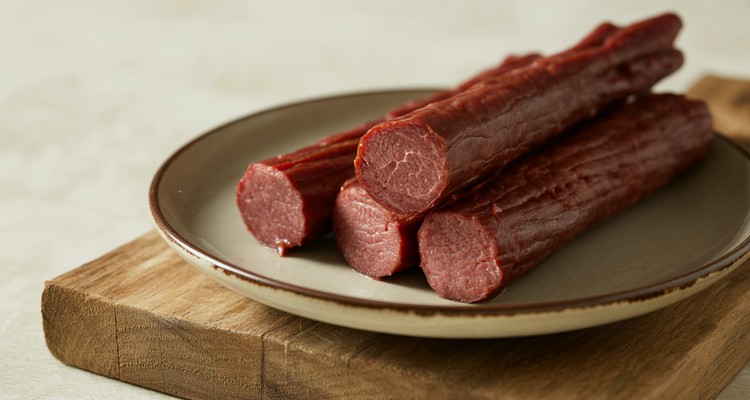
Load the meat mixture into your sausage stuffer or jerky gun. Slide a length of collagen casing onto the stuffing nozzle before you start. Feed the meat in slowly and steadily, guiding the casing off the nozzle as it fills.
Apply even pressure to avoid air pockets, which create voids in the finished sticks.
Stuff the casings firmly but not so tight that the casing strains or tears. If you notice air pockets forming, poke them with a toothpick or cake tester before the meat mixture firms up. Twist or tie off at your preferred length — 6-8 inches is standard for snack sticks.
Step 4: The Overnight Cure
Arrange the stuffed casings in a single layer on wire racks set over sheet pans. Leave them uncovered in the refrigerator for at least 12 hours, or overnight. This step serves two functions: it gives the curing salt time to fully penetrate the meat, and it allows the surface of the casings to dry out.
A dry casing surface is critical for smoke adhesion. Wet casings repel smoke and produce a flat, underdeveloped flavor. After the overnight rest, the casings should feel slightly tacky rather than moist — this is the surface that will pick up beautiful smoke color and flavor.
 Quick Facts: The overnight cure is essential for both food safety and optimal texture, allowing curing salts to penetrate and casings to dry for better smoke adhesion.
The Smoking Process: Temperature and Timing
Smoked beef sticks are cooked using a series of carefully controlled temperature steps. This step-up schedule starts low to finish drying the casings and absorbing smoke, then gradually increases heat to safely cook the meat through. This gradual approach prevents fat from rendering out too quickly, which causes greasy sticks and burst casings.
The total smoke time is typically 4-6 hours depending on your smoker and ambient conditions. Many pellet grills, including the Traeger lineup, make this series of temperature changes easy to manage with their digital controls.
The Step-Up Smoker Temperature Schedule
Set your smoker to the starting temperature before loading the sticks. Add your wood choice once the smoker is up to temperature — you want smoke flowing from the start of the first stage. Here is the complete step-up schedule:
| Stage | Duration | Smoker Temp | Purpose |
|---|---|---|---|
| Stage 1 | 1-2 hours | 130-140°F | Final casing dry-out and initial smoke absorption |
| Stage 2 | 1-2 hours | 150-160°F | Begin cooking through and deepen smoke color |
| Stage 3 | 1-2 hours | 170-180°F | Finish cooking to safe internal temperature |
Reaching the Target Internal Temperature
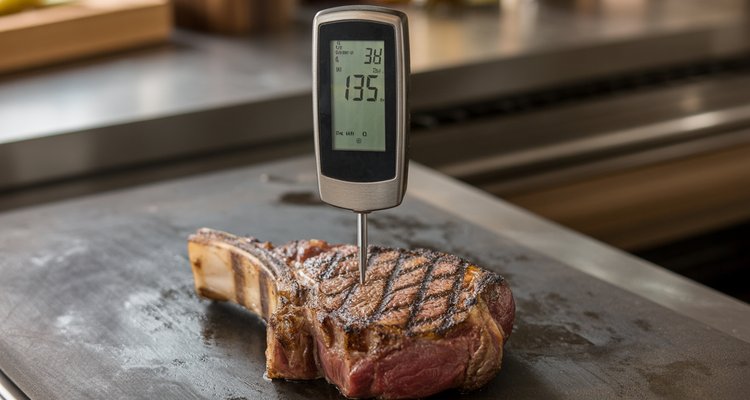
The beef sticks are done when the internal temperature reaches 160°F[USDA]. Use a reliable instant-read thermometer and check a few sticks from different areas of the smoker, as temperature can vary across the grate. Time is a guide — internal temperature is the true finish line.
Do not rely solely on color or appearance to judge doneness. Cured meat retains a pink color even when fully cooked to a safe temperature, which can look underdone to the untrained eye. A calibrated thermometer removes all guesswork.
Pitmaster Tip: If your smoker struggles to maintain a steady low temperature during Stage 1 and Stage 2, leave the smoker door or vent slightly open to bleed off excess heat. A consistent temperature is far more important than hitting the exact number — variance of 10-15°F within each stage is normal and manageable.
Finishing and Storing Your Beef Sticks
The finishing steps happen immediately after the sticks come off the smoker. An ice bath stops the cooking, and a room-temperature bloom develops the color and tightens the casings. Skipping either step doesn’t ruin the batch, but nailing both gives you a noticeably better finished product — firmer casings, deeper color, and a cleaner bite.
The Ice Bath and Blooming Process
Move the sticks from the smoker directly into a large container of ice water. Submerge them for 5-10 minutes. This rapid chilling stops the cooking immediately and causes the collagen casings to contract tightly around the meat filling — the snap you feel and hear when you break a good beef stick is a direct result of this step.
After the ice bath, pat the sticks dry and hang them or lay them on wire racks at room temperature for 1-2 hours. This resting period is called blooming. During the bloom, the surface of the casings deepens from a grayish-pink to the characteristic dark mahogany red of a properly finished snack stick.
Storing in the Refrigerator
Once fully bloomed, transfer the beef sticks to an airtight container or zip-top bag and refrigerate. Properly cured and smoked sticks will keep in the refrigerator for up to 2-3 weeks. The salt and cure extend shelf life significantly compared to uncured meat.
Freezing for Long-Term Storage
For longer storage, vacuum seal individual portions and freeze for up to 6 months. Vacuum sealing prevents freezer burn and preserves the smoke flavor far better than standard zip-top bags. Thaw in the refrigerator overnight — they will taste nearly identical to the day they came off the smoker.
Quick Facts: An ice bath and subsequent blooming process are crucial for achieving the ideal texture and color in finished beef sticks, followed by proper refrigeration or freezing for extended storage.
Popular Flavor Variations
Once you master the basic technique, you can experiment with a wide range of flavor profiles. The key is to maintain the core ratios of meat, cure, and binder while swapping out the seasonings and add-ins. Here are a couple of popular variations to get you started.
Jalapeño Cheddar Beef Sticks
For a classic spicy and cheesy stick, add finely diced pickled jalapeños and high-temp cheddar cheese to your meat mixture. Use about 1 cup of cheese and 1/2 cup of diced jalapeños per 5 pounds of meat. It is critical to use high-temp cheese, which is designed not to melt out during the smoking process.
Teriyaki and Black Pepper
For a sweet and savory flavor, replace half of the cold water in the recipe with low-sodium soy sauce or teriyaki sauce. Add 1-2 tablespoons of brown sugar and a generous amount of coarse black pepper to the spice blend. A pinch of ginger powder can also enhance the teriyaki profile.
Troubleshooting Common Beef Stick Problems
Even experienced cooks run into issues the first couple of batches. Most beef stick problems trace back to one of three sources: meat temperature during mixing, smoker temperature management, or protein extraction during the mix phase. Here is how to diagnose and fix the most common issues.
Why Are My Beef Sticks Greasy?
Greasy sticks are almost always caused by smoking temperature that spiked too high, causing the fat to render and pool inside the casing. Stick to the step-up schedule and avoid rushing to the final temperature stage.
Why Are My Beef Sticks Crumbly?
Crumbly sticks point to under-mixing — if the protein extraction phase was cut short, the meat won’t bind and will fall apart when bitten.
Why Did My Casings Burst During Smoking?
Burst casings are usually caused by two things: overstuffing or a smoker temperature that is too high. Stuff the casings firmly but not so tight that they are strained. Follow the step-up temperature schedule carefully to prevent fat from rendering too quickly, which creates pressure inside the casing.
Why Do My Beef Sticks Have Poor Smoke Color?
A pale, uneven color is typically due to wet casings. The overnight cure in the refrigerator is essential for drying the casing surface. A dry, slightly tacky casing allows smoke to adhere properly, resulting in a deep, uniform mahogany color.
Take Home Message
Making your own smoked beef sticks is a rewarding process that offers complete control over ingredients and flavor. By following a precise step-by-step guide, including proper curing, mixing, stuffing, and a gradual step-up smoking schedule, you can achieve delicious, safe, and perfectly textured snack sticks.
Remember to prioritize food safety with curing salt and ensure the internal temperature reaches 160°F for a successful batch.
Frequently Asked Questions
Do you have to use curing salt for smoked beef sticks?
Yes — curing salt is required for safety when smoking beef sticks using a low-temperature step-up schedule. The extended time in the danger zone (40°F-140°F)[USDA] creates conditions where Clostridium botulinum can multiply rapidly without a cure present. Prague Powder #1 at the correct dosage provides the necessary protection.
Do not substitute regular salt or skip this ingredient.
What temperature do beef sticks need to reach?
Smoked beef sticks must reach an internal temperature of 160°F[USDA] to be considered safe for consumption. This applies to any ground beef product. Use a calibrated instant-read thermometer and check multiple sticks from different positions in the smoker to confirm even cooking throughout the batch.
How long should you smoke beef sticks?
The total smoking time for beef sticks is typically between 4 and 6 hours. This duration depends on your specific smoker, the thickness of the sticks, and ambient weather conditions. Always rely on a calibrated internal thermometer to confirm doneness, aiming for 160°F.
Can you make beef sticks in a smoker?
Absolutely. A smoker is the ideal piece of equipment for making beef sticks. The key is using a smoker or pellet grill that can maintain very low temperatures, starting around 130-140°F, which is crucial for the step-up cooking process.
Does smoke stick better on wet meat or dry meat?
Smoke adheres significantly better to a dry or slightly tacky surface. This is why the overnight curing step in the refrigerator is so important. It allows the casings to dry out, creating the perfect surface to absorb smoke for a deep, rich color and flavor.
What are common jerky mistakes to avoid?
Beef sticks and jerky are both smoked snacks, but they fail in different ways. Jerky suffers when the meat is too fatty, while beef sticks usually fail from under-mixing or poor temperature control.
How long do homemade beef sticks last?
Properly cured and smoked beef sticks will keep in the refrigerator for 2-3 weeks in an airtight container. Vacuum-sealed and frozen sticks keep for up to 6 months with minimal quality loss. Always refrigerate homemade sticks — unlike many commercial products, homemade versions are not shelf-stable at room temperature without further drying and water activity reduction.
Can I use a jerky gun instead of a sausage stuffer?
Yes, a jerky gun works well for smaller batches of beef sticks. It functions similarly to a sausage stuffer but is hand-operated like a caulk gun. Ensure you have a round nozzle attachment designed for snack sticks.
Homemade Smoked Beef Sticks
Equipment
- Smoker Pellet grill, electric, or offset capable of holding 130-180°F
- Kitchen scale For accurate measurement of meat and curing salt
- Stand mixer with paddle attachment Or a large bowl for hand-mixing
- Sausage stuffer or jerky gun For filling casings
- 19-21mm collagen casings Standard snack-stick size
- Digital instant-read meat thermometer
- Wire cooling racks and sheet pans
- Large bowl or container For the ice bath
Ingredients
For the Beef Sticks
- 5 lbs lean ground beef 85/15 or 90/10
- 1 tsp Prague Powder #1 Also called Instacure #1 or pink curing salt. Do not omit.
- 3 tbsp non-fat dry milk powder Acts as a binder
- 3 tbsp Kosher salt
- 2 tbsp coarse black pepper
- 2 tbsp smoked paprika
- 1 tbsp garlic powder
- 1 tbsp onion powder
- 1 tsp mustard powder
- 1/4 cup cold water
- 19-21mm collagen casings As needed
Instructions
- In a small bowl, whisk together all dry ingredients: Prague Powder #1, non-fat dry milk powder, kosher salt, black pepper, smoked paprika, garlic powder, onion powder, and mustard powder. This ensures the curing salt is evenly distributed.
- Place the cold ground beef in the bowl of a stand mixer or a large mixing bowl. Add the blended dry seasonings and the cold water.
- Using the paddle attachment on low speed (or mixing vigorously by hand), mix the meat for 5-10 minutes. The mixture is ready when it becomes very sticky and fibrous. This protein extraction is key to the final texture.
- Load the meat mixture into your sausage stuffer or jerky gun. Slide a collagen casing onto the nozzle and stuff the mixture into the casings, avoiding air pockets. Do not overstuff. Twist into links of your desired length (6-8 inches is typical).
- Arrange the stuffed beef sticks in a single layer on wire racks set over sheet pans. Place them uncovered in the refrigerator to cure for at least 12 hours, or overnight. This step is crucial for the cure to work and for the casings to dry, which helps smoke adhere.
- Preheat your smoker to 130°F. Hang the beef sticks from smoker racks or lay them on wire mesh shelves, ensuring they don't touch.
- Smoke for 1 hour at 130°F. Then, increase the smoker temperature to 140°F and smoke for another hour.
- Increase the temperature to 150°F and continue to smoke for 2 hours.
- Finally, increase the temperature to 175°F and smoke until the internal temperature of the beef sticks reaches 155°F, as measured with an instant-read thermometer. This can take 1-2 more hours.
- Immediately transfer the finished beef sticks to a large ice bath to stop the cooking process and help set the casings. Chill for about 10-15 minutes.
- Remove the sticks from the ice bath, pat them dry with paper towels, and hang them at room temperature for 1-2 hours to 'bloom'. This step develops their final color and firms up the texture.
- Cut the sticks to your desired length. Store in a vacuum-sealed bag in the refrigerator for several weeks or freeze for longer storage.
Notes