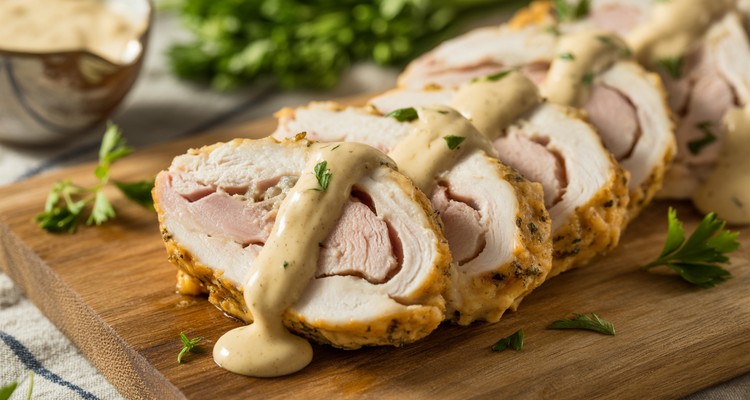
Crispy breadcrumbs, smoky ham, and melted cheese — chicken cordon bleu is already a showstopper. But a rich, silky Dijon cream sauce is what takes it from weeknight dinner to something truly special. In this guide, you’ll learn exactly how to make chicken cordon bleu sauce from scratch, with step-by-step instructions, popular variations, and pro tips for fixing common problems.
What Is Chicken Cordon Bleu Sauce?
Chicken cordon bleu sauce is a creamy, milk-based sauce — classically a béchamel enriched with Dijon mustard and cheese — designed to complement the savory ham and Swiss cheese stuffed inside a breaded chicken breast. It adds moisture, tang, and a layer of flavor that ties the entire dish together.
The Classic Dijon Cream Profile
The traditional sauce starts with a roux (butter and flour cooked together), which gives it a stable, velvety body. Milk and sometimes chicken broth are added to create the béchamel base, and then Dijon mustard goes in for its signature tangy bite. A handful of grated Parmesan or Gruyère rounds it out with a nutty, savory depth. The result is a sauce that is creamy enough to cling to baked or fried chicken without being heavy. The acidity from the mustard is the key — it keeps the sauce from feeling one-dimensional alongside rich ham and cheese.
Why This Sauce Pairs Perfectly with Ham and Cheese
The flavors inside chicken cordon bleu — salty ham and melted Swiss — are bold and fatty. A straight cream sauce would make the dish feel overwhelmingly rich. Dijon mustard’s acidity cuts through that fat and saltiness, balancing each bite. The creamy texture also softens the crispy breadcrumb coating, creating a luxurious mouthfeel when the sauce meets the crunch. Together, the sauce bridges all four elements — chicken breast, ham, cheese, and coating — into one cohesive dish.
Helpful gear for this cook:
- ThermoMaven Sub-1G Smart Wireless Meat Thermometer — tracks long cooks without opening the smoker
- HOTEC silicone basting brushes — apply sauce, butter, or glaze evenly
- Grill Armor Oven Gloves — protect hands around hot grates and pans
Essential Ingredients for Chicken Cordon Bleu Sauce
The classic Dijon cream sauce uses pantry staples you likely already have. Each ingredient plays a specific role in flavor, body, or smoothness, so it’s worth understanding what each one contributes before you start cooking.
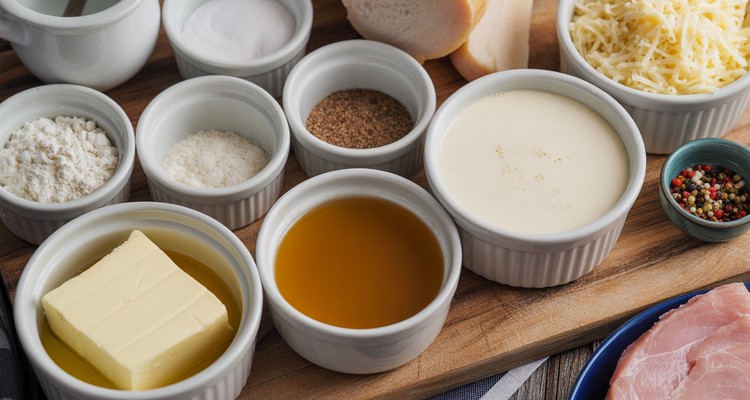
- Unsalted butter (2 tablespoons): Creates the roux base and adds richness. Unsalted lets you control the final seasoning mix.
- All-purpose flour (2 tablespoons): The thickening agent. Combined with butter, it forms a roux that gives the sauce its stable, creamy body.
- Whole milk (1 cup): The primary liquid for the béchamel. Whole milk gives the best texture; lower-fat milks can make the sauce thin.
- Chicken broth (1/2 cup): Adds savory depth without extra fat. It also helps dial in the sauce’s consistency.
- Heavy cream (2-3 tablespoons, optional): A splash at the end makes the sauce noticeably more lush. Skip it for a lighter result.
- Dijon mustard (1-2 teaspoons): The star ingredient. It provides tang, complexity, and a slight heat that balances the richness of the ham and cheese.
- Grated Parmesan or Gruyère (1/4 cup): Added off the heat so it melts smoothly into the sauce rather than turning grainy.
- Seasonings: Salt, white pepper, and a pinch of nutmeg. Nutmeg is traditional in béchamel — it adds a subtle warmth you’ll notice if it’s missing.
 Pro Tip: Use cold or room-temperature milk when building the béchamel, not hot milk. Adding cold liquid to a warm roux and whisking constantly prevents lumps from forming.
How to Make Chicken Cordon Bleu Sauce: Step-by-Step
This method produces a smooth, restaurant-quality Dijon cream sauce in about 15 minutes. The technique is the same whether you’re serving it alongside baked chicken cordon bleu or pan-fried chicken breast, and it scales cleanly for family dinners.
Step 1: Make the Roux
Melt 2 tablespoons of unsalted butter in a medium saucepan over medium-low heat. Once the butter is melted and just beginning to foam, add the flour all at once. Whisk the butter and flour together until a smooth, pale paste forms — this is your roux. Cook the roux for 1-2 minutes, whisking constantly. This step is important: cooking out the raw flour taste ensures your finished sauce won’t have a starchy or pasty flavor. Don’t let the roux turn golden or brown — you want it pale for a white cream sauce.
Step 2: Build the Béchamel Base
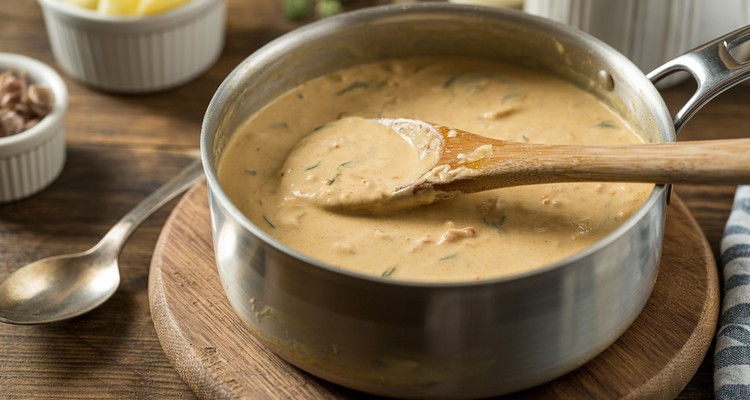
Take the pan off the heat briefly, then slowly pour in about one-third of the milk while whisking vigorously. Return the pan to medium-low heat. Continue adding the milk in a slow, steady stream, whisking the entire time. Add the chicken broth the same way. Bring the sauce up to a gentle simmer, then reduce heat to low. Let it cook for 5-8 minutes, stirring frequently, until the sauce thickens enough to coat the back of a spoon. You should be able to draw a clean line through it with your finger.
Step 3: Add the Flavor-Makers
Remove the saucepan from the heat. This step is non-negotiable — always take the sauce off the burner before adding the mustard and cheese. Whisk in the Dijon mustard first, then add the grated cheese a little at a time, stirring after each addition until fully melted and smooth. Adding these off the heat keeps the proteins in the cheese from tightening up, which is what causes a grainy or broken sauce. The residual heat from the pan is more than enough to melt the cheese.
Step 4: Season to Taste
Taste the sauce and adjust seasoning with salt, white pepper, and a pinch of nutmeg. Keep in mind the ham and cheese inside your chicken cordon bleu are already quite salty — season the sauce a little more lightly than you think you need to. You can always add more salt at the table. If you want a richer, silkier finish, stir in 2-3 tablespoons of heavy cream at this point. Serve the sauce immediately, spooned generously over baked or fried chicken cordon bleu.
Pitmaster Tip: If you’re cooking chicken cordon bleu on the grill or in a smoker, make the sauce separately on the stovetop and serve it warm in a small pitcher on the side. The smoky char on grilled chicken pairs beautifully with this creamy Dijon sauce — just don’t pour it over during cooking or you’ll lose the crust.Common Sauce Variations to Try
The classic Dijon cream sauce is hard to beat, but there are several popular variations worth knowing. Whether you want something richer, quicker, or completely different, one of these will fit your needs without changing the basic serving style.
Rich and Cheesy Mornay Sauce
A Mornay sauce is simply a béchamel with cheese — making it a natural upgrade from the classic version. Use a combination of Gruyère and Parmesan for a nutty, slightly sweet flavor that echoes the Swiss cheese inside the chicken. The result is thicker, more indulgent, and ideal for baked chicken cordon bleu. Follow the same steps as the classic recipe, but double the amount of cheese and hold the mustard — or add just a small amount for balance. This sauce is especially good with the breadcrumbs on top soaking it up.
Quick Pan Sauce Using Fond
If you pan-fry your chicken cordon bleu, don’t rinse that pan. Those browned bits stuck to the bottom — called fond — are concentrated flavor waiting to become a super easy sauce. Pour off most of the oil, leaving just a thin coating. Deglaze with 1/2 cup of white wine or chicken broth, scraping up all the fond with a wooden spoon. Let it reduce by half, then stir in 1/2 cup of heavy cream and 1 teaspoon of Dijon mustard. Simmer until slightly thickened, about 3-4 minutes. Season with salt, white pepper, and fresh thyme or parsley.
Lighter Sauce Without a Roux
For a less heavy option that skips the flour entirely, simmer 1 cup of chicken broth with a sprig of fresh thyme over medium heat until reduced by half. Stir in 1/3 cup of heavy cream, 1 teaspoon of Dijon mustard, and a squeeze of lemon juice. To thicken it, mix 1 teaspoon of cornstarch with 1 tablespoon of cold water to make a slurry, then whisk it into the simmering sauce. This method is quicker and lighter than a roux-based sauce, though it won’t have quite the same body.
Simple Cream Sauce Without Mustard
Not a fan of mustard? A garlic herb cream sauce is a great alternative. Sauté 2 cloves of minced garlic in butter until fragrant, about 30 seconds. Add 1 cup of heavy cream and let it reduce over medium heat for 5-7 minutes until slightly thickened. Stir in 1/4 cup grated Parmesan, fresh chopped chives, and parsley. This variation is milder and pairs well with chicken cordon bleu that uses a subtler ham. The garlic adds savory complexity without the tang of Dijon mustard.
Shortcut Sauce Variations (When You Need It Fast)
Sometimes you just need a quick sauce and don’t want to build a roux from scratch. A common shortcut uses condensed cream of chicken soup thinned with a little milk or chicken broth. Warm it gently, stir in some Dijon mustard, and it comes together in under five minutes. It won’t have the same depth as the classic sauce, but it’s reliable and familiar. Another popular option is a mayonnaise-based sauce: combine 1/3 cup of mayonnaise, 1 tablespoon of Dijon mustard, a squeeze of lemon juice, and a splash of heavy cream. Warm it gently in a saucepan over low heat. Don’t let it boil or it will break. This sauce has a tangy, creamy flavor that works surprisingly well and requires no cooking skill at all.
Pro Tip: The mayonnaise-based sauce can also be served cold, almost like a dipping sauce. Thin it with a little lemon juice, add fresh dill, and serve it chilled alongside sliced chicken cordon bleu for a lighter presentation.Troubleshooting Your Cordon Bleu Sauce
Even experienced cooks run into problems with cream sauces. The good news is that most common issues are easy to fix — if you catch them quickly. Here’s a breakdown of the most frequent problems and their solutions.
| Problem | Common Cause | Solution |
|---|---|---|
| Sauce is lumpy | Liquid added too quickly or roux not whisked enough | Whisk vigorously off the heat. For stubborn lumps, pour through a fine-mesh strainer. |
| Sauce is too thin | Wrong flour-to-liquid ratio or not simmered long enough | Simmer longer to reduce. Or whisk a cornstarch slurry (1 tsp cornstarch + 1 tbsp cold water) into the simmering sauce. |
| Sauce is too thick | Too much flour or over-reduced on the heat | Whisk in warm milk, cream, or chicken broth a tablespoon at a time until you reach the desired consistency. |
| Sauce is grainy or broken | Cheese or cream added over high heat; dairy overheated | Remove from heat. Whisk in a tablespoon of cold cream. If that fails, use an immersion blender to re-emulsify. |
| Sauce tastes floury or starchy | Roux not cooked long enough before adding liquid | Keep simmering over low heat for another 5-10 minutes, stirring constantly. The starchy taste cooks off with time. |
| Sauce has a skin on top | Exposed surface of hot sauce cooled and oxidized | Press plastic wrap directly onto the surface of the sauce while storing or resting. Whisk the skin back in when reheating. |
Storing and Reheating Your Sauce
One useful thing about this sauce is that it’s make-ahead friendly. A little planning goes a long way when you’re preparing chicken cordon bleu for a dinner party or a weeknight meal, especially when the chicken needs oven time.
Can You Make Chicken Cordon Bleu Sauce Ahead of Time?
Yes — the classic Dijon cream sauce can be made up to 3 days in advance. It will thicken considerably as it cools in the refrigerator. Let it sit at room temperature for 10-15 minutes before reheating, and expect to thin it slightly with a splash of milk or broth.
How to Store Leftover Sauce
Let the sauce cool slightly after cooking — don’t put it directly into the refrigerator while it’s still steaming. Transfer it to an airtight container and press a piece of plastic wrap directly onto the surface of the sauce before sealing. This prevents a skin from forming and keeps it fresh for up to 3-4 days.
How to Reheat Sauce Without It Separating
Place the sauce in a small saucepan over the lowest heat setting you have. Whisk it constantly as it warms. If it looks too thick, whisk in a splash of warm milk or chicken broth a little at a time until it comes back to its original consistency. Never let the sauce boil during reheating. Leftover sauces containing dairy should be reheated thoroughly to 165°F before serving[USDA]. Don’t reheat more than once — portion it into smaller containers if you’re storing a large batch.
What to Serve with Chicken Cordon Bleu Sauce
This Dijon cream sauce is versatile enough to serve in multiple ways. The obvious use is poured generously over baked or fried chicken cordon bleu, but it works beautifully with grilled chicken, roasted vegetables, and simple starches too.
Classic Side Dish Pairings
Creamy sauces like this one pair best with sides that can soak up the extra liquid without competing in flavor. Roasted or mashed potatoes are the classic choice — their starchy neutrality lets the sauce shine. Steamed rice or buttered egg noodles are equally effective and a bit more weeknight-friendly. For vegetables, choose something with mild flavor: steamed green beans, roasted asparagus, or simple sautéed spinach. Avoid strongly flavored vegetables like broccoli rabe or Brussels sprouts, which can clash with the Dijon tang in the sauce.
Using This Sauce with Grilled or Smoked Chicken
If you’re a BBQ cook who prefers to grill or smoke your chicken breast, this sauce is a natural complement. The smokiness of the chicken cuts beautifully with the acidity of the Dijon, and the cream rounds out any bitterness from char marks. Serve the sauce on the side in a small pitcher rather than pouring it over the chicken before serving — keeping it separate lets each person control how much sauce they want, and it preserves the crispy crust on pan-fried or oven-baked chicken cordon bleu.
Frequently Asked Questions
What is in cordon bleu sauce?
Classic chicken cordon bleu sauce is made from butter, flour, milk, chicken broth, Dijon mustard, and grated cheese — typically Parmesan or Gruyère. Seasonings include salt, white pepper, and a pinch of nutmeg. Together, these ingredients create a creamy béchamel-style sauce enriched with the tangy, savory flavors that complement the ham and cheese inside the chicken.
What’s the best sauce to put on chicken cordon bleu?
The most traditional sauce is a Dijon cream sauce — a béchamel enriched with Dijon mustard and Parmesan or Gruyère cheese. Its creamy texture and tangy flavor balance the ham and Swiss cheese inside the chicken breast. A cheesier Mornay sauce is another strong choice for cooks who want a richer result.
Does chicken cordon bleu need a sauce?
It doesn’t strictly need one, but a sauce adds moisture, richness, and a tangy counterpoint to the crispy breadcrumb coating. Without sauce, baked chicken cordon bleu can feel slightly dry. That is especially true if the cheese filling has oozed out during cooking. A simple Dijon cream sauce makes a noticeable difference with very little extra effort.
How do you make gravy for chicken cordon bleu?
Traditional gravy is made from meat drippings and stock, which makes it different from the classic Dijon cream sauce. For something gravy-like, deglaze your pan with chicken broth after pan-frying the chicken. Scrape up the fond, add a bit of cream, and whisk in a small flour slurry to thicken. A teaspoon of Dijon mustard keeps the flavor close to classic cordon bleu sauce.
Can I use something other than Dijon mustard?
Yes. Whole-grain mustard is the easiest swap and adds a pleasant texture with a slightly milder flavor. Spicy brown mustard also works but has a more pungent bite. For a no-mustard option, add a squeeze of fresh lemon juice for acidity, or a pinch of smoked paprika for warmth. The goal is something that cuts through the ham and cheese.
How is this sauce different from a gravy?
The key difference is the primary liquid. This cream sauce is milk-based, which makes it a béchamel derivative — light, white, and creamy. Traditional gravy starts with meat drippings and stock, giving it a darker color and a meatier flavor. Both are thickened with a roux or slurry, but cream sauce is the classic pairing.
Can I make the sauce without cheese?
Yes. A plain Dijon cream sauce — béchamel plus mustard, with no added cheese — is still delicious and a bit lighter. Increase the Dijon slightly to keep enough flavor depth. This version is also less likely to become grainy if you accidentally overheat it, since there are no cheese proteins to tighten up.
What if my sauce is too salty?
Add a small splash of unseasoned heavy cream or whole milk to dilute the salt level. A pinch of sugar can also help balance excessive saltiness. In the future, season the sauce lightly and let diners add salt at the table. The ham and cheese inside chicken cordon bleu are already salty, and the sauce absorbs those flavors.
Can I freeze this sauce?
Dairy-based cream sauces generally don’t freeze well because the emulsion breaks when thawed, creating a grainy texture. It is better to refrigerate the sauce and use it within 3-4 days. If you must freeze it, reheat gently from frozen over the lowest heat setting with constant whisking. Finish with a splash of fresh cream to help re-emulsify it.
How do I keep the sauce warm for a party?
The simplest method is to transfer the finished sauce to a heat-proof bowl set over a pot of hot water. Stir it occasionally and keep the heat under the water low. You can also use a slow cooker on the “warm” setting for up to 1-2 hours, but whisk it periodically to prevent a skin. Avoid direct heat, which risks breaking the sauce.
Is this sauce gluten-free?
The classic recipe uses all-purpose flour in the roux, which contains gluten. To make it gluten-free, substitute the flour with cornstarch or a certified gluten-free flour blend. The cornstarch version should be made as a slurry mixed with cold liquid before adding it to the sauce. The finished texture will be similar, though slightly less creamy-white.
What wine pairs with chicken cordon bleu and this sauce?
A dry white wine is the natural choice. Chardonnay works well with creamy, buttery sauces; choose one that is lightly oaked so it does not overwhelm the Dijon. Pinot Gris or Pinot Grigio are lighter options that complement the ham and cheese without competing with the sauce. If you prefer red wine, a light Pinot Noir can work.
Chicken Cordon Bleu Sauce (Dijon Cream)
Equipment
- Medium saucepan
- Whisk essential for lump-free roux and smooth béchamel
- Fine-mesh strainer optional; use if lumps form
Ingredients
Dijon Cream Sauce
- 2 tablespoons unsalted butter unsalted allows precise seasoning control
- 2 tablespoons all-purpose flour forms the roux base
- 1 cup whole milk cold or room temperature; do not use hot milk
- 1/2 cup low-sodium chicken broth adds savory depth
- 1 teaspoon Dijon mustard increase to 2 tsp for more tang; added off heat
- 1/4 cup grated Gruyère or Parmesan added off heat in small additions to prevent graininess
- salt and white pepper to taste; season lightly — ham and cheese inside the chicken are already salty
- 1 pinch ground nutmeg traditional in béchamel; adds subtle warmth
Optional
- 2 tablespoons heavy cream stir in at the end for a richer, silkier finish
Instructions
- Melt butter in a medium saucepan over medium-low heat until just foaming. Add the flour all at once and whisk constantly until a smooth, pale paste forms. Cook the roux for 1-2 minutes, whisking the entire time — this cooks out the raw flour taste. Do not let it turn golden or brown.
- Remove the pan from heat briefly. Pour in about one-third of the milk while whisking vigorously to prevent lumps. Return to medium-low heat. Add the remaining milk in a slow, steady stream, whisking constantly. Add the chicken broth the same way. Bring to a gentle simmer, then reduce to low and cook 5-8 minutes, stirring frequently, until the sauce thickens enough to coat the back of a spoon.
- Remove saucepan from heat completely. Whisk in the Dijon mustard. Add the grated cheese in small additions, stirring after each until fully melted and smooth. Adding cheese and mustard off the heat prevents proteins from tightening and causing a grainy or broken sauce — the residual heat is sufficient.
- Season with salt, white pepper, and a pinch of nutmeg. Taste — season lightly, as the ham and cheese in cordon bleu are already salty. For a richer finish, stir in 2 tablespoons of heavy cream. Serve immediately over chicken, or keep warm over the lowest heat setting, whisking occasionally.
Notes