For the serious BBQ enthusiast, a standard kitchen knife just doesn’t cut it when it comes to slicing a whole smoked brisket or crafting homemade charcuterie. A true commercial meat slicer offers the power, precision, and capacity needed for perfect, consistent slices every time.
This guide covers commercial-grade meat slicers suitable for home use, explaining the key features that separate them from consumer models.
Commercial-specification machines start at a 1/2 HP motor, gravity-feed carriage, and NSF certification — the hard floor for what qualifies as a true commercial unit. If you need a lower-cost option that handles occasional home slicing with a knife, see our Best Meat Slicers for Home Use guide, which covers consumer and prosumer models.
Quick Roundup List
- Top Pick: KWS Commercial 12″ Slicer (MS-12N)
- Mid-Range Commercial: Hobart EDGE12-1 Manual Slicer
- Professional Benchmark: Hobart HS9N-1 Heavy Duty Slicer
Why a Commercial Meat Slicer is a Game-Changer for BBQ
A commercial meat slicer provides unparalleled consistency and efficiency for serious BBQ tasks. It allows you to slice large cuts like brisket paper-thin for sandwiches or precisely portion cured meats and bacon. This level of control elevates your presentation and ensures every slice is perfect.
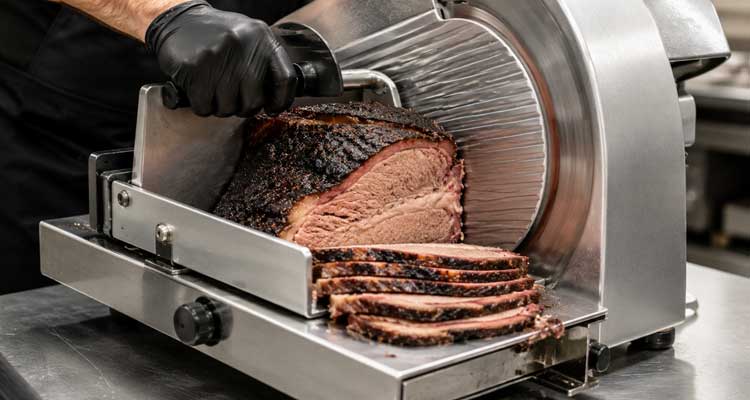
Achieve Perfect Brisket Slices
A powerful slicer lets you achieve consistent, deli-style thin or thick slices from a whole packer brisket. It cuts cleanly without tearing the bark or meat fibers, preserving the texture and appearance of your hard-earned BBQ.
For those who cure their own meats, a commercial slicer is essential. It can precisely slice cured hams, home-cured bacon, coppa, and other charcuterie for professional-quality boards and sandwiches that are impossible to achieve by hand.
Process Bulk Meats Efficiently
Quickly slice large quantities of smoked roast beef, turkey breast, or pork loin for meal prep or party trays without fatigue. What would take an hour by hand can be done in minutes, with perfectly uniform results.
Benefit from Commercial-Grade Durability
Commercial units are built with powerful motors and heavy-duty components. They are rated for continuous-use duty cycles that consumer models simply cannot match, ensuring longevity and reliable performance for years.
Commercial vs. Consumer Slicers: What the Specs Actually Mean
Not all slicers labeled “commercial” meet true commercial specifications. Key differences include motor power, blade size, and safety certifications like NSF. Understanding these specs helps you separate genuine, continuous-duty machines from rebranded consumer units that may not handle demanding tasks.
Blade Diameter
A 10-inch blade on a true commercial machine (1/2 HP+ motor, NSF-certified, gravity-feed carriage) is an acceptable entry point for this category. A 12-inch blade is the real step-up for large hams or full brisket flats, eliminating the need to reposition the meat mid-slice.
Consumer 10-inch machines with lower-powered motors are a separate category and not covered here.
Motor Wattage and Duty Cycle
Duty cycle matters more than peak wattage. A commercial unit is engineered to run continuously without overheating, while most consumer motors require rest periods every few minutes. Look for a copper-wound motor rated at 1/2 HP or higher — this is the baseline for sustained performance on large BBQ cuts.
Carriage Design
Gravity-feed carriages use the weight of the meat to assist the meat slicing stroke, reducing operator fatigue during high-volume sessions like breaking down a full packer brisket. Manual-feed carriages require you to push the product across the blade by hand. For BBQ cooks slicing 10-plus pounds in a session, gravity-feed is a meaningful advantage.
Blade Material and NSF Certification
Stainless steel blades resist rust and are the better choice for home kitchen use. Carbon steel holds a sharper edge but requires diligent drying and oiling to prevent corrosion. NSF certification on the blade means the material meets food-contact sanitation standards, and the machine is designed to disassemble for thorough cleaning — a critical consideration for raw meat prep.
Our Top Picks for Commercial Meat Slicers in 2026
Our top picks represent the ideal balance of power, features, and value for serious home use. We selected models that offer true commercial-grade performance, from NSF-certified powerhouses to high-value units that bring precision slicing to the home kitchen.
| Model | Blade | Motor | Duty Cycle | Best Use |
|---|---|---|---|---|
| KWS Commercial 12″ Slicer (MS-12N) | 12 inches | 0.57 HP / 420W | Serious home / light commercial | Best buy for serious home BBQ |
| Hobart EDGE12-1 Manual Slicer | 12 inches | 1/2 HP | Medium duty commercial | Gravity-feed commercial slicing |
| Hobart HS9N-1 Heavy Duty Slicer | 13 inches | 1/2 HP | Heavy duty commercial | Professional benchmark |
Commercial Meat Slicers Reviewed
This review focuses on commercial-grade slicers that deliver the power and precision needed for serious BBQ and home charcuterie. We evaluated the KWS MS-12N as the most realistic buy for serious home cooks, then used two Hobart commercial models to show what the mid-range and professional tiers add.
KWS Commercial 12″ Slicer – Top Pick
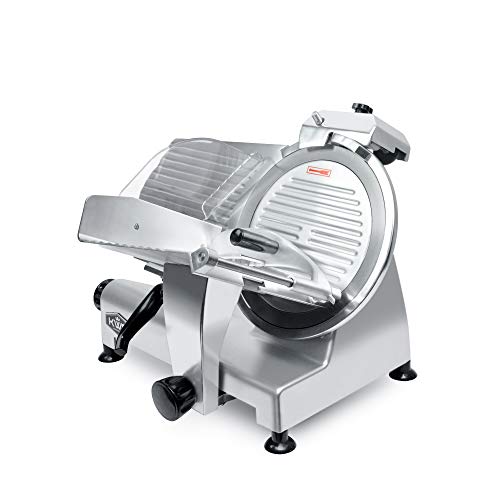
The KWS MS-12N hits the sweet spot for serious home use, delivering true commercial specs without the four-figure price tag of professional deli equipment. Its 0.57 HP copper motor and 12-inch stainless steel blade handle everything from large smoked roasts to semi-frozen pork belly.
ETL and NSF certification means it meets the safety and sanitation standards expected in a commercial kitchen. The 12-inch blade is a key advantage for BBQ, slicing a full brisket flat without repositioning. Its spring-assisted carriage reduces fatigue during long sessions compared to manual designs.
What We Like
- 420W (0.57 HP) copper motor provides consistent power for extended slicing sessions without overheating.
- 12-inch stainless steel blade accommodates full brisket flats, large hams, and whole pork bellies.
- NSF certified for commercial sanitation — easy to disassemble and clean thoroughly after raw meat prep.
- Built-in dual whetstone sharpener keeps the blade in peak condition between uses, eliminating the need for external sharpening tools.
- Quiet operation is noticeably calmer than many consumer models, a practical benefit in a home kitchen environment.
What We’d Improve
- Some buyers report missing small parts on delivery, so inspect the feet and hardware before first use.
- It is not the best choice for shaving cheese paper-thin.
- Cleaning still takes real disassembly time, as it should with a commercial-style slicer.
Specifications
- Blade Diameter: 12 inches
- Motor: 420W / 0.57 HP (copper wound)
- Slicing Thickness: 0-15mm (0-0.6 inches)
- Carriage: Semi-automatic, spring-assisted
- Carriage Tray: 8.5″ L x 11″ W x 8″ H
- Certifications: ETL, NSF
Customer Reviews
- “I love this slicer. Tricks to make things easier, 1/2 frozen meat slices the best. When it comes to slicing bacon, I can get a normal sized piece sliced with no issues. I would absolutely recommend to anyone.”
- “Good slicer, but can’t close blade enough to shave cheese.”
- “This meat slicer from KWS arrived on time and physically in undamaged condition. I was happy until I realized that the package did NOT include the 4 rubber feet that are supposed to screw into the base.”
Hobart EDGE12-1 Manual Slicer – Mid-Range Commercial Pick
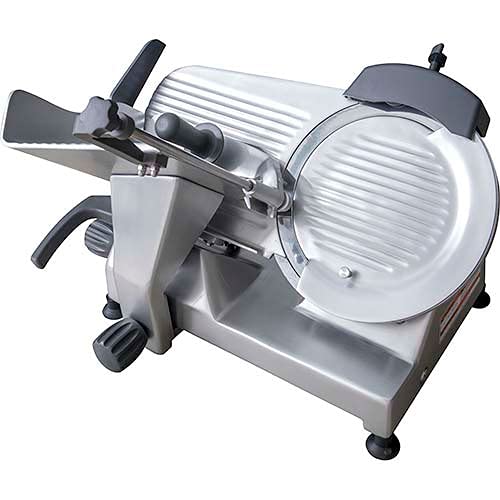
The Hobart EDGE12-1 is the practical step up when you want real deli equipment rather than an entry commercial-style countertop machine. Its 1/2 HP motor, 12-inch carbon steel knife, and full 45-degree gravity-feed carriage make it a better fit for repeated slicing sessions, dense cooked meats, and high-volume BBQ prep.
For most home cooks, the EDGE12-1 is more machine than necessary. For a small catering setup, club kitchen, or serious charcuterie workspace, it is the kind of commercial slicer that gives you stronger feed geometry, cleaner portioning, and a more serviceable platform than budget slicers.
What We Like
- 1/2 HP motor meets the commercial baseline for sustained slicing.
- 12-inch carbon steel knife gives enough clearance for brisket flats, roast beef, hams, and bacon slabs.
- Full 45-degree gravity feed helps move product into the blade with less operator fatigue.
- Large product tray and slide rod are built for repeated prep work, not occasional sandwich slicing.
What We’d Improve
- It is expensive and heavy enough that occasional users should stay with the KWS tier.
- Carbon steel knives need more careful drying and maintenance than stainless blades.
- It needs dedicated counter or storage space rather than casual cabinet storage.
Specifications
- Blade Diameter: 12 inches
- Motor: 1/2 HP
- Feed Style: 45-degree gravity feed
- Electrical: 120V, 480W, 60Hz
- Use Case: Medium-duty commercial slicing
Customer Reviews
- “I have had this slicer for 9 years.. used it every day Monday – Friday…. The bearings have just now gone out!! Best slicer, easy to clean and powerful enough to do most slicing jobs….”
- “If you’re wondering how this could be 4-6 times better than many so-called ‘professional’ slicers in the $300-$500 range, the main difference is accuracy and consistency.”
Hobart HS9N-1 Heavy Duty Slicer – Professional Benchmark
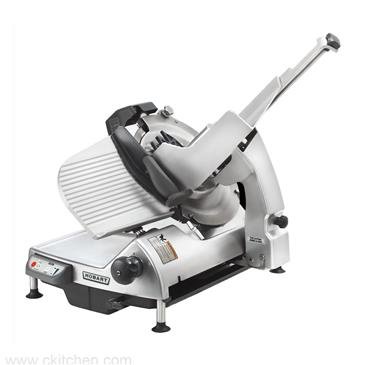
The Hobart HS9N-1 is the professional-grade anchor for this guide and the reference point for serious commercial slicing. It is not the realistic buy for most backyard cooks, but it shows what the top of the category looks like: heavy-duty construction, programmable stroke control, a 1/2 HP motor, and cleaning systems designed for commercial kitchens.
If you are comparing slicers for a catering operation, pop-up BBQ business, club kitchen, or restaurant-style prep space, the Hobart tier is the standard to measure against. If you are slicing a few briskets a month at home, use it as the benchmark and buy the KWS-class machine instead.
What We Like
- 13-inch knife gives more clearance for full brisket flats and large cured meats.
- 1/2 HP commercial motor is built for sustained slicing rather than short home-use bursts.
- Zero-knife-exposure cleaning and sharpening features set a high safety benchmark.
- Hobart parts, service, and long-term commercial support are major advantages.
What We’d Improve
- It is expensive enough that most home cooks should treat it as a benchmark, not a default recommendation.
- The size and weight require a dedicated prep area.
- It only makes sense for very high-volume home, catering, or commercial use.
Specifications
- Blade Diameter: 13 inches
- Motor: 1/2 HP
- Duty Cycle: Commercial continuous-use benchmark
- Operation: Three stroke lengths and four stroke speeds
- Use Case: Professional-grade reference point
Final Verdict
For serious home BBQ use, the KWS MS-12N is the practical pick. It clears the commercial-spec threshold with a 0.57 HP motor, 12-inch blade, and NSF certification, while staying realistic for a dedicated home kitchen or BBQ prep area.
The Hobart EDGE12-1 and Hobart HS9N-1 are the step-up choices. The EDGE12-1 shows what medium-duty commercial construction adds, while the HS9N-1 sets the professional standard for heavy-duty slicing, cleaning safety, and long-term service support.
Safety and Maintenance Guide
Commercial slicers are among the most dangerous pieces of kitchen equipment due to their exposed, razor-sharp rotating blades. Following proper setup, use, and cleaning procedures is non-negotiable. Adhering to safety protocols protects you and ensures the machine operates correctly.
Before You Start Slicing
- Place the slicer on a stable, non-slip surface with all rubber feet seated properly on the counter.
- Verify the thickness adjustment is set to zero (closed position) before powering on.
- Wear cut-resistant gloves rated for blade contact — especially when loading meat close to the blade or adjusting thickness during operation.
- Never reach across the blade path while the machine is running.
- Keep children and bystanders away from the operating area.
Cleaning Your Commercial Slicer
NSF-certified machines are designed to disassemble for thorough cleaning — take advantage of this. A quick wipe-down after each use is not sufficient when working with raw meat; the blade, carriage, and food tray all require direct cleaning to prevent cross-contamination[FDA].
- Power off and unplug the machine completely before beginning any cleaning.
- Set the thickness dial to zero and remove the food tray, hand guard, and product pusher per the manufacturer instructions.
- Use a blade removal tool or cut-resistant gloves — never grab the blade barehanded.
- Wash all removable parts with hot, soapy water; rinse and dry thoroughly to prevent rust on carbon steel components.
- Wipe the blade and non-removable surfaces with a food-safe sanitizing solution.
- Reassemble only when all parts are fully dry.
- Apply a food-safe lubricant to the carriage track per the manufacturer’s recommendation.
Blade Sharpening
Built-in whetstone sharpeners on entry-level commercial machines are convenient for routine touch-ups but are not a substitute for professional sharpening on a dull blade. Use the built-in sharpener for maintenance after every few sessions. If slices start tearing rather than cutting cleanly, the blade needs professional sharpening — most restaurant equipment dealers offer this service.
Which Slicer Is Right for You?
- Serious home BBQ: Choose the KWS MS-12N if you want commercial-grade slicing for brisket flats, bacon slabs, roast beef, and charcuterie without stepping into restaurant-equipment pricing.
- Frequent high-volume prep: Choose the Hobart EDGE12-1 if you slice weekly, cater events, or need heavier construction than an entry commercial machine.
- Professional or business use: Treat the Hobart HS9N-1 as the benchmark when serviceability, heavy-duty safety systems, and long-term commercial support matter more than price.
Frequently Asked Questions
What blade diameter do I need to slice a whole brisket?
A 12-inch blade is ideal for slicing a full packer brisket flat in a single stroke. A 10-inch commercial blade can handle a trimmed flat but may require repositioning on larger cuts. For whole briskets with the point still attached, a 13-inch blade like those found on Hobart professional machines eliminates any repositioning.
What is the difference between a commercial and a consumer meat slicer?
The core differences are motor power, duty cycle, and construction standards. Commercial machines use motors rated at 1/2 HP or higher designed for continuous operation, while consumer models often use lower-wattage motors that require rest periods. NSF certification, gravity-feed carriages, and heavy-gauge aluminum or stainless construction are additional markers of a true commercial unit.
What does NSF certification mean for a meat slicer?
NSF certification means the slicer has been tested and approved against the NSF/ANSI 8 standard for commercial food equipment. Certified machines use food-grade materials that do not leach harmful substances, and the design must allow for thorough disassembly and cleaning. This is the baseline sanitation standard required in commercial kitchens and a meaningful quality indicator for home use.
Can a commercial meat slicer handle frozen meat?
Most commercial slicers handle semi-frozen meat well — partially freezing the product (to about -4°C / 25°F) actually improves slice consistency and reduces tearing on thin cuts like bacon or bresaola. Fully frozen, rock-hard blocks should not be run through any meat slicer; they can chip or damage the blade.
The KWS MS-12N and similar commercial-tier machines perform well on semi-frozen product.
Is a gravity-feed or manual-feed-carriage better for home BBQ use?
Gravity-feed carriages are the better choice for high-volume BBQ sessions. The design uses the weight of the meat to assist each slice stroke, reducing hand fatigue when processing a whole brisket into 40 or 50 portions. Manual-feed carriages require continuous pushing force, which becomes tiring quickly on large cuts.
Entry-level commercial machines like the KWS MS-12N use a spring-assisted semi-automatic carriage that approximates the gravity-feed experience.
How do I clean a commercial meat slicer safely after use?
Always unplug the machine before cleaning and use cut-resistant gloves when handling the blade. Disassemble all removable parts — food tray, hand guard, product pusher — and wash with hot, soapy water. Sanitize the blade and all food-contact surfaces with a food-safe sanitizer, then dry everything completely before reassembling to prevent rust.
What motor power do I need for continuous slicing?
A 1/2 HP (approximately 370-420W) motor is the commercial baseline for sustained slicing without overheating. Lower-powered motors may handle intermittent slicing but will bog down or require rest periods on dense cuts. For BBQ use cases involving large smoked roasts or whole briskets, a copper-wound motor in the 400-500W range provides reliable continuous performance.
Can I use a commercial meat slicer for charcuterie and cured meats?
Yes — commercial slicers are excellent for charcuterie work. The precision thickness control allows paper-thin slices of prosciutto, coppa, or bresaola that would be impossible with a knife or consumer slicer. NSF-certified machines are easier to sanitize thoroughly between raw and cured meat sessions, which is an important food safety consideration in a home curing operation.