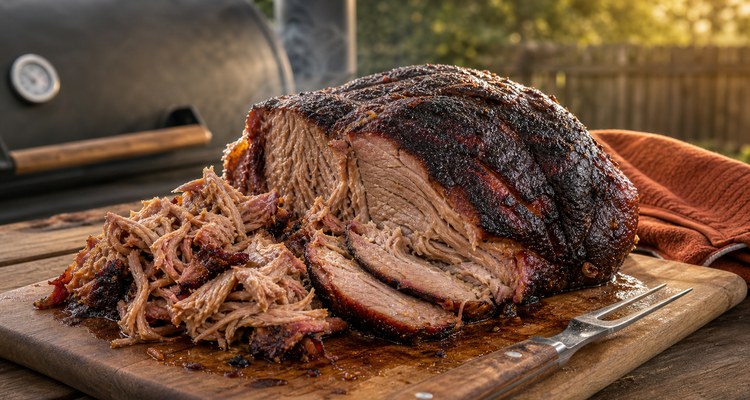
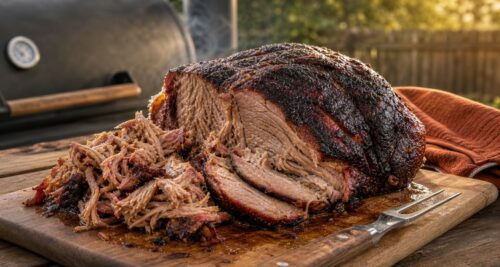
 You just pulled a perfectly smoked pork shoulder off the grill, and the temptation to tear into it immediately is real. Resist that urge. The difference between dry, disappointing pork and juicy, melt-in-your-mouth results comes down to one often-skipped step: the rest. This guide covers exactly how long to rest pork after smoking for every major cut. You will learn the science behind why resting smoked meat matters, step-by-step instructions for the faux Cambro technique, and the common mistakes that ruin otherwise great barbecue.
Quick Roundup List
 Quick Summary:
- Resting is crucial – resting smoked pork is a non-negotiable step that ensures maximum juiciness and flavor by allowing muscle fibers to relax and reabsorb juices. Skipping this step leads to dry, less flavorful meat.
- Rest times vary by cut – larger cuts like pork shoulder need 1-2 hours in a faux Cambro, while ribs require 10-15 minutes tented with foil. Leaner cuts like loin and chops need shorter rests (5-20 minutes) to prevent overcooling.
- Faux Cambro technique – for large cuts, wrap the pork in butcher paper or foil, then place it in a pre-warmed cooler surrounded by old towels. This method can safely hold pork above 140°F for up to 4 hours, ensuring it stays tender and juicy.
- Avoid common mistakes – never slice or pull immediately after smoking. Always insulate large cuts properly, and avoid resting in cold or drafty spots to prevent rapid temperature drops and loss of moisture.
Why Resting Smoked Pork Is Non-Negotiable
Resting smoked pork is the critical final step that separates good barbecue from great barbecue. It allows the meat to finish cooking gently while ensuring every bite is as juicy and flavorful as possible. Without a proper rest, you risk losing precious moisture the moment you slice into it.
Maximizing Flavor and Juiciness
The primary benefit of resting smoked meat is moisture retention. When meat rests, the juices that were forced to the center during cooking have time to redistribute evenly throughout the cut. This ensures that the flavor is locked into the meat fibers, not lost on the cutting board.
The Role of Muscle Fibers
Cooking causes muscle fibers in the pork to tighten and contract. The resting period allows these fibers to relax. As they loosen, they reabsorb the free-flowing juices, resulting in a more tender and succulent final product. This process is essential for every cut of pork, from a massive pork shoulder to a single thick-cut chop. It is the final touch that ensures your hard work pays off.
What Happens During the Rest? The Science Explained
When pork rests after smoking, a fascinating series of physical and chemical changes occur. The muscle fibers, which tightened during cooking, begin to relax. This relaxation allows the juices that were forced to the center of the meat to redistribute evenly throughout the cut, a process that is key to a moist final product.
Heat’s Effect on Muscle Fibers
During smoking, intense heat causes the meat’s muscle fibers to contract and tighten. This process squeezes moisture toward the cooler center of the cut. This liquid is a flavorful mix of water, proteins like myoglobin, and rendered fat, all concentrated deep within the pork.
Collagen, Gelatin, and Myosin Proteins
For cuts like pork shoulder, the long cook time breaks down tough connective tissue (collagen) into rich, unctuous gelatin. This gelatin mixes with the natural juices. At the same time, heat denatures the main muscle proteins, primarily myosin, causing them to shrink and expel moisture. During the rest, as the internal temperature gently falls, the denatured myosin proteins relax. This allows them to reabsorb the gelatin-enriched liquid, locking moisture and flavor back into the meat structure itself.
The Magic of Juice Redistribution
This entire process is known as juice redistribution. When you remove the pork from the heat, the fibers gradually loosen, creating space for the concentrated juices to flow back outward and rehydrate the entire cut. This is why a well-rested pork shoulder is uniformly moist and tender. Slicing the pork too soon short-circuits this process. The un-rested, tight fibers cannot hold onto the liquid, causing it to spill out onto the cutting board. That lost liquid is lost flavor and moisture, leading to a drier, less satisfying result.
Essential Tools for Resting Pork
You don’t need fancy equipment to rest pork properly, but a few key items make the process foolproof. Having these ready before your pork comes off the smoker ensures a smooth transition from cooking to resting, especially for large cuts like pork shoulder.
Insulated Cooler
A standard insulated cooler is the key to creating a “faux Cambro,” a DIY hot-holding box.
A few tools that help with resting pork properly:
- ThermoMaven Professional Digital Meat Thermometer — confirm the pork holds above 140F during the rest for food safety
- ThermoMaven Smart Bluetooth Wireless Meat Thermometer — leave-in probe monitors temperature during the faux Cambro hold
- Bryco Goods Pink Butcher Paper Roll — wrap large cuts before the cooler rest to preserve bark texture
It provides a stable, warm environment to let large cuts rest for hours without losing significant heat, ensuring they stay juicy and food-safe.
Old Towels
Clean, old towels are the perfect insulation to fill the empty space in your cooler. They trap air and surround the wrapped pork, preventing heat from escaping and maintaining a consistent temperature during a long rest.
Butcher Paper or Foil
Wrapping large cuts of meat is essential for a long rest. Pink butcher paper is ideal as it allows some steam to escape, preserving the bark’s texture. Heavy-duty aluminum foil is a great alternative that traps more heat and moisture, though it may soften the bark.
Instant-Read Thermometer
An instant-read thermometer is crucial for food safety. Use it to confirm the pork is done before resting and to periodically check its temperature during a long hold, ensuring it stays above the 140°F safety threshold.
How Long to Rest Smoked Pork: A Quick Guide by Cut
Rest time varies significantly based on the size and density of the pork cut. Larger cuts with more connective tissue need longer rests for full juice redistribution. Use the table below as a quick reference for every major smoked pork cut.
| Pork Cut | Target Internal Temp | Minimum Rest | Ideal Rest and Method |
|---|---|---|---|
| Pork Shoulder/Butt (pulled pork) | 203-205°F | 30 minutes | 1-2 hours wrapped in butcher paper in a faux Cambro |
| Pork Ribs (spareribs/baby backs) | 195-203°F | 10 minutes | 10-15 minutes loosely tented with foil |
| Pork Loin/Tenderloin | 145°F | 10 minutes | 15-20 minutes tented with foil |
| Pork Chops (thick-cut) | 145°F | 3 minutes | 5-10 minutes on the plate or cutting board |
The Ultimate Guide to Resting a Pork Shoulder for Pulled Pork
Large cuts like pork shoulder require a long, insulated rest to finish rendering connective tissue and fully reabsorb juices. This extended rest is what separates competition-quality pulled pork from a dried-out disappointment. Follow these steps for consistently juicy results.
Step 1: Confirming Doneness
The rest begins only after the pork shoulder is fully cooked. For pulled pork, the target internal temperature is 203-205°F, the point where collagen has broken down into gelatin. 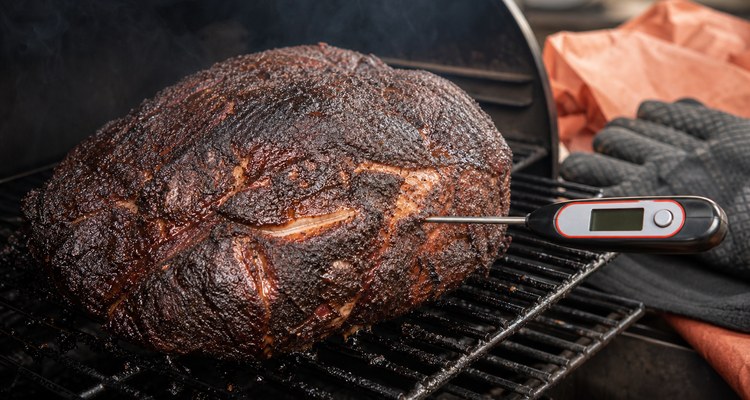 Use the probe test as a secondary check. Insert your thermometer probe into the thickest part of the meat. It should slide in and out with almost no resistance, like probing warm butter.
Step 2: The Initial Vent
Remove the pork shoulder from the smoker and let it sit unwrapped on a cutting board for 10-15 minutes. This allows surface steam to escape and stops carryover cooking. Skipping this step traps steam against the bark, turning a crispy exterior into a soft, soggy mess. Those few minutes make a noticeable difference in bark texture.
Step 3: Wrapping for the Long Rest
After the initial vent, wrap the pork shoulder for its extended rest. You have two good options. 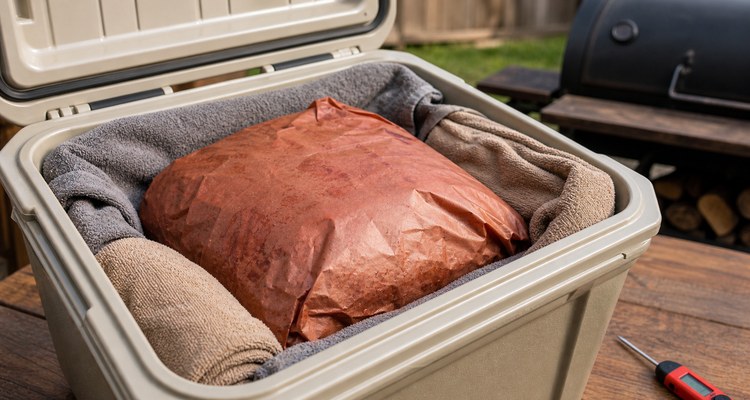 Butcher paper is the preferred method. It allows the pork to breathe slightly, preserving crispy bark while keeping the meat moist. Use a fresh sheet if your cooking paper is saturated with grease. Aluminum foil is a solid alternative that traps more heat and steam. The bark will soften, but the insulation is excellent. Wrap tightly in a double layer for best results.
Step 4: Holding in a Faux Cambro
This technique uses an insulated cooler to hold large cuts of meat at a safe temperature for hours. This method is used by competition pitmasters and backyard cooks alike to ensure perfect timing and results. Here is how to set it up:
- Pre-warm a dry, empty cooler by placing a pot of hot water inside for 15-20 minutes. Dump the water and dry the interior.
- Place a layer of old, clean towels on the bottom of the cooler.
- Set the wrapped pork shoulder on the towels.
- Cover the pork with more old towels, filling any empty space to maximize insulation.
- Close the cooler lid tightly and do not open it until you are ready to serve.
This method can hold pork safely above 140°F for up to 4 hours.[USDA] It gives you a generous buffer between when the cook finishes and when guests arrive.
 Pitmaster Tip: If you do not have a cooler, you can use your home oven as a holding chamber. Pre-warm it to 170°F, turn it off, then place the wrapped pork inside. The residual heat works similarly to a faux Cambro.
How to Rest Other Smoked Pork Cuts
Not every smoked pork cut needs a multi-hour rest in a cooler. Smaller, leaner cuts have different needs. The key is matching rest time to the size and fat content of the cut so you get maximum juice redistribution without overcooling the meat.
Resting Smoked Pork Ribs
Ribs have less mass than a pork shoulder and cool quickly. Let them rest on a cutting board, loosely tented with aluminum foil, for 10-15 minutes. This short rest allows the surface to cool enough for easy slicing while the interior stays juicy. Do not wrap ribs tightly or put them in a cooler, as this steams the bark and softens the texture you worked to build.
Resting Smoked Pork Loin and Tenderloin
These are leaner cuts cooked to a lower internal temperature of 145°F. Tent loosely with foil and rest for 15-20 minutes. Be careful not to over-rest lean cuts. Carryover cooking can push the internal temperature 5-10°F higher during the rest, and lean pork dries out fast once it climbs past 150°F.
Resting Smoked Pork Chops
Thick-cut smoked pork chops need the shortest rest of any pork cut. A simple 5-10 minutes on the plate or cutting board is enough for the juices to settle before serving. No wrapping with butcher paper or tenting is necessary for chops. They are thin enough that the rest period happens naturally while you plate the rest of the meal.
Common Mistakes to Avoid When Resting Pork
Even seasoned pitmasters can make simple resting errors that undermine an otherwise perfect cook. These common missteps can turn a juicy, tender pork shoulder into a dry disappointment. Understanding these pitfalls is key to consistently achieving barbecue excellence.
Mistake 1: Slicing or Pulling Immediately
This is the most common resting mistake. Cutting into meat right off the smoker causes juices to pour out, leaving you with dry, disappointing pork. Patience is the single most important ingredient in great barbecue.
Mistake 2: Not Insulating Properly
For large cuts like pork shoulder, simply leaving the meat on the counter is not enough. Without insulation, the pork cools too quickly. Rendered fat solidifies and muscle fibers tighten up again, reversing much of the tenderizing work the long smoke accomplished.
Mistake 3: Resting in a Cold or Drafty Spot
Where you rest your pork matters. A cold countertop, a breezy kitchen, or an air conditioning vent can all cause the meat to cool down too rapidly. This prevents proper juice redistribution and can even lead to food safety concerns if the temperature drops too low too fast.
Mistake 4: Forgetting the Initial Vent
Before wrapping a large cut for a long rest, you must let it vent for 10-15 minutes. Trapping that initial blast of steam inside the wrap will turn your hard-earned crispy bark into a soft, soggy layer. This step is crucial for preserving texture.
Mistake 5: Resting for Too Long
While a long rest is good, an excessively long one can be detrimental. If a pork shoulder rests for more than 4-5 hours, even in a faux Cambro, the texture can become mushy. More importantly, if the internal temperature drops below 140°F for more than two hours, it enters the food safety danger zone.[USDA]
Take Home Message
Resting smoked pork is a simple yet crucial step that elevates your barbecue from good to great. By allowing muscle fibers to relax and juices to redistribute, you ensure every bite is tender, moist, and packed with flavor. Whether it’s a large pork shoulder or a quick-cooking chop, a proper rest is the secret to unlocking the full potential of your smoked pork.
Frequently Asked Questions
Here are answers to some of the most common questions about resting smoked pork.
Can you rest smoked pork for too long?
Yes, you can. The ideal window for resting a large cut like a pork shoulder is 1 to 4 hours. Beyond that, two issues can arise: the texture can become overly soft or mushy, and the meat can fall into the food safety danger zone (40°F to 140°F) where bacteria can multiply.[USDA]
What happens if you don’t rest smoked pork?
If you slice or pull pork immediately after removing it from the smoker, the contracted muscle fibers cannot hold onto their juices. The flavorful liquid will spill out onto your cutting board, resulting in significantly drier and less flavorful meat. The rest is essential for locking in that moisture.
What is the best way to keep smoked pork warm while it is resting?
The best method for large cuts is the faux Cambro technique. Wrap the pork in butcher paper or foil, then place it in a pre-warmed cooler and surround it with old towels. For smaller cuts, tenting loosely with foil on a cutting board is sufficient.
What is the ideal internal temperature for pork shoulder before it is rested for pulling?
The ideal internal temperature for pulled pork is between 203°F and 205°F. At this temperature, the connective tissues have fully rendered into gelatin, making the meat exceptionally tender and ready to be pulled apart easily after a proper rest.
Perfectly Rested Smoked Pork Shoulder
Equipment
- Smoker To cook the pork shoulder.
- Instant-read thermometer To confirm doneness.
- Insulated Cooler Used as a 'faux Cambro' to hold the meat.
- Old Towels For insulating the pork inside the cooler.
- Butcher paper or aluminum foil For wrapping the pork during the rest.
Ingredients
For the Smoked Pork
- 1 bone-in pork shoulder (Boston butt) 8-10 lbs
- 1/2 cup your favorite BBQ rub
Instructions
- Smoke the pork shoulder until the internal temperature reaches 203-205°F. Confirm doneness by probing the thickest part; it should slide in and out with almost no resistance, like probing warm butter.
- Remove the pork shoulder from the smoker and let it sit unwrapped on a cutting board for 10-15 minutes. This initial vent allows surface steam to escape and stops carryover cooking, preserving the bark.
- After venting, wrap the pork shoulder tightly in a fresh sheet of butcher paper (preferred for bark texture) or a double layer of aluminum foil.
- Prepare a faux Cambro by placing a layer of old, clean towels in the bottom of a dry, pre-warmed insulated cooler.
- Set the wrapped pork shoulder on the towels, then cover it with more towels, filling any empty space to maximize insulation.
- Close the cooler lid tightly and let the pork rest for a minimum of 1 hour, and ideally 2 hours, before pulling and serving. The pork can hold safely for up to 4 hours.
Notes