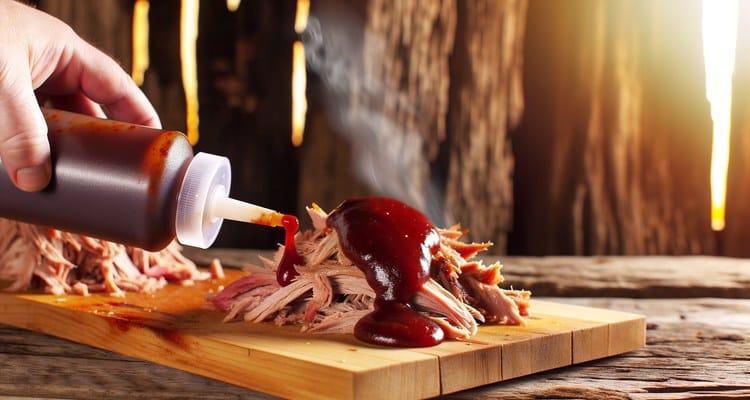
Ask ten pitmasters what sauce belongs on pulled pork and you’ll start ten arguments. That’s because there is no single pulled pork sauce — there’s a whole family of them, each rooted in regional tradition, each built on a different flavor philosophy. Carolina pitmasters pour thin vinegar sauce right into the pulled meat so it soaks every strand. Kansas City folks slather on a thick, sweet tomato glaze. South Carolina adds mustard to the mix. And Alabama turned the sauce white entirely, using mayonnaise as the base.
Every one of those styles is worth knowing. Once you understand the logic behind each sauce — what makes it work, why it was built that way — you can make any of them from scratch with pantry staples and tune them to your exact taste. This guide covers all four core styles in detail: the ingredients, the recipes, the ratios, and the pro-level techniques that separate good sauce from great sauce.
Whether you’re finishing off a batch of smoked pulled pork or need a sauce for a slow-cooker shoulder, you’ll find a recipe here that hits exactly the right note.
The 4 Core Pulled Pork Sauce Styles
Every regional BBQ sauce grew out of what was available locally and what worked best with the local cooking style. Understanding those roots makes it easy to remember the flavor profile and adjust recipes to taste.
| Style | Base | Flavor Profile | Region | Best For |
|---|---|---|---|---|
| Eastern NC Vinegar | Apple cider vinegar + white vinegar | Sharp, tangy, peppery | Eastern North Carolina | Tossing directly into pulled pork |
| Kansas City | Tomato / ketchup | Sweet, smoky, thick | Kansas City, MO | Slathering, glazing, dipping |
| Carolina Gold Mustard | Yellow mustard | Tangy, slightly sweet, earthy | South Carolina Midlands | Pulled pork sandwiches, ribs |
| Alabama White | Mayonnaise | Creamy, tangy, peppery | Northern Alabama | Finishing sauce, dipping, smoked chicken |

The Building Blocks: Core Ingredients Explained
Most pulled pork sauces share a handful of core ingredient categories. Learning what each one contributes lets you mix, match, and balance any style.
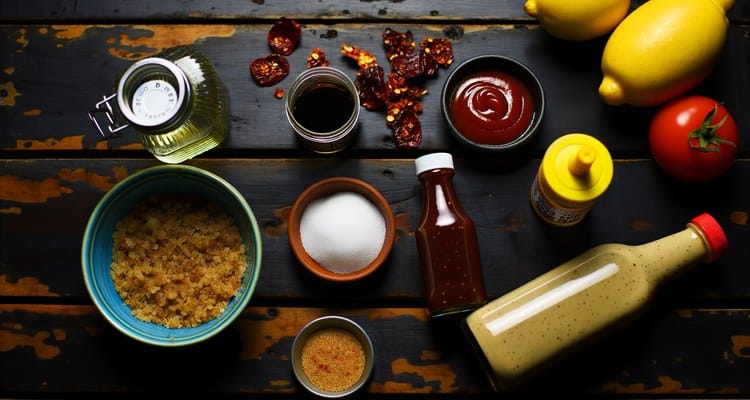
Vinegar: The Acid Foundation
Vinegar is the backbone of most pulled pork sauces, even those that don’t taste primarily acidic. It brightens flavors, cuts through the fat of the pork, and gives sauce its essential liveliness. Apple cider vinegar is the most common choice — it has a mild fruitiness that complements pork without dominating. White vinegar is sharper and more aggressive, used in some Eastern Carolina recipes for extra punch. Red wine vinegar adds depth. The ratio of vinegar to other ingredients determines whether a sauce reads as tangy or balanced.
Sweeteners: Brown Sugar, Honey, and Molasses
Sweet and acid balance each other. The Kansas City style leans hard into sweetness — brown sugar and molasses create that glossy, thick BBQ sauce texture and caramelized glaze when exposed to heat. Honey adds a floral note. Even vinegar-forward sauces typically include a small amount of sugar to take the edge off. The key is balance: too much sweetness and the sauce tastes like candy; too little and the acid is overwhelming.
Heat: Cayenne, Red Pepper Flakes, and Hot Sauce
Heat is essential in most regional styles, especially Eastern Carolina sauce, which traditionally relies on red pepper flakes for a slow, building heat rather than immediate fire. Cayenne pepper integrates more smoothly. Hot sauce (Tabasco, Texas Pete, or Crystal) adds both heat and additional vinegar tang. Adjust the heat level to match your crowd — start conservative and add more at the end.
Tomato: Ketchup vs. Tomato Paste
Ketchup is the shortcut that most home BBQ sauce makers rely on for tomato-based sauces. It already contains vinegar, sugar, and seasoning, so it provides a solid flavor foundation. Tomato paste offers deeper, more concentrated tomato flavor but needs more sweetener and acid added around it. For Kansas City style, ketchup is the traditional base and gives the sauce its characteristic color and sweetness.
Mustard
Yellow mustard does double duty in Carolina Gold sauce — it’s both the flavor base and the emulsifier that keeps the sauce smooth. Use prepared yellow mustard (not dry mustard) for the classic South Carolina version. Dijon can be substituted for a more sophisticated flavor, though it moves away from tradition.
4 Pulled Pork Sauce Recipes: From Carolina to Kansas City
These four recipes are scaled to yield approximately 1½ to 2 cups each, enough for a full pork shoulder. All use common pantry ingredients.

Recipe 1: Eastern North Carolina Vinegar Sauce
This is the original pulled pork sauce — simple, sharp, and devastatingly effective. It’s designed to be poured directly into the pulled meat, saturating every strand with tangy, peppery flavor. No thickening, no sweetness overload. Just clean acid and heat.
Ingredients:
- 1 cup apple cider vinegar
- 1 cup white vinegar
- 1 tbsp crushed red pepper flakes
- 1 tsp black pepper
- 1 tsp cayenne pepper
- 2 tsp granulated sugar
- 1 tsp salt
Method: Combine all ingredients in a saucepan over medium-low heat. Stir until sugar and salt dissolve, about 3 minutes. Do not boil — heat drives off the vinegar. Remove from heat, cool to room temperature. Pour generously over pulled pork immediately after pulling and toss to coat. Alternatively, serve on the side.
Recipe 2: Kansas City BBQ Sauce
Thick, sweet, smoky, and built for slathering. This is the sauce that made KC famous — it caramelizes on the surface of meat and goes equally well as a dipping sauce. This is the recipe to use when you want a sauce that looks as good as it tastes.
Ingredients:
- 1½ cups ketchup
- ½ cup apple cider vinegar
- ⅓ cup brown sugar, packed
- 2 tbsp molasses
- 1 tbsp Worcestershire sauce
- 1 tsp garlic powder
- 1 tsp onion powder
- 1 tsp smoked paprika
- ½ tsp cayenne pepper
- ½ tsp black pepper
- 1 tsp salt
Method: Combine all ingredients in a medium saucepan over medium heat. Whisk until smooth. Bring to a gentle simmer, then reduce heat to low. Cook uncovered for 20-25 minutes, stirring occasionally, until thickened. Let cool before using. The sauce keeps for 3 weeks refrigerated.
Recipe 3: Carolina Gold Mustard Sauce
South Carolina’s signature contribution to BBQ sauce history. Mustard gives this sauce a bright yellow color and earthy tanginess that plays beautifully against the richness of pulled pork. It’s one of the most underrated BBQ sauces in existence — make it once and you’ll keep it in rotation.
Ingredients:
- 1 cup yellow prepared mustard
- ¼ cup apple cider vinegar
- 3 tbsp brown sugar
- 1 tbsp honey
- 1 tbsp Worcestershire sauce
- 1 tsp garlic powder
- ½ tsp cayenne pepper
- ½ tsp black pepper
- ½ tsp salt
Method: Whisk all ingredients together in a saucepan over medium-low heat. Simmer gently for 10 minutes, stirring frequently to prevent scorching. The sauce should be smooth and pourable. Remove from heat and cool before serving. Excellent both tossed into pulled pork and served on the side.
Recipe 4: Alabama White Sauce
Created by Big Bob Gibson in Decatur, Alabama in the 1920s, this mayo-based sauce sounds strange until you taste it. The fat in the mayonnaise carries flavor beautifully, and the combination of vinegar, horseradish, and black pepper creates a complex, creamy sauce that works on pulled pork and is particularly outstanding on smoked chicken. No cooking required — just mix and chill.
Ingredients:
- 1 cup mayonnaise
- ¼ cup apple cider vinegar
- 2 tbsp prepared horseradish
- 1 tbsp lemon juice
- 1 tsp coarse black pepper
- 1 tsp garlic powder
- ½ tsp cayenne pepper
- ½ tsp salt
- 1 tsp sugar
Method: Combine all ingredients in a bowl and whisk until smooth. Refrigerate for at least 1 hour before serving to allow flavors to meld. Do not heat — this sauce is always served cold or at room temperature. Use as a finishing drizzle or dipping sauce.
Quick-Reference Recipe Ratios
| Style | Acid Ratio | Sweet Ratio | Fat/Base Ratio | Heat Level |
|---|---|---|---|---|
| Eastern NC Vinegar | High (2 cups vinegar) | Minimal (2 tsp sugar) | None | High (pepper + cayenne) |
| Kansas City | Moderate (½ cup vinegar) | High (⅓ cup brown sugar + molasses) | Ketchup base (1½ cups) | Low-moderate |
| Carolina Gold | Moderate (¼ cup vinegar) | Moderate (3 tbsp + honey) | Mustard base (1 cup) | Moderate |
| Alabama White | Moderate (¼ cup vinegar + lemon) | Minimal (1 tsp sugar) | High (1 cup mayo) | Moderate (horseradish + cayenne) |
Pro-Tips and Common Mistakes to Avoid
These are the techniques that separate a good pulled pork sauce from a great one. Most mistakes come down to heat management and imbalance — both are easy to fix once you know what to look for.
Don’t Simmer Vinegar Sauces at High Heat
The biggest mistake with vinegar-based sauces is bringing them to a rolling boil. High heat drives off the volatile acids in vinegar rapidly, and you can lose 20-30% of the sharp, tangy character you’re trying to preserve. Always heat vinegar sauces over medium-low heat, just until the sugar and salt dissolve. Remove from heat immediately. The sauce develops more as it cools.
Balance Using the Flavor Triangle
Every good BBQ sauce balances three forces: acid (vinegar, lemon), sweet (sugar, honey, molasses), and heat (cayenne, pepper, hot sauce). When a sauce tastes flat, add acid. When it’s too sharp, add sweet. When it tastes thin and one-dimensional, add heat. Taste as you go and adjust in small increments.
Don’t Apply Sweet Sauce Too Early
If you’re using Kansas City-style sauce on smoked meat, don’t add it until the last 15-20 minutes of cooking. The sugar content in thick tomato-based sauces burns at grill temperatures, turning from caramelized to carbonized quickly. Think of it as a glaze, not a marinade. Vinegar sauces can be applied earlier — they’re used like a Memphis-style mop sauce, mopped on during cooking to keep the meat moist and build flavor layers.
Bloom Your Dry Spices
If you’re adding garlic powder, onion powder, cayenne, or paprika to a sauce, warm them in the pan first for 30-60 seconds before adding the liquids. Heat opens up the aromatic compounds in dry spices and integrates them into the sauce more completely than simply stirring them in cold.
Add Umami Depth
Worcestershire sauce is the secret weapon in most BBQ sauce recipes. It adds savory depth (umami) that fills out the flavor and makes the sauce taste more complex. A tablespoon or two makes a significant difference in Kansas City and mustard sauces. Some pitmasters also add a dash of soy sauce or fish sauce for the same reason — neither is detectable as its source ingredient, but both deepen the sauce considerably.
How and When to Use Your Sauce
The right sauce applied the wrong way is still a mistake. Different sauces are built for different applications, and knowing when and how to use them is part of the craft.
Mop Sauce vs. Finishing Sauce
Thin vinegar sauces are mop sauces — they’re applied during the cook to add moisture and flavor while the meat renders. They work because they evaporate quickly and don’t burn. Thick tomato-based sauces are finishing sauces — applied at the end to glaze and set. Alabama white sauce is purely a finishing sauce, applied after cooking or served on the side. Never use a mayonnaise-based sauce while the meat is still over heat.
Tossing vs. Serving on the Side
Eastern North Carolina pitmasters toss the sauce directly into the pulled pork immediately after pulling, while the meat is still hot. The vinegar absorbs into the fibers and the steam helps it penetrate evenly. This method produces the most evenly flavored pulled pork. Serving sauce on the side gives guests control and works better with thicker sauces that don’t integrate the same way. For a sandwich setup, both approaches work — toss a small amount in for base flavor, then offer more on the side.
Layering With Smoke and Fat
Sauce added to properly smoked pulled pork is working alongside the wood smoke flavor and rendered pork fat, not against them. The rendered fat is already adding richness and mouthfeel — you don’t need a fat-heavy sauce on top of it. This is why lean, sharp vinegar sauces work so well with fatty pork: they cut through the richness and add contrast. Mustard sauce does the same. The Alabama white sauce brings additional fat, but the vinegar and horseradish keep it from feeling heavy.
Beyond Pulled Pork
All four of these sauces have uses beyond pulled pork. Vinegar sauce is excellent on coleslaw (the Eastern NC style often doubles as slaw dressing). Kansas City sauce is a universal glaze for ribs, chicken, and burgers. Carolina Gold mustard sauce works beautifully as a pretzel dip and on bratwurst. Alabama white sauce is arguably at its best on smoked chicken — it was originally created for that purpose. You can explore more creative BBQ sauce variations once you’ve mastered the regional foundations.
Customizing Your Sauce
Once you understand the base recipe for each style, customization is just a matter of adjusting one variable at a time.
More heat: Add more cayenne, red pepper flakes, or a splash of hot sauce. For the Alabama white sauce, extra horseradish is the best heat lever. For vinegar sauce, more red pepper flakes added 24 hours before serving creates a deeper, more infused heat.
Sweeter profile: Add more brown sugar in small increments (½ tsp at a time). Honey adds sweetness with a slightly floral note. Molasses adds sweetness plus a deep, smoky bitterness. Maple syrup is an unusual but excellent addition to mustard sauce.
Smokier depth: Add smoked paprika (not regular paprika). A small amount of liquid smoke — ¼ tsp or less — goes a long way. Some pitmasters add a tablespoon of espresso or very strong coffee to Kansas City sauce for dark, smoky depth without any coffee flavor coming through.
Fruit additions: Peach preserves or bourbon peach sauce added to Kansas City BBQ sauce creates a popular variation. A tablespoon of orange juice in the vinegar sauce adds brightness. Pineapple juice replaces some of the vinegar in Hawaiian-influenced versions.
Storage and Shelf Life
Properly stored homemade BBQ sauce lasts longer than most people expect. The high acid content in vinegar-based sauces is a natural preservative. The exception is the Alabama white sauce — because it’s mayonnaise-based, it has a shorter refrigerator life than the others.
| Sauce Type | Refrigerator Life | Freezer Life | Storage Notes |
|---|---|---|---|
| Eastern NC Vinegar | 3-4 weeks | Not recommended | Store in glass jar; vinegar prevents bacterial growth |
| Kansas City | 3-4 weeks | Up to 3 months | Freeze in ice cube trays for portion control |
| Carolina Gold Mustard | 2-3 weeks | Up to 2 months | May separate slightly; stir or shake before using |
| Alabama White | 1-2 weeks | Not recommended | Mayo base degrades when frozen; keep refrigerated |
Store all sauces in airtight glass containers — plastic absorbs odors and can react with highly acidic sauces over time. Always cool completely before refrigerating to prevent condensation inside the container, which dilutes the sauce and encourages mold.
Frequently Asked Questions
What is the best sauce for pulled pork?
There’s no single “best” sauce — it depends on how you plan to use it. If you want to toss the sauce into the pulled pork while it’s hot, Eastern North Carolina vinegar sauce is the traditional and most effective choice. For a thick, sweet finishing sauce that looks impressive and pleases most palates, go with Kansas City style. For something distinctive and conversation-starting, mustard sauce or Alabama white are excellent options.
Should I put sauce on pulled pork while cooking or after?
Vinegar-based sauces (Eastern NC style) can be applied during and after cooking as a mop. Thick, sweet tomato sauces like Kansas City should only be applied in the last 15-20 minutes of cooking to prevent burning. Alabama white sauce is a finishing sauce only — apply it after cooking or serve on the side. Never cook with a mayo-based sauce.
How much sauce do I need for a pork shoulder?
Plan on 1 to 1½ cups of sauce per pound of finished pulled pork if you’re tossing the sauce into the meat. If serving on the side, 1-2 cups for a 6-8 pound pork shoulder is sufficient for a serving of 8-10 people. Make extra — BBQ sauce disappears faster than expected at any gathering.
What is Carolina BBQ vinegar sauce made of?
Classic Eastern North Carolina vinegar sauce is made from apple cider vinegar, white vinegar, red pepper flakes, black pepper, cayenne, a small amount of sugar, and salt. That’s it — no tomato, no ketchup, no molasses. The simplicity is the point. Western North Carolina (Lexington style) adds ketchup to the mix, creating what’s sometimes called a “dip” rather than a sauce.
Can I make BBQ sauce without brown sugar?
Yes. Honey, maple syrup, or molasses can substitute for brown sugar in equal amounts. Agave nectar works similarly. For a low-sugar or keto version, a small amount of erythritol or monk fruit sweetener can replace the sugar in Kansas City style, though the texture and caramelization behavior will differ.
Why does my homemade BBQ sauce taste bitter?
Bitterness in BBQ sauce usually comes from one of three sources: burnt garlic or onion (bloom spices carefully), overcooked tomato paste (use ketchup instead if this is consistent), or too much molasses (start with 1 tablespoon and adjust). Occasionally, low-quality apple cider vinegar can have a harsh, bitter note — try a different brand.
How do I thicken a BBQ sauce that’s too thin?
The simplest way to thicken a BBQ sauce is to simmer it longer uncovered — evaporation concentrates the sauce and reduces the liquid content. For faster results, add more ketchup or tomato paste. A small amount of cornstarch slurry (1 tsp cornstarch dissolved in 2 tsp cold water) stirred in at the end of cooking also works without changing the flavor profile.
Can I use store-bought BBQ sauce as a base and improve it?
Absolutely. Most store-bought sauces benefit from additional depth. Try adding a tablespoon of apple cider vinegar (sharpens the flavor), a teaspoon of smoked paprika (adds smoke), or a dash of Worcestershire sauce (adds umami). Simmering a store-bought sauce for 10 minutes with these additions transforms it into something that tastes genuinely homemade.
Is pulled pork sauce the same as BBQ sauce?
Not exactly. “BBQ sauce” is a broad category that includes everything from thick tomato-based sauces to thin vinegar sauces to white mayo sauces. Not all BBQ sauces are designed for pulled pork. A great steak sauce is a terrible pulled pork sauce and vice versa. The styles covered in this guide are specifically developed or traditionally associated with pulled pork, though they can all be used more broadly.
How long does homemade BBQ sauce last in the refrigerator?
Vinegar-based sauces last 3-4 weeks refrigerated due to the natural preservative properties of acid. Kansas City tomato-based sauce lasts 3-4 weeks. Carolina Gold mustard sauce lasts 2-3 weeks. Alabama white sauce has the shortest life at 1-2 weeks due to its mayonnaise base. All should be stored in airtight glass containers and inspected before use.
Contents