Selecting the right wood for smoking transforms ordinary barbecue into extraordinary culinary experiences. The difference between using generic wood chips and carefully chosen hardwood chunks can mean the distinction between forgettable meals and signature dishes that guests remember for years. Professional pitmasters understand that wood selection affects not just smoke flavor, but also temperature control, burn duration, and even the appearance of your finished barbecue.
The barbecue wood market has evolved significantly, with specialized suppliers now offering kiln-dried, sustainably sourced options that deliver consistent results. Understanding wood characteristics, regional preferences, and proper storage methods ensures you’ll achieve professional-quality smoke every time. This comprehensive guide covers everything from basic wood types to advanced blending techniques, helping you master the art of smoke flavor.
Quick Roundup List
- Wood Fundamentals: Understanding BBQ Wood Basics
- Wood Selection: Choosing the Right Wood
- Regional Styles: Regional BBQ Wood Traditions
- Advanced Techniques: Professional Wood Techniques
- Storage & Safety: Proper Wood Storage
Understanding BBQ Wood Basics
Wood selection forms the foundation of authentic barbecue flavor. Unlike gas or charcoal alone, wood smoke contains over 100 different compounds that create complex flavor profiles unique to each species. These compounds interact with proteins and fats in meat through the Maillard reaction and smoke ring formation, creating both taste and visual appeal.
Wood Forms and Their Applications
| Wood Form | Size | Burn Time | Best For |
|---|---|---|---|
| Chunks | 3–5 inches | 2–4 hours | Offset smokers, kamado grills, long cooks |
| Chips | ¼–1 inch | 20–30 min | Gas grills, electric smokers, quick smokes |
| Pellets | Compressed | Varies by hopper | Pellet grills, automated smoking |
| Logs | 6+ inches | 4–8 hours | Large offset smokers, traditional pits |
| Dust | Fine powder | Smolders slowly | Cold smoking cheese, salmon, cured meats |
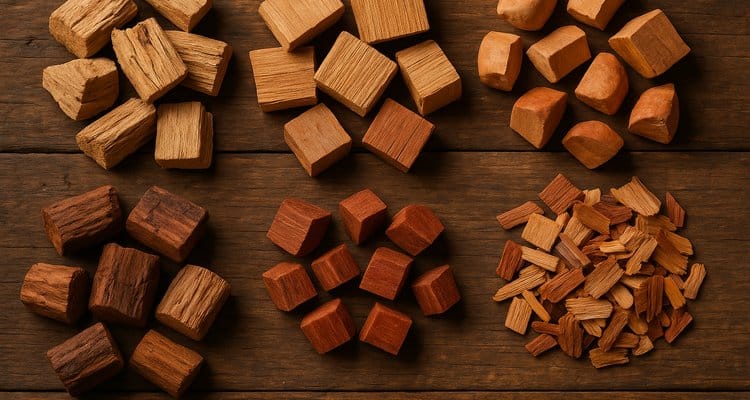
Chunks burn for 2–4 hours and suit long sessions in offset smokers and kamado grills — the preferred form for brisket and pork shoulder. Chips ignite quickly but burn out in 20–30 minutes and are best matched to electric smokers and gas grills. Don’t soak chips — soaking creates steam rather than improving smoke quality. Pellets are designed for pellet grills and provide automated, consistent smoke; see our guide to the best wood pellets for smoking for brand recommendations. Logs require experienced fire management but produce the most authentic smoke in large offset smokers — split logs burn more efficiently than rounds. Dust is primarily used for cold smoking cheese, salmon, and cured meats.
Moisture Content and Seasoning
Properly seasoned wood contains 15–20% moisture content, achieving optimal combustion temperature and smoke production. Fresh-cut “green” wood creates bitter, acrid smoke due to incomplete combustion and excess moisture. Seasoning requires 6–12 months of proper storage, though kiln-dried options provide immediate usability.
 Pitmaster Tip: Digital moisture meters provide accurate readings and eliminate guesswork. Aim for 15–20% — over-dried wood below 10% burns too hot and fast, producing minimal smoke. Experienced pitmasters also check for weight (lighter than green wood), a hollow ring when struck, and bark separation.
Hardwood vs. Softwood
| Characteristic | Hardwoods | Softwoods |
|---|---|---|
| Tree Type | Deciduous (oak, hickory, maple, fruit trees) | Coniferous (pine, cedar, fir, spruce) |
| Resin Content | Low | High |
| Smoke Quality | Clean, flavorful, thin blue smoke | Harsh, bitter, thick smoke |
| Burn Rate | Slow, even | Fast, uneven |
| BBQ Suitability | ✓ Excellent | ✗ Not recommended |
Important: Softwoods from coniferous trees contain high resin levels that create harsh, bitter smoke unsuitable for food. Pine, cedar, fir, and spruce should never be used for smoking meat. The one exception is cedar planks for salmon, where indirect heat prevents resin combustion.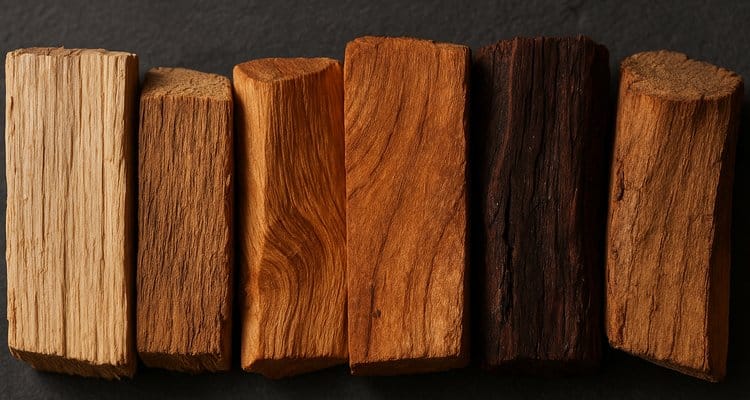
Choosing the Right Wood for Your BBQ
Selecting appropriate wood requires understanding flavor profiles, intensity levels, and meat pairings. Each wood species imparts distinct characteristics ranging from mild sweetness to bold, bacon-like smokiness. Mastering these profiles allows customization for specific dishes and personal preferences.
Wood Flavor Intensity Scale
| Intensity | Wood Types | Flavor Notes | Best Proteins |
|---|---|---|---|
| Mild | Apple, Alder, Cherry, Maple | Fruity, sweet, subtle | Poultry, fish, pork, vegetables |
| Medium | Oak, Pecan, Walnut | Neutral, nutty, versatile | All meats, excellent base for blends |
| Bold | Hickory, Mesquite, White Oak | Bacon-like, earthy, intense | Beef, pork shoulder, ribs |
Mild Woods for Delicate Proteins
- Apple — Subtle fruity sweetness ideal for pork and poultry. Mild enough not to overpower delicate flavors, making it an excellent starting point for beginners. Pairs well with cherry for enhanced bark color.
- Alder — Traditional Pacific Northwest choice for salmon and seafood. Delicate smoke complements rather than masks natural fish flavors. Also excellent with vegetables and cheese.
- Maple — Mild sweetness similar to apple but with slightly more intensity. Especially good with pork and vegetables. Sugar maple offers the best flavor among maple varieties.
- Cherry — Slightly sweet smoke with exceptional color enhancement. Creates deep mahogany bark on ribs and shoulders. Blends well with heavier woods for balanced flavor.
Medium-Intensity Woods
- Oak — The universal BBQ wood, delivering medium smoke intensity with a neutral flavor profile. Red oak is slightly stronger than white oak. Forms an excellent base for custom wood blends.
- Pecan — Rich, nutty sweetness stronger than fruit woods but milder than hickory. An excellent all-purpose choice for beef and pork. A staple of Southern BBQ traditions.
- Walnut — Robust, slightly bitter smoke best used sparingly or in blends. English walnut is milder than black walnut. Pairs well with beef and game meats.
Bold Woods for Robust Flavors
- Hickory — The quintessential BBQ wood. Strong, bacon-like smoke that can become overpowering if overused. Best for pork shoulders, ribs, and beef.
- Mesquite — Intense, earthy smoke characteristic of Texas BBQ. Burns extremely hot and requires careful fire management. Best suited to beef and direct grilling.
- White Oak — Strong but refined smoke without bitterness. Excellent for brisket and large beef cuts. Wine barrel oak adds unique complexity.
Complete Wood and Meat Pairing Guide
| Meat Type | Best Woods | Good Alternatives | Avoid |
|---|---|---|---|
| Beef Brisket | Oak, Hickory | Mesquite, Pecan | Fruit woods (too mild) |
| Pork Ribs | Apple, Cherry, Hickory | Maple, Pecan | Mesquite (overpowering) |
| Chicken | Apple, Cherry, Maple | Pecan, Oak | Heavy hickory, Mesquite |
| Salmon | Alder, Cedar plank | Apple, Maple | Hickory, Mesquite |
| Pork Shoulder | Hickory, Apple | Cherry, Pecan | Mesquite (too intense) |
| Turkey | Cherry, Apple, Pecan | Maple, Oak | Strong hickory |
| Tri-Tip | Oak, Hickory | Pecan, Cherry | Apple alone (too mild) |
| Cheese | Apple, Cherry | Maple, Alder | Hickory, Mesquite, Oak |
Looking for recipe inspiration? Try our smoked tri-tip recipe with oak or hickory, or experiment with mild fruit woods in our smoked cream cheese appetizer. Our smoked mac and cheese pairs perfectly with any smoked meat.
Gear We Recommend for This Guide
 Wood chips· Best for beginners6-flavor variety set Cor cordiumA sampler of apple, cherry, hickory, oak, mesquite, and pear.Why we picked it: the cheapest way to find your favorite smoke before buying in bulk.
 Pellets· Pellet-grill pickWood pellet variety pack HarmosSix smoke profiles in resealable bags for pellet grills.Why we picked it: swap flavors mid-cook without buying six full bags.
 Accessory· Budget upgradeCold-smoke pellet trayA stainless tray that adds up to 12 hours of smoke.Why we picked it: turns a gas or electric grill into a real cold-smoker for a few dollars.
Regional BBQ Wood Traditions
American barbecue traditions developed around locally available wood species, creating distinct regional flavor profiles. Understanding these traditions provides context for wood selection and helps recreate authentic regional styles.
Texas BBQ Wood Preferences
Central Texas barbecue relies on post oak, providing moderate smoke that enhances rather than masks premium beef flavor. The Hill Country tradition emphasizes simplicity — salt, pepper, and oak smoke at 225–250°F in offset smokers. South Texas incorporates mesquite for direct grilling and shorter smokes, where intense heat suits fajitas and barbacoa. East Texas shows Southern influence, using hickory and pecan alongside oak for sauced, “low and slow” meats.
Carolina Traditions
Eastern North Carolina whole hog barbecue uses oak and hickory burned down to coals for consistent heat throughout the night. The mild pork accepts smoke without becoming overpowering. Western North Carolina focuses on pork shoulders with hickory and oak, where the stronger smoke complements the tomato-based sauce characteristic of the Lexington style. South Carolina’s mustard-based sauce tradition pairs particularly well with oak and pecan smoke.
Kansas City Style
Kansas City’s burnt ends tradition relies on a hickory and white oak combination. The sweet, molasses-based sauces stand up to bold smoke flavors. Competition teams typically use apple-cherry blends for ribs and hickory-oak for brisket. For sauce pairings, see our guide to the best store-bought BBQ sauces.
Memphis Methodology
Memphis dry-rub ribs traditionally use hickory — sometimes with charcoal for heat and hickory chunks for smoke. The moderate smoke allows complex spice rubs to shine. Many pitmasters add fruit wood during the last hour for color enhancement without intensifying the smoke flavor.
Regional Wood Preferences at a Glance
| Region | Primary Wood | Secondary Woods | Signature Meat |
|---|---|---|---|
| Central Texas | Post Oak | Pecan | Beef brisket |
| South Texas | Mesquite | Oak | Fajitas, barbacoa |
| Eastern NC | Oak | Hickory | Whole hog |
| Western NC | Hickory | Oak | Pork shoulder |
| Kansas City | Hickory | White Oak, Fruit woods | Burnt ends, ribs |
| Memphis | Hickory | Apple, Cherry | Dry-rub ribs |
| Pacific NW | Alder | Apple, Maple | Salmon, seafood |
Professional Wood Techniques
Wood Blending Strategies
Professional pitmasters rarely use single wood species, instead creating custom blends for specific flavor profiles. Base woods like oak provide consistent heat and mild smoke, while accent woods add complexity. Common ratios use 70% base wood with 30% flavor wood.
 Popular Wood Blend Ratios:
- Competition Brisket: 70% oak + 30% hickory
- Sweet Ribs: 50% apple + 30% cherry + 20% hickory
- Balanced Pork: 60% pecan + 40% apple
- Color-Enhanced: Any base + 20% cherry (for mahogany bark)
Successful blending requires understanding burn rates and intensity levels. Adding 20% cherry to any blend enhances bark color without significantly affecting taste. Time-staged wood addition creates flavor layers — starting with oak establishes smoke ring formation, adding fruit wood mid-cook provides sweetness, and finishing with pecan adds depth. This technique prevents any single flavor from dominating.
Fire Management Principles
Clean smoke production requires proper combustion temperature between 650–750°F. Thin blue smoke indicates complete combustion, while thick white smoke suggests incomplete burning that creates bitter creosote. Maintaining small, hot fires produces better results than large, smoldering ones.
Preheating wood on the firebox reduces temperature drops when adding fuel — many pitmasters keep a rotation system with wood warming zones. Coal bed management provides temperature stability: allowing wood to burn down to coals before adding meat creates consistent heat, and additional wood added to established coal beds burns cleaner than cold starts.
Smoke Ring Development
The prized pink smoke ring forms when nitrogen dioxide in smoke reacts with myoglobin in meat below 140°F internal temperature, making the first hours of the cook critical. Higher-nitrogen woods like oak and hickory produce better rings. Moisture on the meat surface enhances smoke absorption — starting with cold, wet meat and spraying hourly during the first three hours maximizes ring development.
Temperature Control Through Wood Selection
Dense woods like oak and hickory maintain steady temperatures; softer woods like apple burn faster but cooler. Uniform 3–4 inch chunks provide 2–3 hours of consistent smoke, while mixed sizes create temperature fluctuations. Chunk size affects burn rate more than species. For precise monitoring during long cooks, see our guide to the best smoker thermometers.
Proper Wood Storage and Safety
Storage Best Practices
Proper wood storage prevents mold, pest infestation, and moisture problems that ruin smoke quality. Elevate wood off the ground on pallets or purpose-built racks to prevent moisture wicking and improve air circulation.
| Storage Location | Pros | Cons | Best Practices |
|---|---|---|---|
| Covered Outdoor | Good airflow, continues seasoning | Weather exposure, pests | Elevate on pallets, use mesh cover |
| Garage | Protected, accessible | Fume absorption risk | Keep away from vehicles, ensure ventilation |
| Basement | Temperature stable | Often too humid | Use dehumidifier, check moisture regularly |
| Shed/Outbuilding | Dedicated space, protected | May lack ventilation | Add vents, inspect for pests monthly |
Use covered storage that protects from rain while allowing airflow. Avoid airtight containers that trap moisture and promote mold. Most properly stored wood remains usable for 2–3 years. For pellet grill users, proper storage is even more critical since pellets absorb moisture quickly — our guide to pellet storage containers covers the best options.
Safety Considerations
Safety Warning — Never Use These for Smoking:
- Pressure-treated lumber (contains toxic chemicals)
- Painted or stained wood
- Plywood or particle board (adhesives release toxins when burned)
- Moldy wood (health hazard and off-flavors)
- Unknown wood species
- Wood from poison oak, poison sumac, or oleander
Moldy wood poses health risks and creates off-flavors. White or green mold indicates moisture problems; black mold requires immediate disposal and serious attention. Proper wood identification prevents accidentally using toxic species — when uncertain, don’t use it.
Fire safety requires maintaining clear areas around smokers and storing wood away from heat sources. Keep fire extinguishers accessible and dispose of ashes in metal containers after complete cooling.
Purchasing and Quality Assessment
Quality wood suppliers provide consistently seasoned products and specify moisture content and harvest dates. Inspect wood for tight grain, no soft spots, minimal bark separation, and uniform color. Avoid wood with excessive checking (cracks) or insect damage.
Kiln-dried wood offers convenience and consistent moisture content but costs more than naturally seasoned options — competition teams often prefer it for predictability. Bulk purchasing (cords or half-cords) reduces costs significantly but requires proper storage capacity.
Common Wood Mistakes to Avoid
Over-Smoking Issues
Excessive smoke creates bitter, acrid flavors that overpower the meat. Optimal smoke absorption occurs during the first 3–4 hours when internal meat temperature remains below 140°F — after this point, smoke absorption decreases significantly. Professional pitmasters often stop adding smoke wood after the first third of cooking time, maintaining heat with charcoal or clean-burning wood.
Signs of over-smoking include black bark (instead of deep mahogany), bitter aftertaste, and a numbing sensation on the tongue.
Wood Contamination Problems
Chemical contamination from pesticides or herbicides on orchard wood creates health hazards — only use wood from known sources that hasn’t been chemically treated. Automotive contamination occurs when storing wood near vehicles; exhaust fumes and oil vapors absorb into wood and create off-flavors. Inspect stored wood regularly for pest infestations, which introduce unwanted flavors and health risks.
Temperature Management Errors
Unseasoned wood causes temperature fluctuations as varying moisture content requires extra energy to evaporate before combustion. Mixing different wood densities without adjustment creates inconsistent temperatures — transition gradually between wood types rather than making abrupt switches. Match chunk size to your equipment’s capacity: large offset smokers handle bigger pieces, while smaller cabinet smokers require smaller chunks.
Smoke Color Guide
| Smoke Color | What It Means | Cause | Action |
|---|---|---|---|
| Thin Blue / Clear | ✓ Ideal — clean combustion | Proper temperature, dry wood | Maintain current conditions |
| Thick White | ⚠ Problem — incomplete burn | Wet wood, low temp, poor airflow | Increase airflow, use drier wood |
| Black | ✗ Danger — grease or contamination | Burning bark, grease fire, bad wood | Identify source immediately |
| Yellow | ✗ Stop — chemical contamination | Treated wood, painted wood | Stop cooking, dispose of wood, clean smoker |
Correcting Flavor Problems
Flavor Troubleshooting Quick Reference:
- Bitter flavors: Creosote buildup, over-smoking, or green wood. Maintain proper combustion temp and limit smoke exposure.
- No smoke flavor: Insufficient smoke during the first hours, old wood, or temps too high. Increase wood early and verify freshness.
- Musty / moldy taste: Contaminated wood or poor storage. Stop using suspect wood and clean smoker thoroughly.
- Harsh, acrid notes: Softwood, wrong temp, or chemical contamination. Review wood source and combustion temperature.
Seasonal Wood Considerations
Winter Smoking Adjustments
Cold weather increases wood consumption by 25–40% to maintain temperature. Dense hardwoods like oak and hickory perform better in cold than softer woods. Pre-warm wood indoors before use to reduce thermal shock. Lower ambient temperatures cause smoke to condense more readily on cold meat surfaces, potentially intensifying flavor — reduce wood amounts by 20–30% in winter to compensate. Bring next session’s wood inside 24 hours before use; ice-covered wood creates temperature instability and excess steam.
Summer Challenges
High humidity reduces oxygen content in air, lowering combustion efficiency — increase airflow and use slightly smaller wood pieces to maintain clean burns. Hot weather reduces cooking times and shortens smoke absorption windows; front-load smoke application during cooler morning hours. Inspect wood before each use in summer when pest activity peaks, and avoid storing near standing water.
Transition Season Strategies
Spring and fall temperature swings demand flexibility — keep a variety of wood types available to adjust for daily conditions. Monitor moisture content more frequently during rainy seasons, as even covered wood absorbs humidity during extended wet periods. Plan bulk purchases around seasonal wood availability: apple and cherry pruning in late winter provides fresh wood that requires 6–12 months of seasoning.
Equipment-Specific Solutions
Offset Smokers
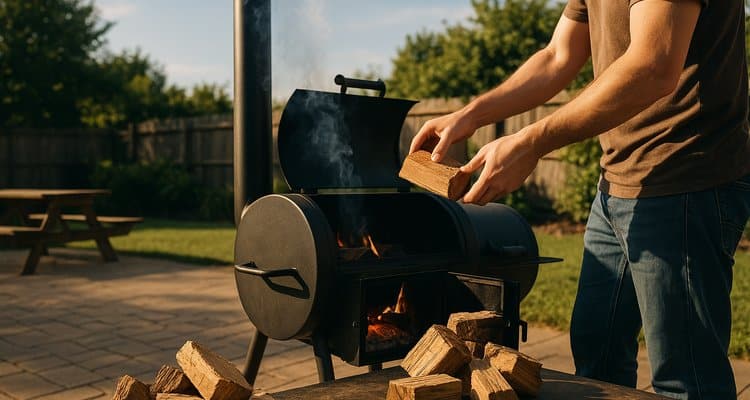
Offset smokers handle larger wood pieces and benefit from log-burning techniques with active coal bed management. Cabinet smokers need smaller chunks placed strategically to promote even smoke circulation throughout the chamber.
Pellet Grills
Pellet grills sometimes produce lighter smoke than traditional methods — supplement with a smoke tube containing wood chips for enhanced flavor. Quality premium pellets from reputable brands contain no fillers and produce better smoke than economy options. A pellet variety pack is a practical way to test multiple smoke profiles.
Electric Smokers
Electric smokers often produce incomplete combustion due to lower chamber temperatures. Use chips rather than chunks and replace frequently. A supplemental pellet smoker tray is an effective way to add sustained smoke to units that struggle with intensity.
Gas Grills
Gas grills require smoke boxes or foil packets positioned over direct heat for wood smoke generation. After each session, proper maintenance extends equipment life — see our gas grill cleaning guide for step-by-step instructions. For a broader introduction to outdoor cooking, our complete BBQ beginner’s guide covers the fundamentals.
Conclusion
Mastering wood selection and usage elevates barbecue from simple cooking to culinary art. Quality wood, proper storage, and careful fire management produce the thin blue smoke that defines exceptional barbecue. Remember that wood selection is highly personal — what works for Texas brisket may not suit Carolina pulled pork.
Start with the proven pairings in this guide, then gradually explore blending and advanced techniques as experience grows. For more guidance, explore our ultimate guide to brisket. The journey toward barbecue mastery requires patience, observation, and willingness to learn from both successes and failures. With proper wood knowledge and technique, you’ll consistently produce barbecue that rivals any commercial establishment.